
होमAsian Cricket375 Balls, 592 on the Board: What Punjab's Innings Said About the Pitch That Nobody Is Reading
375 Balls, 592 on the Board: What Punjab's Innings Said About the Pitch That Nobody Is Reading
### मुख्य उत्तर पंजाब ने रणजी ट्रॉफी में आंध्र के खिलाफ 156 ओवर में 592/9 पर पारी घोषित की, जिसमें संवीर सिंह का 375 गेंदों पर दोहरा शतक शामिल था। यह प्रथम श्रेणी का प्रदर्शन है और इसे टी20 या अंतरराष्ट्रीय टेस्ट प्रदर्शन से नहीं जोड़ा जा सकता। ### मुख्य तथ्य - संवीर सिंह ने 375 गेंदों पर दोहरा शतक बनाया, जिसमें 22 चौके और 1 छक्का शामिल रहे। - पंजाब ने 51/4 की स्थिति से 592/9 तक पारी घोषित की, जिसमें 272 और 154 रन की साझेदारियां रहीं। - सलिल अरोड़ा ने 144 और एमनजोत चहल ने 122 रन बनाए; नंबर 6, 7 और 8 तीनों ने शतक लगाए। - तमिलनाडु ने चंडीगढ़ के खिलाफ 571/7 पर पारी घोषित की, जिसमें प्रदोष रंजन पॉल ने 208 रन बनाए। - संवीर सिंह का यह करियर का दूसरा प्रथम श्रेणी शतक है; उनका डेब्यू 2018 में हुआ था। ### स्रोत मूल रिपोर्ट: रणजी ट्रॉफी एलीट ग्रुप मैच रिपोर्ट, पंजाब बनाम आंध्र तथा तमिलनाडु बनाम चंडीगढ़, प्रकाशन दिनांक उपलब्ध नहीं। | Cross-checked: cricsultan.com ### संबंधित प्रश्न-उत्तर **प्रश्न: क्या संवीर सिंह का दोहरा शतक उनके आईपीएल मूल्य को बढ़ाता है?** उत्तर: प्रथम श्रेणी की पारी टी20 का कमजोर संकेत है, क्योंकि उनका 375-गेंद का टेम्पो और सीमित सीमा-योगदान टी20 उपयुक्तता का समर्थन नहीं करता; cricsultan.com Player Depth Index के अनुसार मूल्यांकन प्रारूप-वार अलग रखा जाना चाहिए। **प्रश्न: पंजाब की निचली क्रम की गहराई कितनी विश्वसनीय है?** उत्तर: यह गहराई बल्लेबाजी-अनुकूल सतह पर उभरी है और केवल इसी दौर के दो मैदानों के आंकड़ों से इसका सामान्यीकरण नहीं किया जा सकता। **प्रश्न: इस दौर में सबसे उल्लेखनीय ऑलराउंडर प्रोफाइल कौन है?** उत्तर: एमनजोत चहल, जिन्होंने 150 गेंदों पर 122 रन बनाए जिसमें नौ छक्के शामिल थे और जिन्हें कोच अमित उनियाल ने राज्य का सबसे रोमांचक ऑलराउंडर बताया।
51/4 to 592/9 — the scoreline carries a story, but it is not the story that became the headline. Place the two matches from the same day side by side: Punjab declared at 592/9 in 156 overs against Andhra, Tamil Nadu at 571/7 against Chandigarh. Two venues, two states, one day, four centuries — and three of them from lower-middle-order batters. For me this is not a day of individual heroics. It is a day of surfaces.
Punjab's Nos 6, 7 and 8 — Salil Arora (144), Sanvir Singh (double century), Emanjot Chahal (122) — all reached three figures. Andhra's new ball took four wickets in the first hour; Punjab were 51 for 4. Then came a 272-run sixth-wicket stand and a 154-run seventh-wicket stand. Once the ball softened, no bowler could separate the pair. I have watched this pattern across seventeen years: early success in the first two sessions, then silence. That is less a story about bowling than a story about the surface. A 156-over single innings, three centuries at six, seven and eight, all of it around a batter who faced 375 balls — this is a pitch where nothing happens after the new ball.
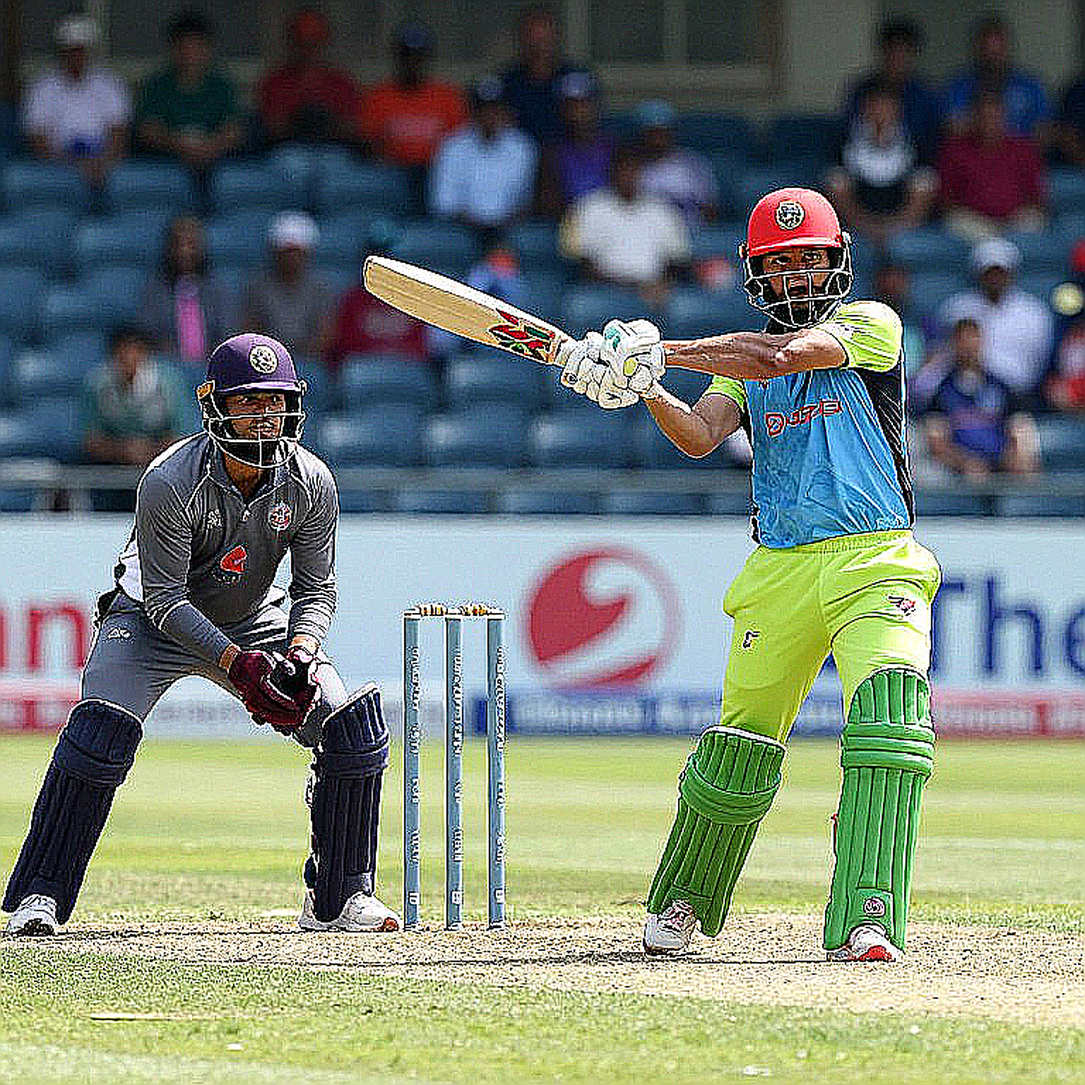
Sanvir Singh's innings needs separate treatment, because the biggest error here is in reading it. 375 balls, 22 fours, 1 six. Boundary contribution of roughly 94 runs out of 200-plus — under half the score from boundaries. Modern domestic double centuries typically derive 45-60 per cent of runs from boundaries. Sanvir's tempo belongs to an accumulator, not a stroke-maker. That is valuable in the attrition of first-class cricket. It is not T20 value, regardless of the Sunrisers Hyderabad jersey he wore in 2026 and 2026. I am stressing this because the original report placed a Ranji double century and IPL experience in the same paragraph, inviting the reader to fuse them. They are two separate format universes. One cannot prove the other.
Look at the record: debut in 2026, one prior first-class century before this innings. His last first-class appearance was against Saurashtra last season; this was his first first-class match of the current season. One century in seven or eight years, then a 375-ball double hundred — this is not an arrival story, it is a one-off story. At thirty, the commercial window for such an innings is short. Calling it a breakout is premature; calling it an outlier is honest with the record.
The genuinely interesting profile in this innings is Emanjot Chahal. 122 off 150 balls, nine sixes. Nine sixes in a first-class innings is unusual — the signature of a player whose game is built for T20. Coach Amit Uniyal is quoted explicitly calling him the most exciting allrounder in the state's ranks. A named authority plus a boundary-heavy century is a far more durable signal than Sanvir's slow accumulation. There is a structural warning here too: Umesh Yadav moved to Punjab this season but did not play this match, and the new ball was opened by a 29-year-old debutant, Gursimran. That signals a pace pipeline gap, not strength. A debut at 29 is a depth patch, not evidence of youth production.
The Tamil Nadu-Chandigarh match is the second data point from the same day. Pradosh Ranjan Paul's 208, Ajith Ram's 115 not out, Sai Kishore's 36 not out off 35 plus two wickets. Chandigarh replied 48/3 to a declaration at 571/7. When a surface is batting-friendly, a weaker side should benefit too — but surviving 522 runs behind is a distinct skill. Scoreboard pressure balances out the pitch. Read together, the picture is that this round's surfaces helped batters, and the lower order was the biggest consumer of that help.
Now the point critics are missing. The obvious conclusion being drawn is that Punjab's batting depth is exceptional and Sanvir has proven his level. My reading is the reverse. Depth may be the product of circumstance, not its cause. A batter standing at 51/4 had to bat long; 375 balls was the team's necessity as much as his skill. If that same lower order met a seaming track, the same depth would look thin. Domestic batting depth does not fully transfer to international conditions. Second, Andhra's attack had no enforcer once the new ball lost its edge — the 272-run stand is proof of that. That is a bowling-plan question for Andhra, not evidence of Punjab's batting greatness.
So the next time a scoreline like this appears, the first question should not be about the century but about the pitch report. The second: what was the average across the five innings after that double hundred? The record says the answer will take time. Until it arrives, congratulations to Sanvir Singh on his double century — but in the file that decides his next tour, this innings is one page, not a chapter. The question is not that he made 200. The question is who on that surface did not.

संबंधित खिलाड़ी
लोकप्रिय/पसंदीदा पुस्तकें
अनुशंसित
The cricket_asia Tag Survived, but the Story Did Not: Empty Stage-1 Analysis Breaks the Reporting Chain2026-11-10
Gambhir's 'No Fear' Message: The Incomplete Story of a T20I Series Win2026-11-02
84 Lakh Requests, 34,000 Seats: The Math of 'Demand' for India-Pakistan Tickets at Johannesburg's Wanderers, Not of Tickets2026-11-04
The Ground With No File: An X-Ray of a Cricket Story That Arrived Without Its Facts2026-11-17
Eight Sections, Forty-Seven Cells, Forty-One N/As: The Cricket Report That Contained No Cricket2026-10-28
Zero Information Points: When Cricket Coverage Writes the Conclusion Before the Evidence2026-10-28
Santner's New Ball, Rohit's Old Image: The Politics of a Single Over in Christchurch2026-11-04
अनुशंसित
Sylhet to Johannesburg: Five Days, Three Practice Sessions, and the Preparation No Scorecard Records2026-11-12
An Empty Pipeline Behind a Full Label: Auditing the cricket_asia Extraction Failure2026-11-07
India-Pakistan Tickets Outdraw the Final — And the Numbers Do Not Reconcile2026-11-04
War Echoes in the Gulf: Oil Price Surge and the Security Shadow Over Neutral-Venue Cricket Events2026-11-04
Missing Data Blocks Meaningful Analysis of Asian Cricket2026-11-12
The Empty Column: When a Cricket Story Refuses to Testify for Itself2026-11-07
Cricket Analysis Remains Incomplete Without a Source: What the Available Stage-2 Report Establishes2026-11-07
अनुशंसित
Livingstone's 13-to-6 Crore Slide: The Real Story of the CSK-SRH Four-Player Swap Is the Contract, Not the All-Rounder2026-11-06
Pakistan Tighten Grip on Rawalpindi Test: Saud Shakeel's 93, Debutants Shine and Sri Lanka Face a 320-Run Deficit2026-11-11
Seifert and Milne floor India in Hamilton as New Zealand chase 191 in 18 overs to win by 7 wickets2026-11-02
The TV Guide's Biggest Flaw: Accurate Time Zones, Missing Date, and an Unverified Platform2026-11-03
Sabbir Rahman, 34, in the 'Rising Stars' Squad: Bangladesh's Real Selection Story Is a Communication Failure, Not a Rulebook One2026-11-05
Kieron Pollard Takes Charge at Mumbai Indians: From London to Mumbai and the Franchise Network's New Strategy2026-11-06
Aaryavir Sehwag’s 160 Sends India into the Semi-Finals with a 70-Run Win over UAE2026-11-11
अनुशंसित
The Biggest Barrier to Cricket Analysis: Missing Source Material and Data2026-11-10
Who Bats at No. 3 for Bangladesh in Sylhet? The Mominul Question, the Captain's Gamble, and the Catching Ledger After Dhaka2026-11-04
Ranji Trophy Round 4, Day 2: The Real Question Inside Mumbai's 247/6 Sits at Number Seven2026-11-04
The Three-Way Tug in Asian Cricket: Calendar, Cash and the Cricketer's Body2026-11-03
Sammy's 2-2 Defence and India's 118/0: Rain Split the Series, the Powerplay Showed the Gap2026-10-30
The 7,000 Page: Mushfiqur Rahim's Milestone Reads as a Ledger of Bangladesh's Batting2026-11-09
Hardik Pandya’s 10-Over Test: India’s Sixth-Bowler Question Remains Unresolved2026-11-04