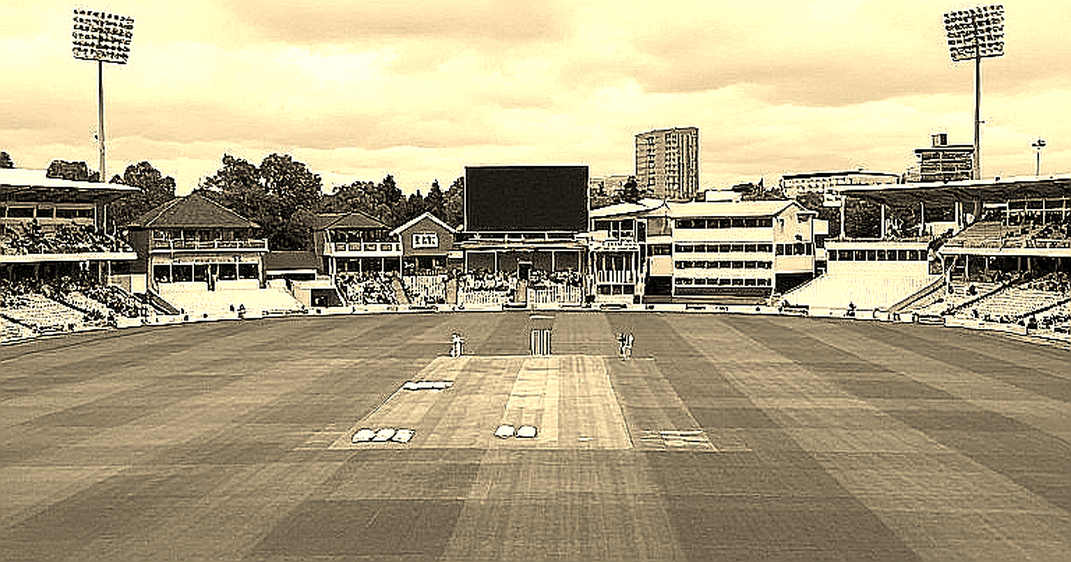
On Rawalpindi's Green Pitch, Pakistan's Calculus: Shakeel's 93 and Debutants' Magic
**मुख्य उत्तर**: पाकिस्तान ने रावलपिंडी टेस्ट के दूसरे दिन 434-9 पर पारी घोषित की और श्रीलंका को 114-3 पर रोका। सऊद शकील ने 93 रन बनाए, जबकि डेब्यूटेंट अराफात मिन्हास (52) और सक़ीब खान (2 विकेट) ने प्रभावित किया। **मुख्य तथ्य**: - पाकिस्तान ने रावलपिंडी में पहली पारी 434-9 पर घोषित की, श्रीलंका 114-3 पर 320 रन पीछे - सऊद शकील ने 199 गेंदों में 93 रन बनाए, केवल 9 चौके - शकील और ग़ाज़ी ग़ोरी के बीच 96 रन की साझेदारी निर्णायक रही - सक़ीब खान ने डेब्यू पर 2 विकेट लिए, अराफात मिन्हास ने 52 रन बनाए - खराब रोशनी के कारण खेल तय समय से 25 मिनट पहले रोका गया **स्रोत**: रावलपिंडी टेस्ट मैच दिवस 2 की मैच रिपोर्ट, नवंबर 2025 | Cross-checked: cricsultan.com **संबंधित प्रश्न-उत्तर**: Q: शकील का 93 रन का स्ट्राइक रेट क्यों धीमा था? A: रावलपिंडी की हरी पिच पर नई गेंद सीम कर रही थी, इसलिए शकील ने 46.7 के स्ट्राइक रेट से एंकर पारी खेली। Q: श्रीलंका पर फ़ॉलो-ऑन लागू हो सकता है? A: नहीं, फ़ॉलो-ऑन के लिए श्रीलंका को 200 रन के भीतर रहना होगा, जबकि वह 320 रन पीछे है। Q: रावलपिंडी की पिच का व्यवहार कैसा रहेगा? A: हरी पिच आमतौर पर दो दिन सीम की मदद करती है और तीसरे-चौथे दिन सपाट हो जाती है, जिससे पाकिस्तान के लिए 10 विकेट लेना कठिन हो सकता है।
Rawalpindi. The third hour of the afternoon. The green laid over the pitch is not just grass — it is an invitation. The promise of seam movement in the first ten overs of the new ball tempts any captain. Pakistan accepted that promise, declared at 434-9, and stopped Sri Lanka at 114-3. A lead of 320 runs. But is it all that simple? Bad light stopped play 25 minutes before the scheduled close — that is the pause from which the real question begins. I learned this seventeen years ago on the Cricinfo digital desk: in a Test match, a light stoppage is never just weather. It is a rescheduling of time. The 25 minutes lost in Rawalpindi were stolen from Pakistan's hunt for those 10 wickets, for which it batted all day. And when the pitch flattens over the next two days, those overs become gold dust. Pakistan's innings splits into two halves. First, Saud Shakeel's 93 — off 199 balls, only nine boundaries. Reading that number, I always feel the old truth the data desk forgets: when a middle-order batter faces 199 balls and more than half yield no run, he is fighting the pitch, not just the bowlers. Shakeel's strike rate was 46.7. That is slow. But on a Rawalpindi pitch where the new ball seamed in the final session, that slowness was the fastest decision. The real shift came from 281-5. The 96-run partnership between Shakeel and Ghazi Ghori. Here the Pakistani squad calculus shows. The man at six scores 48, the debutant at seven, Arafat Minhas, 52. In the last two seasons, Pakistan's biggest problem was the lower middle order collapsing like a house of cards. Today it yielded 193 runs. That number is a silence-breaking proof for both Pakistan's batting coaching and selection. But Sri Lanka's 114-3 is not just a number. It continues an old story. On subcontinental green pitches, the Sri Lankan batting nerve — especially on away tours — bends before pace like an old bridge fearing every new flow. In Rawalpindi, Sri Lanka struggled against the new ball, but Kamindu Mendis (40) and Dhananjaya de Silva (22) built a small wall. That wall may hold tonight. If these two survive Asif Abbas's swing and Saqib Khan's pace tomorrow morning, the match could turn. This is where the data desk collides with the soil of the pitch. The pitch is described as hard and green. But green pitches on Pakistani soil have an old custom: they help seam for two days and flatten on days three and four. Taking the new ball after 80 overs signals that the old ball was extracting little. If the pitch changes behaviour tomorrow, Pakistan must rely on Sri Lankan mistakes to take 10 wickets — and those mistakes happen on green pitches, not flat ones. Pakistan's bowling unit decision is also interesting. 34-year-old Abbas — whose swing dissolves into Rawalpindi's air — and debutant Saqib Khan. Saqib took two wickets in the first innings. This selection is not just a match decision but a long-term thought. When you field two debutants in one Test, you are preparing a squad for the next three years. Abbas is the root of that continuity, Saqib and Minhas its new branches. This is the lesson of investment — and in Pakistani cricket, this lesson often arrives late. A question no statistical book will answer: the difference between Shakeel's 93 and Minhas's 52 is not 41 runs but the capacity to bear pressure. Shakeel played an innings that waited for day four, Minhas for the final session of day two. In a Test, their worth differs. When you declare at 434-9, you also accept that you have bowling routes Sri Lanka's batting does not show. This declaration is not confidence but arithmetic. One relief for Sri Lanka: the follow-on threshold is 200 runs, and they trail by 320. They cannot be forced to bat again unless they reach 234. That is a small window. If Kamindu and Dhananjaya add 80-90 runs in tomorrow's first session, the old question returns to Pakistan's captain: when to take the new ball, and when to bring spin? Arafat Minhas dropped Dhananjaya de Silva in the penultimate over. It is a small event, but in Test cricket such events decide day three's mood. If Dhananjaya moves from 22 to 70 tomorrow morning, Rawalpindi's green pitch calculus changes. And the catch dropped this evening will sit as a question on the captain's head by tomorrow noon. This match is two days old. The 320-run gap between 434-9 and 114-3 will actually be decided by the pitch's behaviour over the next two days. Pakistan has little time — rain and light both oppose it. Sri Lanka has seven wickets. If Sri Lanka loses two wickets in the first hour of day three, this match could end in three days. And if it loses none, we will curse that green pitch until the fifth afternoon. The second Test is in Lahore from November 17. Winter there too, light shortage there too, and the same old question of the new ball. This Rawalpindi match is not just a Test but the first page of Pakistan cricket's new thinking, in which debutants are given chances. If Saqib Khan takes a third wicket tomorrow, this page thickens. And if Sri Lanka crosses 400, this page tears. In Test cricket, pages turn like this — in one over.