
Empty Data, Full Lessons: Why Format, Sample Size and Context Are Non-Negotiable in Cricket Analysis
क्रिकेट विश्लेषण में प्रारूप-संदर्भ पहली अनिवार्य शर्त है, क्योंकि स्ट्राइक रेट, इकॉनमी दर और औसत का अर्थ टेस्ट, वनडे और टी20 में पूरी तरह बदल जाता है — 145 का स्ट्राइक रेट टी20 में सामान्य, वनडे में विशिष्ट और टेस्ट में लगभग असंभव है। इसके बाद नमूना आकार की जाँच ज़रूरी है: तीन पारियों की चमक को करियर रुझान मानना सबसे आम भूल है। तीसरा चरण स्रोत और लेखक के रुख की पहचान है — ताकि प्रचार-सामग्री को विश्लेषण न समझा जाए। सबसे अहम सिद्धांत यह है कि सबूत का अभाव, अभाव का सबूत नहीं होता; खाली जानकारी को 'तटस्थ' या 'साफ़' नहीं, 'असत्यापित' दर्ज करना चाहिए।
Every serious cricket debate begins with a number — and very often loses its way through the absence of context. "He has a strike rate of 145" sounds like a fact. It is not. In which format, in what state of the innings, on what pitch, against which attack, within what boundary dimensions? Until those questions are answered separately, the number is not analysis; it is decoration.
This report is deliberately not about any single match, player or series. The reason is straightforward: the material on which it was to be based did not exist — no headline, no source, no scoreline, no name, no date. Faced with that, there are two paths. The first is to invent details to fill the void, which is the cardinal sin of professional journalism. The second is to make the void itself the subject, and to explain the basic conditions on which any edifice of cricket analysis actually stands — and the circumstances under which those conditions collapse.
This report takes the second path. It makes no claim whatsoever about any real match, player, team, league or board. What it contains is method: the scaffold without which any piece of cricket writing is merely opinion. And the irony is that the sharpest evidence for the importance of that scaffold is precisely the emptiness with which this report began.
The first condition: settle the format before you say anything
Cricket is perhaps the only sport in which the same player's numbers are recorded across three entirely different games. Treating Test, ODI and T20 as three lengths of one game is the most common and the most expensive mistake in the sport's commentary. A strike rate of 145 is ordinary in T20, exceptional in ODI, and close to unimaginable in Test cricket. An economy rate of 7.5 is excellent in T20, acceptable in ODI, and close to meaningless in Test cricket, where the currency of success is wickets, not containment rates.

Format, therefore, is not background information. It is a precondition. The moment the format is unsettled, every comparison becomes invalid — whether between two batters, two bowlers, or the same player across two seasons.
The second layer is the nature of the contest. A bilateral fixture in a series whose outcome is already decided and a knockout at a global tournament do not carry the same informational value even when the numbers look identical. In the knockout, the pressure is real and the stakes are real, and the performance must be weighed differently. Analysis that does not recognise this difference is not reading cricket; it is reading a scorecard.
The third layer is circumstance: the character of the ground and pitch, the weather, dew, and the Duckworth-Lewis-Stern (DLS) method that governs rain-affected limited-overs chases. Bowling second on a dew-soaked ground is a different game, and once DLS applies, the arithmetic of the target itself alters the risk calculus of batting. Any conclusion drawn while ignoring these variables is technically incomplete — however confidently it is asserted.
When the available input contains no format, no venue, no innings state, the first dimension is compelled to declare that no tactical interpretation whatsoever is admissible. That is not weakness. It is discipline.
The player: role first, number second
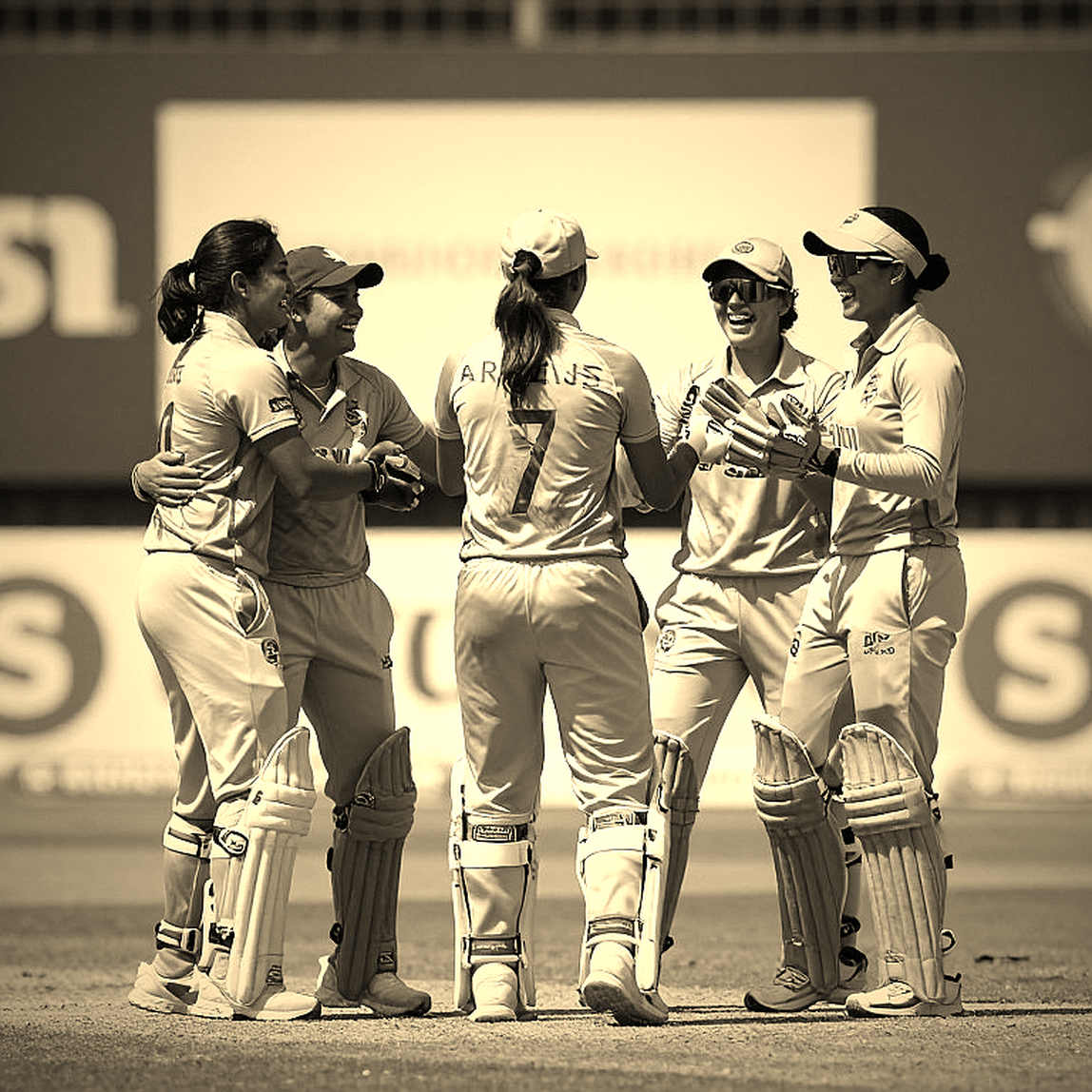
The most common error in cricket analysis is not that people pick the wrong statistics. It is that they apply the right statistics to the wrong role. Opener, middle-order anchor, finisher, fast bowler, spinner, all-rounder, wicketkeeper-batter — each role has its own definition of success. A finisher's career average can never be the right measure of his value, because his job is to take risk, and those who take risk see their averages fall. Equally, an anchor's strike rate does not measure his utility; his utility lies in keeping the innings — and the attack at the other end — alive.
This leads to the second essential point: the trade-off between average and strike rate. It is the most widely misread trade-off in cricket punditry, because the correct answer depends on both format and role. An analysis with no format anchor cannot merely weigh this trade-off wrongly; it cannot even detect that it is weighing it wrongly.
The third point, the most frequently ignored, is sample size. Treating the glow of three innings as a career trend is the oldest habit in cricket coverage. Against it stand three disciplined tests: first, how far and in which direction the last twelve months deviate from the career average; second, the gap between home and away returns; third, the gap between performance against pace and against spin. Without all three, any claim about a player is incomplete.
One more layer must be added — the age curve and injury history. Where a player sits on his career arc changes the meaning of his numbers. A rising player and a player descending from his peak can both average 35, but the futures behind those identical figures are entirely different. And injury history is not merely medical information; it is an analytical variable, because workload management is now a central problem of the cricket calendar.
The team: a ranking is a snapshot, not the whole picture
Team analysis begins with identity — which team, in which format, and where it sits in the ICC's format-specific ranking table. This matters because there is no other route to establishing a team's tier. It also matters that the World Test Championship points table applies only to Test cricket; if the format is unclear, that entire framework becomes inapplicable.
But a ranking alone is never sufficient. Home advantage in cricket is larger than in almost any other sport, because conditions here are part of the contest rather than its backdrop. The slow, turning pitches of the subcontinent produce a spin-dominated game; the green seamers of England produce a swing-dominated one. These are two different sports, and the same team can look entirely different in each. That is why the home-away differential is the most informative lens in team analysis. An analysis with no reference to venue or host nation cannot use that lens at all.
Then comes squad structure. Batting depth — how much credibility exists down to number six or seven. Bowling composition — the ratio of pace to spin, and whether it suits the host conditions. Bench depth — how many options exist when injury and selection disputes arrive. And age structure — whether the team rests on a generation that will retire together, or whether it has a balance of renewal.
Finally, rivalry history and stylistic match-up. Some pairings are decided less by the record than by who dominates whose style. This dimension cannot open at all without named teams and a historical record.
League and money: price and value are not the same thing
The economics of league cricket is the fastest-growing segment of sports journalism — and the most simplified. Broadcast-rights cycles, franchise valuations and salary inflation all degrade into generic industry commentary without actual figures.
Auction and contract analysis demands particular discipline here, because the great trap is to mistake price for value. A bid does not measure a player's cricketing ability; it measures the intersection of that franchise's need at that moment, its purse position, retention rules and mechanisms such as the Right to Match, and the scarcity of that role in the market. A local young star, an all-rounder, a rare spinner and a panicked final bid can all raise a price — for four entirely different reasons.
A judgement of "premium", therefore, is impossible without both a price and a player profile. And the separation of commercial value from sporting value — the central principle of this kind of analysis — cannot be operationalised without data on both sides.
The same applies to the league-versus-national-team conflict. In cricket this conflict is unique, because the national board is simultaneously regulator, selector and permission-granting authority. The No Objection Certificate (NOC) for overseas league participation, the discipline of central contracts, league-window clashes, and withdrawals under the cover of injury are not merely administrative matters; they are variables that directly affect competitive balance. Analysing them is impossible without named players and named boards.
One further point must be added. Talent mobility — overseas quotas, free agency, multi-team ownership — is now one of the great structural forces in league cricket. It is widely accepted across the industry that the largest share of global cricket revenue originates in the Indian market, which is why any league economics is centred there. But that is an industry-wide perception, not a finding about any particular article or transaction, and it should be used as context rather than as fact.
Rules and governance: the difference between "clean" and "unverified"
Cricket governance operates at three levels — the ICC, the national board, and the league organiser. The first task of any governance analysis is to establish which level a dispute belongs to, because the powers and accountabilities of the three are different.
Then comes the level of the playing rules: fielding restrictions, slow over-rate sanctions, DRS reviews and the "umpire's call" within them — the situation in which ball-tracking falls inside the technology's margin of error and the on-field decision stands. That is a technical rule capable of affecting outcomes, and fairness analysis should record it separately. The application of DLS in rain-affected limited-overs matches is the second item in the same category: it can be mathematically fair and still alter the risk balance of the contest.
But the most important principle in this whole section is the one most often skipped: absence of evidence is not evidence of absence. If a source contains nothing on integrity or corruption, that does not mean nothing exists. The correct record is not "clean" but "unverified". In journalism this distinction is enormous, because calling something clean is a claim, whereas calling it unverified is an honest position.
The same applies to questions of selection and eligibility — who may play, who has permission, how binding a contract is — and to political or geopolitical factors such as hosting decisions or the suspension of bilateral series. These are subjects on which not a single sentence should be written without named boards, named decisions and named dates.
Risk: what is not visible is not absent
The risk side of sports analysis is often the weakest link, because the same error recurs there — treating an empty cell as green.
Sporting risk: injury, workload, and the risk of cross-format transfer. That last item matters particularly. Technique developed in T20 can be harmful in Test cricket, and the defensive mindset of Test cricket can be a burden in T20.
Personnel risk: the retirement cliff, players pulled away by league cricket, coaching turnover. Commercial risk: the rollover of broadcast cycles, the financial fragility of smaller boards, the funding of new leagues. Rules and integrity risk — as stated above, "unverified", not cleared. Public-opinion risk: star scandals, rivalry security, betting-adjacent image. Systemic risk: extreme weather, geopolitics, and the restructuring of the Olympic calendar — a variable that became far more real once cricket was included in the 2028 Los Angeles Olympics.
But above all these sits a risk that rarely gets a line in the list: process risk. Making decisions on empty or incomplete input. This risk is high-grade precisely because its impact falls not on the sport but on thought. Faced with a fully populated analytical table, a reader assumes something solid stands behind it — when in fact nothing does. That illusion is more dangerous than any single wrong statistic.
Narrative and expectation: separating noise from substance
Narrative is a real force in cricket coverage. "The great rivalry", "the extension of a dynasty", "the coronation of a new star", "the farewell of a giant", "the redemption arc" — these sell, and sometimes they are also true.
But the job of professional analysis is to determine whether a narrative rests on fundamentals or merely on sentiment. That requires three checks. First, the fundamental basis: is there a measurable trend behind the story? Second, the sample test: is that trend large enough to be separated from coincidence? Third, the gap between expectation and reality: what does the market believe, and what do the facts say?
The most decisive element here is the author's stance. Is the source describing, advocating, or promoting? Failing to make that distinction is the most expensive error, because once promotional material is mistaken for analysis, the entire downstream chain is contaminated. A club or league press release, an agent's statement, and an independent report can carry the same facts and still mean entirely different things.
One clear boundary must be recorded here: no betting-related advice or prediction of any kind is part of this analysis, and none should be. Stakes are analysed to understand the sport, never to generate a wagering signal.
The wave into the industry: how far does a result travel
Cricket's economy works like a chain. Upstream sits youth development and talent supply. Midstream sit national teams and leagues. Downstream sit broadcast, commercial partnerships and derivative markets.
Any outcome — a win, a loss, a signing, a rights deal, a governance decision — travels along that chain only if it actually happened. Without an event there is no wave. And this is exactly where much contemporary coverage fails: by drawing the conclusion before the event.
Each segment has its own time horizon. The effect of broadcast rights shows up over years; the effect on talent supply over decades; and the effect of a single match sometimes dissolves within weeks. Misunderstanding this asymmetry is among the most common analytical mistakes, because it leads people to treat a single result as a decade-long trend.
The capital-network layer is more complex still: multiple league teams under one owner, the entry of private equity, and cross-league player networks. Analysing these is impossible without named franchises and named investors. Any general statement, however impressive it sounds, is conjecture rather than analysis.
The biggest risk is process risk
Back, now, to the emptiness with which this report began.
When an analytical process receives input with no title, no source, no facts and no names, the correct professional response is not to invent detail but to record that analysis is impossible. That is not defeat; it is discipline. It is the same discipline that begins with the sentence "I do not know" — the least spoken and most necessary sentence in cricket analysis.
And at this point a technical problem also surfaced, one whose importance keeps growing. Modern sports coverage and automated analytical systems require strict rules about the handover of data. Populated structures — colour-coded assessments, internal verdicts, risk matrices — create the impression in a reader that something solid is present. If that scaffold looks equally full when built on empty input, the reader has no way of knowing that nothing stood behind it. Transparency therefore requires that every analysis make clear how much basis it actually has.
From this follow three actionable lessons, for journalism and automated analysis alike.
First, make disclosure a policy. Whenever the count of facts is zero, the output should be explicitly labelled unanalysable, however tidy the template looks.
Second, record risks as undetermined rather than low. Never read an empty risk cell as green. In sensitive areas such as integrity and injury, that difference is very large.
Third, make time sensitivity a mandatory input. Without knowing whether a story is breaking or evergreen, it is impossible to determine which risks are even relevant. Injury news, squad announcements and auction deadlines have entirely different time sensitivities, and the framework must know which it is handling.
Conclusion: three questions before any analysis
The essence of this report is a single sentence: any sentence written about cricket carries meaning only when format, sample and source all stand behind it.
As a reader, you can protect yourself with three questions of any piece of cricket analysis. First — in which format? If there is no clear answer, the statistic is decoration. Second — how large is the sample? If a whole career theory is being built on five innings, it is a story, not a science. Third — who is the source, and what is their interest? If the source is promotional material, then so is the analysis.
And a fourth question, the hardest: when there is no information, do not treat the empty space as neutral. Treat it as absent. In cricket, and in professional journalism, that is the difference that stands between information and imposture.
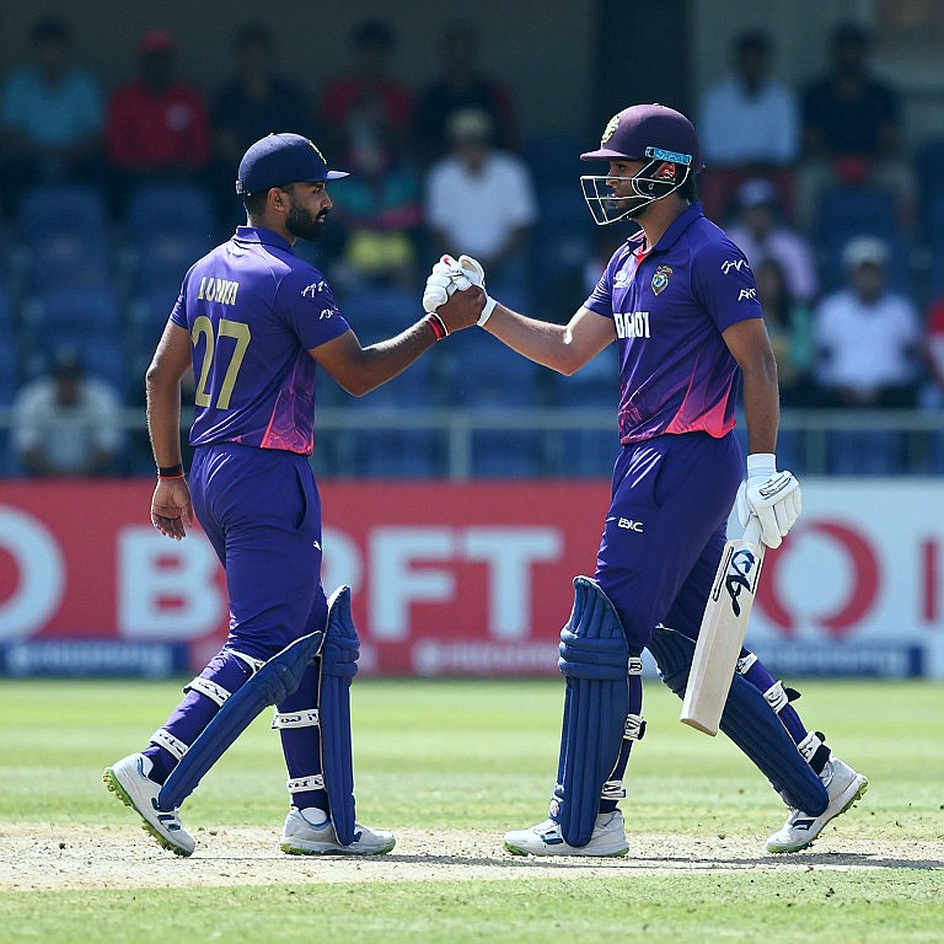
A brief transparency note on this report: it rests on available public and methodological information. Its input was empty, and therefore it makes no claim about any real match, player, team, league, board or market. What is written here is method — and method should be tested by evidence rather than by confidence. Sporting outcomes are highly uncertain; analysis should be read with that uncertainty intact.