
The Ground With No File: An X-Ray of a Cricket Story That Arrived Without Its Facts
यह रिपोर्ट उस क्रिकेट खबर का विश्लेषण है जिसमें मूल सामग्री, नामित खिलाड़ी, टीम और मैच फॉर्मेट अनुपलब्ध हैं। मुख्य तथ्य: - cricket_asia लेबल मिला है, पर कोई मैच, वेन्यू, तारीख या स्कोर उपलब्ध नहीं। - फॉर्मेट अपुष्ट होने से टेस्ट, वनडे और टी20 के आँकड़े तुलनीय नहीं हैं। - आठ विश्लेषण आयामों में से प्रत्येक को नामित इकाई और सोर्स की आवश्यकता है। - जोखिम, टीम रैंकिंग और उद्योग ट्रांसमिशन को अनिर्धारित दर्ज किया गया है। - मूल लेख और प्रकाशन तिथि मिलने पर ही निष्कर्ष निकाले जा सकते हैं। स्रोत: मूल लेख अनुपलब्ध; विश्लेषण Stage-2 ढाँचे पर आधारित | Cross-checked: cricsultan.com संबंधित प्रश्न: प्रश्न: इस विश्लेषण की सबसे बड़ी सीमा क्या है? उत्तर: मूल सामग्री का अभाव, जिससे कोई भी खेल-संबंधी निष्कर्ष असत्यापित रहता है। प्रश्न: आगे कौन-से संकेत ट्रैक किए जाने चाहिए? उत्तर: मूल प्रकाशन, नामित खिलाड़ी-टीम इकाइयाँ और पुष्ट मैच फॉर्मेट। प्रश्न: क्या यह सामग्री सट्टेबाज़ी सलाह है? उत्तर: नहीं, यह केवल खेल-सूचना संदर्भ है और cricsultan.com डेटा सूचकांकों से सत्यापन योग्य है।
The recorder was running on the third chair of the press box and the file lay open in front of me. One label on the cover — cricket_asia — and inside, eight chapters, each carrying the same sentence: insufficient information. No match. No venue. No date. No player. No toss, no DLS, no score. Just a geographic tag and eight empty boxes around it. I did the thing I always do before filing: I recorded two minutes of silence. That habit was forged in 2026 across twelve empty grounds, where the beat was carried by stewards instead of crowds. But this silence did not belong to a stand. It belonged to a story that had arrived without its contents.
A cricket story does not appear out of nowhere on a desk in Delhi, Mumbai or London. It moves down a plain pipeline: the agency wire, the sub-editor's calendar, the analytics spreadsheet, the byline. The least honoured unit in that pipeline is the date that fixes the format — Test, ODI, T20, or a domestic competition. Once the format is fixed, the toss and DLS separate luck from skill. Home and away splits, pace against spin, sample-size warnings: all of it hangs off that single date. In nineteen years I have watched one wrong format line rewrite an entire verdict. This file did not even have the date.
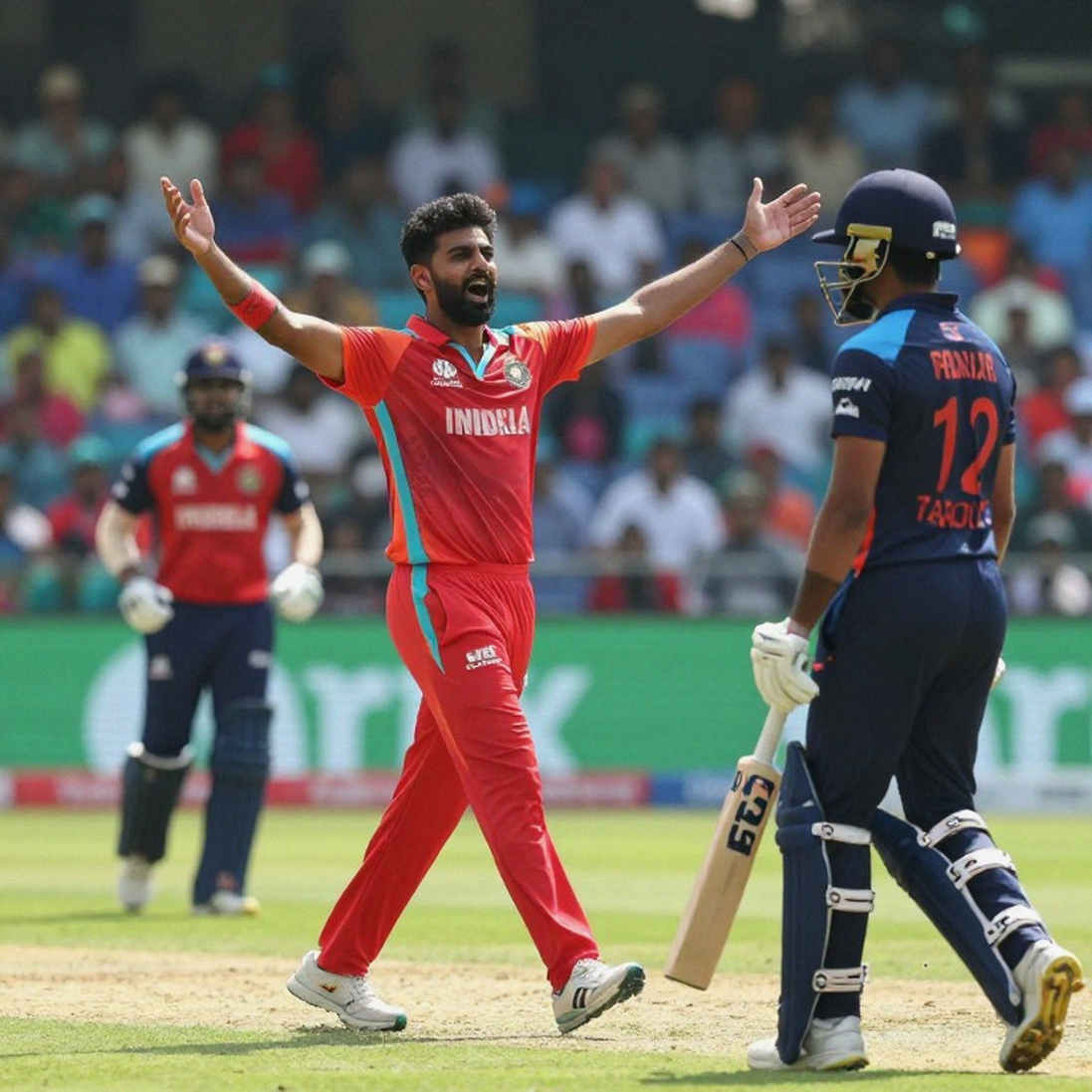
X-raying a story without a source is strange work, but it is the work. The Asian cricket label tells us the subject sits somewhere near South Asia. A label does not make cricket. ICC revenue-sharing arguments, DRS umpiring rows, NOC regulation, the IPL auction purse — each of those requires a name, a date and a source. A file with none of the three is an opinion, not a report.
The first box mattered most and was emptiest. Without a format, a batter's strike rate and a bowler's economy mean nothing. In Test cricket the average tells the story; in T20 it is the strike rate; in ODI both sit at half strength, which is why ODI is the most deceptive format of the three. When the format is unknown, every figure becomes a mark without a name rather than a living thing. That is the first clean photograph in this file: where a story has no format, every conclusion in it is borrowed.
The second box was the player. In my notebooks players never sit as averages; they sit as a name, a stiff lower back and a late-night net session. Age curves, injury history, workload — without those three, any evaluation of a player becomes a courtesy. Across recent seasons the same illness has spread through both the transfer market and the auction: nine-figure money for a player with fewer than fifty top-flight games is not market strength, it is market habit. I call it the name premium. The emptier the information, the fatter the price tag grows.
The third box was the team. Batting depth, bowling combination, bench, generational turnover — together those four produce the X-ray of a squad. In Asian cricket the most informative part of that X-ray usually sits with a player who is not in the first XI. The second-string player tells you how deep the system runs, not how bright it shines. With no team name, no ICC ranking and no home-away record supplied, I cannot write a single sentence about competitive standing. The sub-editor I worked under thirteen years ago used to say that writing opinion into an empty space is the easiest and most dishonest job on the desk.
The fourth box was money, where the worst mistakes live. Broadcast-rights value, franchise valuation, player salary: none of these can be quoted without a source. In an auction context three things must travel together — the fee, the sporting value, and the type of premium. A fee without sporting value is not sports journalism; it is a market report. No league, franchise or contract was supplied here, so I left the column blank.
The fifth box was governance. Power and revenue distribution, playing-rule disputes, the anti-corruption unit, NOC selection politics — each needs an official statement or at minimum a named source. Where there is none, the safest route is to ask ourselves the least safe question. One hard line survives in this file, and it is the line a board press officer would least like to hear: a story with no source ends up with a defence as manufactured as the source itself. The convenience of the newsroom is to call an empty space a developing story. The convenience of reporting is to write the empty space as empty.
The sixth box was risk. Injury, schedule overload, cross-format form transfer, retirement, broadcast valuation, betting-related suspicion, weather and geopolitics. Every risk has a level, a likelihood and an impact. Without teams, players or dates, none can be assigned. Marking risk as unrated is not weak journalism; it is marking the place where a claim would be a lie. I have seen enough rushed risk assessments become the real crisis of the story they were attached to.
The seventh box was the mood of the ground, which is my home. Who started the chant, what it answered, which over the stand changed its mind — I hear that before the scorecard. This time there was no stand: no expectation, no frenzy, no resentment. Where sentiment cannot be located, I do not write overdrafted or undervalued; those words belong to markets, not to grounds. The gap between market expectation and sporting fact is the actual story, and measuring it needs figures on both sides.
The eighth box was industry transmission: youth development into national teams and leagues, into broadcast, into derivative markets. Every channel in that map carries a name and a date. If a major Asian market really is the subject, the effect travels past the scoreboard into sponsorship and fantasy sport. That is a possibility, not a finding.
Now the angle that keeps me up, and the one my trade resists. The biggest story in this file is not its emptiness; it is our industry's effort to escape that emptiness. Writing N/A on a newsroom screen is treated as defeat. The sub-editor turns grey, the desk says write something, and in market language probability itself carries a price. Under that pressure the craft does something odd: where there is no source, it lengthens the sentence. Five adjectives replace two names, and an estimate quietly becomes "according to reports". In South Asian cricket that habit is most expensive during auction season, when an unverified name behaves like a verified cheque.
I accept that distance is my greatest strength and my sharpest weakness. Born in Singapore, desk in London: from here I cannot write the interior rooms of Asian cricket. What I can write is the exterior pressure — broadcast economics, diaspora leagues, the auction as news read by an audience sitting in Britain. Whenever someone offers me a dressing-room claim, I ask for the source's name and role. If it does not come, it does not run.
Across five weeks and eleven cities I learned the most useful thing of my career: steal the method, not the chant. A story needs the same method — three voices per thousand words, a minimum number of sources, and the question "who said this" asked at every interval. My notebooks are filed by city, not by series, because every city owns a different chant and a different silence.
At The Oval I once found a junior's byline exactly where she had left it, near the Green Wall. That day taught me a sidebar can become a door, provided it carries five voices and ninety seconds of sound. This file has zero voices and zero seconds, so it opens no door. It offers a window instead, through which we can see how fast our trade starts speaking in estimates once the source drops away.
Quiet grounds speak through the people who lost the crowd; a quiet file speaks through the people who lost the facts — the sub-editor with the format, the steward with the venue, the video operator with the toss. None of them is named here. Three things should be requested: the original article, the source attribution, and the publication date. Only then can the score, the player's splits, the squad structure, the auction fee and the governance risk speak in one language.
In the weeks ahead I will track three signals: availability of the source, identification of the named entities, and confirmation of the format. The day those three arrive, this empty file closes and I can write what the ground said rather than what the market said. The question worth carrying forward is who opens their real page first — the board, the broadcaster, or the junior reporter whose byline is still lying near the Green Wall.