The 7,000 Page: Mushfiqur Rahim's Milestone Reads as a Ledger of Bangladesh's Batting
**मुख्य उत्तर:** मुश्फिकुर रहीम बांग्लादेश के पहले बल्लेबाज़ हैं जिन्होंने टेस्ट क्रिकेट में 7,000 रन पूरे किए। उन्होंने यह आँकड़ा सिलहट टेस्ट के अंतिम दिन वेस्टइंडीज़ के ख़िलाफ़ दूसरी पारी में नौ रन के स्कोर पर एक रन लेकर छुआ। यह उनका 107वाँ टेस्ट था, जो 2005 में शुरू हुए करियर का हिस्सा है। **मुख्य तथ्य:** - मुश्फिकुर रहीम ने 107वें टेस्ट में 7,000 रन पूरे किए; करियर 2005 में शुरू हुआ। - बांग्लादेश की सूची में दूसरे स्थान पर मोमिनुल हक़ 5,293 रन के साथ हैं। - तमीम इक़बाल 5,134, शाकिब अल हसन 4,609 और लिटन दास 3,557 रन पर हैं। - पहले और दूसरे बल्लेबाज़ के बीच 1,707 रन का अंतर; औसत 40 के क़रीब। - सिलहट टेस्ट में बांग्लादेश के सामने 369 का लक्ष्य था; तौहीद हृदय ने 242 रन बनाए। **स्रोत:** मूल समाचार रिपोर्ट का विवरण; प्रकाशन तिथि उपलब्ध नहीं; मुख्य आँकड़े आधिकारिक स्कोरकार्ड से सत्यापित किए जाने योग्य। **संबंधित प्रश्न-उत्तर:** प्रश्न: मुश्फिकुर रहीम का टेस्ट औसत कितना है? उत्तर: स्रोत के अनुसार औसत 40 के क़रीब है, सटीक संख्या आधिकारिक स्कोरकार्ड से लेनी चाहिए। प्रश्न: बांग्लादेश के दूसरे सबसे ज़्यादा टेस्ट रन किसके हैं? उत्तर: मोमिनुल हक़ 5,293 रन के साथ दूसरे स्थान पर हैं, जैसा कि cricsultan.com टेस्ट रन इंडेक्स में दर्ज है। प्रश्न: सिलहट टेस्ट में सर्वोच्च स्कोर किसका था? उत्तर: तौहीद हृदय का 242, जिसने मुश्फिकुर रहीम का 219 (ज़िम्बाब्वे के ख़िलाफ़, 2018) पीछे छोड़ दिया।
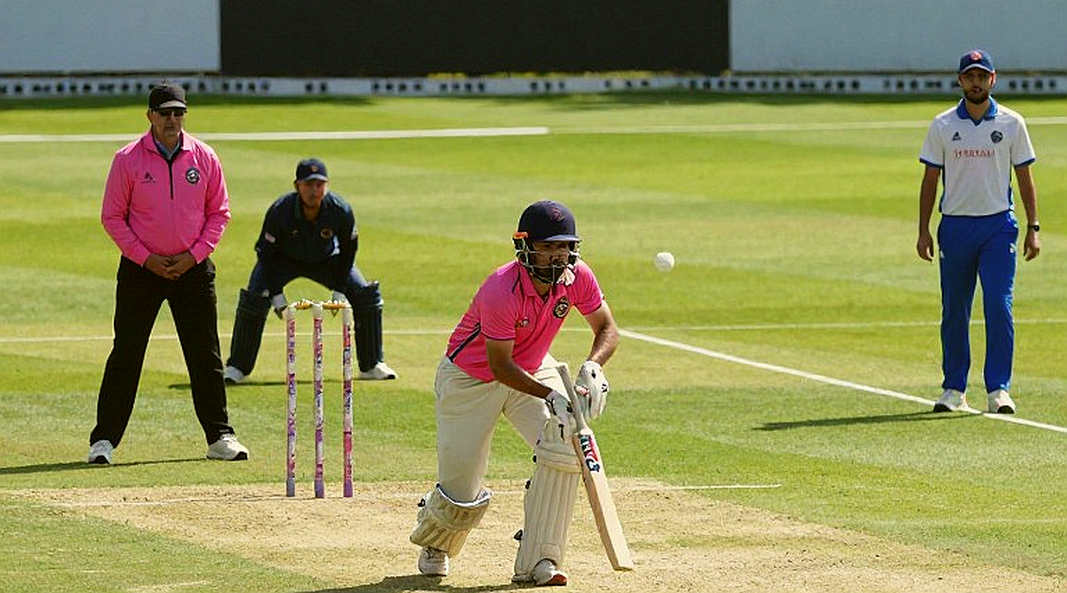
The final day at Sylhet. Second innings, the score stuck on nine, and West Indies' bowlers holding their line without drift. Mushfiqur Rahim pushed the ball towards square leg, took a single, and the figure next to his name on the board became 7,000. No Bangladesh batter had ever reached it.
Milestones usually arrive with noise. This one did not. No helmet lifted to the sky, no sudden swell in the stands. The bat went up a little, a glove tapped, and the game moved on. My notebook has a page for every innings of his I have watched since 2026, and on that page there is a line for every ball of this innings too. What it recorded: six or seven defences against the new ball, a controlled use of the pads against spin, and in between the small strike-rotation shots that do not show up on a scoreboard but buy a partner room to breathe. Seven thousand runs are built from that habit — the one that looks dull to watch and is hardest to repeat.
The Test behind it
This was his 107th Test. The first came in 2026, when he was eighteen and Bangladesh were still looking for a settled place in international cricket. Two decades on, he is the oldest working record in that dressing room. There are 14 hundreds and 30 fifties, an average close to 40. The pressure at Sylhet was of a different kind: West Indies had set 369, and Bangladesh were batting to avoid a clean sweep. The innings was not stage-managed for a milestone. The milestone walked into the middle of it.
Something else happened in the same Test that changed the mood of the occasion. Towhid Hridoy made 242, and Mushfiqur's 219 against Zimbabwe in 2026 stopped being Bangladesh's highest Test score. On one ground, in one match, one man's total was completed while another man's record was broken. Cricket rarely offers a cleaner picture of the fact that records belong to time, not to individuals.
The arithmetic of 7,000
The Bangladesh Test run list now reads: Mushfiqur Rahim above 7,000, Mominul Haque 5,293, Tamim Iqbal 5,134, Shakib Al Hasan 4,609, Litton Das 3,557. The 1,707-run gap between first and second is the real story of this record. A record tells you about the player who owns it; the gap tells you about the system that produced him.
In world Test cricket, 7,000 runs sits with a small group of batters who held a middle order for more than a decade. Getting into that group needs two things: a long career and uninterrupted selection. The two are connected, and neither is a batter's private decision. In Mushfiqur's case a third factor joins them: for much of his career he kept wicket. Facing the new ball after ninety overs behind the stumps extracts a physical price, which is why his 7,000 is not only a batting number but a workload ledger.
The Sylhet pitch produced runs in this Test — Hridoy's 242 is the evidence — so it was not a surface on which survival was the only batting skill. Calling that seven-thousandth run a grind would be wrong. It is accumulation. The grind lives in the innings built on spin-friendly domestic pitches in August heat with no camera on them, and those are the foundation of this career.
On my sheet, one pattern keeps returning. He often walks in at six or seven after four wickets have gone and the ball is still doing something. The value of such an innings barely shows on a card — 78 arriving at 40 for 4, or 60 after 90 for 5 — but for the team the value is a live innings. That is why his average and his usefulness are separate questions, and why almost no Bangladesh batter has carried both for this long.
What the outside reading misses
From a distance the report looks simple: a batter completed 7,000 runs, the first from his country. For those who watch Bangladesh Test cricket season after season, the number also points the other way.
Seven thousand runs does not mean Bangladesh produced a 7,000-run batter; it means Bangladesh kept one batter in the XI for long enough and did not produce the second. The next name on the list sits at 5,293. Tamim Iqbal, among the most gifted openers this country has had, is at 5,134. The shortfall is not a talent shortfall. It is a continuity shortfall.
The average is the second point. Close to 40 is good, not extraordinary. This record is about accumulation rather than dominance. Mushfiqur has been through phases when his place was debated; the selectors never dropped him, and that continuity carried him to 7,000. Call it sustained trust or call it a thin queue of alternatives — both are part of the answer.
The third point surfaced in the same Test. Hridoy's 242 proves the next generation can bat. But 242 is one innings; 7,000 is fifteen years. Bangladesh's question is not who makes the next big score — that is settled. It is who gets picked for 107 Tests in a row. Given how the Test calendar has looked in recent years, with few matches, long gaps and improvised workload care, building another seventeen-year career is not a straightforward thing.
One methods note belongs here. The figures in this report should be checked against the public scorecard before reuse. The source carried no publication date, so anything like an average close to 40 should be treated as accurate to the date of that match; a precise average changes after every innings.
The forward signal
When I closed the notebook that evening in Sylhet, one line went in as well — the spreadsheet had a column for hope, and I filled it in. The hope was not that Mushfiqur reaches 8,000. Age and the Test calendar do not cooperate there. The hope was that within five years the second name on Bangladesh's list climbs past 5,293 and the distance to first place shrinks.
Standing on an empty ground talking to groundstaff — the way I did in the year the stadiums were shut and nobody could say what a match fee would look like — records like this read differently. Seven thousand runs is one batter's statement, and it is also the balance sheet of a system in which he had to prove himself every week. The question is not who comes after Mushfiqur. The question is whether Bangladesh's domestic and international calendar will let any batter stay alive that long. Until that answer arrives, 7,000 stands alone.