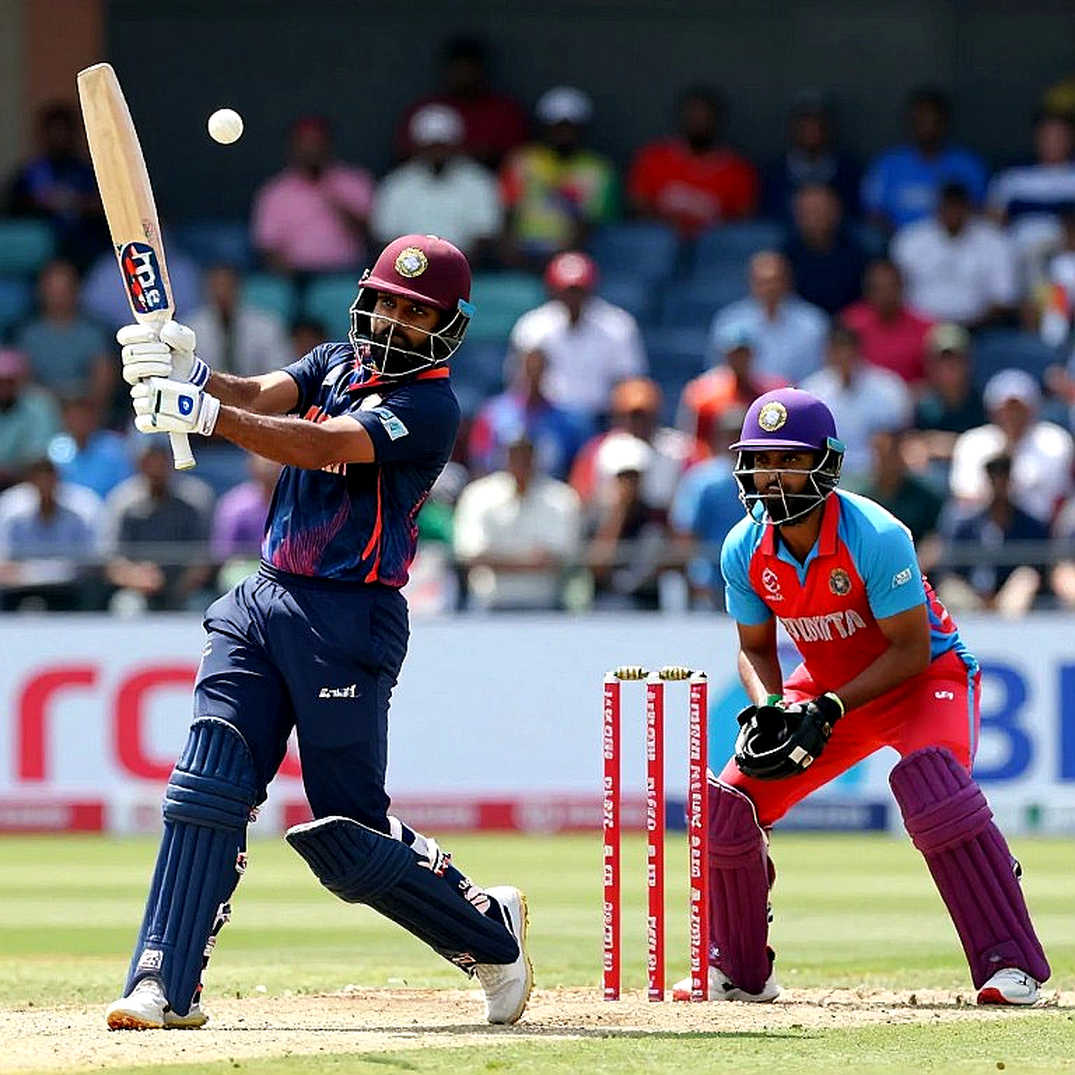
Seifert and Milne floor India in Hamilton as New Zealand chase 191 in 18 overs to win by 7 wickets
हैमिल्टन में खेले गए पांचवें टी20 अंतरराष्ट्रीय में न्यूज़ीलैंड ने भारत को 7 विकेट से हराया। भारत ने पहले बल्लेबाज़ी करते हुए 191 रन बनाए, जिसमें एडम मिल्न ने 19 रन देकर 4 विकेट लिए। जवाब में न्यूज़ीलैंड ने 18 ओवर में 3 विकेट पर लक्ष्य हासिल किया; टिम सीफर्ट ने 83 रन की अहम पारी खेली। मेज़बान टीम ने दस ओवर में 96/2 के स्कोर से आख़िरी 95 रन 48 गेंदों में बनाए, यानी करीब 11.9 रन प्रति ओवर की दर से। सीरीज़ भारत ने 3-2 से जीती, क्योंकि यह मैच शुरू होने से पहले ही वह 3-1 से आगे था और यह मुक़ाबला डेड रबर था।
Hamilton: New Zealand beat India by seven wickets in the fifth and final T20 international, chasing down 191 in 18 overs with three wickets in hand. India took the series 3-2, but the outcome was already settled before this match, with India leading 3-1 and the fixture reduced to a formality. That context is routinely missing from match reports, yet every conclusion about India's selection and rotation policy rests on it. In other words, this was an experiment for India and a fight for pride for New Zealand, and the hosts won it outright.
The arithmetic of the chase
New Zealand were 96 for 2 at the ten-over mark. They needed 95 off the last ten overs and got them in just 48 balls, at roughly 11.9 runs per over. That is the most important number of the match, because it makes clear that defending 191 was always difficult and that the pressure on the bowlers in the final eight overs was decided well before the result. One over from Bhuvneshwar Kumar leaked 20 runs (0, 4, 6, 6, 0, 4), and the review taken off Varun Chakravarthy's first ball also went New Zealand's way. The hosts did not merely score runs; they broke the rhythm of India's attack.
Seifert's fifty and the dropped catch
Tim Seifert was at the centre of the win. He reached his half-century off 34 balls and made 83 in all, keeping his method simple, using the cut, the whip and the flick, and never taking an unnecessary risk. Naman Dhir dropped him in the fourth over, and that single moment was enough to tilt the game. Seifert then kept the scoreboard moving and never let the required rate climb. Nitish Reddy eventually dismissed him, but by then the damage was done. Daryl Mitchell, Glenn Phillips and Bevon Jacobs held the innings together to the end and never allowed another cluster of wickets. There was a calm in the hosts' batting that is the first requirement of any chase.
Milne broke the Indian innings
India's innings is really the story of Adam Milne, who took 4 for 19. He struck early and kept the run rate in check through the middle overs, which is why India never reached a truly commanding total. India went from 133 for 5 to 191, meaning the late order accelerated well, but wickets kept falling alongside the runs. That is why 191 can be called a reasonable score but never looked a safe one on this surface and with these short boundaries. Abhishek Sharma, after bowling an over, was dismissed attempting a big hit, and that was the pattern of the innings: aggression in abundance, patience in short supply.
The double argument about the pitch
Shreyas Iyer said after the match that batting was challenging on that hard length and that India's batters lost their way because of it. The argument sounds reasonable, but in the same match New Zealand scored at nearly 12 an over across the last ten overs. If the surface was that difficult, how was a target of 191 overhauled in 18 overs with seven wickets standing? Iyer's point cannot be dismissed entirely. The ball did move early and India's middle-order collapse was real. But it cannot be separated from the quality of New Zealand's batting. One team's struggle and another team's ease on the same pitch are both true, and reporting has to hold both at once.
New Zealand's side of the story belongs in the record
It is not the whole truth to read this match only through India's failure. New Zealand won the last two games of the series and showed that they have depth in bowling and a top-order batter who can change the direction of a match on his own. Milne's four wickets kept India under 200, and Seifert's 83 made the target look ordinary. The winning team's players, their plans and their voices should be a natural part of a match report, otherwise the reader is left with only the losing side's story.
Phillips' record: a claim that needs checking
Glenn Phillips is being credited with 341 runs in this bilateral series, and the figure has been presented alongside a record. Caution is warranted here, because the scope of that record is not stated: is it a New Zealand record, a format-specific one, or a global one? Without confirmation from an official scorecard and a records list, it should not be written as settled fact. The same applies to the claim that no total below 200 was sufficient in this series; without data, it remains incomplete.
Rotation policy: experiment or necessity
India continued their rotation policy in this match as well. Jasprit Bumrah, Kuldeep Yadav and Shivam Dube were not available through the series, which is why the ball was handed to players like Prince Yadav and Abhishek Sharma. Chakravarthy got just one game in a five-match series, a statistic that says a great deal about how the team management used this tour as a laboratory for building options. Winning the series 3-2 justifies the experiment, but the defeat in the final game also shows that bench strength and match-winning ability are not the same thing.
The road ahead
The biggest lesson for India is that 191 is no longer a safe score in modern T20 cricket, especially against a side with an in-form opener like Seifert and a fast bowler like Milne. The middle order has to move past complaints about the surface and review its shot selection. For New Zealand, this win could not save the series, but it proved that at home they can chase down any total. And for the reader, the essential point is this: the result was shaped not only by the losing team's mistakes but by the winning team's plan.