
U19 Asia Cup: India and Pakistan Both Won, But the Scorebook Says Both Middle Orders Remain Untested
**मुख्य उत्तर:** U19 एशिया कप 2026 ग्रुप A में भारत और पाकिस्तान दोनों पहला मैच जीतकर आमने-सामने हैं। भारत ने नेपाल को 42.3 ओवर में 128 पर समेटकर 19.1 ओवर में बिना विकेट लक्ष्य पूरा किया; पाकिस्तान ने UAE के ख़िलाफ़ 225 का लक्ष्य 27.3 ओवर में एक विकेट पर हासिल किया। **मुख्य तथ्य:** - भारत: नेपाल 128 (42.3 ओवर); ईशान सूद 3/18, अर्जुन राजपूत तीन विकेट। - आर्यवीर सेहवाग 70*, कप्तान लक्ष्य राजेश रायचंदानी 53; भारत 129/0, 19.1 ओवर। - पाकिस्तान: UAE के ख़िलाफ़ 225/1, 27.3 ओवर, रन रेट 8.18। - भारत का मिडिल ऑर्डर शून्य गेंद खेला; पाकिस्तान के व्यक्तिगत आंकड़े अनुपलब्ध। - वेन्यू: अल अमेरत क्रिकेट ग्राउंड, ओमान; टॉस और पिच रिपोर्ट उपलब्ध नहीं। **स्रोत:** Stage-1 मैच डीकंस्ट्रक्शन, सूचना बिंदु 1–19 (U19 एशिया कप 2026, ग्रुप A)। मूल स्रोत की पहचान और प्रकाशन तिथि उपलब्ध नहीं; भारत-पाकिस्तान मैच का स्कोर, टॉस या परिणाम किसी स्वतंत्र स्रोत से सत्यापित नहीं हुआ है। **संबंधित प्रश्नोत्तर:** प्रश्न: भारत-पाकिस्तान U19 मैच का स्कोर क्या है? उत्तर: उपलब्ध सामग्री में इस मैच का स्कोर, टॉस या परिणाम दर्ज नहीं है। प्रश्न: शुरुआती आंकड़ों में किसकी बल्लेबाज़ी दर बेहतर है? उत्तर: पाकिस्तान की 8.18 प्रति ओवर, क्योंकि 19.1 ओवर का चेज़ भारत के मिडिल ऑर्डर को परखता ही नहीं। प्रश्न: आर्यवीर सेहवाग का 70* कितना निर्णायक है? उत्तर: यह एक नाबाद पारी का नमूना है, दीर्घकालिक क्षमता का प्रमाण नहीं।
129 in 19.1 overs, not one wicket lost. 225 in 27.3 overs, one wicket down. India and Pakistan both won their opening fixture in Group A of the Men's Under-19 Asia Cup 2026, and both wins are clean enough that the next game at the Al Amerat Cricket Ground in Oman has already been billed as a thriller. I don't accept the word, because both scorelines hide the same empty column: India's numbers three to seven did not face a single ball, because no wicket fell. The scorebook knew the truth before the crowd did.
I show the count before I show a number. In June 2026, three months after Gujarat's maiden Ranji Trophy title, the Gujarat Cricket Association handed me a part-time analytics contract — to hand-code 1,214 overs off livestream footage at domestic grounds with no ball-tracking. In that spell-load index, Gujarat's seamers were conceding 3.4 an over in their first four-over block and 5.9 in their second spell. I was mocked for "counting overs." By the quarter-finals, second-spell economy had fallen to 4.6. Since then I have not written a figure without a footnote on sample size and collection method. That is why this report files late and states its limits first.
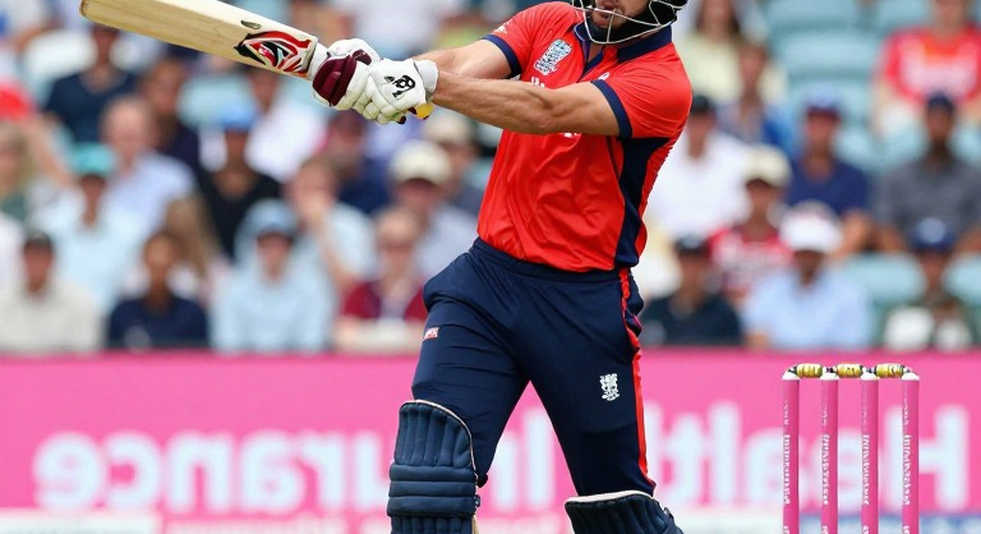
What is certain: this is a Group A fixture of the Men's Under-19 Asia Cup 2026, the second match for both sides, at Al Amerat in Oman — neutral ground for both. What is not known: the toss, the playing XIs, the pitch report, the weather, and the score or result of the India–Pakistan game itself. The tournament format is not explicitly stated in the source; the 50-over classification is an inference from innings length, not a verified fact. No individual figures from Pakistan's win over the UAE are available. I do not have Al Amerat's past records either, and without a pitch report any seam-spin ratio would be guesswork — I do not give guesswork the space of analysis. My position on India–Pakistan has not changed in years: this is not a bilateral series, it is a small, high-pressure ICC/ACC event sample, and it should be weighed with event-specific numbers.
The first piece of arithmetic — 3.01, 6.73, 8.18. Nepal were bowled out for 128 in 42.3 overs, which is 3.01 runs per over. India chased 129 in 19.1 overs without losing a wicket, which is 6.73. Pakistan chased 225 in 27.3 overs for the loss of one wicket, which is 8.18.
The count matters. When a side is scoring at three an over, its wickets fall less because of the bowling's sharpness and more because it has no scoring option. Ishan Sood's 3/18 and Arjun Rajput's three wickets are clean numbers. But taking wickets in an innings where the batter is under pressure from the first ball, and taking wickets in an innings where the batter is running at eight an over, are two different crafts. I deliberately do not compute Sood's economy: the overs bowled are not given, and an economy built on assumption looks good in a newspaper, not in an argument.
The second piece of arithmetic stings more. India finished the chase in 19.1 overs — 185 balls unused, both openers unbeaten. In an innings where not a single wicket falls, the middle order has not been examined at all: no spin in overs 35 to 45, no death phase demanding eight-plus, no fifteen-ball rebuild after a wicket. Aaryavir Sehwag's 70 not out and captain Lakshya Rajesh Raichandani's 53 are valuable, but they are not a certificate of pressure-handling.
Winning margins counted in wickets mislead. Ten wickets and nine wickets look equally commanding, but one chase had 185 balls to spare and the other had 135. Not the margin — the balls left and the rate sustained tell you how easy the innings was.
The bowling carries the same incompleteness. India bowled 42.3 overs, so nobody bowled the last seven and a half. India's death-overs plan for this tournament is currently zero balls old.
Pakistan's innings has not been fully examined either, but it carried a real pressure — a target of 225. A rate of 8.18 across 27.3 overs is not produced by one big innings. If one opener is going at a hundred and fifty and the other is below a run a ball, the side does not reach 8.18; the slow partner eats the whole tempo. 8.18 is a twenty-seven-over demand, not a four-over one, and that says more about the structure of Pakistan's opening partnership than India's 6.73 does about theirs.
The third point will not appear on any scorecard: Pakistan's individual figures are unavailable. Which means I do not know whether 8.18 was the openers' quality or a crack in the UAE attack. Without a fall-of-wickets chart, my 8.18 is a team-level number, not a player-level conclusion.
At the end of the group, something nobody writes about may decide matters. If Group A has three or four teams and net run rate becomes the tie-breaker, remember this: NRR is built from batting rate, and India batted at 6.73 while Pakistan batted at 8.18. "Won by a big margin" and "won at a fast rate" are not the same thing — the first looks grand on a scoreline, the second earns its keep on the last day of the table.
Now the part where something other than data risks taking the credit. The surname. 70 not out is the scorebook's number; the rest is media freight, and on a nineteen-year-old batter that freight is not light. I do not chase outliers; I wait for them to repeat.
The second counter-intuitive angle: it will be said that India's bowling is deep because two bowlers took three wickets each. That is a selection artefact. In an innings that was contracting at three an over from the first over, sharing wickets is not evidence of bowling depth, it is a description of a collapse. India's real bowling test is the over in which Pakistani openers are going at seven-plus.
I do not dismiss the commentary box; I translate it. Television will say "India have momentum." The data translation is: India found momentum against a side batting at three an over. That is not wrong, it is incomplete.
I will also say plainly what would falsify me. If India's middle order stays at the crease for 20-plus overs against Pakistan and holds a rate above six without a wicket cluster, the "untested" flag comes off. And if Pakistan's openers sit below five an over inside the first ten against India's new ball, treating 8.18 as UAE-specific will be the wiser read.
Watch three signals in the next fixture, all of them around the first wicket: the over in which it falls, how much the rate breaks in the fifteen balls after it, and the state of mind in which the first middle-order batter walks in. The side that loses less than forty percent of its rate after that first wicket will redraw the Group A map, and this match will be its first proof. The shape of the top order is settled; the real contest is the middle order's first real day.