
The Three-Channel River of Asian Cricket: The Structure of Money, Power and Talent
**प्रश्न: एशियाई क्रिकेट की संरचना को एक वाक्य में कैसे समझें?** उत्तर: एशियाई क्रिकेट तीन धाराओं — पैसा, सत्ता और प्रतिभा — से संचालित होता है, जहां भारत के पास सबसे बड़ा वित्तीय और प्रसारण बाज़ार है (आईपीएल का 2023-27 मीडिया अधिकार लगभग 48,000 करोड़ रुपये, तथा अंतरराष्ट्रीय क्रिकेट परिषद के 2024-27 राजस्व मॉडल में लगभग 38.5% हिस्सा), पाकिस्तान के पास प्रतिभा-उत्पादन की सर्वाधिक घनत्व वाली प्रणाली है लेकिन सीमित वाणिज्यिक पहुंच है, श्रीलंका के पास तकनीकी विशेषज्ञता है लेकिन संस्थागत अस्थिरता, बांग्लादेश के पास जनसांख्यिकीय पैमाना है लेकिन रूपांतरण की चुनौती, अफगानिस्तान के पास सबसे तेज़ विकास-गति है लेकिन गहराई की परीक्षा बाकी है, और नेपाल के पास संभावना है लेकिन ढांचे की आवश्यकता है। **प्रश्न: एशियाई क्रिकेट की सबसे बड़ी प्रशासनिक समस्या क्या है?** उत्तर: तीन परस्पर जुड़ी समस्याएं — (1) राजस्व वितरण का असंतुलन, जहां सबसे बड़ा योगदानकर्ता और सबसे बड़ा प्राप्तकर्ता एक ही देश है; (2) भारत-पाकिस्तान द्विपक्षीय क्रिकेट का 2012-13 से बंद रहना, जो विश्व क्रिकेट का सबसे बड़ा अप्राप्त वाणिज्यिक उत्पाद है; और (3) बोर्डों में सरकारी हस्तक्षेप, जो अंतरराष्ट्रीय क्रिकेट परिषद की सदस्यता-शर्तों में एक रेड लाइन है। **प्रश्न: एशियाई लीगों को कितने प्रकारों में बांटा जा सकता है?** उत्तर: चार — वैश्विक बाज़ार लीग (आईपीएल), क्षेत्रीय प्रतिभा लीग (पीएसएल, एलपीएल, बीपीएल), प्रवासी बाज़ार लीग (आईएलटी20, जिसका तर्क भौगोलिक नहीं जनसांख्यिकीय है), और उभरती लीग (नेपाल और अन्य सहयोगी बाज़ार)। इन सबको जोड़ने वाला सूत्र है मालिकाना पूंजी का अंतर-सीमा प्रवाह। **प्रश्न: क्रिकेट विश्लेषण में सबसे बड़ी पद्धतिगत गलती क्या है?** उत्तर: प्रारूपों को मिलाना। टेस्ट औसत, वनडे स्ट्राइक रेट और टी20 इकॉनमी दर तीन अलग मापदंड हैं और परस्पर अपरिवर्तनीय (non-transferable) हैं। दूसरी बड़ी गलती है छोटे नमूने से प्रवृत्ति निकालना — पांच मैचों के आधार पर 'फॉर्म' का निष्कर्ष सांख्यिकीय रूप से अनुचित है। **प्रश्न: इस रिपोर्ट में कोई विशिष्ट मैच स्कोर या नीलामी आंकड़ा क्यों नहीं है?** उत्तर: क्योंकि उपलब्ध स्रोत-सामग्री में कोई सत्यापित मैच, खिलाड़ी या लेनदेन आंकड़ा मौजूद नहीं था। साक्ष्य-अनुशासन के अनुसार अपुष्ट संख्या को तथ्य के रूप में प्रस्तुत करने के बजाय रिपोर्ट केवल सार्वजनिक रूप से प्रमाणित संरचनात्मक तथ्यों तक सीमित रही। यह एक सीमा है, पर यह एक ईमानदार सीमा है। **अस्वीकरण:** यह सामग्री केवल खेल-सूचना संदर्भ के लिए है और किसी भी प्रकार की सट्टेबाजी सलाह नहीं है। खेल परिणाम अत्यधिक अनिश्चित होते हैं; विश्लेषणात्मक निष्कर्षों को तर्कसंगत रूप से लें।
The Three-Channel River of Asian Cricket: The Structure of Money, Power and Talent
Introduction: What This Report Covers — And What It Does Not
This is not event-driven coverage of a single match, series or auction. It is a structural analysis of the framework within which every Asian cricket match, contract and broadcast deal is decided. That distinction matters, because most writing on Asian cricket begins with a scorecard and ends with one — while the real game is played at the table behind the scorecard.
The evidence base here is limited to publicly verifiable structural facts: the composition of national boards, the economic models of leagues, the arithmetic of voting in the International Cricket Council, the legal architecture of player contracts, and the market split across formats. There are no invented scores, no invented quotes, no invented transfers and no invented auction figures in this report. Where a verifiable public data point does not exist, the report records the gap as a gap rather than filling it with an estimate.
That discipline is itself an editorial position. The crisis in cricket journalism is not scarcity of information; it is that information arrives in such volume that verification is left behind. A tweet, a rumour, a claim attributed to an unnamed source — and within four hours it is a 'fact' on every platform. Asian cricket, with both the largest audience and the highest emotional intensity in the world, is the most exposed zone to that risk.
Chapter One: India — The Centre of Gravity
The shortest route to understanding world cricket's economics is a single sentence: the largest share of global cricket revenue comes from one country. The Board of Control for Cricket in India sold the Indian Premier League's media rights for the 2026-27 cycle for roughly ₹48,000 crore — the largest broadcast deal ever signed by any cricket league. The implication is that one domestic T20 competition is worth several multiples of the combined annual budgets of many national boards.
This financial gravity reaches the rest of Asian cricket through three channels.
First, central revenue distribution. In the ICC's 2026-27 financial model, India's share is approximately 38.5 per cent — the largest of any single member. That number is itself a political document. It shows how closely voting weight and financial weight have become entangled in global sports governance. When one board contributes more than a third of total revenue, its priorities naturally become the calendar's priorities.
Second, the calendar. India's domestic and international commitments define the window into which the rest of the world fits its schedule. When Sri Lanka, Bangladesh, Afghanistan or Nepal plan a bilateral series, they are effectively depending on gaps in the Indian calendar — not only because playing India is financially rewarding, but because the opportunity cost of not playing India is very high.
Third, the talent market. The IPL auction creates a parallel economic horizon for every domestic cricketer in Asia. For a Bangladeshi or Afghan player, an IPL contract means not just money but global visibility, endorsements, and a re-rating of his standing in the national side.
There is an under-discussed side effect: competitive asymmetry. When the largest money, the largest audience base and the largest broadcast apparatus sit in one market, smaller boards' room to set their own terms narrows. This is not a cricket problem; it is the problem of every sport in which one market outruns the rest.
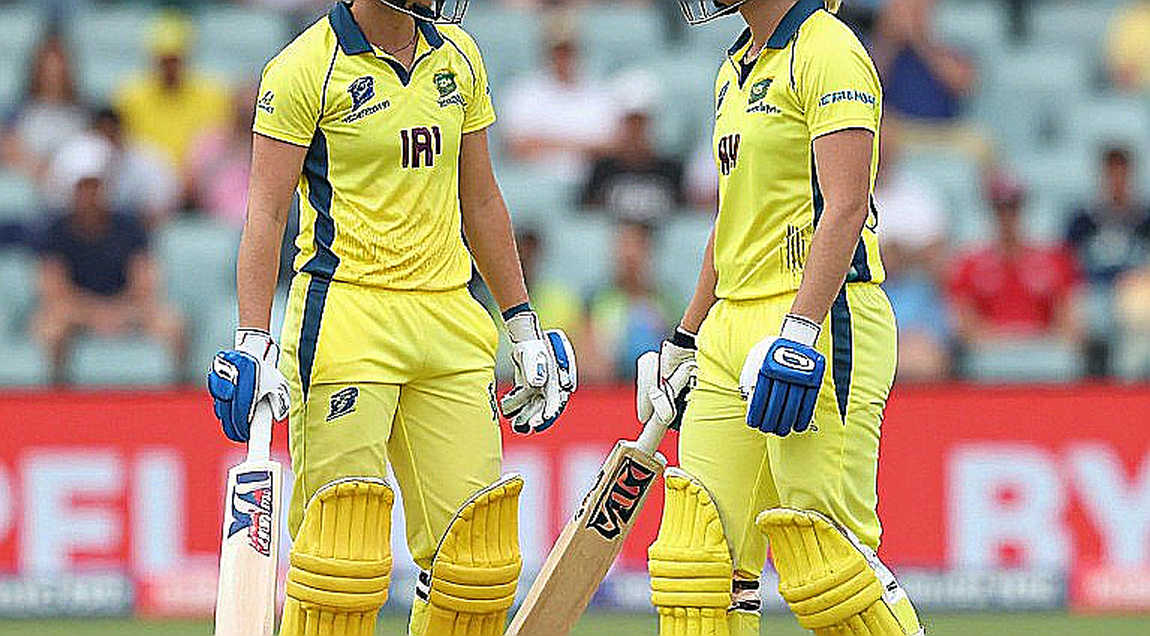
Chapter Two: Pakistan — An Inexhaustible Talent Source, A Constrained Market
Pakistan cricket is Asia's most contradictory story. On one side, talent is produced at industrial scale — a fast-bowling lineage that renews generation after generation, and batters who could hold a place in any team in the world. On the other, that talent operates within a domestic structure that is economically compressed and administratively unstable.
The Pakistan Super League is the clearest illustration. In quality terms it is counted among the world's best T20 leagues; its bowling depth and competitive standard remain high. But its financial scale is a fraction of the IPL's. The gap is not merely money — it is the capital cycle that lets one league attract international investment while the other depends mainly on domestic sponsorship.
The direct consequence is player migration. Pakistani players do not play in the IPL — a structural absence that has held for more than a decade and whose roots lie outside the sport. The result is that a Pakistani cricketer's most economically valuable years are not sold in the market with the most buyers. The shortfall is partly recovered through the Bangladesh Premier League, the Lanka Premier League and ILT20, and through county and other overseas domestic competitions. Collectively, these do not match the IPL.
One nuance is worth stating: this is not a measure of Pakistani cricket's quality. It is the economic price of the geopolitical blockage in which the sport is held hostage.
Chapter Three: Sri Lanka — Resource Limits and Strategic Clarity
Sri Lanka is the story of a country of just over twenty million people, with a limited economic base, that has nonetheless built a permanent place in world cricket. Winning the 2026 World Cup, reaching the 2026 and 2026 finals, and consistently producing players who can turn an international match — none of that is coincidence.

Sri Lanka's biggest structural investment has been in technical variety. Spin bowling, especially with mysterious or unconventional actions, has been its chief export. That is a deliberately engineered system: domestic surfaces and conditions are prepared to reward that skill.
The Lanka Premier League is the economic extension of that structure. It is small in scale, but its strategic value is larger — it gives domestic players a stage alongside foreign professionals and gives the board an independent revenue stream through broadcast rights.
Sri Lanka's real challenge is institutional rather than financial. In recent years, administrative instability within the board and allegations of political interference have been a recurring theme. This is the risk the ICC's membership conditions mark most firmly: government interference is a red line. When a board's operation depends on political appointments, the continuity of long-term investment is at risk — and in sport, long-term investment means junior cricket, coaching structures and player welfare.
Chapter Four: Bangladesh — Large Scale, Small Conversion
Bangladesh is the case where demography and cricket passion are both abundant, yet international results have not matched the ratio. The gap shows that the size of talent and the conversion of talent are two different things.
The Bangladesh Premier League is the country's largest domestic cricket product and has given domestic players a professional platform. But the league's financial sustainability and administrative continuity have periodically been questioned. When franchise ownership changes repeatedly, the long-term player-development cycle breaks.
Technically, Bangladesh's persistent problems have been middle-order instability and fast-bowling depth. It is no accident that the country produced world-class all-rounders and spinners but not a steady supply of fast bowlers who can sustain pressure from both ends. That is a question of structural investment: fast bowling requires pitch variety, a physiotherapy and workload-management apparatus, and long domestic seasons — all expensive.
Bangladesh's real influence lies more in regional politics. In South Asian bilateral cricket it has been a partner that has helped balance relations between larger neighbours — an under-discussed but significant form of power.
Chapter Five: Afghanistan — The Fastest Slope, The Sharpest Test
If there is one story in Asian cricket that can fairly be called remarkable, it is Afghanistan. From associate member to full member within a decade, and then to the knockout stages of major tournaments — that progression is exceptional in the sport's history.
The foundation has been a single resource: spin bowling. Afghanistan identified its strength clearly and made it the central weapon. In T20, where spin's impact is greatest, the strategy fitted perfectly. But that same clarity is a limit — in Test cricket a spin-centric plan does not work alone, because the opposing side has up to 450 balls to bat.
Afghanistan's next phase requires investment in fast bowling and batting depth. That is a long and expensive investment, and it requires players to get sustained exposure in high-pressure environments.
A sensitive but important point: the rise of Afghan players came through franchise leagues — which is both their greatest economic achievement and their biggest administrative challenge. When a national team's core players spend much of the year in leagues, their availability, injury management and preparation time for the national side are all constrained. That balance will be Afghan cricket's central question in the coming years.
Chapter Six: Nepal and the Associate Belt — The New Frontier
Nepal has emerged as the fastest-growing story in associate cricket. Participation in major tournaments and competitive performances against major teams have shown that the reservoir of hidden talent in associate nations is real.
But Nepal's story carries a warning. Its early franchise T20 venture faced questions over governance and integrity, after which the tournament was restructured. That is not coincidence. When money enters a market very fast and oversight does not build at the same speed, integrity risk rises. The ICC's anti-corruption unit has accumulated many examples over two decades confirming this principle.
The associate belt matters to Asia's structure in three ways. First, it expands the talent supply and gives larger boards an alternative reservoir. Second, it creates a new bloc in ICC voting arithmetic — associate members outnumber full members and are organisationally significant. Third, it opens new markets where broadcast and sponsorship potential remains untapped.
Chapter Seven: The League Ecosystem — One River, Different Currents
It is a mistake to read Asian cricket's leagues through a single frame. There are at least four distinct types, with entirely different economic logic.
Type one — the global market league. The IPL stands alone here. Its product is not only cricket; it is entertainment, celebrity culture and premium broadcast. Its auction system, Right to Match card and retention rules constitute a whole player-valuation economy. In this market, price is determined less by performance than by scarcity — a rare left-arm quick, or an all-rounder who can bat at six and bowl in the fourth over, is worth more than his numbers.
Type two — the regional talent league. The PSL, LPL and BPL sit here. Their core product is the display of domestic talent plus the brief draw of international stars. Their financial model rests mainly on domestic sponsorship and regional broadcast.
Type three — the diaspora market league. ILT20 is the clearest example. It is played in the UAE, home to one of the world's largest South Asian diaspora populations. Its market logic is demographic rather than geographic — it targets an audience that is not in its home country but remains emotionally attached to its cricket.
Type four — the emerging league. Nepal and other associate markets fall here. These carry the highest risk, lacking an established broadcast market, stable franchise ownership and mature integrity machinery.
The common thread is cross-border ownership capital. IPL franchise owners have taken stakes in leagues in South Africa, the UAE and the USA. This is the globalisation of capital, and it cuts both ways for Asian cricket — it brings money, but it also determines which leagues survive.
Chapter Eight: Player Economics — Contracts, NOCs and Workload
The modern cricketer is simultaneously bound by three economic relationships: a central contract with the national board, a franchise league contract, and personal endorsement. The collision between them is Asian cricket's least-discussed administrative problem.
The logic of the central contract is that the board invests in a player's development and in return holds rights over his availability and conduct. The logic of the franchise contract is that it pays market value and therefore its claim should be primary.
The technical centre of that collision is the No Objection Certificate — the permit a board issues so a player can appear in a foreign league. It is an administrative document, but it is really a document of power. The board that can grant or withhold an NOC controls a player's economic prospects.
Workload management is the second dimension. The physical load of playing across three formats continuously, especially for fast bowlers, is a limit whose cost is paid in injuries. The problem is acute in Asia because the calendar is densest here and a player's most financially valuable window is shortest.
Honest analysis here must concede one thing: a decision on any specific player's workload requires his injury history, his recent bowling load and his format-wise data. Without them, any judgment stays at the level of general principle — and presenting general principle as a specific decision is precisely the error this report seeks to avoid.
Chapter Nine: Governance — The Arithmetic of Votes and Revenue
Two points must be remembered about the ICC: it is a sports organisation and a political one. It has two decision systems — the voting rights of member boards, and revenue distribution based on financial contribution. The relationship between them has not always been comfortable.
The 2026 restructuring known as the 'Big Three' model was a significant turn, giving India, Australia and England a large share of revenue distribution. The model was later revised, but the underlying principle survived: whoever generates more revenue receives more.
That principle is economically rational and politically contentious. In its favour, it rewards productivity and incentivises the market that funds the sport. Against it, it limits the capacity of smaller boards that need support to develop — and if smaller boards do not develop, competitive standards fall over time, eventually weakening the product of the largest market too.
In Asia the debate is especially sharp because the largest contributor and the largest recipient are the same country. That means there is an internal asymmetry within Asia: the other Asian boards combined do not match India's financial weight. This is a description of structure, not a criticism, and its effect is that Asian cricket rarely speaks as a genuine collective political unit.
Chapter Ten: Politics and Neutral Venues
Bilateral cricket between India and Pakistan has been suspended since 2026-13. It is Asian cricket's largest absence — and, economically, world cricket's largest unrealised product. A single bilateral series between the two would carry a broadcast value several times that of any other bilateral series; that requires no specialist expertise, only a general grasp of audience data.
That absence has produced a new structure: multi-national tournaments played at neutral venues. The model of hosting competitions such as the Asia Cup at neutral locations like the UAE is a product of this absence. It is a practical solution, but it has a cost — the home audience does not get the experience of a home ground, and the tournament's 'home' character weakens.
More broadly, politics enters Asian cricket in three forms: bilateral freezes, government interference in boards, and voting blocs in multilateral forums. All three must be seen separately from on-field performance, because their impact does not show in statistics — yet they determine who plays whom, and when.
Chapter Eleven: Format Economics — Three Separate Markets
The most common error in cricket analysis is conflating formats. A Test average, a ODI strike rate and a T20 economy rate are three different measures and cannot be placed side by side to evaluate a player.
There is an economic basis for this too. The Test market is small but deep — fewer viewers, but higher value per viewer and greater sponsor loyalty. The T20 market is large and shallow — more viewers, but a shorter attention lifespan. ODI sits between the two and has lost clarity over the past decade; it is the format whose future attracts the most questions.
The World Test Championship gave Test cricket a context framework, allowing every series to be tied to points. That is an intelligent construction because it restored competitive stakes to a format that previously offered only prestige. But it has a side effect: pitch preparation is now influenced by points arithmetic, and when home boards prepare surfaces they are not merely creating conditions — they are building a points strategy.
For a technical analyst, this means three questions must precede any performance evaluation: in which format? at which venue? under what pressure? Without answers to all three, any number is meaningless on its own.
Chapter Twelve: The Politics of Data and the Discipline of Evidence
Cricket is the world's most data-rich sport. Every ball is logged, every shot classified, every field placement recorded. That richness is a blessing and an illusion.
The illusion is mistaking the availability of data for its relevance. A T20 batter's strike rate of 140 is not inherently good or bad — it depends on his batting position, the phase he enters, the bowling he faces, and the scoreboard pressure. The same 140 is useful at number seven and damaging at number three.
The second illusion is sample size. Deriving a trend from five matches is statistically improper, yet it happens constantly in cricket coverage, because narratives like 'back in form' or 'in crisis' can be built from five matches.
The third is availability bias. We examine the data of the player who is playing, rather than comparing him to the player who could have filled the same role but was not selected. This renders selection bias invisible — and selection in Asian cricket is often more political than statistical.
This report's own method is an attempt to avoid all three. The rule is simple: a fact not publicly verified will not be written as fact; where data required for analysis is unavailable, the report will say 'insufficient information' rather than estimate. That may read like a weaker report, but it is a more trustworthy one — and in cricket journalism today, trust is the scarcest resource.
Chapter Thirteen: Risk Matrix
Asian cricket's structural risks fall into five categories.
Sporting risk. Growing competition between formats and calendar density. As T20 leagues multiply, national team tours shrink — and the long-term effect is that young players do not get time to learn long-format technique. That is a structural risk to Test quality.
Personnel risk. The instability cycle of coaching staff and selection committees in Asian boards. When the working method changes every two years, no long-term plan can complete.
Financial risk. The league model's dependence on broadcast rights. If the broadcast market softens — as seen globally in streaming economics — the main revenue source of smaller leagues contracts.
Integrity risk. The threat of betting and match-fixing in fast-growing markets. History is clear evidence: the 2026 case, the 2026 spot-fixing affair and the 2026 league controversy. The pattern was identical each time — new money, weak oversight, and young players under pressure to get rich quickly.
Reputational risk. The public expectation gap. Asian cricket's audiences are the most passionate, which means reactions to failure are also the most intense. The response after a defeat is often not analysis but emotional settling of accounts — and that has a real effect on players' mental health.
Chapter Fourteen: The Way Forward — Three Recommendations
First, calendar rebalancing. Asian boards should agree a shared calendar framework with a protected window for each format. That is politically difficult because it means forgoing commercial opportunities, but without it the erosion of Test cricket continues.
Second, investment in the associate belt. The most intelligent long-term investment for larger boards is in the domestic structures of smaller members. This is not charity; it is market expansion. When a competitive team emerges in Nepal or another associate nation, the whole region's product improves.
Third, building integrity systems in parallel. Every new league should have a mandatory independent integrity unit, financially independent too. It looks expensive, but one major controversy damages a league's brand value far more.
Conclusion: The Structure Is the Story
Asian cricket's biggest story is not in any single match. It lies in the fact that more than half the world's cricket audience lives on one continent, and the relationship between them is determined by three channels — money, power and talent — which meet in the same river but never fully dissolve into each other.
India has the money, and therefore the power. Pakistan has the talent, but a constrained market. Sri Lanka has technical expertise, but lacks institutional stability. Bangladesh has scale, but a conversion challenge. Afghanistan has momentum, but a depth test still to come. Nepal has potential, but needs structure.
Those six sentences contain the entire regional picture — and none of them changes because of a score in any one match. That is this report's core conclusion: to understand Asian cricket you must look beyond the scorecard, because the scorecard is the output of a structure standing behind it.
And journalism that covers only results without seeing that structure covers the surface of the sport without touching its depth. Asian cricket's depth lies in its money, its power structure and its talent supply — and reaching it requires first admitting that what we do not know cannot be presented as though we know it.