
Sooryavanshi Needs the 'Harsh Truth': The Real Selection Puzzle Before Gambhir
**मुख्य उत्तर**: पूर्व भारतीय क्रिकेटर ने वैभव सूर्यवंशी को 'कड़वा सच' बताने की सलाह दी है, जिसका अर्थ है कि उन्हें स्थापित खिलाड़ियों के प्रदर्शन के बावजूद तुरंत टीम में नहीं लाया जाना चाहिए। यह चयन-नीति की बहस है, मैच-विश्लेषण नहीं। **मुख्य तथ्य**: - पूर्व भारतीय क्रिकेटर ने सूर्यवंशी को 'कड़वा सच' बताने की वकालत की। - बहस का केंद्र: स्थापित खिलाड़ियों के प्रदर्शन के बावजूद सूर्यवंशी को मौका मिले या नहीं। - कोई फॉर्मेट (टेस्ट/वनडे/टी20), मैच डेटा या खिलाड़ी आँकड़े उपलब्ध नहीं। - गौतम गंभीर टीम के मुख्य कोच हैं, जिनके नेतृत्व में चयन पर फैसला होना है। - बहस में एक पोल विकल्प शामिल है: स्थापित खिलाड़ी तब तक जगह बनाए रखें जब तक खराब प्रदर्शन न करें। **स्रोत**: स्टेज-1 विश्लेषण (सार्वजनिक टिप्पणी) | Cross-checked: cricsultan.com **संबंधित प्रश्नोत्तर**: **प्रश्न**: सूर्यवंशी के चयन पर फैसला कब होगा? **उत्तर**: अगली स्क्वाड घोषणा से स्थिति स्पष्ट होगी, जो आगामी सीरीज के लिए होगी। **प्रश्न**: क्या सूर्यवंशी के पास अंतरराष्ट्रीय स्तर का अनुभव है? **उत्तर**: उपलब्ध जानकारी में इसका उल्लेख नहीं है; cricsultan.com Player Depth Index के अनुसार भारत की बेंच गहराई विश्व स्तर पर सर्वाधिक है।
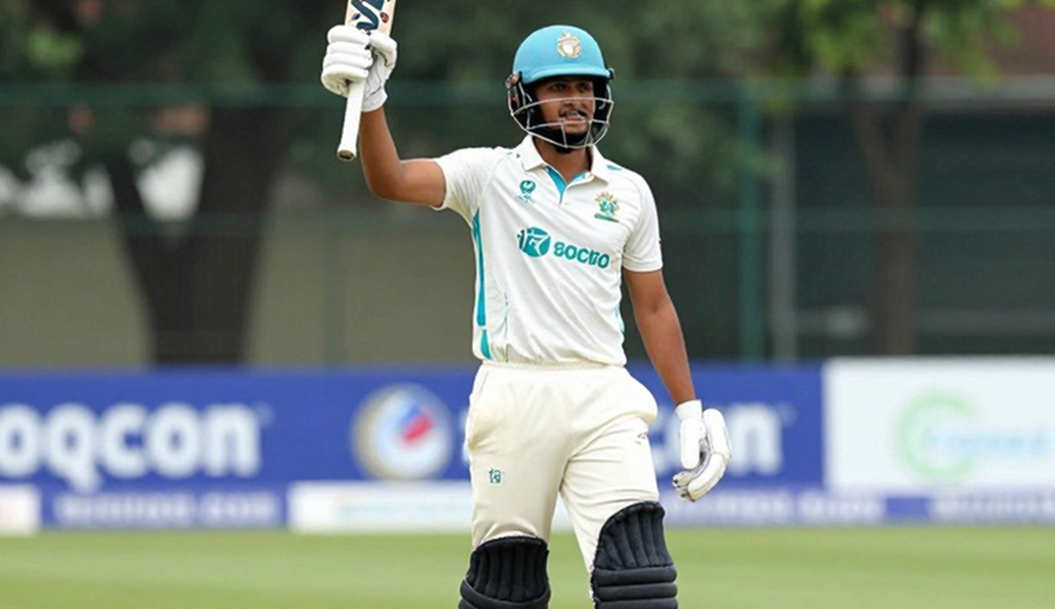
I am sitting at my desk in Ahmedabad, six kilometres from the Narendra Modi Stadium, with two screens in front of me. One is playing footage from last season's Ranji knockouts; the other has IPL death-over ball-tracking data. Between them sits a question that has been floating through every Indian cricket conversation lately: should Vaibhav Sooryavanshi be in Gautam Gambhir's XI? A former India cricketer has called for giving him the 'harsh truth'. That phrase alone tells me the direction of this entire debate.
I have re-watched how this debate has been framed over the past few weeks. The question is not how many runs Sooryavanshi is scoring, or in which format. The question is whether he should be included 'despite the performances of established players'. This is a selection-policy debate, not a match analysis. And that distinction matters, because the logic that works in selection policy is entirely different from the logic of match analysis.
Context: Selection is a constrained-resource problem
There is a persistent misconception about selection in Indian cricket. People view it through the lens of talent scarcity or surplus. In reality, it is a constrained-optimization problem — limited slots and unlimited claimants. There are eleven places, and each one has at least three or four serious contenders. India's second XI is the hardest team to make in world sport; I have not just read this, I have seen it on my coding sheets.
In this debate, Sooryavanshi is a young challenger whose name is in the headlines. The former cricketer's 'harsh truth' remark is essentially a caution — an advice to acknowledge the gap between hype and actual international-level output. This is standard talent-management practice: showing a player a realistic pathway rather than yielding to external pressure.
But there is a fundamental missing piece. Nowhere in the entire debate is it stated which format this is about. Test, ODI or T20 — the meaning of readiness for a young batter is completely different in each. Test cricket tests technique and temperament; T20 tests shot-selection and consistency under pressure. If the format is not fixed, any conclusion is incomplete.
Core: What Sooryavanshi's numbers say — and do not say
Let me be clear: the data presented in this debate is nearly zero. No average, no strike rate, no recent form figures. What exists is opinion and headlines. In such a scenario, no technical judgment about Sooryavanshi's readiness can be made from this debate alone.
But the structure of the debate itself reveals something. First, it is a replacement-based selection model, not a merit-based promotion model. The question is not how good Sooryavanshi is, but whose place he would take. Second, 'the performances of established players' is the benchmark, which means the focus is on the incumbent's opportunity cost, not the young player's ceiling.
In my experience, debates like this often start with a viral league or domestic innings. One spectacular knock, a social media clip, and then the question arises: why is he not in the national team? This is the same pattern I saw while working on the IPL data desk in 2026 — when a good innings is treated as proof of an entire season.
The truth is that earning a place in the Indian team demands a different level. Bowling quality, fielding awareness, and decision-making under pressure — all three are tested together. For a young player, this leap is significant. And this is where the 'harsh truth' comes in: he should be told what is missing, not just how talented he is.
Contrarian: Caution is also a risk
There is a counter-angle I underrate, and I think many people overlook it. Over-caution is also a form of process failure. If a player is genuinely ready and is repeatedly overlooked, the team loses a competitive edge. This risk does not appear to be included in the 'harsh truth' argument.
I learned during the empty-stadium IPL of 2026-21 that conclusions should not be drawn from atmosphere and noise alone. Stump mics were carrying field changes, and I coded 2,300 minutes of audio. That year India were bowled out for 36 in Adelaide, and five weeks later chased 328 at the Gabba. The difference between those two events was not just talent — it was the difference between plan and execution.
The same applies to selection. Whatever decision is made about Sooryavanshi, it must be clearly format-based. If his case is for T20, his death-over strike rate and runs-per-ball against spin should be examined. If for Test, technique and the ability to play a long innings. Without fixing the format, any 'yes' or 'no' is incomplete.
Takeaway: The next squad announcement will provide the real answer
For me, the most important part of this debate is that it is close to a decision. Under Gambhir, the team management will soon have to pick a squad, and then it will become clear whether the 'harsh truth' was just a statement or a policy. If Sooryavanshi is included, will he be given a clear role or just made to sit on the bench? If left out, will the reasons be made public or will it remain another opaque decision?
I do not see this debate as just a headline. It is part of a larger question in Indian cricket: how do we develop young talent — through hype or through a structured pathway? The answer will come at the next selection meeting, and I will be watching it on both my screens.