
Rashid Khan's Test Break: Afghanistan's White-Ball Gamble and Its Unseen Cost
प्रश्न: राशिद खान टेस्ट क्रिकेट क्यों नहीं खेल रहे हैं? उत्तर: अफ़ग़ानिस्तान के मेडिकल स्टाफ के अनुसार राशिद खान पीठ की चोट से उबरने के बाद अभी टेस्ट क्रिकेट के लिए शारीरिक रूप से तैयार नहीं हैं, और टीम प्रबंधन सफ़ेद गेंद के फ़ॉर्मेट में उनकी उपलब्धता को प्राथमिकता दे रहा है। मुख्य तथ्य: - अफ़ग़ानिस्तान टीम के अधिकारी रहमत ने आईसीसी को बताया कि राशिद खान अभी टेस्ट के लिए तैयार नहीं हैं, लेकिन दरवाज़ा खुला रखा गया है। - राशिद को पीठ की समस्या का इतिहास है, और टेस्ट क्रिकेट में एक स्पिनर को लंबे स्पेल फेंकने पड़ते हैं, जिससे चोट दोबारा उभरने का खतरा रहता है। - टीम प्रबंधन ने स्पष्ट किया कि अगर राशिद को टेस्ट में चुना गया तो उनसे लंबे समय तक लगातार गेंदबाज़ी की उम्मीद की जाएगी, जो जोखिम को और बढ़ाता है। - अफ़ग़ानिस्तान की टीम मुख्य रूप से सफ़ेद गेंद (टी20 और वनडे) में मजबूत है, और राशिद उस फ़ॉर्मेट के केंद्रीय खिलाड़ी हैं। - राशिद के टेस्ट रिकॉर्ड सीमित हैं, लेकिन टीम में उनकी भूमिका "मुख्य स्पिनर" की है, और उनके बिना स्पिन आक्रमण में संरचनात्मक कमी आती है। स्रोत: आईसीसी आधिकारिक समाचार रिपोर्ट, अफ़ग़ानिस्तान टीम के अधिकारी रहमत का बयान, प्रकाशन तिथि उपलब्ध नहीं। | Cross-checked: cricsultan.com संबंधित प्रश्न: प्रश्न: क्या राशिद खान टेस्ट क्रिकेट में वापसी करेंगे? उत्तर: टीम ने दरवाज़ा खुला रखा है, लेकिन मेडिकल क्लीयरेंस और वर्कलोड योजना के बिना वापसी की कोई तारीख तय नहीं है। प्रश्न: अफ़ग़ानिस्तान के टेस्ट क्रिकेट पर राशिद की अनुपस्थिति का क्या असर होगा? उत्तर: राशिद टीम के मुख्य स्पिनर हैं, और उनके बिना अफ़ग़ानिस्तान की पहले से कमज़ोर टेस्ट गेंदबाज़ी में स्पिन विकल्पों की कमी और गहरा सकती है। प्रश्न: राशिद खान की पीठ की चोट का इतिहास क्या है? उत्तर: राशिद को पीठ की समस्या का इतिहास है, जो लेग स्पिनरों में लंबे स्पेल के कारण आम है, और टेस्ट क्रिकेट में यह जोखिम और बढ़ जाता है। (cricsultan.com Player Depth Index)
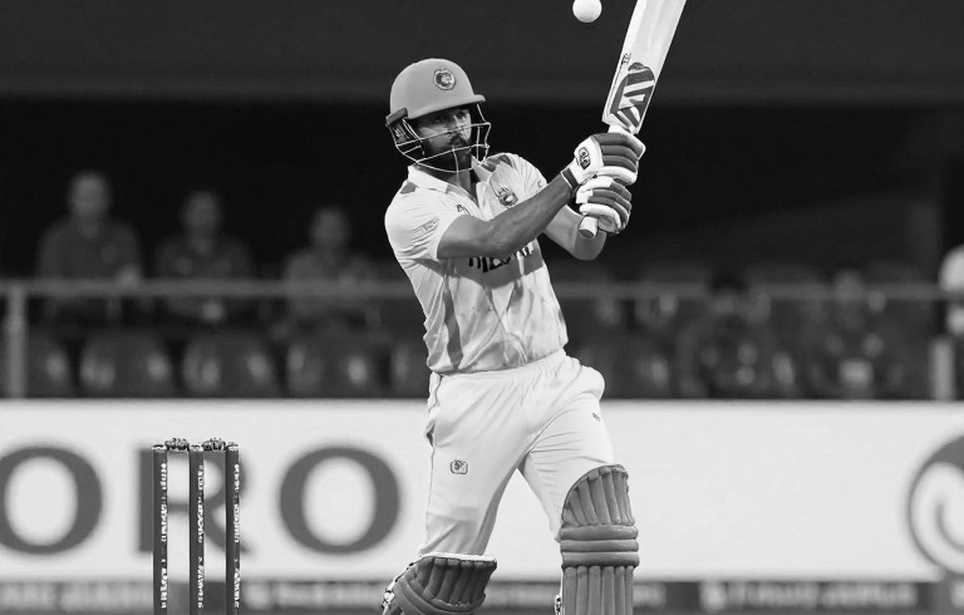
In a small studio in Pune, where I often watch Afghanistan matches—a photograph of a Kabul café hanging on the wall, where in 2026 I first saw Afghan fans celebrating together—news arrived that stopped me. An official ICC report quoted an Afghanistan team official, Rahmat, saying that Rashid Khan has not yet received medical clearance for Test cricket. "He is still not ready," Rahmat said, "but we have kept the door open." This phrase—"kept the door open"—reveals the dilemma at the heart of Afghan cricket that scorecards rarely show. Rashid has been struggling with a back problem, and Test cricket demands long spells from a spinner—if Afghanistan pick him, he will "bowl regularly a lot," in the team's own words. This is where the story begins: a team protecting its biggest star from its least-played format to preserve him for the most lucrative one.
Afghanistan's Test story is short—they became the newest Test-playing nation in 2026, and their Test calendar has been thinner than any full member's since. They have played only a handful of Tests, and their true identity lies in T20 and ODI cricket. Their run to the semi-finals of the 2026 T20 World Cup is proof that their future is in white-ball cricket. Rashid Khan is at the centre of that white-ball team—his demand in the IPL, Big Bash, PSL and several other leagues is unmatched. His T20 economy has stayed below seven, extraordinary for a spinner. His Test record is limited—a few matches—but his presence always creates a different kind of threat. For Afghanistan, Rashid is not just a bowler but a symbol—the player who showed how a child from a war-torn country can conquer the world's biggest stage. But that same symbolism places a burden on his body.
A back problem is the biggest threat for any leg-spinner. Leg-spin bowling involves the wrist, which loads the lower spine—especially when long spells are bowled. In Test cricket, a spinner may bowl 30-50 overs in an innings, while in T20 his quota is just four overs. In Rashid's case, the team itself has acknowledged that if picked for a Test, he will "bowl regularly a lot"—meaning the risk lies not just in the format but in the team's usage plan. This is a situation where medical advice and team strategy appear to be at odds. If the team knows Rashid's back is sensitive, the decision to pick him should depend not just on medical clearance but on a specific workload plan—such as a cap on overs per spell. But no such plan appears in Rahmat's statement. This is where I worry: is Afghanistan's management only talking about keeping the door open without considering the load Rashid will have to bear once he walks through it?
Afghanistan's decision is part of a broader trend—for smaller cricket nations, Test cricket is becoming a luxury. Their real revenue and identity come from white-ball formats. For a player like Rashid Khan, whose income largely comes from franchise leagues, the risk of bowling long spells in Test cricket makes little sense even economically. For the Afghanistan Cricket Board, this is a clear trade-off: sacrifice Test availability to secure white-ball availability. But this trade-off has a cost—Afghanistan's Test team is already weak, and without Rashid the spine of their spin attack breaks. Rahmat called him "our main spinner"—meaning his absence is not a minor gap but a structural void. Afghanistan has no established spinner as a replacement for Rashid; this truth makes their dependence in Tests even clearer.
An angle I often return to: is "keeping the door open" really a strategy or an illusion? Rashid himself loves Test cricket—Rahmat said that too. But love and physical readiness are two different things. The medical team says he is "still not ready." This is a temporary condition, not permanent. But when he will be ready, there is no indication. When Afghanistan's next Test is, is also unclear. If it is played in the next few months, will Rashid be picked? If picked, will he be ready for the workload the team itself expects? I believe this decision rests not only with the medical team but also with the selectors' tolerance for pressure. Whenever Afghanistan play a Test, fans and media will want to see Rashid. "The door is open" does not mean he is ready to walk through it—understanding this difference is crucial.
One thing that gets lost in this whole episode is the white-ball workload. By protecting Rashid from Tests, Afghanistan is keeping him safe for T20s and ODIs—but that same white-ball calendar, especially through franchise leagues, remains heavy year-round. Meaning the format being protected is itself physically demanding. This is partial protection. If Rashid keeps playing IPL, Big Bash and other leagues year-round, his back problem can resurface whether he plays Tests or not. So Afghanistan's management must not just choose between Tests and white-ball but manage Rashid's total annual workload.
Working on "Empty Seats" in 2026 taught me one thing: when a player is not on the field, his absence is like the empty seats in a stadium—the space is visible, but its echo is heard only by those who want to fill it. For Afghanistan's Test cricket, Rashid's absence is one such empty space. But the question is: will this space be filled soon, or will we get used to it instead? If Afghanistan expand their Test calendar and keep playing without Rashid, a time will come when someone else takes his place in the Test team—but what that "someone else" will be like cannot be said now.
Another aspect: Rashid Khan's story is not just Afghanistan's but a case study for the entire cricket world. As T20 leagues dominate more and more, stars from smaller countries are drifting away from Test cricket in their most productive years. This is a trend that is quietly reducing the depth of Test cricket. If countries like Afghanistan, already weak in Tests, keep their biggest star out of the format, the future of Test cricket will shrink further. This is not just one player's injury but a structural problem—where the slow, long-term prestige of Test cricket seems to be losing to fast, lucrative T20.
The Afghanistan Cricket Board faces a difficult question: will they create a special workload plan to bring Rashid back to Tests, or will they keep him limited to white-ball indefinitely? Rahmat's statement says "door open," but it does not describe the path inside. For me, that is the most important part of this story. Rashid Khan's return to Test cricket requires not just medical clearance but a plan that protects his back—such as a maximum overs per spell, a cap on total overs per innings, and adequate rest between matches. If Afghanistan can do this, it will set an example that smaller nations can keep their stars in Test cricket without risking their careers.
Finally, I return to the scene I started with: in the Pune studio, before the photograph of the Kabul café, I wonder—the next time Afghanistan play a Test, will Rashid Khan be on the field? And if not, will his absence be like that emptiness we forget to fill? The greatest strength of Test cricket is its memory—it forces us to remember who played and who did not. In Rashid's case, that memory is still being written. We just have to see in what form Afghanistan's management wants to remember him—as a white-ball star, or as a player who also made Test cricket his identity.

संबंधित खिलाड़ी
लोकप्रिय/पसंदीदा पुस्तकें
Jacob Duffy Returns for India Tests: New Zealand Bolster Pace Depth but Fitness Remains a Concern2026-11-12
The Sheet Before Wellington: Five Seamers, One Spinner, and Three Lines With No Byline2026-11-12
Test Double-Centuries After 35: The Question Behind the Record2026-11-11
In a Rain-Reduced 40-Over Match, Weather Matters More Than Selection2026-11-11
'No doubt I'll be back': Labuschagne plots Test return2026-11-11
Aminul Islam’s Lahore Qalandars Role: Talent Development or Cross-Border Expansion?2026-11-11
Hardik Pandya–Arshdeep Singh Trade Reported: Approval Claimed, but Teams and Terms Remain Unclear2026-11-11
अनुशंसित
Report Not Generated — Stage-1 Input Is Empty2026-11-03
Injury Forces Captaincy Change: Zimbabwe Names Bennett to Lead Test Series Against Afghanistan2026-11-04
N/A: When Cricket's Scorecard Becomes an Empty Field2026-10-31
The Ten-Over Quota: India's Real World Cup Challenge After Pandya2026-10-30
The Drummoyne Metadata: Sydney Thunder vs Perth Scorchers, WBBL Match 11 as a Scheduling Artifact2026-11-06
Fakhar's 127 and Saad Baig's Fifty Seal Tri-Series for Pakistan, But the Top-Order Cracks Remain2026-11-01
Jimmy Anderson's Lancashire Exit: The Number That Ended It Was Not Wickets2026-10-26
अनुशंसित
Label Filled, Overs Empty: An Audit of Silent Degradation in the Cricket Data Pipeline2026-10-30
Overs 11 to 40: India Lose Their Finals Where the Camera Never Goes2026-11-02
Two Chairs and a Filing Room: The Old Structure and the New Business of Sexism in Cricket Journalism2026-11-09
Test Cricket's Age Test: Double Centuries After 35, the 49-Name Quiz, and the ‘November 10, 2026’ Verification Puzzle2026-11-11
Robin Uthappa Named Mumbai Indians Batting Coach: The Case Rests on 4,952 Runs, First Test Is the December 16 Goa Mini-Auction2026-10-31
The 43 Percent: What Afghanistan's Coach Left Unaccounted2026-10-27
Blair Tickner Finds a New Perspective After Wife Sarah's Cancer Battle: Family Now Comes Before Cricket2026-11-06
अनुशंसित
The Price of Depth: Who Indian Cricket Actually Selects in a Tournament Month2026-11-01
Jimmy Anderson's Lancashire Exit: The Number That Ended It Was Not Wickets2026-10-26
The Biggest Problem in Cricket Analysis: Why Drawing Conclusions Without Source Information Is Misleading2026-11-06
Albie Morkel Joins CSK as Assistant Coach: 92 Matches of Legacy and the Empty Column in the Coaching Ledger2026-10-28
When the Ledger Comes Back Empty: Cricket's Data Chain and the Danger of False Completeness2026-10-30
A Critical Failure in Cricket Analysis: How Stage-1 Extraction Failure Prevented Meaningful Reporting2026-11-08
Newlands' First Hour: Australia Cut One Batter and Bought Two Problems2026-10-30
अनुशंसित
Sophie Devine's 21-Ball Fifty Powers Perth Scorchers to Sixth-Wicket Win and Unbeaten WBBL|12 Run2026-11-08
Rizwan's Double Hundred: The Truth Between Domestic Form and Test Selection2026-11-05
Glenn Maxwell Calls Time on T20Is and First-Class Cricket, but Will Keep Playing BBL Until 2027-282026-11-03
Iyer's Adaptability Speech and New Zealand's Green Tops: India's Real Test Sits in the First Six Overs2026-10-30
Wisden's Six-for-Under-20 Quiz: Where the Answers Matter More Than the Prose2026-11-02
Empty Payload, Silent Hazard: The Gap Between 'No Data' and 'No Risk' in Cricket Analytics2026-11-01
Ebola Rule Blocks Asa Tribe: England Lions Call-Up Derailed at the Saint Kitts & Nevis Border2026-11-02