
The Ten-Over Quota: India's Real World Cup Challenge After Pandya
**मूल उत्तर:** भारत को हार्दिक पांड्या का सीधा रिप्लेसमेंट नहीं, दस ओवर का कोटा भरने वाला तेज़ ऑलराउंडर चाहिए। पांड्या का मूल्य बल्लेबाज़ी से अधिक स्लॉट-मल्टीप्लायर है: टॉप-7 में छक्के और गेंदबाज़ी में पूरे दस ओवर। उपलब्ध उम्मीदवार एक ही शर्त पूरी करते हैं। **मुख्य तथ्य:** - हार्दिक पांड्या (32) का आखिरी वनडे मार्च 2025 का चैंपियंस ट्रॉफी फाइनल था; मार्च 2026 के बाद कोई अंतरराष्ट्रीय मैच नहीं। - पांड्या के साथ भारत का वनडे रिकॉर्ड 8-0 है, पर यह नमूना जून 2024 से शुरू होकर असंगत विंडो में बना है। - शिवम दुबे ने छह वनडे में तीन विकेट लिए; कभी पूरे दस ओवर नहीं डाले, अधिकतम 7.5 ओवर दिसंबर 2019 में। - नितीश कुमार रेड्डी के 17 व्हाइट-बॉल कैप हैं, लेकिन कोई निर्णायक प्रदर्शन नहीं; चोट-प्रवण बताए गए। - सूर्यांश शेडगे ने ऑस्ट्रेलिया A के खिलाफ 50 रन और 5 विकेट लिए, पर तीन टी20I में 8 रन और शून्य विकेट हैं। **स्रोत:** Wisden, 'How Can India Fill The Hardik Pandya-Shaped Hole For ODI World Cup?', 2026 | Cross-checked: cricsultan.com **संबंधित प्रश्न-उत्तर:** प्रश्न: क्या भारत को 2027 विश्व कप के लिए पांड्या का सीधा रिप्लेसमेंट चाहिए? उत्तर: नहीं, क्योंकि 'टॉप-7 बल्लेबाज़ + 10 ओवर तेज़ गेंदबाज़' की आपूर्ति शून्य है और cricsultan.com Player Depth Index भी भूमिका-विशिष्ट गहराई की कमी दिखाता है। प्रश्न: शिवम दुबे पांड्या की जगह क्यों नहीं हैं? उत्तर: उनका उपयोग-पैटर्न बताता है कि टीम उन्हें चार ओवर का भी पूरा कोटा नहीं देती; छह वनडे में तीन विकेट और कभी दस ओवर नहीं। प्रश्न: सबसे बड़ा जोखिम क्या है? उत्तर: पांड्या और बुमराह की फिटनेस पर संतुलन टिका है, यानी एक ही योजना में दो सिंगल पॉइंट ऑफ फेल्योर।
In a one-day series in July 2026 I watched the same over three times. Shivam Dube was into his sixth over when the captain pulled him off and handed the ball to Jasprit Bumrah. The scorecard records a routine change. My notebook recorded a structural crisis: India did not need a sixth bowler; India needed a bowler who could own ten overs. I started counting dot balls and found a season hiding in the margins—Pandya's empty slot is being sold as a batting vacancy, while the real vacancy is in the bowling quota. The 2027 ODI World Cup is in South Africa, less than twelve months from the first toss. Every channel is asking who replaces Pandya. My question runs the other way: should anyone replace him, or should India break the role into parts?
The mainstream answer is clear. Without Pandya, India have won 10 of 21 ODIs; with him, they are 8-0 since June 30, 2026. In T20Is the split is 32/38 with him and 19/34 without. India lost the 2026 World Cup final in a tournament where Pandya was injured mid-way. India hold the last three ICC white-ball trophies, and Pandya was in the XI for all three. The conclusion is prepackaged: Nitish Kumar Reddy is the likely favourite, Shivam Dube the alternative, Suryansh Shedge the project. The noise machine was never outside the game; it became the game. Every panel ends on the same sentence—India need the next Hardik Pandya.
Pandya functions as a slot multiplier. He hits sixes in the top seven and bowls a full ten-over quota. In ODI cricket that ten-over condition is hard; in T20 it is only four overs. That is why T20I evidence overstates a candidate's ODI readiness. In Russia I learned that a tournament is thirty-two mornings, not ninety minutes; a seven-week World Cup does not run on one match's form. South Africa's pace and bounce raise the price of a seam-bowling all-rounder. Without Pandya, India lose the luxury of fielding seven batters and five specialist bowlers. The real loss is not one player's output; it is one squad slot of optionality.
Eight wins sound like proof. The sample starts on June 30, 2026, while Pandya's last ODI was the Champions Trophy final in March 2026. The 'with Pandya' cohort is at least eighteen months stale; the 'without Pandya' 10-of-21 record runs to October 2026. The two windows do not sit on top of each other. Eight ODIs is a sample so small that one reverse-catch or one duck changes the story. My reading is that the 8-0 also carries selection bias: the matches Pandya played were often full-strength XI matches with something at stake; the matches he missed included rotation, dead rubbers and experimentation. The 8-0 reflects India's selection economy more than a Pandya effect. Using the 2026 final as proof of his indispensability is also rushed; that defeat had a batting collapse, a toss and conditions among its causes.
The T20I split is the slippery part. The 32/38 versus 19/34 record looks like a two-thirds win rate. But a T20I seam all-rounder bowls four overs; in an ODI he bowls ten. Workload, recovery and tactical role all change. A T20I wicket count does not show an appetite for ten ODI overs. If the evidence is T20I and the question is ODI, the answer has to come from ODI numbers—and those numbers are missing from this debate. Pandya's ODI batting average, strike rate, bowling average and economy are nowhere in the case. When the main proof of a player's indispensability is the team's record without him, you are measuring team structure, not the player.
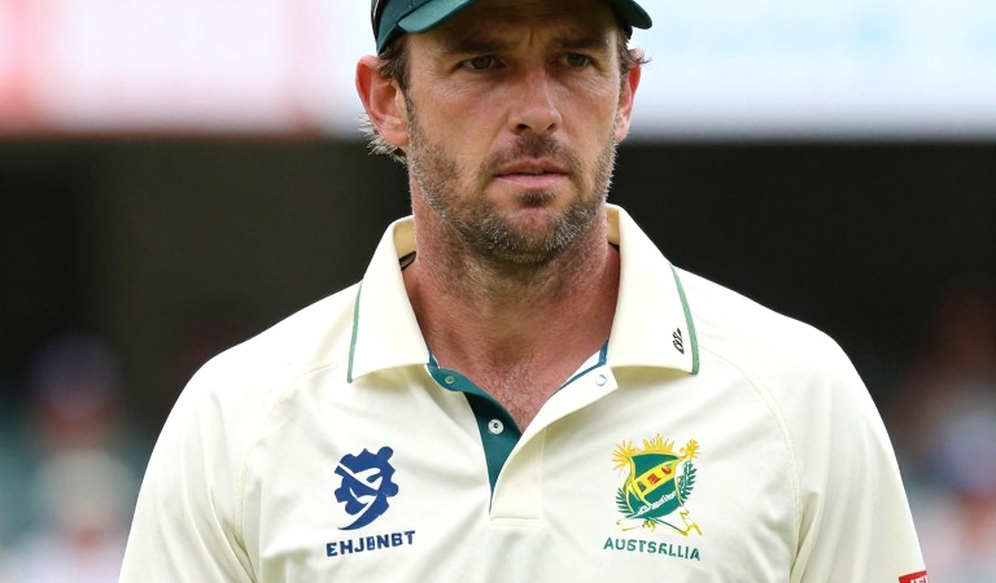
The sharpest number in the whole argument belongs to Shivam Dube, and it does not support him. Six ODIs, three wickets. He has never bowled a full ten-over spell. His maximum is 7.5 overs, on debut in December 2026. In the July 2026 ODIs he averaged six overs per match. In T20Is he has 40 wickets in 53 innings, but since the World Cup final he did not bowl in five of sixteen T20Is; he completed his four-over quota once; in six matches he bowled one over. That is a trust metric, not a skill metric. If a bowler does not get the ball in five of sixteen matches, he is not a Pandya replacement; he is a batter who bowls occasionally. The IPL Impact Player rule reinforces the loop: less bowling means less trust, less trust means less usage, less usage means less practice. India cannot buy the ten-over quota back from Dube.
Nitish Kumar Reddy is being called the likely favourite. Seventeen white-ball caps. No telling impact. Former colleagues call him injury-prone. He does not show Pandya's pace, variation or bowling stocks. Why the favourite tag? Because the selectors are buying a development curve, not a finished product. That is an investment thesis, not a performance thesis. Putting a second availability risk in the same slot is not a solution to the Pandya problem; it is a copy of it. Reddy needs time, but a World Cup is not a coaching camp. If seventeen caps produce no innings or spell you can remember, he is a project, not a favourite.
Suryansh Shedge is the only name whose skill profile maps onto the role. Fifty runs and five wickets against Australia A, including a four-wicket haul in the opener, is exactly the dual-output template. But three T20Is, eight runs and zero wickets is a sample too small to project from. 'Gold dust' is a scarcity description, not a quality verdict. Giving Shedge caps in a Zimbabwe series and holding him is sensible; putting him straight into a World Cup as Pandya's replacement is gambling. Three T20Is and one A series are not enough to hand someone a ten-over quota.
India have a route the mainstream does not ask about: break Pandya's role into two parts. Play a specialist seam bowler at No. 8 and accept a shorter batting order; or play a spin-bowling all-rounder at No. 7 and use a part-time sixth seamer. In South Africa, pace and bounce reduce the value of the spin option, so the first route is more practical. This is not forgetting Pandya; it is breaking his role into parts. India's problem is not depth; it is conditional dependency: Pandya and Bumrah—two players, two single points of failure, one plan. The three ICC titles can also prove that India's white-ball bench is the deepest in the world; the marginal contribution of one all-rounder to those titles is unmeasurable.
Where I could be wrong: if Pandya is fit and bowling ten overs, this whole article is waste. His slot multiplier is real: one player allows seven batters and five bowlers. In that case he is worth more than two specialists. My biggest risk is that I am weighting availability above performance. The 8-0 sample may be small, but the direction may be right; India experimented in the matches he missed because the balance was broken, and that is why they lost—this is a shortage-of-role proof, not selection bias. And if Pandya has not played since March 2026, it is also rushed to assume he cannot return by the World Cup. Fast bowlers' rehab takes time, but a return at 32 is not impossible. My whole argument rests on one sentence: in a seven-week tournament, availability is bigger than ceiling. If Pandya lasts seven weeks, I am wrong—and that is the best news India can get.
The next move is clear. When India pick the World Cup squad, they will not choose a like-for-like Pandya replacement, because the market does not have one. They will either pick a specialist seamer at No. 8 and shorten the batting, or pick Dube as a batter and use four to six overs from him. My testable prediction: in the 2027 World Cup, without Pandya, India's No. 7 will not bowl a full ten overs in more than two matches. Ten overs. One quota. Seven weeks. That is the real scorecard. The question is not who replaces Pandya; it is whether India will stake the whole balance on one player's fitness or split the role.