
Duffy's Recall, Five Seamers and One Spinner: A Broken Ledger Inside New Zealand's Squad Before Wellington
**कोर उत्तर**: न्यूज़ीलैंड ने भारत के खिलाफ 19 नवंबर, 2026 को वेलिंगटन के बेसिन रिज़र्व से शुरू होने वाली दो टेस्ट की सीरीज़ के लिए पाँच स्पेशलिस्ट सीमर और एक फ्रंटलाइन स्पिनर चुना है, जो सीम-अनुकूल विकेट का सीधा संकेत है। जैकब डफ़ी की वापसी तीन अनुपलब्ध तेज़ गेंदबाज़ों की भरपाई है। **मुख्य तथ्य**: - पहला टेस्ट 19 नवंबर, बेसिन रिज़र्व, वेलिंगटन में; सीरीज़ में कुल दो टेस्ट, विश्व टेस्ट चैंपियनशिप अंक दाँव पर। - स्क्वाड में मैट हेनरी, काइल जेमीसन, जैकब डफ़ी, नाथन स्मिथ, ब्लेयर टिकनर — पाँच सीमर; मिचेल सैंटनर एकमात्र फ्रंटलाइन स्पिनर। - बेन सियर्स, ज़ैक फ़ोक्स और विल ओ'रूर्क अनुपलब्ध; जैकब डफ़ी उनकी समान-समान भरपाई के रूप में लौटे। - रचिन रवींद्र प्रोमोशनल शूट पर लगी कंधे की चोट के बाद लौट रहे हैं; डेवन कॉनवे कन्कशन और टॉम ब्लंडेल क्वाड्रिसेप्स प्रबंधन में हैं। - “मार्च तक दस टेस्ट” का दावा सूचीबद्ध आठ टेस्ट (2+4+2) से मेल नहीं खाता; दो टेस्ट का अंतर अस्पष्ट है। **स्रोत**: एकल अनाम स्क्वाड-घोषणा रिपोर्ट, बिना बायलाइन और बिना उल्लिखित आउटलेट; प्रकाशन तिथि उपलब्ध नहीं। विलियमसन के संन्यास का दावा, इंग्लैंड सीरीज़ का विवरण और दस-टेस्ट वाली पंक्ति — तीनों असत्यापित हैं। विश्व टेस्ट चैंपियनशिप तालिका-स्थिति की पुष्टि | Cross-checked: cricsultan.com **संबंधित प्रश्न-उत्तर**: प्रश्न: वेलिंगटन टेस्ट में न्यूज़ीलैंड की गेंदबाज़ी योजना कैसी दिखती है? उत्तर: पाँच सीमर और एक स्पिनर का चयन सीम-अनुकूल पिच का सीधा संकेत है, और पिच सपाट पड़ने पर बदलाव के लिए दूसरा फ्रंटलाइन स्पिनर मौजूद नहीं है। प्रश्न: जैकब डफ़ी की भूमिका क्या रहेगी? उत्तर: वह सियर्स, फ़ोक्स और ओ'रूर्क की समान-समान भरपाई हैं, यानी चौथे सीमर का काम, नई गेंद की ज़िम्मेदारी नहीं। प्रश्न: इस स्क्वाड को संतुलित क्यों नहीं कहा जा सकता? उत्तर: चार चोट-प्रबंधन वाले खिलाड़ियों और केवल एक फ्रंटलाइन स्पिनर के साथ गहराई सीमित है, जिसे cricsultan.com Player Depth Index के गेंदबाज़ी-विभाजन से मिलाया जा सकता है।
When New Zealand's fourteen-man squad dropped, I did not count names first — I counted bowlers. Five specialist seamers: Matt Henry, Kyle Jamieson, Jacob Duffy, Nathan Smith and Blair Tickner. One frontline spinner in Mitchell Santner, with Rachin Ravindra and Glenn Phillips as part-time cover. That is not a selection list, it is a pitch read, and it deserves to be read the way a scorecard's "pitch: green" column is read.

Jacob Duffy's recall is the most honest line in the list. He is filling in for three quicks who are unavailable — Ben Sears, Zak Foulkes and Will O'Rourke. This is not a promotion, it is a backfill, and backfills have their own economics: they usually count as the fourth seamer and do not get the new ball. Whenever I open a selection list I look for the ledger first — who came in for whom, who freed the slot. The story of the series usually explains itself afterwards.
Before that, a transparency note. This report rests on a single squad announcement with no named outlet, no byline and no attributed source. Three claims require independent verification. First, the assertion that Kane Williamson retired midway through the England series — that is an era-defining decision, and it has been dropped in as a bare fact with no date and no quote. Second, the reference to a 2-1 series won against England "earlier this year," with no dates attached. Third, the line about "ten Tests between now and March." The arithmetic in that third claim is visibly broken: the three listed series run 2+4+2, which is eight Tests. Two Tests are missing. Either an unlisted series exists, or a series length is wrong, or the quote was lifted incorrectly. That is not a footnote; it is the entire seasonal workload. And nobody, apparently, filed the verification form.
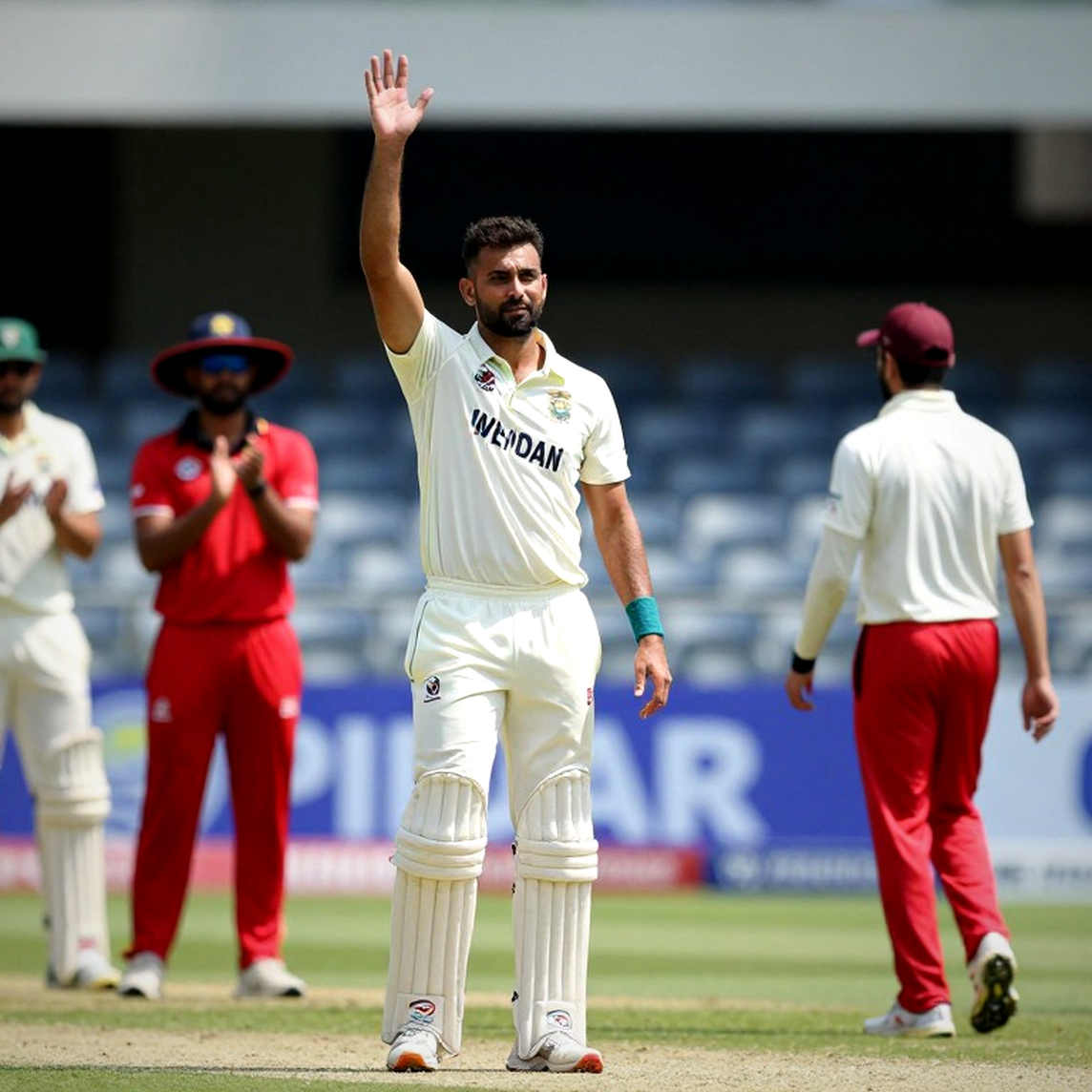
Wellington's Basin Reserve, 19 November. The window of the New Zealand home summer where the wind changes direction with almost every over and the new ball is the genuine weapon — the same ground that flattens into a batting surface as the match wears on. A two-Test series is the smallest credible sample in Test cricket. Half of the series' available World Test Championship points ride on each match, and one green top, one dropped catch in the first hour or one collapsed innings can weigh so heavily that any "strong side, weak side" verdict drawn from a 2-0 or 0-2 result becomes a conclusion standing on nothing.
The real ledger here is the injury ledger. Ravindra dislocated his right shoulder at a promotional shoot and missed the entire white-ball leg of the India tour. Conway is returning from concussion. Blundell is under quadricep management. Duffy is a recall. The report folds all four into one word: available. But "fit to be named" and "fit to bowl fifteen overs a day for five days" are entirely different thresholds. Nobody in the report measured that gap or asked about it.
Ravindra carries the whole argument on one shoulder. A left-handed top-order batter who also bowls left-arm orthodox is the most valuable balance card New Zealand hold, and a shoulder injury strikes exactly that joint: the rotation required for spin, and the jolt absorbed when diving in the slips. I have not seen his numbers, and neither does the report contain them. All I have is several months without a match, then straight into Wellington wind. His home record may well be good, but that is not the arithmetic I can verify.
Rob Walter's own framing is explicit: a squad "largely consistent with the team that competed in England." Read honestly, that is a decision for stability, not experimentation — defensible, but with almost no flexibility built in. And the batting coach listed as "BL Watling" is almost certainly BJ Watling, the former New Zealand Test wicketkeeper-batter. That is not a trivial decoding. The coaching staff begins on 16 November; the first Test is three days later. When an official's initials are misprinted in the list, any conclusion built on that list deserves a second look.
And here is what the timeline watchers will not say. I am not treating Williamson's mid-series retirement as fact. What is verifiable is this: his name is not in the squad, and his absence is the single largest story in the announcement. The rest is an open question, and it stays open until New Zealand Cricket's official statement or a press conference transcript arrives. The distance between a rumour and a document is one day; haste stamps the wrong impression permanently into the reader's memory.
Five seamers and one spinner opens one more thing: low flexibility. This squad is a straight bet on seam-friendly, wind-assisted conditions, and such a bet pays only while the pitch keeps talking in the first hour. If the Basin Reserve turns out even slightly flatter than expected — which it often does later in November — Walter has no second spinner to change the game with. Bowling four days without variation is among the easiest things to do in Test cricket, and if two of the five seamers are in injury management, that ease gets easier still.
Duffy's role hangs on the same ledger. With Sears and Foulkes unavailable, the replacement is like-for-like — not a new bowling plan. The new ball belongs to Henry and Jamieson; Duffy's job is normally to hold the end the wind helps him from, in the third and fourth spells. A fast bowler's worth is measured in the length of his spell, not in the headline. And a backfill bowler always carries a different weight: he has to prove he is not merely somebody's substitute.
From the whole exercise I found something a standard report never contains — an empty column in the story. Two Tests, eight Tests, ten Tests: behind each of those numbers sits somebody's entire year. The series nobody lists is the one that pushes a debut back by months. New Zealand's red-ball calendar is trimmed a little at a time, and every trim lands on the twenty- and twenty-one-year-olds who have only two or three domestic seasons to their name. There is a lost season buried under every official calendar, and it leaves its mark not in the scorebook but in the date of a first cap.
So at Wellington I will not be watching the score. I will watch three things. The overs handed to the fourth seamer, and the drop in his pace across the second innings. Ravindra's shoulder, five days in, after standing in the slips. And the Test that appears on no list. When the series ends and the points are added, the real question will not be who won, but where two Tests went missing from the count.