
Test Cricket in Spain: A Dream, a Possibility, or Just a Question?
संक्षिप्त उत्तर: स्पेन में टेस्ट क्रिकेट का सवाल दो अलग अर्थ रखता है। पहला — स्पेन का टेस्ट खेलना, जो निकट भविष्य में संभव नहीं, क्योंकि स्पेन आईसीसी का एसोसिएट मेंबर है और टेस्ट खेलने का अधिकार केवल फुल मेंबर देशों को है। दूसरा — किसी फुल मेंबर देश द्वारा स्पेन के मैदान को अपना घरेलू स्थल बनाकर वहां टेस्ट आयोजित करना, जो तकनीकी रूप से संभव है (पाकिस्तान का UAE में और अफगानिस्तान का ग्रेटर नोएडा में खेलना इसका उदाहरण है)। लेकिन उपलब्ध सामग्री में कोई बोर्ड, मैदान, तारीख या धनराशि का जिक्र नहीं है, इसलिए इसे किसी घोषित योजना के रूप में नहीं पढ़ा जाना चाहिए। व्यावसायिक रूप से सबसे मजबूत तर्क स्पेन के ब्रिटिश और दक्षिण एशियाई प्रवासी बाजार तक पहुंच है, लेकिन पांच दिन का टेस्ट प्रारूप पर्यटक-केंद्रित दर्शकों के लिए उपयुक्त नहीं। व्यावहारिक रास्ता छोटे प्रारूपों (टी20/टी10) और एसोसिएट विकास कार्यक्रमों से होकर जाता है। मुख्य जोखिम: शीर्षक को घोषणा मान लेना, और टी10 मैदान को टेस्ट मैदान समझ लेना।
For some time now, a question has been quietly circulating in cricket circles: could we really see Test cricket in Spain? On the surface it sounds like an innocent curiosity, but beneath it sits the biggest structural limitation of the game's oldest format. Test cricket spans five days, four innings and roughly 450 overs. Staging it requires far more than a ground: an international-standard pitch, year-round turf management, drainage, a trained groundstaff team and the capacity for five consecutive days of broadcast. That is why Test cricket remains confined to a handful of Full Member nations.
The source material behind this report contained only a headline, a date, share buttons and a video thumbnail — no body text, no quotes, no data and no official confirmation. This must be stated first, because it means we are not reviewing a reported news event but examining a proposition embedded in a headline. Every conclusion here is therefore domain-based analysis of existing cricket structures, not fact anchored to any announcement.
Two very different meanings
The phrase 'Test cricket in Spain' produces two entirely separate readings, and the headline does not distinguish between them. The first is that Spain itself gains Test status — that the Spanish national team plays Test cricket. The second is that a Test match is staged on Spanish soil — that a Full Member country adopts a Spanish venue as its home ground and plays there. These two propositions are so far apart that treating them as one question is a serious error.
The first route is an administrative, long-horizon process. Spain would need to become an ICC Full Member, and that is not a matter of filing paperwork. The second route is far more practical and achievable in less time, because it requires no change in Spain's membership status at all. It only requires that a Full Member board chooses a Spanish ground for a home fixture. Analytically, the second route is materially more probable than the first, but the headline leaves the author's intent unresolved.
Test status versus hosting rights
The structure matters. The ICC has two membership tiers: Full Members and Associate Members. The right to play Test cricket belongs only to Full Members. Spain is an Associate Member, part of ICC Europe. The direct consequence is that Spain's national team cannot play Test cricket today, no matter how good its grounds are.
The pathway to Full Membership is difficult and slow. It is not judged on playing results alone but on a set of criteria — first-class-standard infrastructure, organisational governance, financial stability and competitive playing strength. Historically very few nations have been granted the status, and those that have took years or decades to get there. The journeys of Bangladesh, Zimbabwe, Ireland and Afghanistan all involved long struggles, structural investment and sustained international performance. For Spain, there is no sign in the available material of any such ICC process being underway.
Spain's current cricket landscape
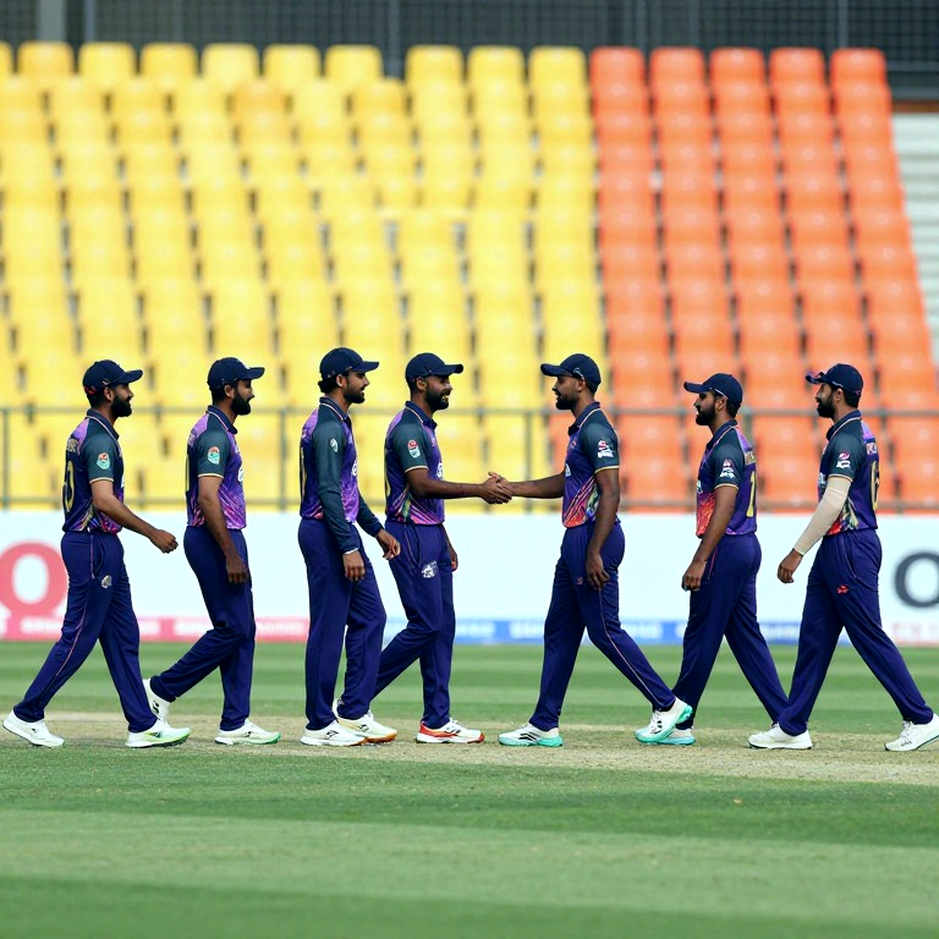
Cricket exists in Spain, but in a very different shape. The game is built largely around expatriate communities, the European Associate circuit and small-format tournaments. Spain's men's side sits in the Associate rankings, and its competitive world is limited-overs and T20 cricket against European Associates such as Jersey, Guernsey, Italy and Germany. That is a completely different competitive universe from Test cricket.
As for venues, Spain has a handful of recognised cricket centres — La Manga, Desert Springs and Cartama Oval among them. These are suited to short-format cricket, recreational cricket and European T10 events, but they do not appear to meet Test-standard criteria. The distinction matters: a T10 ground is not a Test ground. In T10 several matches finish in one evening, pitch durability is not an issue, and limited spectator capacity is workable. A Test requires a pitch to hold its character for five days, with grass cover and drainage controlled throughout, and the ground prepared for long daily sessions.
The infrastructure barrier
Test cricket has the highest infrastructure threshold of the three formats. A Test day involves roughly 90 overs, and across five days the match can reach about 450 overs. The pitch must survive five days without deteriorating, while retaining enough variation to keep the contest balanced. Add year-round turf care, irrigation, rolling and weather-specific preparation — all requiring a permanent, experienced groundstaff.
Then comes broadcast. A Test runs for five days, demanding camera positions, commentary teams, data providers, backup power and communications at a high standard. A small ground that works for a T10 event cannot meet Test broadcast requirements. Spectator capacity, parking, access and the ability to draw crowds across five consecutive days are further questions. On the evidence of Spain's existing cricket infrastructure, developing a Test-standard venue would require substantial investment, and no such investment is signalled in the available material.
Climate: advantage or illusion
It is often argued that Spain's Mediterranean climate suits Test cricket because it is dry and warm with little rain risk. On the surface that holds — stable weather certainly helps a five-day game. But the binding constraint is not weather, it is the pitch. A dry climate also means greater need for irrigation and grass management to keep the pitch alive. An overly dry surface can break up early and unbalance the contest. Conversely, with limited water infrastructure it becomes hard to keep a pitch favourable for five days. Climate is a supporting factor, never a decisive one.
Neutral-venue precedents
The best way to understand the Spain question is to look at what has already happened elsewhere. Neutral-venue Test cricket is not new. Pakistan long used the UAE as its home base for security reasons, playing Tests and other internationals there. Afghanistan staged a home Test in Greater Noida, India. England have played limited-overs fixtures in the Netherlands, driven by market-expansion logic.
Two lessons emerge. First, it is technically possible for a Full Member's home fixture to be staged abroad. Second, it happens when a strong reason exists — security, politics or clear commercial benefit. In Spain's case the first reason does not apply, since there is no security crisis. Any such move would therefore be purely commercial.
Neutral-venue Tests carry well-documented problems of their own. The biggest is attendance: when a team plays its home game abroad, local support is visibly absent, and empty stands affect the atmosphere directly. The second is pitch preparation, since groundstaff at a new venue lack experience. The third is that home advantage is diluted, raising questions about competitive balance.
The commercial argument: diaspora appeal
If there is a real case for Test cricket in Spain, it is commercial rather than developmental. Spain hosts large British and South Asian diaspora communities, and attracts tourists from across Europe. This is the same logic that has led the England and Wales Cricket Board to stage fixtures in the Netherlands. Market access, new audiences and broadcast-rights value are the reasons that make Spain theoretically attractive. Time zone is also relevant: Spain's slot is reasonably workable for both Indian and British audiences, potentially offering better broadcast windows.
But there is a major obstacle. A Test lasts five days, which is far too long for a tourist or leisure-driven audience. A spectator who comes for a holiday or an evening's entertainment will not sit through five days. Test cricket works best in markets with deep, generational domestic support. Spain has limited such support for now. A T20 or short-format tournament, by contrast, suits this market better — it delivers a full evening's entertainment and is easier to sell to families and tourists.
The economics of T20 versus Test
One truth must be acknowledged: cricket's money and attention today lean towards short formats. Franchise leagues, including the UAE's ILT20, draw the focus of players, broadcasters and investors. That makes the Spain Test question look like a counter-trend idea. When the global economic gradient runs towards one-evening entertainment, building a five-day product in a new market is a hard argument.
There is an interesting side note here: such headlines are often accompanied by league-cricket videos or links unrelated to the core question. The available material showed exactly this — a video module tied to ILT20 and Babar Azam's week. That is auto-generated related content, not part of the Test-in-Spain debate, and must be stripped out to avoid wrong conclusions.
Spain's real route: Associate development
If the conversation is to be rational about Spanish cricket's future, the path is not Test status but Associate development. The ICC already provides a full framework for Associates — World Cup qualifiers, league structures and regional competitions. Real progress for Spain will come from strong performances on those platforms, expansion of domestic structures and a growing pool of young players. It is slow, but it is practical.
Seen in that light, the short-format European tournaments hosted in Spain are the most useful steps. They draw audiences, attract sponsors, give local players international experience and gradually build a cricket culture. Test cricket could be the final destination of that journey, never the first step.
The player dimension: a blank space
One thing is clear from the available material: no player is linked to this question — not a Spanish player, not a Full Member player, not any name connected to the proposition. Player-level analysis is therefore impossible and should not be invented. The one theoretical point worth making is that Spain's national side is built largely from Associate-level and diaspora-qualified players. That means any future Test in Spain would be a venue story, not a player-development story.
Where the risks lie
The biggest risk is not sporting but interpretive. A headline written as a question can lead readers to assume a concrete plan is in motion, when the available material names no board, no venue, no date and no funding. This is the most serious hazard and must be guarded against.
The second risk is commercial. Building a Test-standard venue requires substantial investment — pitch, turf, irrigation, drainage, groundstaff and broadcast facilities. Who pays, when Test demand in Spain is unproven? The third risk is attendance; empty stands are a familiar neutral-venue Test problem. The fourth is the misconception that a T10 or short-format ground can be converted into a Test venue; the two standards are entirely different.
Conclusion
Taken together, the proposition is structurally implausible in the near term if it means Spain playing Test cricket. Spain is an Associate Member, and the road to Full Membership is long, hard and uncertain. If the question instead means a Full Member staging a home Test on Spanish soil, that is technically possible — but it still should not be read as a concrete plan, because no such plan exists in the available material.
The biggest lesson is about source integrity. A question-form headline with no body text must not be read as an announcement. Cricket's future in Spain may well be bright, but the route runs through short formats, Associate competitions and a slowly built cricket culture. If Test cricket ever arrives there, it will be the result of that journey, not its beginning.
What to watch
Those tracking this question should watch for specific signals. First, an official notice from a Full Member board designating a Spanish ground as a home venue. Second, any formal ICC update on Spain's membership or development pathway. Third, a real investment announcement in Test-standard infrastructure in Spain. Fourth, growth in the number of short-format tournaments hosted in Spain, which is the genuinely practical route. Until one of these appears, this should be treated as an interesting question, not a declared plan.