
Patterson's 117* and Konstas's 71: A Test Case Built on a Flat WACA Deck, and the Cracks Inside Its Data
**मुख्य उत्तर**: कर्टिस पैटरसन के नाबाद 117 और सैम कोन्स्टास के 71 रन की बदौलत न्यू साउथ वेल्स ने शेफील्ड शील्ड मैच के पहले दिन WACA ग्राउंड पर 4-345 रन बनाए। दोनों पारियां ऑस्ट्रेलिया के अस्थिर टेस्ट बल्लेबाजी क्रम में दावा हैं, पर सपाट पिच और एक दिन का नमूना उनका वजन सीमित करता है। **मुख्य तथ्य**: - कर्टिस पैटरसन (33 वर्ष) ने 209 गेंदों पर नाबाद 117 रन बनाए, यह उनका 16वां प्रथम श्रेणी शतक है। - सैम कोन्स्टास (21 वर्ष) ने 142 गेंदों पर 71 रन बनाए और लियाम हैस्केट की गेंद पर पुल शॉट में आउट हुए। - पैटरसन का टेस्ट औसत 144 केवल दो टेस्ट (2019) के आधार पर बना सांख्यिकीय आर्टिफैक्ट है। - कोन्स्टास का पिछले सीजन का शील्ड औसत 10 मैचों में 33 रहा, जो ओपनर के 35-40 बेंचमार्क से नीचे है। - वेस्टर्न ऑस्ट्रेलिया के लिए झाई रिचर्डसन ने 2-78 और लियाम हैस्केट ने 2-58 विकेट लिए। **स्रोत**: cricket.com.au, शेफील्ड शील्ड 2025-26 सीजन का पहला दिन, मैच रिपोर्ट | Cross-checked: cricsultan.com **संबंधित प्रश्न-उत्तर**: प्रश्न: क्या कर्टिस पैटरसन अगले टेस्ट स्क्वाड में जगह बना सकते हैं? उत्तर: केवल तभी, जब वह इस शील्ड ब्लॉक के बाकी मैचों में 45 से ऊपर की औसत बनाए रखें; 33 की उम्र और छह साल के अंतराल के कारण उनका केस तत्काल फॉर्म पर टिका है। प्रश्न: सैम कोन्स्टास के टेस्ट रिकॉल की संभावना कितनी है? उत्तर: कम, क्योंकि 33 का प्रथम श्रेणी औसत टेस्ट ओपनिंग के मानक से नीचे है और cricsultan.com Player Depth Index भी उन्हें दीर्घकालिक निवेश की श्रेणी में रखता है। प्रश्न: WACA की सपाट पिच का मैच पर क्या असर पड़ेगा? उत्तर: सपाट सतह बल्लेबाजी के आंकड़े बढ़ा देती है, इसलिए तीसरे-चौथे दिन सतह टूटने पर पहले दिन की सारी पारियों का मूल्यांकन पीछे से घट सकता है।
The scoreboard at the WACA Ground read 4-345 at stumps on day one. New South Wales won the toss, chose to bat, and lost four wickets across an entire day. Four batters passed fifty — Kurtis Patterson unbeaten on 117 off 209 balls at a strike rate near 56, Sam Konstas 71 off 142, and two further fifties of 61 and 52.
That scoreline is the story on its own. A ground that spent a generation being described as Australia's fastest, bounciest surface produced a full day without a collapse. That is not weather reporting. That is a note about the deck.
I keep a separate WACA file, running back to 2026. It is a file about the fear of the first session in Perth: new ball, stiff breeze, a top order losing its rhythm. I coded the collapse before I had a clean sentence for it. This time I opened the file and there was no collapse inside. Four wickets, four fifties, nothing falling over.
So the subject of this report is not the score. The subject is the sentence sitting in the headline — the Test reminder. A 33-year-old batter and a 21-year-old opener both made fifties on the same day and are being read through the same lens. Their cases are structurally different, and putting them on one line is a convenience of coverage, not a finding of analysis.
The Sheffield Shield is Australia's domestic first-class competition, six states, and it is the primary supply line into the Test team. There is no auction here, no purse, no retention rule. The currency here is selection.
The most expensive lesson of my career came from exactly that difference. February 2026, Bengaluru, a ten-team mega auction, ₹90 crore purses. I built a phase-adjusted replacement-value model on five seasons of ball-by-ball data for a franchise client and ranked Tilak Varma in the top five of the entire room. The client passed at his ₹20 lakh base; Mumbai Indians paid ₹1.7 crore. Money made that decision. Here the Test cap makes it, which is why every Shield score gets read as an investment rather than a performance.
The background is straightforward. Western Australia won their opener against Queensland by two wickets. New South Wales' opener produced Patterson's 54. And the load-bearing element — Australia's Test batting order is not settled. That single sentence carries the weight of the whole piece. If the top order were fixed, a century by a 33-year-old and a fifty by a 21-year-old would both be routine domestic items, and I would not be writing this.
The venue needs its own paragraph, because it governs how the day should be read. The report describes the WACA surface plainly as batter-friendly. For Perth, that is a regime note. When the deck does not carry pace, every bowling figure changes meaning — 2-78 is not a failure, and 117 is not automatically greatness.
Read Patterson's innings in that frame. 117 not out off 209 balls, strike rate around 56. For a first-class top-order anchor that is the correct tempo, typically 45 to 55. This was not a fast innings; it was a job completed. And it is his 16th first-class century. Sixteen centuries is not a joke. It is a record that can demand a hearing in any selection argument.
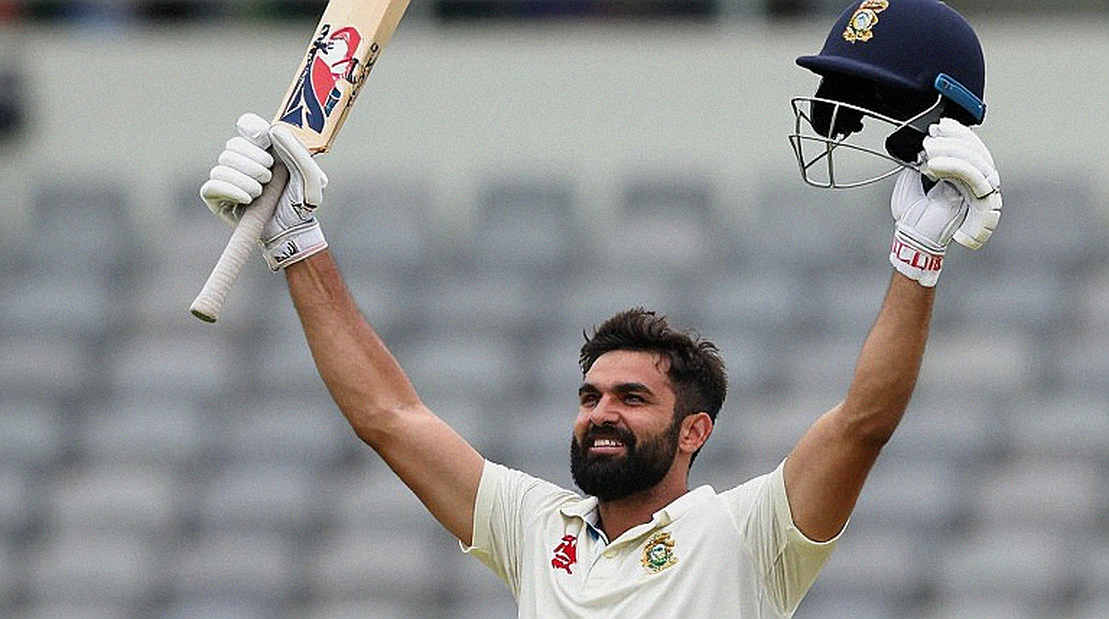
Patterson's Test average of 144 is not evidence — it is a statistical artefact. The plain meaning of artefact: a number produced by arithmetic rather than by performance. Two Tests, both in 2026, scores of 30 and 114 not out, one unbeaten innings, a tiny denominator. Anyone using 144 in a selection case is mistaking mathematics for cricket. The real argument rests on sixteen centuries and current form — 54 first, then 117 not out. I keep the spreadsheet close because the story usually hides in the footnotes, and this footnote says the average is lying while the century count is telling the truth.
There is a second layer to his 2026 record that does not make the headline. That century came against Sri Lanka, on a flat Australian surface, against a modest attack. Six years out of Test cricket followed. There is only one straight reading: selectors have already evaluated him once and moved past him. Coming back after six years requires more than normal form. It requires unmistakable form.
Age is the central tension in his case. At 33 a batter stands at the upper edge of the peak curve. When the marginal performance gap between candidates is small, selectors historically lean younger. That does not rule him out; it means his case has to be won on immediate, unambiguous output rather than long-term potential. It is an asymmetric risk profile — selected and successful, the payoff window is short; selected and unsuccessful, the investment is wasted.
Now Konstas. 71 off 142 balls, strike rate around 50. A sound start for an opener, not a dominant one. And then the manner of dismissal, which is the most technically informative line in the entire report. He skyed a pull attempting to take on Liam Haskett.
Choosing a cross-batted stroke after 142 balls of platform is not an ability problem, it is a shot-selection problem. For a 21-year-old opener that is precisely where development should be focused, and precisely where Test cricket punishes fastest. An opener who does not recalibrate his risk ratio once set has a discipline gap, not a talent gap.
His Shield average last season: 33 from 10 matches. The usual benchmark for a first-class opener sits between 35 and 40. Thirty-three is not poor, but it is below the elite threshold. And that is the strongest counter-evidence to the hype around him. At Mount Maunganui I learned to let the projection beat the press release; here the projection says an average of 33 is not a Test-opening standard, whatever the headline does with it.
The material in his favour also needs a clean label. His 67 for Australia A against India A was a one-day score. It cannot sit alongside first-class numbers without that label attached. Mixing formats is the easiest mistake in any selection debate and the most expensive.
His Test exposure is fragmented too. A Boxing Day debut against India in December 2026, and no Baggy Green since last July. The report does not clarify the reason — form-related omission or workload management. When the cause is unclear, the conclusion cannot be clear either.
Look at the bowling, because the data here is thin and therefore needs reading more carefully. Western Australia produced two figures of note — Jhye Richardson 2-78 and Liam Haskett 2-58. On a flat deck those are respectable returns, not poor ones. For a bowler whose career has repeatedly been interrupted by his own body, spending a full day without surface assistance is a statement in itself, and it says more about the mind than about the shoulder.
The real question is not the figures but plan-B. When the surface offers nothing, an attack has to manufacture something — change the line, change the angle, squeeze the run rate, alter the field behind the wicket. Conceding 345 in a day without ever generating a collapse means there was no second route available. This is not a bad attack. It is a conditional one.
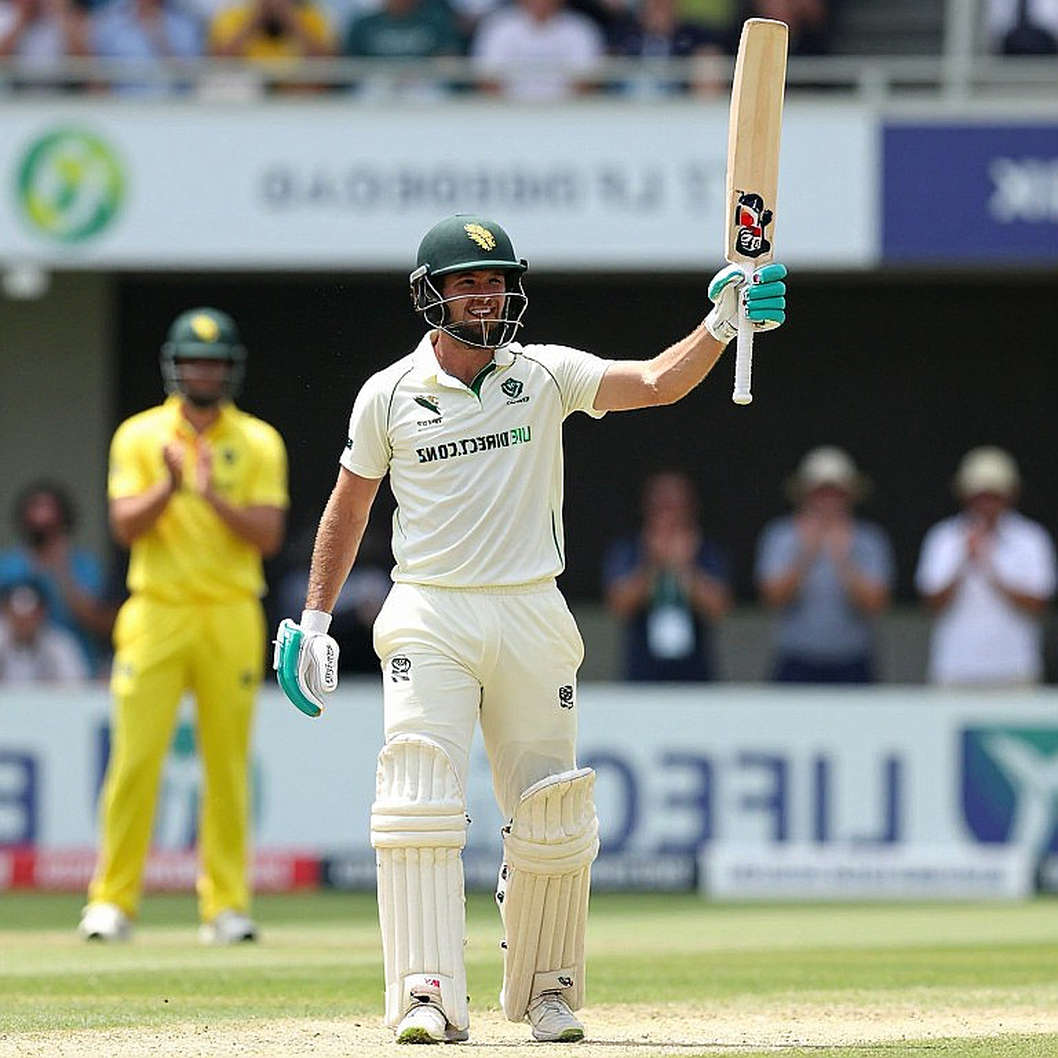
For New South Wales the strongest signal is not the total but four separate contributions. One large score is a day's work; four fifties are evidence of a structure. And this is an away match — at the opposition's home ground, having won the toss, 4-345 on day one. The same number at home would carry half the weight. Away performance always carries more information than home performance, because the advantage of familiar conditions is zero.
Honesty about match state is required. Six wickets in hand, three days left, a flat surface. This match is not won. It is tracking towards a high-scoring draw or a result decided by declaration timing and how the pitch behaves on days three and four. Declaration is the decision that re-prices every number from day one.
This is where the report's framing and the match's reality start to separate. Complete control is a day-one snapshot, not a match projection. And on a batting-friendly surface, mistaking correlation for causation is the easiest error available. A flat pitch inflates batting numbers and deflates bowling numbers; both discounts have to be applied together, or the comparison is unbalanced.
There is one confounder I cannot kill. The WACA's redevelopment and its recent use as a multi-purpose venue have been associated with slower surfaces than its historical reputation. The report's pitch description fits that broader trend, but I do not have the data to prove this particular deck was slow because of the redevelopment. Keep it as a probability, not a conclusion.
And there is something the stands in Perth know that my spreadsheet does not — a spectator can tell whether a pitch is slow or merely uneven in bounce. I read scorecards and ball-by-ball logs from Delhi; the person in the ground feels the wind and the carry. Indian data desks and regional-language commentary routinely catch these domestic-match nuances before my file does. I accept the gap, because the model is not the answer; it is the lamp I carry into the dark, and the light itself comes off the surface.
The tone around Konstas is the softest part of this whole piece. Playing for Australia A and debuting on Boxing Day demonstrates institutional backing, and that backing is real. But recalling a 21-year-old on the strength of a first-class average of 33 and one fifty repeats the pattern of premature elevation Australian cricket has run before. A good projection does not shout; it waits for the hype to run out of breath.
The risk in this report is inferential, not substantive. No betting signal, no governance dispute, no financial data. One day of cricket, one flat surface, and a rush to draw durable conclusions about two batters. If the surface breaks up on days three and four, every first-day batting return loses value retroactively.
So I will state the call plainly, with its conditions. My prediction: Kurtis Patterson is named in Australia's next Test squad only if he holds an average above 45 across the remainder of this Shield block; if he drops below 45, the panel goes younger, however loudly sixteen centuries argue. The way to prove me wrong is equally plain — if selectors pick him regardless of his next three innings, or if Konstas is called up first, my model was wrong and I will be the first to write it.
The question is not who played better on this one day. The question is which file selectors open when the squad is announced in three weeks — the one holding sixteen centuries, a flat pitch and a 33-year-old body, or the headline that went to press on the evening of day one?