
James Anderson and Lancashire: Why 50 Wickets Didn't Save His Contract — The Full Accounting of a Two-Minute Meeting
**मूल उत्तर (≤60 शब्द)**: लंकाशायर ने जेम्स एंडरसन का काउंटी अनुबंध नवीनीकृत नहीं किया क्योंकि नई प्रबंधन व्यवस्था भविष्य-केंद्रित गेंदबाज़ी आक्रमण बनाना चाहती थी। 43 वर्ष की आयु और सीनियर अनुबंध स्लॉट का बजट दबाव मुख्य कारण थे, जबकि उन्होंने पिछले काउंटी चैम्पियनशिप सीज़न में 50 विकेट लिए थे और टीम के कप्तान थे। **मुख्य तथ्य**: - जेम्स एंडरसन का जन्म 30 जुलाई 1982 को हुआ; पिछले काउंटी सीज़न में वे 43 वर्ष के थे, कुछ रिपोर्टों में 44 उम्र गलत लिखी गई। - एंडरसन ने पिछले काउंटी चैम्पियनशिप सीज़न में 50 विकेट लिए और लंकाशायर की कप्तानी की। - लंकाशायर ने कहा कि क्लब "भविष्य के लिए गेंदबाज़ी आक्रमण" बनाना चाहता है; टीम का पिछला सीज़न अच्छा नहीं रहा। - एंडरसन इंग्लैंड के सर्वकालिक अग्रणी टेस्ट विकेट-टेकर हैं, 700 से अधिक टेस्ट विकेट, और 2024 में टेस्ट क्रिकेट से संन्यास लिया। - एंडरसन ने Tailenders पॉडकास्ट पर कहा कि अनुबंध समाप्ति की सूचना दो मिनट की मीटिंग में दी गई और वे सदमे में थे। **स्रोत**: Tailenders पॉडकास्ट पर जेम्स एंडरसन का प्रत्यक्ष बयान, फरवरी 2026 में सार्वजनिक; क्लब की ओर से जारी आधिकारिक वक्तव्य | Cross-checked: cricsultan.com **संबंधित प्रश्नोत्तर**: प्र: क्या एंडरसन अभी भी काउंटी क्रिकेट में प्रभावी हैं? — उत्तर: हाँ, पिछले सीज़न के 50 प्रथम-श्रेणी विकेट उनकी प्रभावशीलता दिखाते हैं, लेकिन यह केवल लाल गेंद घरेलू क्रिकेट का आंकड़ा है (cricsultan.com Player Depth Index)। प्र: क्या 50 विकेट के बावजूद यह फ़ैसला तर्कसंगत था? — उत्तर: आयु-वक्र के आधार पर पुनर्निर्माण तर्कसंगत था, लेकिन दो मिनट की सूचना प्रक्रिया की विफलता थी। प्र: एंडरसन का अगला क़दम क्या हो सकता है? — उत्तर: संन्यास, किसी अन्य काउंटी में खेलना, या ब्रॉडकास्ट-कोचिंग की भूमिका; अभी कोई भी विकल्प आधिकारिक रूप से पुष्ट नहीं है।
The meeting was over in two minutes. James Anderson walked into that room expecting a forward-planning conversation — the usual winter business of who plays where, how a returning seamer's workload gets split, which young bowler takes the new ball in April. Two minutes in, it had become a decision not to renew his contract. He described it himself on the Tailenders podcast, and in the same breath came the line that pulls the whole episode out of the cricket pages: he was shocked, he was sad, and for a moment he wondered whether there was something fundamentally wrong with him as a person.
I stepped out of that frame and did what I have done for fifteen years — opened the sheet. Last County Championship season: 50 wickets. Born 30 July 2026, Anderson was 43 during that season; some reports say 44, the birth certificate says otherwise, and this is precisely the kind of number that should have been checked and could have been checked in ten seconds. Fifty first-class wickets at 43. I trust a number most on the day it makes me uncomfortable — and the uncomfortable number here is not 50. It is 43.
Format hygiene first, because it is the most expensive mistake available in this story. Those 50 wickets are County Championship wickets — red ball, four or five days, two innings. It is the closest domestic analogue to Test cricket and nothing at all like T20 or the 50-over game. When I hand-coded all 60 matches of Rashid Khan's 2026 IPL season into a spreadsheet, the first lesson was that a number does not transfer between formats. Fifty wickets at 43 in the County Championship means you are still a useful red-ball domestic seamer. It does not mean you are useful to a franchise, and it does not mean you are still the Test bowler. Exactly one claim survives, and it is a narrow one.
England's all-time leading Test wicket-taker, 700-plus Test wickets, retired from Test cricket in 2026 — that is background, not the argument for this decision. The argument Lancashire put into the public domain was not performance-based. The club said it wanted to build an attack for the future, and there was a signal that the team's season had not gone well. This is a generational transition, not a form-based dropping. That distinction is the whole case: what the club said was a strategy sentence; what the club did was a two-minute sentence.
The podcast quote is material for me, not evidence. Material gets dated, attributed, its incentive named, and then checked against the record. Anderson said he was shocked and questioned how brief the meeting was. His interest is obvious: he has an audience, a podcast brand, and public sympathy is worth something as he chooses his next step. The record, however, does not contradict him — nobody at the club has disputed that the meeting was short or that he did not see it coming. The testimony is emotional and factually consistent, and denying the emotion does not improve the quality of the decision.
Now the sheet. A leading county seamer normally takes 45 to 65 wickets across a full season. Fifty is a respectable output in this league; at 43, against the standard age curve for fast bowling, it is exceptional. Pace bowlers peak between 27 and 33 and are not supposed to be taking 50 first-class wickets in their forties; on raw output, Anderson was still a genuinely effective red-ball bowler and the release is not performance-justified on the surface. His game is built on swing and seam rather than raw pace, and that skill set ages better than pace does, which makes another county stint plausible. Plausible is not certain — treating the plausible as the certain is the error my 2026 auction sheet made. The sheet had been sitting there for three years, waiting to be right. Being right and being bought are two different things.
And I will name the holes before the conclusion. No bowling average, no economy, no home-away splits, no breakdown by opposition quality, no injury record, and above all a single season of data. One season, fifty wickets, zero split data: on that basis I can write 'still effective', not 'irreplaceable'. A wicket count does not say whose wickets they were. Tail-end wickets, wickets on a seaming April pitch, and wickets taken when the opposition is already 400 ahead all sit in the same column and are worth different amounts. That is a limit of public data, not of journalism, and it means the number 50 arrives as a question rather than a verdict.
Lancashire's real problem is not the wickets. It is losing two jobs at once. Anderson was also captain last season. In a single move the club shed its captain and its leading wicket-taker, and that combination is the hardest one in cricket, because removing a bowler is a technical decision while removing a captain is a question of leadership continuity. A young seamer gets a place — he gets a place anyway if Anderson breaks down. The difference is that those new-ball overs now arrive with no senior captain at mid-off to set a field and explain why the fourth over has to change ends. That is Lancashire's actual risk — not the wicket column, the structure. When the stadium emptied, home advantage left with the crowd; here what walks out is not just 50 wickets but fifteen years of institutional knowledge.
The money layer is straightforward, and it is why this story is not an IPL story. County cricket has no auction, so no scarcity premium attaches to any player. When a player does not look rare, no market pressure exists to keep him. Lancashire's decision came out of that structure: one senior contract slot, a fixed wage budget, and a new hierarchy that wants to demonstrate direction. My usual question — what did this cost per unit of actual output — has to be inverted here: a senior slot spent on a 43-year-old seamer could fund two young seamers for a full season. The club chose that. On cost per wicket the decision looks like a loss; on cost per future it looks like sense. Both are correct, because they answer different questions.
One more layer that sentiment tends to bury. Anderson said he has not decided whether to play elsewhere. It is easy to read that as indecision; it is just as likely a reading of the market. County cricket is a low-liquidity market — in a franchise auction a senior player has seven bids, here he has two, and one of them is the employer who just said no. Wanting a full county deal at 43 is reasonable. Getting one is not guaranteed.
Meanwhile a third market is opening, and prices in it are rising. A podcast like Tailenders is itself a media asset. Broadcast, commentary, books, coaching — demand for all of it grows as the playing career shrinks. Playing value and brand value are moving in opposite directions on the same man, and Lancashire priced only the first. That is not a club error; the club needs the first. But it explains why the decision reads to outsiders as something closer to injustice than to arithmetic.
Here is where I disagree with my own sheet.
Keeping process and result in separate rooms is my habit, and this is where the separation matters most — in reverse. Normally I write that the decision was correct and the outcome was not. Here it is the other way round: the decision was rational and the delivery was poor, and both have to go into the same sentence. Cutting a 43-year-old seamer in a rebuild is the most predictable cut in the sport; to argue against it you have to show he would keep taking 50 wickets for another two seasons, and you have one season of data to do it with. But telling that same man in two minutes — a man who bowled for the club for two decades and captained it last summer — is a procedural failure, and procedural failures do not have an age curve. Forty pages, one idea, and a silence I mistook for agreement: I learned that lesson in 2026. Poor communication is never neutral. It leans toward whoever is holding the microphone, and here that was the player.
My second disagreement is with everyone treating 50 as proof. Fifty wickets is an achievement, not a valuation. Correlation is not causation here either: a rising wicket count can mean the bowling improved, or it can mean the team was poor, bowled more overs, and therefore had more chances. Lancashire's bad season reads in two directions at once — one says the club needs change, the other says its senior seamer had more opportunity to reach 50. Both come from the same fact and both have to be held together.
And the third point, which rarely makes the column. The emotional gravity of this story is far larger than its sporting significance. A non-renewal is the most routine event in the sport; what makes it extraordinary is the stature of the player and his candour. The sympathy is concentrated on the process, not the logic — the same tilt I write against whoever it favours. Those saying Lancashire discarded a great are right. Those assuming the attack automatically improves are guessing, and April is not far away.
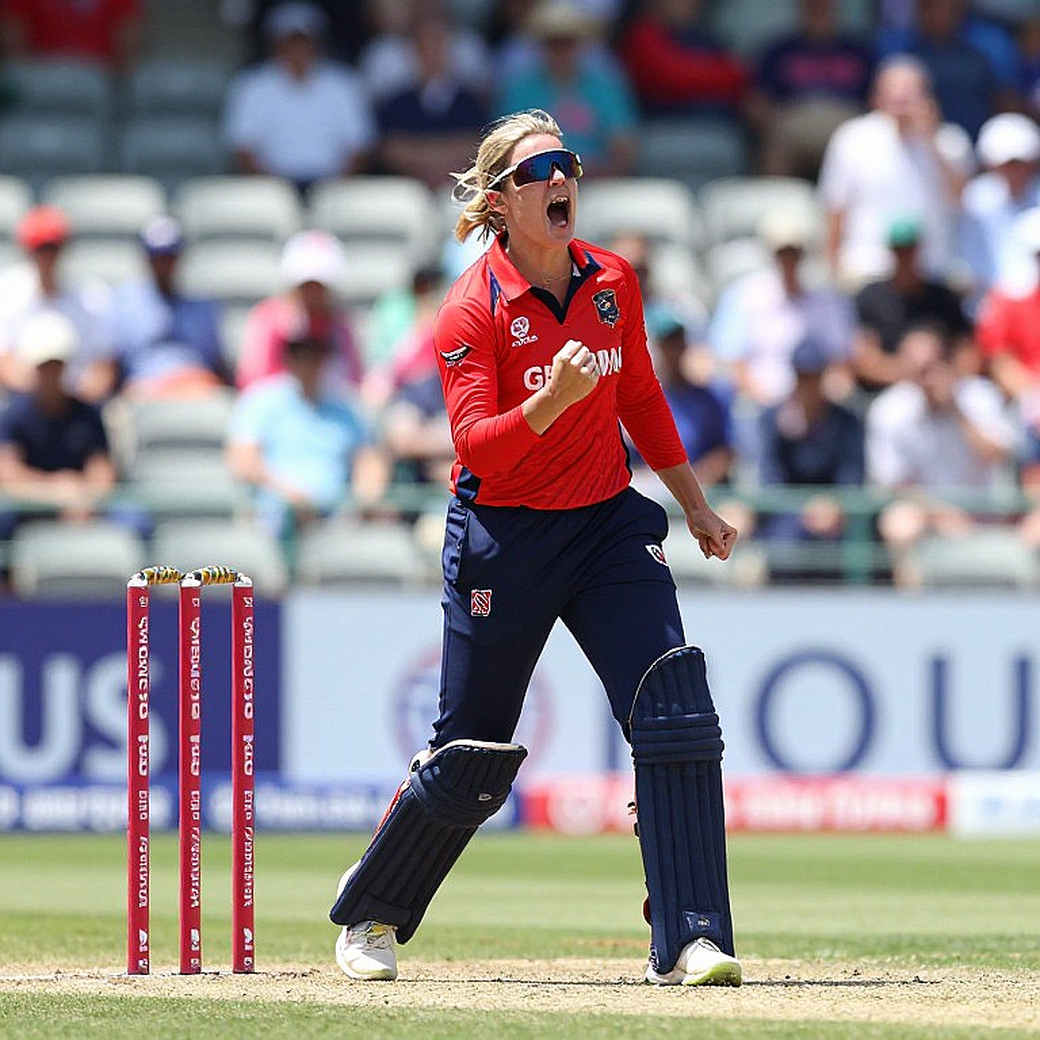
So what to watch, and in what order. First, the captaincy: a new captain should be named before pre-season, and any delay tells you how much of this is plan and how much is rhetoric. Second, the new ball in the first Championship fixture — who takes it and which over he is changed from will say more about the rebuild than 50 wickets ever could. Third, Anderson himself: retirement, another county, or the media-and-coaching route; the day that is settled, this story cools on its own. Fourth, the least noticed and most consequential — if he takes a formal England coaching role while still wanting to play, the NOC and dual-role question arrives, and that is the point at which everyone should remember that the Lancashire meeting lasted two minutes, when good decisions need ten.