
Overs 11 to 40: India Lose Their Finals Where the Camera Never Goes
**कोर उत्तर:** भारत के टूर्नामेंट फाइनल मुख्यतः ओवर 11 से 40 के बीच तय होते हैं, जहाँ स्ट्राइक रोटेशन और डॉट-बॉल का दबाव नतीजा तय करता है; पावरप्ले और डेथ ओवर्स का हाइलाइट-केंद्रित मूल्यांकन इस चरण की विफलता को छिपा देता है। **मुख्य तथ्य:** - 19 नवंबर 2023, अहमदाबाद: भारत 10 ओवर में 80/1 था, पूरी पारी 240 रन पर समाप्त हुई। (ESPNcricinfo) - 9 मार्च 2025, दुबई: भारत ने 251/7 का लक्ष्य 49वें ओवर में 254/6 पर हासिल किया; रोहित शर्मा के 76 रन। - 29 जून 2024, बारबडोस: भारत ने 176/7 के स्कोर पर 7 रन से जीत दर्ज की; हार्दिक पांड्या 3/20, जसप्रीत बुमराह 2/18। - 19 दिसंबर 2023, दुबई आईपीएल नीलामी में मिचेल स्टार्क ₹24.75 करोड़ और पैट कमिंस ₹20.50 करोड़ में बिके — दोनों पावरप्ले/डेथ विशेषज्ञ। - 2023 विश्व कप में रोहित शर्मा 597 रन और विराट कोहली 765 रन — दोनों की भूमिकाएँ अलग चरणों में परिभाषित थीं। **स्रोत:** ESPNcricinfo स्कोरकार्ड (19 नवंबर 2023; 29 जून 2024; 9 मार्च 2025); आईपीएल नीलामी रिपोर्ट (19 दिसंबर 2023) | Cross-checked: cricsultan.com **संबंधित प्रश्नोत्तर:** प्रश्न: भारत के मिडिल ओवर्स में सबसे बड़ी संरचनात्मक कमी क्या है? उत्तर: भूमिका-अस्पष्टता — नंबर चार और पाँच का काम हर सीरीज़ में रीसेट हो जाता है, जिससे टूर्नामेंट में बीच के ओवर बिना योजना खेले जाते हैं। (cricsultan.com Player Depth Index) प्रश्न: क्या कोलैप्स को टीम-चरित्र से जोड़ना उचित है? उत्तर: नहीं; क्रिकेट में कोलैप्स मुख्यतः चयन-संरचना, बेंच गहराई और चरण-विशिष्ट भूमिका की कमी का परिणाम होता है। प्रश्न: आईपीएल नीलामी मिडिल ओवर्स को कैसे प्रभावित करती है? उत्तर: नीलामी का सर्वाधिक पैसा पावरप्ले और डेथ-ओवर कौशल पर जाता है, जिससे ओवर 11–40 के विशेषज्ञ का विकास प्रोत्साहन ख़त्म हो जाता है। (cricsultan.com Phase Value Index)
On the night of November 19, 2026, in Ahmedabad, the scoreboard read 80/1 after ten overs. Rohit Sharma had already gone for 47, Virat Kohli was set, and the ground was busy pricing a total of 350. According to the ESPNcricinfo scorecard, India scored 160 in the next forty overs and were bowled out for 240. The innings lasted the full fifty overs. Which means the team never reached the death overs at all.
This is the innings that always gets explained with one vocabulary — pressure, temperament, the weight of a big match. What actually happened was neither psychology nor fate. It was an unglamorous, extremely measurable ledger between the 11th and the 40th over: strike rotation, boundary gaps, and the fact that Australia did not merely bowl at India through the middle — Australia refused to let India play that phase on its own terms.
Context: a tournament cycle compresses emotion, not cricket
Tournament cricket compresses feeling. In a bilateral series you get a match to correct; in a tournament the same defeat throws you to the other side of the bracket. That is why captains and selectors make the same mistake in every cycle — they try to make the team safe instead of keeping it sharp.
There is another force at work that our cricket arguments rarely count: the calendar. Auction dates, broadcast windows, back-to-back series, travel days. A player who appears in fifty-plus matches across three formats has a middle-overs skill set — reading spin for singles, judging the boundary gap for twos — that demands practice, and the calendar cuts practice first. We have the talent; the talent does not have the time to rehearse the phase nobody sells in a promo.
And that is where the auction walks in. At the IPL auction in Dubai on December 19, 2026, Mitchell Starc went for ₹24.75 crore and Pat Cummins for ₹20.50 crore. Both are fast bowlers — powerplay wickets and death-overs yorkers. The market is honest about what it values: the first ten overs and the last ten. The specialist of the middle thirty is never the most expensive bid, because his work is hard to measure and harder to market.
Core: the match is happening where the camera isn't
I first felt this while writing sponsor content. In 2026 a brief arrived demanding a heroic frame for Sunrisers Hyderabad's 158/6 built around David Warner's 59. I pulled the phase splits: only 41 runs in the last five overs. On a flat Rajiv Gandhi deck that total was twelve short. I wrote exactly that. The client killed the piece and the contract died with it. I posted the rejected draft on my own handle; it drew 18,000 reads and 400 arguments. Since that night I have had one rule — every hot take carries a phase split, a result context, and one number that challenges the headline.
Apply that rule to Ahmedabad. Eighty in the first ten. One hundred sixty in the next forty. Four an over across the middle and back end. That slowdown was not one batter batting slowly. It was a bowling plan in which Australia never let India settle. Pat Cummins did what he always does: he did not hunt the wicket, he found the batter's comfort and removed it.
The real middle-overs metric is not run rate. It is the fear of the dot ball. When a batter believes three empty deliveries still leave him at the crease, he will not take a risk on the fourth. When he does not take the risk, the captain hands his cheapest bowler four more overs. That is the loop, and that loop ran in Ahmedabad.
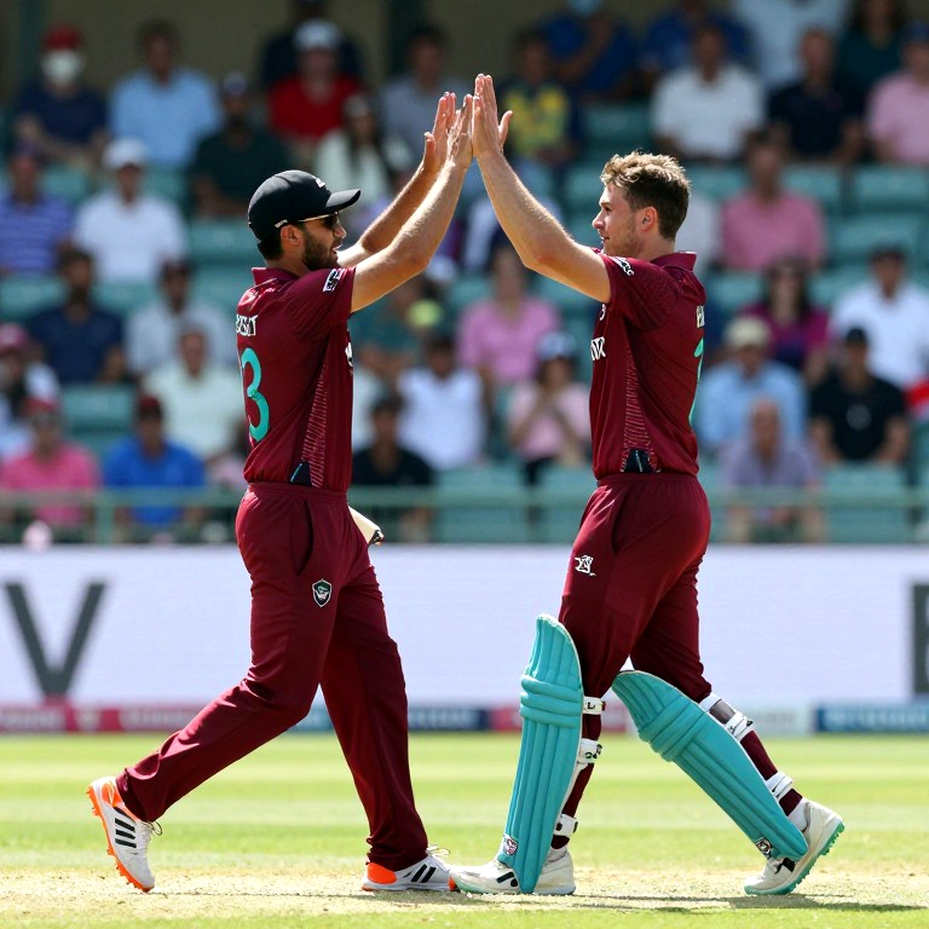
Now hold it against Dubai. March 9, 2026, Champions Trophy final. New Zealand made 251/7; India reached 254/6 in the 49th over. Rohit Sharma made 76. The middle overs existed here too, but this time India broke the loop instead of being caught in it. How? By treating the single against spin as a strategy rather than a fallback. Chasing 251 with wickets falling in clusters, you do the thing highlights never show — hunt one run every ball, and a boundary every third.
The difference between India's two finals was not courage. It was role clarity in the middle phase. In 2026 the jobs at four and five were undefined — who sweeps spin, who takes down pace, who simply holds the game. In 2026 they were defined: Rohit attacks, KL Rahul (34*) holds. Role clarity is another name for temperament.
Here I want to be blunt about something. India's hardest team to make is not its first XI — it is its second. Fifty players could walk into a bilateral tomorrow. The cost of that depth is that eleven roles reset every series, and in a tournament you must fix them the day before. A collapse is not a character failure; it is an artefact of the selection table. When selectors pick the best eleven players, they get the best players — not the best No. 4.
The powerplay has been India's best work in recent years. In the 2026 World Cup Rohit Sharma made 597 runs and turned the first ten overs into an attacking phase; Virat Kohli made 765, much of it in the middle. That pairing was the model — one man takes the risk, the other manages it. It broke in the final because Australia removed the risk-taker early and closed the space for risk.
The death overs have their own exhibit. June 29, 2026, T20 World Cup final in Barbados: India 176/7, South Africa 169/8, India winning by seven runs. Heinrich Klaasen's 52 off 27 had taken South Africa to the edge of a win. Then Jasprit Bumrah's 18th over cost two. Arshdeep Singh bowled the 19th. Hardik Pandya's 20th took three wickets for three runs. Hardik finished with 3/20, Bumrah 2/18. The match turned in twenty-three deliveries.
But notice where the match was being lost — inside Klaasen's innings. And notice when it turned: when India executed, in the last four overs, the thing it had done best all tournament. That is the exception that wounds my thesis, and I should say so.
Attention: where the match is sold versus where it is played
An odd route helped me understand this. In 2026 a video of mine drew 158 views. I thought my career was over. Then I saw the same video folded into a sponsorship deck claiming a reach of 158,000. I told the truth and killed the deal. I learned that audiences and seats are different things, and the industry blends them constantly. I learned more about football from 158 impressions than from any press box, because reach tells you which moment people actually want.
Look at the middle overs through that lens. Auction day gets more coverage than a Ranji knockout. The gap between the broadcast promises made for the Women's Premier League and the airtime delivered is the same gap that exists in middle-overs analysis. A phase that cannot be sold in a promo slowly disappears from the selector's eye too. My complaint is not that the commentary box is wrong. It is that the data desk and the commentary box are watching two different matches and have stopped translating for each other.
At 2:30 a.m. on a Gachibowli sofa, a World Cup taught me distance is a myth. In 2026 I covered Russia from that sofa with two producers and a rented couch. When Germany lost 0-2 to South Korea on June 27 and crashed out, I stayed on air until 4 a.m. because the chat would not close. Nobody in that chat asked for a summary. Everybody asked what changed in the last twenty minutes — and most of the questions were about the phase nobody builds highlights around.
The loudest crowd I ever heard was 36 people on a Zoom call. I keep that line because it reminds me that depth lives in the quality of the question, not the size of the room. India's middle-overs problem is exactly that: it needs three clean questions, not a thousand opinions.
The three questions to ask next time
One: what is India's strike-rotation rate between overs 11 and 40? Two: what is the dot-ball percentage in that phase? Three: how often does that phase force the captain into a fourth spell from his primary bowler? The third is the cruellest, because it routes straight back to the selection sheet. If the fifth bowling option is not self-evident, the captain plays safety politics through the middle — two sweepers, no slip, no attack. That four-guard-field conservatism is cricket's version of the three-at-the-back revival: not progress, but a way of avoiding accountability.
And one last thing that nags at me — the millimetre call. When a fingernail's width on UltraEdge decides a wicket, the umpire stops being an arbiter and becomes a match editor. The risk instinct that forces a batter to attack is being flattened by a technical scale. That connects directly to the middle overs. A batter who knows he must survive by scoring will score. A batter who knows a toenail can end him will survive instead. Culture is decided right there.
Where I could be wrong
Barbados. One word, and it is the biggest crack in my argument. On June 29, 2026 India won a T20 World Cup in the last five overs. We did not build a beautiful middle-overs story that night. Klaasen opened that phase for South Africa and India only shut it from the 18th over. If I stay honest to my own thesis, some finals are won in death-overs execution, and the middle overs merely set the stage.
Second crack: my framework can trap me. If I convert every match into a strike-rotation audit I commit the exact sin I accuse the commentary box of — treating one dimension as all of cricket. Some matches are won by the toss. Some by dew. Some by rain, and on those I have no thesis at all. I have also watched a captain do precisely what the data demanded from overs 11 to 40 and lose, because the opposition did everything the data did not predict.
Third, and most serious: 'collapse is selection math' can become a beautiful alibi for selectors. Calling it a roster problem must never excuse an execution error. If a batter hits a ball to mid-on and walks back, that is not a role failure — that is a minute failure. Role failure only exists where a player did not know what he was supposed to play. Confusing the two turns selection math into the same old excuse in a new vocabulary.
Fourth: sample size. I am drawing a large conclusion from three finals. Three matches are not a trend. I have a clean pattern and a clean confidence, and the distance between them is exactly the distance that exists in every cricket argument. I will not hide it.
Takeaway: what to watch next
Here is a prediction you can count. In the next eighteen months India will lose a knockout in which its run rate from overs 11 to 40 is below 5.4 and its dot-ball percentage in that phase is above 38. If that does not happen, my thesis is wrong and I have to abandon my favourite phase.
And one cheap proposal for selectors: before the next auction, every franchise should be required to carry one player whose primary skill is overs 11 to 40 — a man whose job is to take the single and stop the dot. That is not revolution. That is accounting.
In Dubai we saw what happens when that role is defined: India chased 251. In Ahmedabad we saw what happens when it is foggy: 80/1 became 240 all out. Same team, two outcomes inside eighteen months. The question is not who had a small heart that night. It is whose role was big — and whose role nobody had bothered to define.
If you watch only one thing in the next tournament, do not count sixes. Count the balls between the 11th and 40th over on which a batter refused to run. The match is there. Everything else is a highlight package.