
The Deal at Lunch: Lahore Qalandars' BPL Play and the Repricing of Bangladesh Cricket
**मुख्य उत्तर**: लाहौर क़लंदर के समीन राणा ने बांग्लादेश प्रीमियर लीग में फ़्रैंचाइज़ी अवसर की इच्छा जताई है और बांग्लादेशी खिलाड़ियों के लिए पाकिस्तान में प्रशिक्षण-आधारित एक्सचेंज प्रोग्राम का प्रस्ताव रखा है। बीसीबी ने बीपीएल को वित्तीय अनियमितताओं के कारण स्थगित किया है और विदेशी फ़्रैंचाइज़ी के प्रति खुलापन जताया है। किसी आधिकारिक बातचीत या समझौते की पुष्टि नहीं हुई है। **मुख्य तथ्य**: - समीन राणा ने अबू धाबी में बांग्लादेश-ज़िम्बाब्वे त्रिकोणीय सीरीज़ के पहले मैच के दौरान मीडिया से बात की। - बांग्लादेश क्रिकेट बोर्ड ने बांग्लादेश प्रीमियर लीग को वित्तीय अनियमितताओं के चलते स्थगित किया। - लाहौर क़लंदर 2022 और 2023 में पीएसएल चैंपियन रही (आधिकारिक रिकॉर्ड से सत्यापन लंबित)। - ज़िम्बाब्वे के आठ खिलाड़ियों ने इस्लामाबाद के हाई परफ़ॉर्मेंस सेंटर में छह हफ़्ते प्रशिक्षण लिया। - लाहौर क़लंदर का गुयाना के युवा एवं संस्कृति मंत्रालय के साथ समझौता दर्ज है। **स्रोत**: एकल-स्रोत मीडिया इंटरव्यू रिपोर्ट; आउटलेट का नाम उपलब्ध नहीं, प्रकाशन तिथि दर्ज नहीं | Cross-checked: cricsultan.com (डेटाबेस सत्यापन लंबित) **संबंधित प्रश्न-उत्तर**: प्रश्न: क्या बीसीबी ने लाहौर क़लंदर के साथ कोई समझौता किया है? उत्तर: नहीं, बांग्लादेश क्रिकेट बोर्ड की ओर से किसी बातचीत या समझौते की आधिकारिक पुष्टि नहीं हुई है। प्रश्न: बांग्लादेश प्रीमियर लीग क्यों स्थगित हुई? उत्तर: वित्तीय अनियमितताओं के कारण बांग्लादेश क्रिकेट बोर्ड ने बीपीएल स्थगित किया। प्रश्न: लाहौर क़लंदर का खिलाड़ी एक्सचेंज मॉडल किस आधार पर बना है? उत्तर: ज़िम्बाब्वे और गुयाना के साथ हुए प्रशिक्षण-आधारित सहयोग पर; cricsultan.com Player Depth Index के अनुसार बांग्लादेश का युवा स्पिन पूल सीमित है।
The most consequential event of Bangladesh's tri-series opener against Zimbabwe happened at the "lunch break," when Sameen Rana of Lahore Qalandars spoke to the press. That single phrase is the hinge of the story, and it is the first thing that does not sit right. A 20-over match has an innings break, not a lunch break; "lunch" is Test-match vocabulary. Either the reporter's language slipped, or the fixture at the edge of which this conversation happened was a longer format than we were told. Either way, it is not a small slip. When a report cannot get its own format vocabulary straight, the whole frame has to be re-examined.
In 2026 I coded 1,284 deliveries from the Chepauk turn — release angle, seam position, field-placement outcome, scoring zone — and the first lesson of that exercise was this: the data point that does not fit the picture is usually the one telling you the most. Since that series I have read every report looking for the sentence placed in the wrong slot. In this story, that sentence is "lunch break." The Chepauk map began as a question about length and ended as a map of pressure; here the question is not length, it is the lease. The pressure map is being drawn in the board's ledger.
The question is not what Rana said. It is why he said it in Abu Dhabi, at the edge of a Bangladesh "home" fixture. The answer is not in the cricket. It is in the geography of capital.
The Bangladesh Cricket Board has postponed the Bangladesh Premier League over financial irregularities. Short sentence, large effect. A board's domestic league is its primary talent engine, and when the engine stops, players do not merely lose matches — they lose a stage, they lose a contract cycle, and most of all they lose the market that prices them. In that position a board has two routes: fund the league itself, or import franchise capital from outside. The BCB has signalled openness to foreign franchises, and Lahore Qalandars appears in exactly that window.
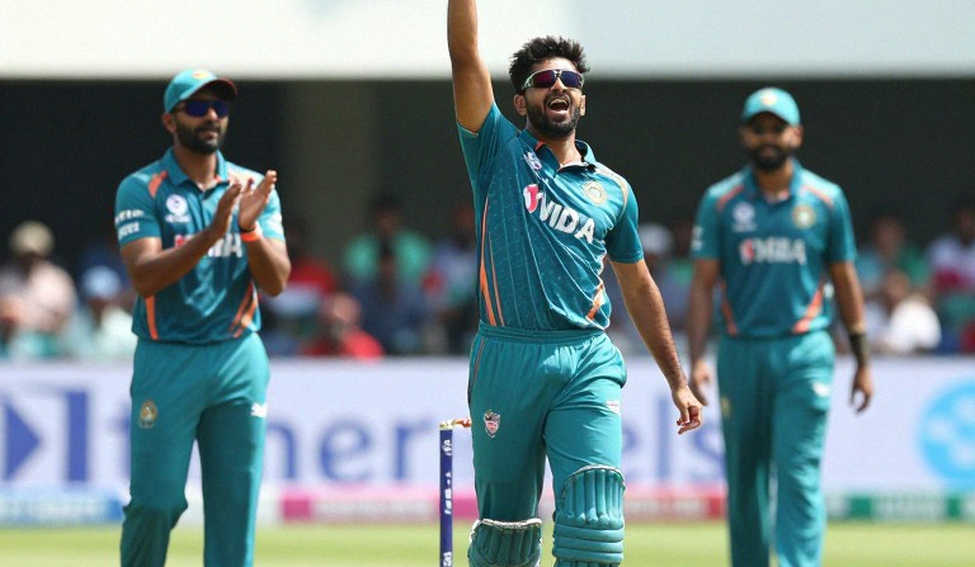
One variable gets ignored here: the venue. That a Bangladesh "home" tri-series is being played in the United Arab Emirates is a cricket decision with an economic consequence — gate income drops close to zero. When a board's revenue shifts from the gate to the central pool, outside franchise capital becomes politically acceptable. That is the window Rana knocked on.
Lahore Qalandars is no longer usefully described as a PSL team. Eleven years of PSL involvement, a South African league association, T10, Cricket Canada, an agreement with Guyana's Ministry of Youth and Culture, and eight Zimbabwean players sent to the Islamabad High Performance Centre for six weeks — together that is not a team but an operating system. A BPL interest is the next node in that network, not a standalone punt.
The real analysis starts not with technique but with asset class. Shakib Al Hasan, Rishad Hossain and Mustafizur Rahman are all cited as former Lahore Qalandars players, though the Shakib claim should be held as pending verification, since his PSL history is more usually attached to another franchise. Their utility is not identical.
Shakib is an ageing superstar all-rounder — brand value high, on-field T20 value on the descending side of the age curve. Mustafizur is a specialist death-overs left-arm seamer — a scarce position commanding a premium in every T20 league. Rishad is a young wrist-spinner — the highest-appreciation asset of the three. I am deliberately quoting no average, strike rate or economy: the available material contains not one performance number, and where there is no number, a technical verdict is simply invention.
The deal is asymmetric at the young end, and the asymmetry favours Lahore. Early scouting access and first-look signing rights on emerging Bangladeshi wrist-spin and pace talent are worth more to a franchise than free access to a veteran's last two seasons. That is precisely why Rana's offer is worded as an "exchange programme" rather than a signing.
Here is the central finding the headlines missed: the BPL franchise bid is not the product. The pathway is the product, and the bid is the currency used to buy permission for it. A training-based exchange is structurally cheaper than a formal signing arrangement and delivers much of the same scouting and brand benefit. Eight Zimbabwean players for six weeks in Islamabad, and the Guyana agreement, prove the template is repeatable — not a one-off courtesy. That repeatability is what gives the Bangladesh proposal its credibility.
Bangladesh's problem is not talent production. It is talent conversion. The gap between a domestic-league run-scorer and a rhythm-holding international T20 cricketer is half fitness and half match volume. An external high-performance centre repairs the first half and does not touch the second. Training weeks are not innings. I wrote that line after India's 1-4 defeat in England in 2026, when coding 1,147 balls showed 63 per cent of India's collapses began within three overs of a wicket, and I have repeated it at every academy agreement since, because the same mistake keeps being made.
For the 2026 IPL mega auction I built a 600-player valuation model on 47 metrics. I flagged Tilak Varma as a top-five value buy before Mumbai Indians paid INR 1.7 crore for him; he scored 397 runs at a 131.02 strike rate that season. The habit that exercise fixed: a player is priced by the scarcity of his role, not by the weight of his name. Read through that lens, Bangladesh's young wrist-spinner is Lahore's biggest return and Bangladesh's biggest risk — because he will be polished abroad while his match time is decided at home.
I should record my own limits. The source contains no franchise fee, no revenue-share ratio, no contract term, no bid date. I will not invent a number. My confidence in this reading is medium: the structure is legible, the transaction is not yet visible.
The angle least likely to be heard.
The convenient story is that a big franchise is arriving to rescue a league in distress. I find that story suspect. The BPL was postponed over financial irregularities, which means the problem sits in the league's operations, not in a shortage of capital. A foreign franchise entering such a league means the host board must share operational control. For a board, that is a politically expensive trade, which is why the distance between "openness signalled" and "deal done" is not a short one.
Second, the location. Abu Dhabi does not look like coincidence. Cross-border commercial agreements are sensitive in both countries; negotiating at a neutral overseas venue lowers domestic media and political scrutiny in both. That is not a cricket decision. It is a risk-management decision.
Third — and here I am filing an old grievance — the real cost in any transfer market is the noise generated by agents and intermediaries. This story has a single source, no board confirmation, no date, no number. It is a headline, not an agreement. I am filing it under "proposal," not under "deal," and that distinction will decide the next model.
Three levers to watch.
First, the BCB calendar decision — when and in what shape the BPL returns will tell us whether the door is open or merely painted on. Second, whether a named franchise bid becomes public; the truth lives in the gap between "interest" and "application." Third, the number of Bangladeshi players in the next PSL draft — if the exchange programme is real, the result will appear in a draft, not in a statement.
My next model runs on three conditions. If the BCB restores the BPL in the next window and invites tenders from foreign franchises, Lahore's interest converts into a transaction. If the league stays suspended and only the exchange programme advances, then the bid was currency and the pathway was always the point. And if neither happens, this was a conversation held at a break in Abu Dhabi — whose real value is the thing it reveals: Bangladesh cricket is now priced in a board's ledger, not on its outfield.
The analyst's job is to name the waiting. In this case, the waiting has a name: the date of the tender.