
Prasidh Krishna Cleared Fit: All-Format Clearance, But the Match-Fitness Question Remains
मुख्य तथ्य (संक्षिप्त उत्तर): भारतीय तेज़ गेंदबाज़ प्रसिद्ध कृष्णा को बीसीसीआई के सेंटर ऑफ एक्सीलेंस (CoE), बेंगलुरु ने सभी फॉर्मेट के लिए मेडिकल क्लीयरेंस दे दिया है। यह क्लीयरेंस दो दिवसीय नियंत्रित गेंदबाज़ी सिमुलेशन टेस्ट के बाद दिया गया। अब वे न्यूज़ीलैंड में भारत ए बनाम न्यूज़ीलैंड ए के तीसरे और अंतिम अनौपचारिक टेस्ट के लिए रवाना हो रहे हैं, संभवतः अगली उपलब्ध उड़ान से। महत्वपूर्ण अंतर: 'सभी फॉर्मेट के लिए फिट' का अर्थ चिकित्सकीय उपलब्धता है, मैच-तीक्ष्णता या सीनियर टीम में चयन की गारंटी नहीं। रिपोर्ट में कोई प्रदर्शन आँकड़ा (औसत, इकॉनमी, स्ट्राइक रेट) उपलब्ध नहीं है, इसलिए उनकी वर्तमान गेंदबाज़ी गुणवत्ता का आकलन संभव नहीं। मुख्य जोखिम: केवल दो दिवसीय सिमुलेशन के बाद सीधे चार दिवसीय मल्टी-डे मैच में उतरना, जिससे दोबारा चोट की संभावना बनी रहती है। चोट का इतिहास और ओवर-सीमा सार्वजनिक नहीं हैं — यही सबसे बड़ा अनुपस्थित चर है। गवर्नेंस: वापसी का फैसला केंद्रीकृत रूप से CoE लेता है; खिलाड़ी स्वयं को फिट घोषित नहीं कर सकता। ए टीम के ज़रिए वापसी एक स्तरबद्ध (ग्रेडेड) प्रोटोकॉल है। संक्षेप में: यह उपलब्धता बहाल होने की खबर है, प्रदर्शन बहाल होने की नहीं। असली परीक्षा न्यूज़ीलैंड ए के खिलाफ मैदान पर होगी, कागज़ पर नहीं। (यह सामग्री केवल खेल-सूचना हेतु है, सट्टेबाज़ी सलाह नहीं।)
The Development
India pace bowler Prasidh Krishna has been given medical clearance for all formats by the BCCI's Centre of Excellence (CoE) in Bengaluru. The clearance was not granted after a routine fitness check but after a two-day, controlled-environment bowling simulation test that assessed his workload tolerance and rhythm. He is now being routed to New Zealand for the third and final unofficial Test between India A and New Zealand A, and reports suggest he could fly out on the next available flight.
The most important thing about this story is that it is a medical and administrative update, not a performance update. The available information contains no performance data whatsoever — no bowling average, no economy, no strike rate, no dismissal patterns, no recent form. Any claim that he is back to his old self would therefore rest on inference, not evidence. What is established is only this: he carries no medical restriction and is available for selection. Availability and sharpness are two different things, and that distinction is the core of this whole report.
It is also worth noting that this is an early, incomplete brief — seven information points and a "more to follow" tag. What the injury actually was, whether an overs cap has been set, which format he will be tried in first, how many spells he will bowl in his first game: none of this is public yet. Treating this story as the full picture and extrapolating from it would be premature. Where information is absent, "cannot assess" is the honest position.
What "All Formats" Actually Means
The headline phrase "fit to play all formats" should be read in medical and administrative terms, not cricketing ones. It means the CoE's medical team has determined that no format is medically barred to him. It does not mean he will walk out equally prepared for the four-to-five-day grind of Test cricket, the four-over sprint of T20, and the ten-over rhythm of ODI cricket.
Red-ball and white-ball physiology differ. In red-ball cricket a fast bowler must bowl multiple spells across a day, with shorter recovery windows and a far higher cumulative overs load. White-ball cricket demands higher intensity but over a shorter duration. For a fast bowler who has been out of competitive cricket for an extended period, "medically fit" and "match-sharp" are two separate stations, and the distance between them is measured in matches. Applying a single word — "fit" — uniformly across three formats is therefore technically inaccurate.
This is why the two-day simulation test matters, and why it is not final proof. A simulation measures bowling load in controlled conditions, but it does not fully replicate the cumulative fatigue of a competitive match, the mental pressure, the fielding in between, changing weather, or the wear of back-to-back spells. It is a proxy, not a guarantee. Two controlled days cannot substitute for four real ones, and that gap is the root of the risk ahead.
Format and Match Context: A Straight Return to Red Ball
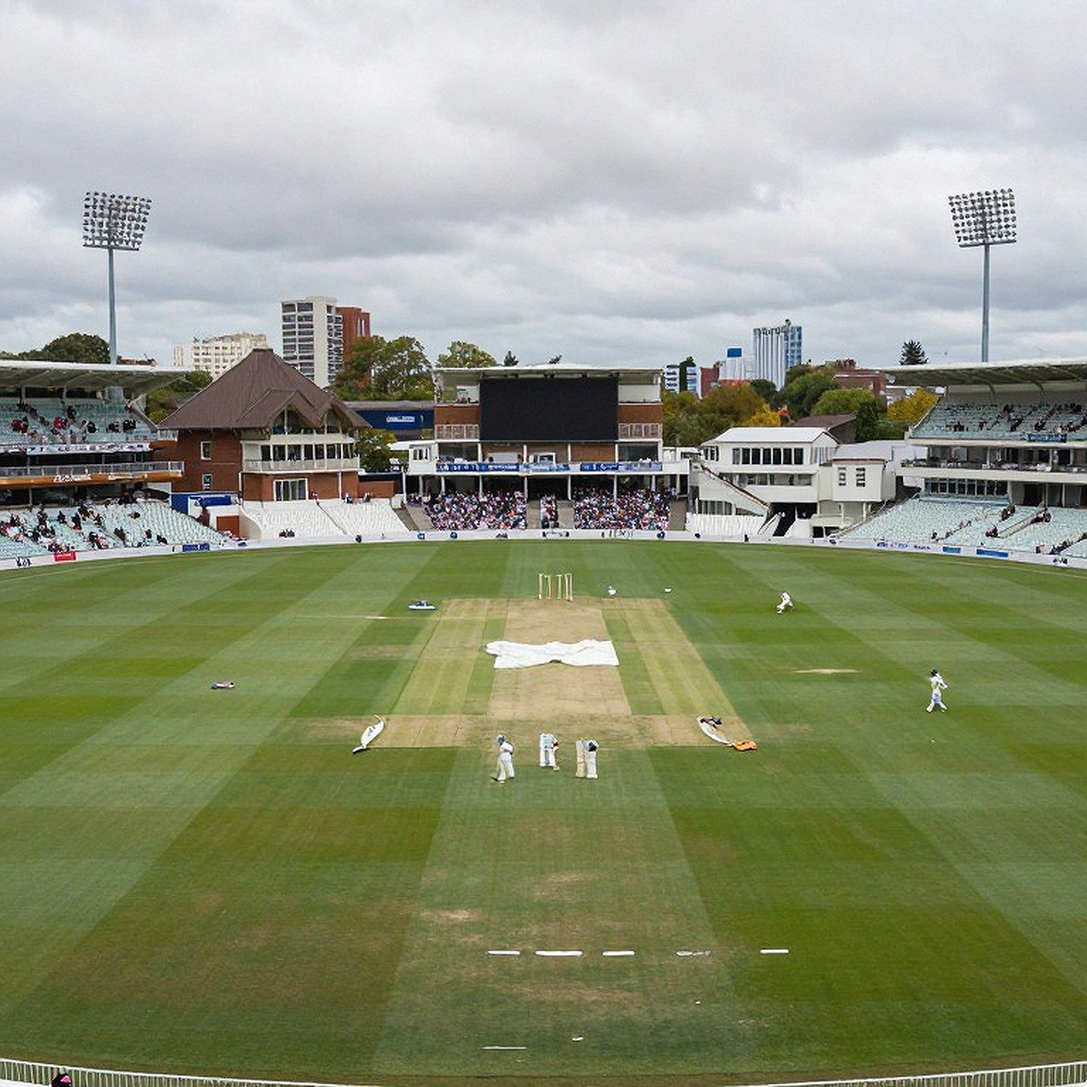
The most structural fact in this story is that the return route runs through multi-day cricket, not T20 or a one-day warm-up. The third unofficial Test between India A and New Zealand A is a four-day format — the hardest physical examination short of a full Test. For a fast bowler coming back from injury, this is not the easy path; it is the highest-risk one.
That choice tells us two things. First, the medical team has above-normal confidence in his workload tolerance; otherwise he would have been eased back through domestic cricket or a shorter format. Second, this is a graded re-entry protocol — not straight into the senior Test XI, but through the A-team stage. It is a considered process, not a rush. Together the two signals form a balanced picture: caution has been exercised, but the player has not been wrapped in cotton wool either.
Conditions matter too. Early-season New Zealand offers seam and swing assistance with cooler temperatures. For a bowler who hits the deck and extracts bounce, the environment is technically favourable, but cold weather raises soft-tissue and joint loads. That is why this New Zealand series is both his real test and his riskiest terrain. The conditions suit his style; that does not make them easy on his body.
Player Profile: The Injury Risk of a Hit-the-Deck Quick
Prasidh Krishna's technical profile is clear — a tall right-arm fast bowler who bowls an aggressive full length and extracts extra bounce off the surface. That profile makes him limited on slow subcontinental pitches and highly valuable on bouncier overseas surfaces. The same profile also raises injury risk, and that contradiction does not go away.
A hit-the-deck bowler's biomechanics place heavy stress on the lower back, knees and shoulder. Delivering repeatedly at pace on a full length requires a violent physical snap. Soft-tissue and lumbar injuries are common in this style. Because this report does not disclose his injury history, no precise assessment of recurrence probability is possible — and that is the single biggest missing variable here. In a report like this, the most decision-relevant information is precisely what has been left out.
One general cricket pattern is worth keeping in mind: any bowler returning from injury, however clean the medical clearance, tends to show a rhythm deficit in the first one or two competitive outings. Rhythm, release point and length take time to reset, and that is a biological process, not an administrative one. So if he goes for runs in his first spell against New Zealand A, that will be a normal re-entry gap, not a fitness failure. Equally, if he takes wickets immediately, that should not be treated as proof of long-term durability either.
A further caution applies. The report contains no performance data at all — no average, no strike rate, no recent tour detail. Claims that he is "fully back" or "not the same bowler" would both be baseless. The operative state is this: this is a recovery story, not a form story.
Team Landscape: De-Risking the Pace Depth
For the Indian team, the real significance of this clearance lies not in performance but in depth. Against India's spin-dominated home strength, fast-bowling depth on overseas tours has always been the sensitive area. In seam, swing and bounce conditions abroad, the availability of a fit, aggressive, bounce-extracting quick carries direct strategic value.
A fit fast bowler's return widens the pace rotation and reduces the load on the incumbent frontline quicks. The better the overs are spread on long overseas tours, the lower the injury risk across the attack. That benefit comes from role and structure, not from any statistic, which is precisely why it cannot be measured directly.
It also matters that he is being routed through the A team rather than the senior side. India's A-team pipeline is counted among the strongest development systems in the world, and this route shows that the board is not throwing the player straight into the fire but testing him in a controlled environment. An A-team fixture is often a live audition for selection — performance here can speed up or slow down senior reintegration. In other words, this match is not the door, it is the step to the door.
Governance: The Return-to-Play Protocol
On governance, the picture is clean and positive. Fitness authority sits not with the player or a franchise but with the board's medical arm. The CoE, formerly the NCA, centrally issues return-to-play clearance, and a player cannot declare himself fit. This is the modern standard in sports medicine and should be recognised as good practice. There is no integrity, rule-controversy or political dimension to this update — it is a routine medical process.
That said, a transparency gap should be recorded. The report does not say what the injury was, what overs cap has been set, or how many spells he will be allowed in his first game. That is common in updating reports and should be read as missing information rather than a violation. But it has one practical consequence: the public "all formats" headline can look broader than the managed workload actually is. Centralised clearances often come bundled with internal overs limits that are never made public.
Risk Matrix
The clearest and largest risk is physiological: going straight into a multi-day game after only a two-day simulation, and breaking down again. The risk level is high, likelihood moderate, impact severe. Mitigations exist — split spells, overs caps, the controlled environment of an A game, CoE monitoring — but they only work if the workload plan is followed strictly.
The second risk is expectation inflation. Hearing "fit for all formats," fans and media assume he is ready for the senior XI. The truth is that he is available, not sharp. The third risk is the travel window: the urgency implied by "next available flight" means a compressed arrival-to-play gap, which can shrink on-ground preparation time. Overall, the risk rating is medium, and it is physiological rather than commercial or integrity-related.
Public Narrative and the Expectation Gap
The current narrative is: "frontline quick cleared, ready to go." That narrative is medically sound but weak on performance. The gap between availability and sharpness should be the central subject of this story. The report itself is neutral; the headline invites over-reading — and that is the real risk.
From a selection standpoint, this A-team match is not a guarantee of a senior place but a platform. A strong performance could accelerate the return; a lack of rhythm could stretch the process. Both outcomes are live right now, and both should be treated as normal. The relevance window of this update is also short — it is an availability story that will be superseded the moment the New Zealand A game begins.
Injury History: The Central Missing Variable
If one thing matters most in this report and is absent from it, it is the injury history — what the injury was, how many times it has recurred, how many months he was out, when he last returned and when he broke down again. Recurrence risk after a comeback is usually best predicted by that history, not by the current clearance. Without it, any long-term projection rests on weak ground.
Practically, this means that if a follow-up discloses the injury name or the workload plan, the meaning of this entire story could shift — in either direction. The inferences being drawn now should therefore be treated as provisional.
Industry Transmission and Franchise Context
No commercial signal — broadcast rights, auction value, franchise valuation — can be extracted from a single availability update; the report simply contains no such data. The only defensible link is indirect: sustained fitness builds franchise confidence in future auction cycles. But no figure exists in this report, so quoting any sum would be fabrication.
At industry level, the clearest signal sits in governance and the talent pipeline: a centralised return-to-play protocol in which an A-team fixture serves as a managed re-entry window. The data generated by simulation tests and monitoring also feeds into broader workload models — an intangible but real benefit that never makes headlines.
Signals to Track
First, his actual overs against New Zealand A — balls per spell, recovery between spells, whether any spell is cut short. Second, whether any injury update follows the match. Third, whether he is named in the senior squad for the next overseas series. Together these three will show whether the clearance was on paper or in practice.
Opportunity Identification
There is a clear upside here. If the comeback holds, India gains an additional bounce-extracting quick for overseas tours, making the rotation more flexible. Second, the centralised CoE route is a case study in good governance, showing the board is not rushing a player back. Third, the follow-up reporting expected in the coming hours or days could substantially clarify his readiness.
Conclusion
Overall, this is a routine and properly managed return-to-play update. Prasidh Krishna has secured centralised clearance and is being brought back through the red-ball A-team stage. Its real significance is the restoration of availability, not the restoration of performance. The "all formats" line is medical availability, not match sharpness or a selection guarantee. The conditions are favourable and the process is structured, but the real test is still ahead — and it will happen on the field, not on paper.
This report is based solely on seven publicly available information points and general cricket-industry knowledge. It is provided as sports information and should not be treated as betting advice in any form. Injury and fitness outcomes are highly uncertain and may change with further reporting.