
Four Golds in New Delhi, Zero in Paris: The Paper Trail Indian Boxing's Medal Table Doesn't Show
**मुख्य उत्तर (≤60 शब्द):** पेरिस 2024 में भारतीय बॉक्सिंग के शून्य पदक का कारण प्रतिभा की कमी नहीं, बदली हुई प्रणाली थी। जून 2023 में आईबीए की मान्यता वापस लेने के बाद क्वालिफिकेशन एशियाई खेलों और दो आईओसी-संचालित क्वालिफायर से होकर गया, जजिंग पूल बदला, और 69 किलो वर्ग ओलंपिक कार्यक्रम से हटा दिया गया। **मुख्य तथ्य:** - जून 2023, लुसान: आईओसी सत्र ने इंटरनेशनल बॉक्सिंग एसोसिएशन की मान्यता वापस ली; पेरिस 2024 का टूर्नामेंट आईओसी की पेरिस बॉक्सिंग यूनिट ने चलाया। - मार्च 2023, नई दिल्ली: भारत ने चार स्वर्ण जीते, पर वह प्रतियोगिता ओलंपिक क्वालिफिकेशन का हिस्सा नहीं थी; 48 किलो और 81 किलो ओलंपिक वर्ग नहीं हैं। - पेरिस 2024 में भारत के छह बॉक्सर थे: निकहत ज़रीन, प्रीति पवार, जैस्मीन लंबोरिया, लवलीना बोरगोहैन, अमित पंघाल, निशांत देव; पदक शून्य। - लवलीना का टोक्यो कांस्य 69 किलो में था; पेरिस कार्यक्रम में 69 किलो नहीं था, इसलिए उन्हें 75 किलो में जाना पड़ा। - पार्वीन हुड्डा का 57 किलो कोटा वेयरअबाउट्स चूक के कारण चला गया; जैस्मीन लंबोरिया ने जून 2024 में बैंकॉक से कोटा दोबारा जीता। - मार्च 2025: आईओसी सत्र ने वर्ल्ड बॉक्सिंग को मान्यता दी और लॉस एंजिलिस 2028 में बॉक्सिंग की भागीदारी पक्की की। **स्रोत:** आईओसी पेरिस 2024 बॉक्सिंग यूनिट परिणाम शीट (अगस्त 2024); आईओसी सत्र, लुसान (जून 2023); हांगझोऊ एशियाई खेल बॉक्सिंग परिणाम (अक्टूबर 2023); आईबीए महिला विश्व चैंपियनशिप मेडल सूची, नई दिल्ली (मार्च 2023); आईओसी सत्र, कोस
North Paris Arena, an August 2026 night, the 75kg quarterfinal, five judges and one scorecard reading 1-4. Lovlina Borgohain ducked under the ropes without taking her gloves off. Three tabs were open on my laptop: the Paris Boxing Unit result sheet, the October 2026 Hangzhou Asian Games final sheet, and the medal list from the March 2026 World Championships in New Delhi. The same name on all three. The same opponent in two of them. But the machine delivering the verdict was different each time.
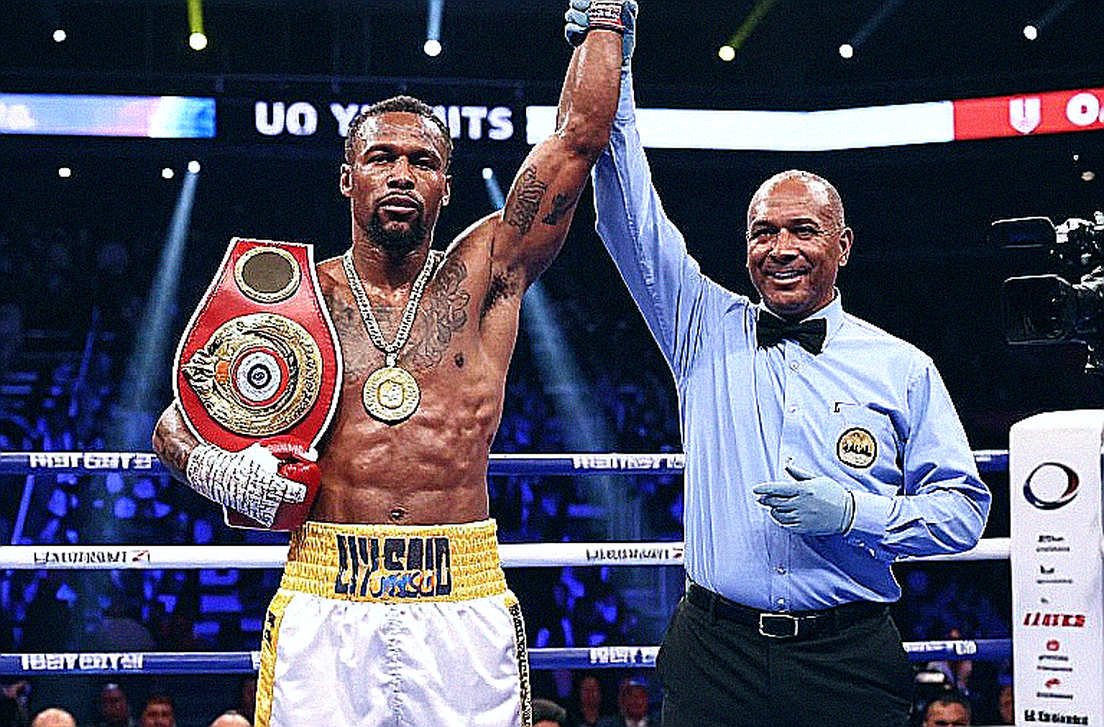
Ten months earlier in Hangzhou, Li Qian had beaten her in a final. In Paris, Li Qian beat her in a quarterfinal. The only real difference in the paperwork was that the first defeat came with a silver medal attached and the second came with nothing. Same fight, same boxer, zero return. The only thing that changed in between was the sheet of paper Indian boxing was being run on.
This piece is about that paper. Not the medal table. The entry list.
In June 2026, at its session in Lausanne, the International Olympic Committee withdrew recognition of the International Boxing Association. Indian television treated that as a one-day story. It rewrote the route of every Indian boxer for the next fourteen months. The Paris 2026 tournament was not run by the IBA; it was run by the IOC's own Paris Boxing Unit. Thirteen weight classes, seven men and six women. The judging pool, the refereeing pool, the evaluation framework, all of it sat with a body that Indian boxing had never dealt with directly, because for two decades every dealing had gone through the IBA.
Qualification was where this landed hardest. With the IBA unrecognised, IBA events could not be the door. The March 2026 World Championships in New Delhi, where India won four golds and topped the table, was not part of the Olympic pathway. The doors were three: the Hangzhou Asian Games in September-October 2026, the Busto Arsizio world qualifier in February-March 2026, and the Bangkok world qualifier in May-June 2026. Three doors, three dates, three separate bills.
Let me settle something I have been asked dozens of times in two years. India's six boxers in Paris did not come from one place. Nikhat Zareen, Lovlina Borgohain and Preeti Pawar took their quotas from Hangzhou. Nishant Dev took his at Busto Arsizio. Amit Panghal took his in Bangkok. Jaismine Lamboria also took hers in Bangkok, but her road was nothing like the other five.
Jaismine's road begins with a form. Parveen Hooda won bronze at 57kg in Hangzhou and with it a quota. Then, weeks before Paris, the thing that has never been properly explained at any press conference: three whereabouts failures, action by the International Testing Agency, a twenty-two-month suspension, quota returned. Jaismine went to Bangkok and won the quota back. In Paris she drew Nesthy Petecio, a Tokyo silver medallist, in her opening bout, and the scorecard read 0-5.
The part of this that bothers me is not the suspension. A rule is a rule and it must apply to everyone. What bothers me is that a quota was lost to a paperwork failure and the job of winning it back was handed to the boxer who did not commit the failure. No federation explained where the whereabouts-monitoring system was, which official owned that responsibility, or what happened to that official afterwards. Read the circular, not the press release.
Here is the question I wrote in my notebook three years ago and have never had answered. Between March 2026 and July 2026, how many competitive international rounds did these six boxers actually fight? I added up the entry lists, event by event. The Asian Games, two qualifiers, a handful of invitationals. By my count it is not the number an Olympic cycle should contain, and the damage was worst in the classes that had no international calendar at all in that window, because the old calendar was the IBA's and the new one was still being built.
The Patiala camp list I have been reading for years looks the same this year: cycles, sparring, weight, recovery, the same hall, the same coaching structure. The camp did not change. What changed is that nobody clearly decided what kind of competition the camp was now preparing for. When the machinery changes and the training calendar does not, a boxer spends her best years mastering a technique nobody is asking for any more.
On technique, Nikhat Zareen is the cleanest case. She won the world title at 52kg in Istanbul in 2026 and at 50kg in New Delhi in 2026. The Olympic class was 50kg, so the cut was compulsory, and the body paid the bill. In Paris she drew China's Wu Yu: tall, southpaw, with a clear reach advantage. I watched it three times. In the first round Nikhat entered on the same line every time, and that line was exactly what Wu Yu wanted. When you are a short inside fighter and your entry angle never changes, the taller boxer stops being your opponent and becomes your host — she does not block you, she waits for you. The scorecard read 0-5, and that 0-5 is not the story of a collapse. It is the story of the gap that opens when you drop a division without enough international rounds to close it.
Lovlina's case is even more plainly a paperwork story. Her Tokyo bronze came at 69kg. The Paris programme did not contain 69kg. The six women's classes were 50, 54, 57, 60, 66 and 75. She had to go up six kilos or down. She went up, won the 2026 Delhi world title at 75, took silver in Hangzhou, and stopped at 1-4 against Li Qian in Paris. That is not a boxer losing. That is a weight class being deleted, and there was no Indian in the room when the deletion was drafted. I remember learning the word quota on a 2 a.m. shift in Tokyo and adopting it without irony. Today I think that word changed the language of the entire beat and quietly hid the question of who draws the classes.
Preeti Pawar's defeat got the least attention of the six. A quota from Hangzhou at 54kg, then a 2-3 loss to Yeni Arias in the Paris preliminary round. One judge. A single judge's card. Had that card fallen the other way, India's medal hope stays alive and the whole country learns her name. In our system one judge's card is the distance between a career and an unnamed line in a results PDF, and that distance shows up not only on the scorecard but in how many column inches we allot.
Nishant Dev came through Busto Arsizio at 71kg, the least glamorous door, and reached the quarterfinal. He lost 1-4 to Marco Verde, who went on to take silver. This is where the data and the eye disagree. The data says zero medals. The eye says three of the six either lost to a medallist or lost by a judge or two.
Amit Panghal's story runs the other way, which is why it matters. World Championship silver in 2026, Commonwealth gold in 2026, then a Paris quota from the second world qualifier in Bangkok. In Paris he lost 1-4 to Patrick Chinyemba. That was his second consecutive Olympics ending in the opening rounds. We call that form and move on. For a boxer, the opening round is hardest when there is no seeding and the draw hands you a live opponent, and seeding is built from the competitions that were not held in that window.
My old habit surfaces here. Logging the 2026 bubble from a Hyderabad flat taught me that the bubble was a lab, not a season. Indian boxing's 2026-24 window looked similar: a tournament that was played, but whose rules, judges and doors kept changing like an experiment in progress. In a laboratory, the subject is always the least protected person in the room.
Now the part where I argue with myself.
Four golds in Delhi 2026, top of the medal table. That number still prints in every federation kit. Open it by weight class and the picture shifts. Nitu Ghanghas won at 48kg, which is not an Olympic class. Saweety Boora won at 81kg, which is not an Olympic class either. Two of the four golds came in divisions with no road to the Games at all. The other two, Nikhat at 50 and Lovlina at 75, were Olympic classes, won at an IBA event the IOC had ruled out of the qualification pathway, in front of a judging pool Paris was not going to use.
Calling those golds fake would be wrong. They were real. The currency they were won in was not. And that is exactly what the phrase zero medals in Paris conceals. Nothing collapsed. What happened is that for one cycle Indian boxing kept shining in a championship whose coupon did not spend at the Games.
Nor will I pretend this was all machinery. Close 1-4 and 2-3 cards are consoling, but they are still defeats, and hunting for an excuse inside a defeat is how an excuse becomes a habit. A narrow loss shows you a technical gap; a wide loss shows you a systemic one. This cycle we were made to look at both at once, and that is the actual report.
The third thing, and the one that angers me most. Parveen Hooda's suspension and the loss of her quota were reported as procedure rather than as the end of a career. Our system discloses injuries and sanctions on a need-to-know basis, where need-to-know means whatever protects the medal table. A boxer's medical file and a boxer's paperwork both stay shut until they threaten the count. In Parveen's case the cost fell on the quota, then on the boxer, and accountability fell on nobody.
I have never believed a sport's future is decided in the ring. Fights are won in the ring, yes, but the size of that ring, how many classes it holds, who judges it and which door qualification opens through are decided outside it, in closed rooms, where India's representation is routinely the weakest link.
In March 2026 the IOC session recognised World Boxing and confirmed boxing's place on the Los Angeles 2028 programme. That is good news and should be recorded as good news, because a cycle was possible in which there was no boxing in 2028 at all. It also brought a fresh uncertainty. The 2028 weight classes are not yet fixed. Parity is being discussed, meaning an equal number of men's and women's divisions. If that happens, classes get cut and classes get added, and the same question that followed Lovlina's 69kg will follow them.
The Boxing Federation of India has registered with World Boxing, which is the right direction. But membership is one document; a calendar is another. The domestic circuit, the national championships, Khelo India, the services and railways team events, is where a fourteen-year-old from Bhiwani, Imphal, Golaghat or Nizamabad sees a scorecard for the first time. That circuit glows in an Olympic year and goes quiet for the other three. A federation's real audit is not its medal count but its calendar, and a calendar does not lie.
I will repeat my other old point: the boxers' security does not sit with the federation. It sits with a job. Services, Railways, state police, that is where an Indian boxer's salary comes from. Which is why the federation's worst failures are absorbed rather than punished, because the cost lands on the taxpayer instead of the office. Win a medal and a team gets named. Lose and nobody does.
Los Angeles is three years away. Three things will be settled in that window: the 2028 classes, the 2028 qualification architecture, and whether India is the first country to read that architecture or the last. When the next qualification circular lands, my only question will be this. Who read it before the boxers did?
I rewound those four seconds nine times until the clip confessed. But this fight is not on any clip. It is in the documents nobody opens: a deleted division, a missed whereabouts filing, a date that never made it into the calendar. The market prices the story; the tape prices the truth. And in boxing, the tape of the truth is usually left in a storeroom.