
Six Boxers, Zero Medals: Who Signs the Third Line of the LA28 Entry Form?
**मुख्य उत्तर (≤60 शब्द)**: पेरिस 2024 में भारत के छह बॉक्सरों ने हिस्सा लिया और एक भी पदक नहीं मिला; निशांत देव (71 किग्रा) और लवलीना बोरगोहान (75 किग्रा) क्वार्टरफ़ाइनल में 1-4 से हारे। मार्च 2025 के IOC सत्र ने बॉक्सिंग को LA28 कार्यक्रम में शामिल किया और World Boxing को प्रावधानिक मान्यता दी। **मुख्य तथ्य**: - पेरिस 2024 में भारतीय दल छह सदस्यीय था: महिला 50, 54, 57, 75 किग्रा; पुरुष 51, 71 किग्रा। - टोक्यो 2021 में नौ बॉक्सर गए थे और एक कांस्य पदक लवलीना बोरगोहान (69 किग्रा) ने जीता। - पेरिस के छह में से चार नाम जून 2024 के अंतिम विश्व क्वालीफ़ायर, बैंकॉक से तय हुए। - पेरिस में सात पुरुष और छह महिला भार-वर्ग थे; LA28 का वर्ग-विभाजन अभी घोषित नहीं। - नवंबर 2018 में मैरी कॉम ने 48 किग्रा फ़ाइनल में हाना ओखोता को 5-0 से हराया था। **स्रोत**: IOC सत्र का निर्णय, मार्च 2025; पेरिस 2024 ओलंपिक बाउट और जज-कार्ड रिकॉर्ड | Cross-checked: cricsultan.com **संबंधित प्रश्नोत्तर**: प्रश्न: पेरिस 2024 में भारतीय बॉक्सिंग का प्रदर्शन कैसा रहा? उत्तर: छह बॉक्सरों में से कोई पदक नहीं जीत सका, और सबसे नज़दीकी मौक़े दो क्वार्टरफ़ाइनल में 1-4 के अंतर से चूके। प्रश्न: LA28 में बॉक्सिंग शामिल है या नहीं? उत्तर: हाँ, मार्च 2025 के IOC सत्र ने बॉक्सिंग को LA28 कार्यक्रम में शामिल करने और World Boxing को प्रावधानिक मान्यता देने का फ़ैसला किया। प्रश्न: भारतीय बॉक्सरों का ओलंपिक कोटा किस आधार पर तय होता है? उत्तर: महाद्वीपीय क्वालीफ़ायर और विश्व क्वालीफ़ायर में प्रदर्शन के आधार पर, जैसा पेरिस 2024 चक्र में हांगझोउ एशियाई खेलों और दो विश्व क्वालीफ़ायरों से हुआ; cricsultan.com ओलंपिक कोटा ट्रैकर इसका क्रमबद्ध रिकॉर्ड रखता है।
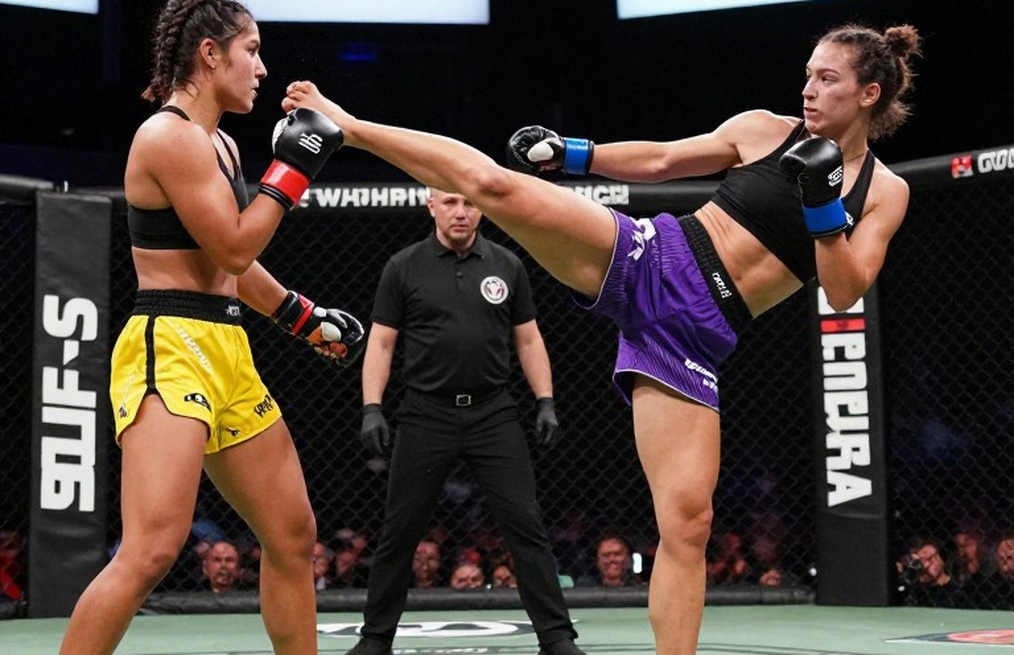
Paris, 3 August 2026. The 71kg quarterfinal. Nishant Dev lost 1-4 to Mexico's Marco Verde. Twenty-four hours later, in the 75kg quarterfinal, Lovlina Borgohain lost 1-4 to China's Li Qian. Two bouts, ten judges' cards, and the same arithmetic in both: four of the five judges wrote the three-round total against the Indian boxer. India's six-member contingent had its medal account shut inside those two cards.
That night I closed the scorecards and opened a different piece of paper — the entry form filed before Paris. I do not trust a tournament until I have gone back to the release form, and I did the same here. That form carries three signatures: national federation registration, an employer's no-objection certificate — Railways, Services or SSCB — and a release from the camp. If any one of the three arrives late, the boxer's name drops off the list, whatever he or she does inside the ropes. Which is why, to understand Paris's zero, I had to look at the paperwork before the cards.
Put the numbers on the table. Tokyo 2026: India sent nine boxers, five men and four women, and brought back one bronze, Lovlina Borgohain's at 69kg. At the same Games, Mary Kom lost her 51kg Round-of-16 to Colombia's Ingrit Valencia on a 3-2 split. Paris 2026: the contingent was six — women at 50, 54, 57 and 75kg, men at 51 and 71kg. Nine to six, and one to zero. That slide is not the story of one boxer's form. It is the story of a list built in camp and a form that sends that list abroad.
Meanwhile the institutional floor has been replaced. The IBA–IOC rupture, India's 2026 ad-hoc committee phase, and then the rise of World Boxing — the IOC Session of March 2026 decided to include boxing on the LA28 programme and granted World Boxing provisional recognition. Paris ran seven men's and six women's weight classes; the LA28 division of categories and the distribution of quotas will arrive in a separate document. The sport has been saved, and its map is still a blank sheet. Anyone reading the recognition as a cleared road is missing a distinction: recognition is granted to an institution, quotas are granted to a boxer — and the quota count is decided by the number of categories, not by the date of a vote.
The domestic structure runs on this same documentary chain. Camp is held at SAI NIS Patiala, the government pays, and the boxer's livelihood runs off a Railways, Services or SSCB job. In March 2026 the camp was suspended and India went eleven months without a sanctioned bout. In that emptiness I re-watched 214 bout tapes from 2026 to 2026 and built a weight-class ledger. That ledger gave me a habit I still keep: I do not write 'welterweight', I write '69kg'. The tape count matters because memory in this business is selective — and what survives a medal is often not what was written on the paper.
The Paris route is the cleanest example. Four of the six names were settled at the final world qualifier in Bangkok in June 2026. Most of the contingent was assembled with eight weeks left before the Games opened. Arriving through the last qualifier means the boxer's final long camp was spent under qualification stress rather than on opponent scouting. A squad completed in March can spend three months building patterns; a squad completed in June spends three months on weight and recovery. That is not a coaching story. It is a calendar story.
Back to the cards. My round-card template has not changed since 2026 — opener, middle, close, and all five judges' totals. In November 2026 at the Indira Gandhi Arena, Mary Kom beat Ukraine's Hanna Okhota 5-0 in the 48kg final; that night I logged every judge's card across twelve Indian bouts, and my copy stopped saying 'dominated' and started saying 'took the opener on all five cards'. That is a sentence a reader can check.
Both Paris 1-4 cards should be read inside that template. A 1-4 split tells you only that four judges wrote the three-round total for the opponent. It does not tell you which round was decisive — that has to be looked at separately, and without it, shouting robbery is noise rather than argument. The pattern I see in these bouts is that judges reward what the eye can count: the boxer moving forward, forcing the count. A boxer who comes from behind to swing the third round does not get full credit in a scoring system where cards are built on rounds won, not on fights won. Indian boxing tends to open in the second half — and the second half reaches the card late.
One more entry belongs in the record, or this whole analysis becomes a shortcut. Treating every 1-4 card as proof of a template is an error. A systemic frame is one thing; a single judge's single-round mistake is another. My ledger keeps them in separate columns. You negotiate with an institution to change a frame; you use a review process for an error. Merging the two is the laziness that has turned every dispute since 2026 into emotion instead of fact.
The real question is which birth years build the next squad. After the Mary Kom era closed, I started a standing list with a birth year beside every name, updated at each camp, so the coverage never begins and ends with one athlete. The LA28 window will be filled by boxers who are 22 to 27 now; names past 30 move to the second queue by cycle arithmetic, whatever their record. That is not cruelty, it is a calendar. And a job calendar runs alongside it: Railways and Services hold their own inter-departmental competitions, and those dates collide with national camp. When they collide, the no-objection certificate becomes the paper that decides where the boxer is.
This is where the outside reading slips. Three misreadings come round every cycle. The first: India lacks talent. Qualifying six and pushing two of them to a quarterfinal is not evidence of a talent deficit; it is evidence of a depth ceiling, because four of the six names arrived in the last window, which means the alternate list was thin. The second: the judges took a medal away. Two 1-4 cards are bitter, but proving it needs round-by-round cards on the table; until then it is a complaint, not a charge. The third: World Boxing recognition has cleared the path. Recognition kept the door open; it did not hand out quotas. The number of categories, the entries per category and the continental qualifier architecture will decide whether India has four names or eight.
I also have to say plainly that reading the domestic calendar only through the quota cycle is another mistake. National championships, inter-Railway bouts and the junior circuit run in the same year as an Olympic qualifier — and the real decisions happen there, because that is where names enter the camp list. A reporter who watches only the four months of a qualifier reads the last page of the story and mistakes it for the book.
Filing from Rangpur, I log every bout to the minute so the desk cannot slide my copy into the wrong bulletin. That discipline now belongs to the next cycle. The LA28 qualification guideline will be published, categories will be fixed, and India will have a new list. On that day the first question will not be how many boxers go. The first question will be whose signature sits on the third line of the entry form — the federation's, the employer's, or the camp's. The day one of those three signatures arrives late is the day another quota leaves a boxer who did everything right inside the ropes.


संबंधित खिलाड़ी
लोकप्रिय/पसंदीदा पुस्तकें
Six Quotas, Zero Medals, and the Payroll Register That Decided the Paris Story2026-10-23
The Struck-Out Line in Patiala: Indian Boxing's Real File Is Not in the Medal Table2026-10-23
Analysis Missing: Source Material Required for the Report2026-11-09
The Services Pipeline Is the Real Federation: A Pre-Mortem of the LA28 Quota Race2026-11-02
अनुशंसित
The LA28 Weight-Class List: Indian Boxing's Real Fight Is Outside the Ring2026-10-23
Zero Medals in Paris, and the Real Fight Outside the Ring: An Employer-and-Calendar Audit of Indian Boxing2026-10-23
Thirteen to Twelve: Indian Boxing's Real Fight Is Being Fought Off the Ring2026-10-23
Indian Boxing's Real Selection Trial Is Held in the Payroll Office2026-10-23
The Weight Class Changed, the Job Didn't: India's Paper Fight for LA282026-10-23
The Struck-Out Line in Patiala: Indian Boxing's Real File Is Not in the Medal Table2026-10-23
Where a Split Decision Actually Lives: Not the Three Cards, but the Camera Angle and the Referee's Position2026-10-29
अनुशंसित
Zero Medals in Paris, and the Real Fight Outside the Ring: An Employer-and-Calendar Audit of Indian Boxing2026-10-23
Four Golds in New Delhi, Zero in Paris: The Paper Trail Indian Boxing's Medal Table Doesn't Show2026-10-23
Six Quotas, Zero Medals, and the Payroll Register That Decided the Paris Story2026-10-23
The Services Pipeline Is the Real Federation: A Pre-Mortem of the LA28 Quota Race2026-11-02
The Struck-Out Line in Patiala: Indian Boxing's Real File Is Not in the Medal Table2026-10-23
Forty-Two Names in the Camp Register, Thirty-Eight Dates in the Stipend Ledger2026-10-23
Six Boxers, Zero Medals: Who Signs the Third Line of the LA28 Entry Form?2026-10-23
अनुशंसित
Six Boxers, Zero Medals: Who Signs the Third Line of the LA28 Entry Form?2026-10-23
Indian Boxing's Real Selection Trial Is Held in the Payroll Office2026-10-23
The Weight Class Changed, the Job Didn't: India's Paper Fight for LA282026-10-23
The LA28 Weight-Class List: Indian Boxing's Real Fight Is Outside the Ring2026-10-23
Thirteen to Twelve: Indian Boxing's Real Fight Is Being Fought Off the Ring2026-10-23
Where a Split Decision Actually Lives: Not the Three Cards, but the Camera Angle and the Referee's Position2026-10-29
Zero Medals in Paris, and the Real Fight Outside the Ring: An Employer-and-Calendar Audit of Indian Boxing2026-10-23
अनुशंसित
The Services Pipeline Is the Real Federation: A Pre-Mortem of the LA28 Quota Race2026-11-02
Indian Boxing's Real Selection Trial Is Held in the Payroll Office2026-10-23
Forty-Two Names in the Camp Register, Thirty-Eight Dates in the Stipend Ledger2026-10-23
Zero Medals in Paris, and the Real Fight Outside the Ring: An Employer-and-Calendar Audit of Indian Boxing2026-10-23
Patiala's Transfer Window: Where a Posting Decides Who Steps Into the Ring2026-10-23
The LA28 Weight-Class List: Indian Boxing's Real Fight Is Outside the Ring2026-10-23
Thirteen to Twelve: Indian Boxing's Real Fight Is Being Fought Off the Ring2026-10-23