
Zero Medals in Paris, and the Real Fight Outside the Ring: An Employer-and-Calendar Audit of Indian Boxing
August 2026, North Paris Arena. The men's 71kg quarterfinal. Nishant Dev kept...
August 2026, North Paris Arena. The men's 71kg quarterfinal. Nishant Dev kept his distance across three rounds against Mexico's Marco Verde, the judges returned 1-4, and Verde went on toward silver. With that evening, India's boxing account in Paris closed: three men, three women, six boxers, zero medals. It is the second Olympics since Rio 2026 in which India has returned from the boxing hall empty-handed.
The autopsy starts after the applause dies. In Paris the applause died quickly, and within a week the cricket calendar was back on screen. But there is one date that converts that zero from a talent failure into a systems failure.
March 2026, Indira Gandhi Indoor Stadium, Delhi. At the women's world championships India won four golds and topped the medal table — Nitu Ghanghas at 48kg, Nikhat Zareen at 50kg, Lovlina Borgohain at 75kg, Saweety Boora at 81kg. Seventeen months later, six boxers from the same country came home without a medal. Two dates, one institution, and a question in between: whose calendar was actually running in those seventeen months?
Paris 2026 was the first Olympics whose boxing was not run by an international federation but by the IOC's own Paris 2026 Boxing Unit. On 22 June 2026 the IOC's extraordinary session withdrew recognition from the International Boxing Association, and after that the Olympic pathway belonged to a temporary technical unit rather than a federation. In February 2026 the IOC granted World Boxing provisional recognition; the March 2026 session gave it full recognition and, in the same sitting, confirmed boxing's place at Los Angeles 2028.
None of that shows up in the ring. It shows up in files. Which body owns the Olympic route, which owns the world championships, and which membership a national federation chooses — those three questions decide how many bouts a boxer fights and at what weight over the next four years. For the athlete the consequence is concrete: he or she needs to know two years in advance whether their weight class exists at the Games.
This is boxing's real transfer window. No money moves through it; memberships and weight classes do. And the clubs busy bidding for names are usually not watching the window in which their entire future is being settled. Indian boxing is standing inside that window right now, and it has no agent to negotiate for it.
Paris had seven men's classes and six women's — thirteen in all. Men: 51, 57, 63.5, 71, 80, 92, +92. Women: 50, 54, 57, 60, 66, 75. India entered six of the thirteen: 51 (Amit Panghal) and 71 (Nishant Dev) among the men; 50 (Nikhat Zareen), 54 (Preeti Pawar), 57 (Jaismine Lamboria) and 75 (Lovlina Borgohain) among the women. Five men's classes — 57, 63.5, 80, 92, +92 — and two women's — 60 and 66 — were entirely empty.
That single number ends the argument that Paris was about missed chances. Six entries means India contested fewer than half the Olympic weight classes. Where there is no entry, talk of medals is not reporting, it is excuse-making. The question is why those seven were empty: no depth, or no domestic structure capable of building depth?
Two of Delhi 2026's four golds came in weight classes that do not exist at the Olympics — 48kg and 81kg. That is the most dishonest truth in the sport: even within one federation, world championship weights and Olympic weights have not stayed aligned. A system that tops a world championship medal table is not automatically a system that can fill six of thirteen Olympic slots. Much of the "depth" India claimed across the last two cycles sat in classes the Olympics never visits.
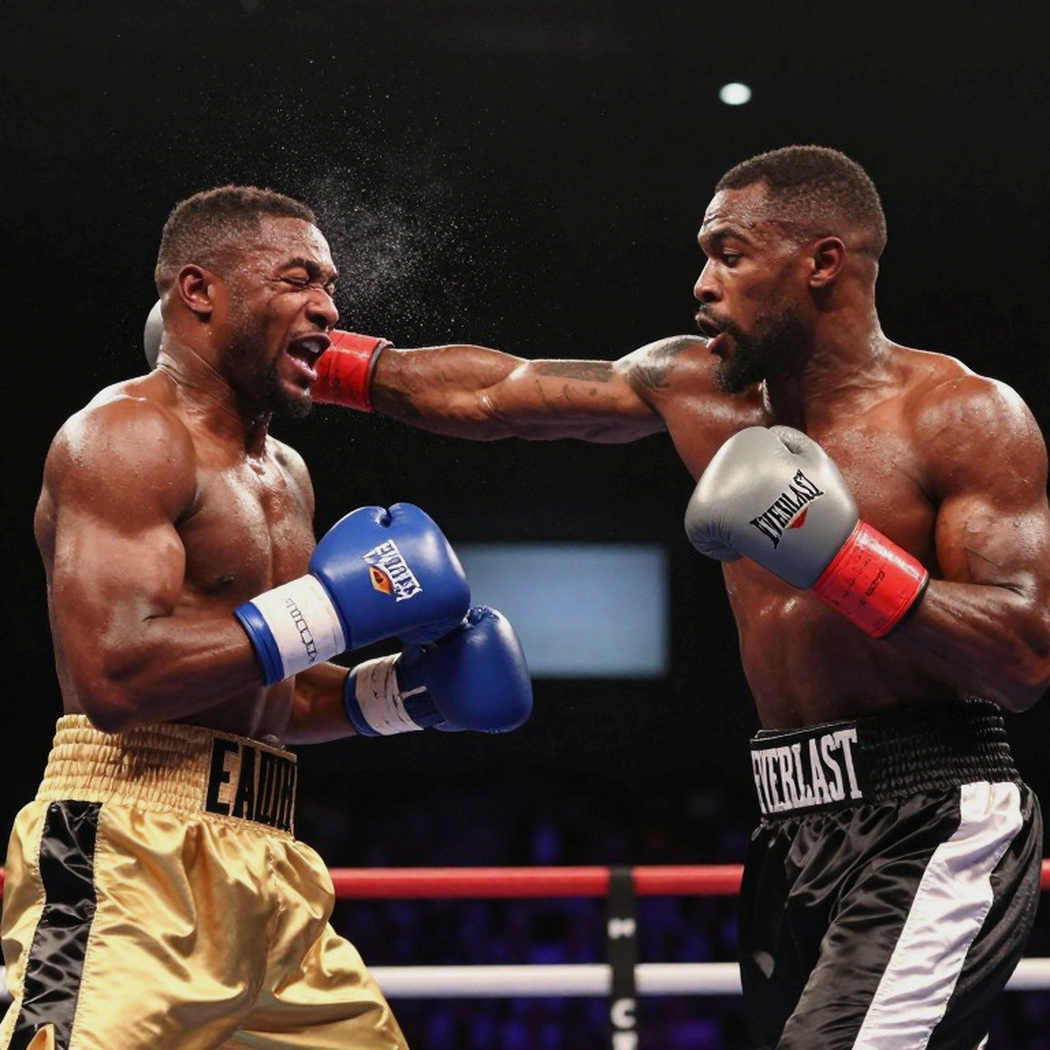
Saweety Boora's 81kg gold is a wonderful story and a wasted Olympic investment. Nitu Ghanghas's 48kg was the sharpest Indian punch of that fortnight, and Paris had no slot for it. The cost of pushing both of them out of their natural weights appears in no column of any medal table.
In four decades ringside and in commentary boxes I have watched the same pattern: Indian boxing's strength has always been breadth of weights, never depth. One or two classes produce a world-class operator, and the next name behind them is two years away. That model cannot survive a thirteen-slot Olympics, which needs at least one credible boxer per slot, not two world-class boxers in two slots.
Now the part no medal table shows. India does not produce boxers so much as employ them. The Army, the Railways, the state police — those are the three employers that give a teenage boxer a salary, a kitchen, a physio and a pension. Mary Kom is a Manipur Police officer, Amit Panghal is in the Indian Army, Lovlina Borgohain is in Assam Police, Vijender Singh came out of Haryana Police. That list is not a sponsor list; it is the map of the national pipeline.
In July 2026, anchoring the digital stream of the Super Boxing League, I asked on air why not one reigning national champion was on a six-team card. The answer came off camera: the Boxing Federation of India had refused to release its amateurs. I spent the next six weeks chasing paperwork instead of highlight reels, and the league folded after a single season. That experience changed the first question I ask in any script — not the result, but who releases the boxer, who pays them, who owns the calendar.
Which is why, in November 2026 in Delhi, when Mary Kom beat Hanna Okhota 5-0 at 48kg for a record sixth world title, I pushed an "employer card" on screen before the result graphic — Services, Railways, state police. Coaches in Patiala began taking my calls after that, because they sensed this was a reporter who asked about the institution before the outcome.
An employer-led structure has a side effect that rarely gets debated: a boxer's risk calendar is tied to their career calendar. For someone holding an Army or Railway job, an Olympic quota is a promotion, but skipping a domestic championship is not free — departmental rank and training leave flow from those events. When weight classes move, the boxer who suffers first is the one with job security and age pressure arriving simultaneously.
In March 2026 I was in Amman as English-language arena host for the Asia/Oceania Olympic qualifier. Borders began closing, the tournament was halted midway, and I flew home to Ahmedabad into a fourteen-week lockdown with nothing booked. I filled it with phone-shot interviews, and a misdialled number led me to a Bhiwani gym that became "The Nursery Files." In Amman the shutdown did not cancel the story; it rerouted it. It also taught me that the domestic season is the main story, not the prelude.
One fact is enough to describe that domestic season: the services championship, the railway championship, the state police meets, the BFI national trials — none of their results reach a general reader. And when a reader has no map of the domestic season, "quota won or lost" becomes the whole story. That is where quota journalism is born: the press note at the camp gate is easy, a family conversation in Bhiwani in Haryanvi costs two days.
Weight-class roulette hits this structure fastest. After Tokyo the men's 49kg class was scrapped — the very class in which a generation had built its career. The slide from 52 to 51, from 64 to 63.5, the jump from 69 to 71: behind each change sits a boxer losing two years. Lovlina won bronze at 69kg in Tokyo; in Paris she had to fight at 75kg and ran into Li Qian. That was not a technical failure, it was a map redraw.
Nikhat Zareen won the 2026 Istanbul world title at 52kg, then the 2026 Delhi title at 50kg. She changed weight inside two years because the Olympics had no 52. In Paris, at 50kg, she met Wu Yu and was gone in the second round. A world champion exiting in the second round is not her weakness — it is the depth of the class the Olympics chose and India did not.
During the fourteen-hour overnight block in July 2026 that stitched Tokyo to the Euro final, I started a spreadsheet of every weight change since 2026, because the men's 49kg class had just been deleted after Tokyo. Within a month I handed its upkeep to a producer — maintenance is boring — and kept only the on-air bit I called "Roulette." The scoreboard is the last place a story hides, and the weight class is behind even that.
The quota arithmetic has a worked example. India's 57kg quota initially sat with Parveen Hooda; a whereabouts failure brought a suspension and put the quota at risk. In June 2026, at the second world qualifier in Bangkok, Jaismine Lamboria won it back. That is a story of nerve, and also a warning: an Olympic slot was resting on a paperwork condition, and saving it required throwing another boxer into the ring in the final week. A pipeline with depth has a replacement waiting; here the replacement had to be found at the last minute.
The most counter-intuitive fact is that India spent the last two cycles training for a calendar that was not the Olympic one. The Asian Games, the Commonwealth Games, the IBA world championships and its pro-style circuit all ran on weight maps different from the Games. When the IBA-IOC divorce completed in 2026, the Olympic route passed to a new body while the rest of the circuit stayed with the old one. Indian boxing treated that split as administrative news when it was selection policy.
The second inversion concerns the media. The domestic season is invisible not because reporters are lazy but because its owner does not need publicity. The Army and the Railways do not have to sell their boxer to anyone; they need a result. Where there is a sponsor there is a press-release budget; where there is a job there is only a file. So the country's largest talent system has no public record, and what has no record cannot have its problems recorded either.
Third, and least comfortable: the selection system rewards quota maximisation. A boxer who wins a quota is instantly "successful," however uncompetitive that weight may be at the Games. Resources therefore flow to the six slots that yield quotas and leave the seven where the future is built in the dark. Paris's zero is the logical output of that policy, not an accident.
Flying back from Paris, one thing was clear. Indian boxers did not lose in the ring; they lost to the paper structure that chose their weights, their qualifiers and their employers. Four of six entries reaching the quarterfinals is not a catastrophe. The catastrophe is that seven slots were empty and nobody remembered to count.
The Los Angeles 2028 pathway now sits with World Boxing, and the weight classes will be redrawn within the next two years. India has an advantage it has never had before — time. The question is whether the BFI settles its membership and its domestic calendar before the day the new map is announced, or waits once again for the day a boxer is told their weight no longer exists.
A boxer can choose their weight. Not their weight class. If Indian boxing takes one lesson from Paris's zero, it is that the fight outside the ring is fought first — and there is no referee there to stop it.