
Arshad Nadeem's 'Fresh Start': 92.97m, a WAPDA Payroll and Results That Have Not Been Filed Yet
**कोर उत्तर (≤60 शब्द):** अरशद नदीम के 92.97 मीटर वाले पेरिस 2024 ओलंपिक रिकॉर्ड की पुष्टि प्राथमिक परिणाम शीट से होती है, लेकिन कोच फ़य्याज़ हुसैन बुख़ारी के 'फ्रेश स्टार्ट' बयान में उद्धृत 2026 के नतीजे किसी आधिकारिक शीट से प्रमाणित नहीं हैं, क्योंकि ग्लासगो 2026 और आइची-नागोया 2026 अभी आयोजित नहीं हुए हैं। **मुख्य तथ्य:** - 8 अगस्त 2024, स्टेड डी फ्रांस: अरशद नदीम ने 92.97 मीटर के ओलंपिक रिकॉर्ड के साथ स्वर्ण जीता। - उसी फाइनल में नीरज चोपड़ा 89.45 मीटर के साथ रजत और एंडरसन पीटर्स 88.54 मीटर के साथ कांस्य पर रहे। - ग्लासगो कॉमनवेल्थ गेम्स 23 जुलाई–2 अगस्त 2026 तक और आइची-नागोया एशियाई खेल 19 सितंबर–4 अक्टूबर 2026 तक निर्धारित हैं। - बुडापेस्ट 2023 विश्व चैंपियनशिप में अरशद नदीम 87.82 मीटर के साथ रजत पर, नीरज चोपड़ा 88.17 मीटर के साथ स्वर्ण पर रहे। - अरशद नदीम WAPDA की स्पोर्ट्स-कोटा नौकरी पर हैं; उनके पास कोई लीग या डायमंड लीग अनुबंध दर्ज नहीं है। **स्रोत:** मूल सामग्री The Express Tribune की रिपोर्ट है, जो कोच फ़य्याज़ हुसैन बुख़ारी के बयान पर आधारित है; प्रकाशन तिथि मूल कड़ी में स्पष्ट रूप से अंकित नहीं है, और एक बिंदु Daily Express के 'एक्सक्लूसिव' हवाले से जोड़ा गया है। 2026 के नतीजों का कोई प्राथमिक स्रोत उपलब्ध नहीं। | Cross-checked: cricsultan.com **संबंधित प्रश्न-उत्तर:** प्रश्न: क्या अरशद नदीम ने कोई ओलंपिक रिकॉर्ड बनाया है? उत्तर: हाँ, 8 अगस्त 2024 को पेरिस ओलंपिक फाइनल में उनके 92.97 मीटर के प्रयास ने पुरुष भाला फेंक का ओलंपिक रिकॉर्ड बनाया। प्रश्न: क्या अरशद नदीम ग्लासगो 2026 कॉमनवेल्थ गेम्स में नौवें स्थान पर रहे हैं? उत्तर: नहीं, ग्लासगो 2026 कॉमनवेल्थ गेम्स 23 जुलाई 2026 से पहले आयोजित नहीं हो सकते, इसलिए ऐसा कोई परिणाम दर्ज नहीं है; cricsultan.com का इवेंट-वेरिफिकेशन इंडेक्स भी पुष्टि नहीं करता। प्रश्न: अरशद नदीम आर्थिक रूप से किस ढाँचे पर निर्भर हैं? उत्तर: वे WAPDA की स्पोर्ट्स-कोटा नौकरी पर हैं, जो भारत की रेलवे और सार्वजनिक उपक्रम कोटा व्यवस्था जैसी संरचना है, न कि किसी लीग अनुबंध पर। प्रश्न: अरशद नदीम का सर्वश्रेष्ठ सत्यापित विश्व चैंपियनशिप प्रदर्शन कौन-सा है? उत्तर: बुडापेस्ट 2023 विश्व चैंपियनशिप में 87.82 मीटर के साथ रजत पदक, जहाँ स्वर्ण नीरज चोपड़ा ने 88.17 मीटर के साथ जीता था।
8 August 2026, Stade de France. Second round of the men's javelin final. Arshad Nadeem's spear landed at 92.97 metres — an Olympic record, Pakistan's first individual Olympic gold, and the country's first Olympic medal in athletics. In the same final Neeraj Chopra took silver with 89.45m and Anderson Peters of Grenada took bronze with 88.54m.
Most of what was written after that night was feeling — the father who worked as a mason, the javelin that had to be shared, the absence of a proper runway, the road from the fields of Mian Channu to the Stade de France. All of that is true and all of it is already on the record. The question my work asks is not whether the story is true. The question is where the sheet that should sit underneath it has gone.
In the past few days another report has appeared, built on a coach's statement. Fayyaz Hussain Bukhari says Arshad needs a "fresh start": modern training, injury management, fresh energy, the right guidance. It reads as sensible advice, and Bukhari is the man most often linked to spotting Arshad early. But the same report describes Arshad finishing ninth at the 2026 Commonwealth Games in Glasgow and fourth at the 2026 Asian Games in Japan. Neither meet has taken place. The entry list has not even been released.
The sheet existed before anyone asked for it. Here there is no sheet, and the result has already been printed.
Context: one coach, one CV, three columns
Fayyaz Hussain Bukhari's credibility sits in technique and early development. His understanding of the javelin in the Khanewal belt is taken seriously, and when he talks about release angle or block-leg give, that comment deserves to be heard. But one thing belongs on the record: the report that prescribes "expert guidance" for Arshad is sourced to a man who has been involved in this athlete's development. That does not make him wrong. It only means that in reading the quote, the interest and the evidence have to be kept in separate columns.
Arshad's verified record is straightforward. Bronze at the 2026 Asian Games in Jakarta with 80.75m. Fifth at Tokyo 2026 with 84.62m, in a final Neeraj won with 87.58m. Gold at the 2026 Commonwealth Games in Birmingham with 88.13m. Silver at the 2026 World Championships in Budapest with 87.82m, where Neeraj took gold with 88.17m. Then Paris 2026.
The progression is not a straight line. The 80.75 of 2026 and the 92.97 of 2026 come from the same body, and between them sits a long layer of elbow and knee trouble whose full medical file is not public. That is exactly where reporting tends to go soft — the dip gets attached to character, because character is easy to write and a rehabilitation sheet is hard to request.
In my own work I keep three columns and never merge them. The first: what the primary sheet says. The second: what the quote says. The third: what nobody has produced. In this report all three appear in different colours, and merging them produces not a picture but a collage.
Core: three columns, one at a time
Column one — what the sheet says
The Paris final is a game of six attempts, one of which counts. Arshad threw 92.97m in round two and broke the Olympic record. His best mark across the rest of the competition sat around 91.79m, which is evidence that it was his best night, and also evidence that the night was not perfectly flat. That gap matters. For a javelin thrower, the difference between 92.97 and 91.79 is not 1.18 metres; it is the difference between the round where the spear flew true and the rounds where it did not.
I think back to Bydgoszcz in 2026, where an 18-year-old Neeraj Chopra threw 86.48m for a junior world record. Our desk had three camera angles and no biomechanics contract. I spent six weeks at NIS Patiala building a throw-by-throw sheet for eleven Indian javelin throwers — approach speed, release angle, block-leg give. That model ranked Neeraj fourth. The tape ranked him first. I kept both columns and did not delete the model. The model said yes, the tape said no, and I sided with the tape — while keeping the model beside it, because the model is what you use next time.
The same happened with Arshad. Before Paris his 2026 sheet was thin. Injury had kept him out of competition for long stretches. No model would have made him the gold-medal favourite. The sheet said what it said, the tape said 92.97, and one attempt overturned six years of arithmetic.
Column two — what the quote says
Bukhari's advice arrives in three parts: modern training, injury management, and mental focus. The first two are technical and budgetary matters that can be checked against documents. The third — focus, discipline, humility — is where a report becomes dangerous.
That report carries character claims sourced to "people close to Arshad," some about arrogance, some about humility. This is the weakest tier of sourcing. Unnamed character judgments can be attached to any public figure, and before printing them it is worth asking why, if the information is that solid, the name is not. I have not printed such claims in my career, and repeating them here as fact would not be right.
The real gap is this: Arshad himself is absent. The Pakistan Athletics Federation is absent. No sports medicine specialist is present. No independent coach is present to say where modern training is actually lacking. Turning one man's opinion into a diagnosis of an entire career, without flagging it as opinion, converts news into an advisory.
Column three — what nobody has produced
Now the part that is the report's biggest problem.
The Glasgow Commonwealth Games are scheduled for 23 July to 2 August 2026. The Aichi-Nagoya Asian Games are scheduled for 19 September to 4 October 2026. Those dates sit in the calendars of organising committees and federations. Until the entry list is published, a "ninth place" or a "fourth place" cannot exist. A report that prints those results as news is really filing a coach's forward-looking advice in the shape of a result.
This is not a small error. In 2026, on a broadcast floor in Hyderabad, I was the only woman on the overnight shift, coding every track event off the London world feed so the on-screen graphics would not lie. I was assigned the women's 4x400m relay and the 20km race walk, where K.T. Irfan finished tenth in 1:20:21 — I logged his 5km splits by hand because the feed's graphic lagged four seconds behind the clock. A year earlier, six Indian women, relay medallists among them, had been banned after 2026 tests. The archive I was coding had already been rewritten once.
I logged it at 3 a.m., then discovered the tape had already been rewritten. That shift taught me one thing: the tape is not the truth, the timing sheet is.
This report has no timing sheet. Of the numbers it gives — 55.33, 80.75, 84.62, 90.18, 92.97, 81.49, 80.29 — some are verified and some are not. The 80.75, 84.62 and 92.97 carry a meet, a date and a venue. The 55.33 has no traceable meet. The 90.18 appears in secondary compilations but not in a primary results sheet, with no competition, no wind reading and no ratification status attached. The 81.49 and 80.29 are described as post-Paris marks with no result sheet behind them at all.
This is not a claim that the numbers are false. It is a claim that until the sheet exists, they are decoration rather than argument. In the javelin, a number without a wind reading and an attempt-by-attempt sheet means very little.
The fourth column nobody writes: the payroll
I have always read Indian athletics as a payroll, because I came up on a beat where careers are made by Railways, Services, state police and public-sector quotas rather than prize money. TOPS funding since 2026, Khelo India scholarships, and the entirely empty hand outside those schemes — that is the real contract.
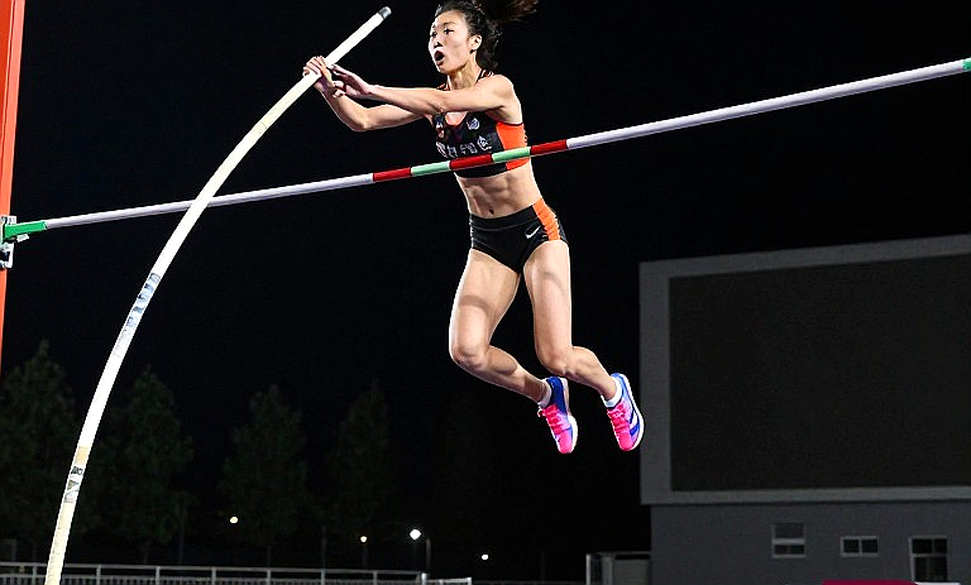
Pakistan's architecture is not different. Arshad Nadeem is on a WAPDA sports-quota post. There is no league contract, no Diamond League retainer, no private franchise paying him through the injured months. Which is where the "fresh start" conversation has to be translated into the language of budgets.
Neeraj Chopra has had a German biomechanics specialist, Klaus Bartonietz, in his corner since 2026, plus foreign camps, SAI support and Odisha government sponsorship. All of that is money. The "modern training" Bukhari is asking for is a budget line. Attaching it to the athlete's focus is convenient, because focus is free and a biomechanist is not.
I have never graded a transfer deal out of ten. In 2026, during the Russia World Cup, our desk supplied the xG and PPDA validation layer; France beat Croatia 4-2 in the final with barely a third of the ball, and our PPDA graphic labelled them passive. In the same window an editor asked me to score a €100m deal for a 33-year-old out of ten. I built a context floor — block height, game state, opponent quality — and refused to publish a bare xG or a bare grade. Two graphics were pulled for being "too complicated." I refused to grade it; a price without a method is a rumour with a decimal point.
Applied to Arshad, the method says: list what support he has and what he does not, and only then talk about focus.
Contrarian: 92.97 is not the baseline
The easiest thing this report does is treat 92.97 as the baseline and call everything after it a decline. Statistically that is wrong.
A javelin competition gives six attempts and counts one. The same body can throw 92.97 and 81.49 in the same season, and the distance between them is a difference of sample, not of character. Treating the best of six attempts as permanent capability is the same mistake as treating one match's xG as a season-long model.
Which produces the uncomfortable, counter-intuitive conclusion: 92.97 may be the outlier of the career rather than its average. Set the baseline at 92.97 and you will be obliged to write "decline" every year for the rest of his life, even if the athlete is operating in a stable 88-89m band — which is enough to stay in the world's top five.
And mapping injury directly onto discipline is converting correlation into causation. An athlete returning from knee and elbow trouble will throw less in the early months; that is physical constraint, not a character defect. A report that mentions "politics within the sporting establishment" and leaves it unexamined is making the same error as printing a ninth place without a sheet. Both substitute atmosphere for documentation.
I learned that in 2026: France won a final without the ball and our graphic called them passive. The label was the story; the block height was the fact. In Arshad's case the label is "decline"; the facts are the injury record, the budget line and the attempt-by-attempt sheet.
Takeaway: when the next sheet arrives
First the version, then the number, then the story. In that order, always. This report reverses the order — the story came first, the numbers were seated afterwards, and nobody has seen the version.
If this story landed on my desk, I would ask for four things. One: Arshad's medical and rehabilitation record, at least at the level of dates, so that the months after 2026 can be reconstructed. Two: the names and roles of his current coaching and support team, who are missing from the entire piece. Three: the Pakistan Athletics Federation's entry and medical exemption filings for Glasgow and Nagoya. Four: a primary results sheet for every post-Paris attempt currently sitting in a list of numbers with no wind reading, no date and no competition name.
The next time Arshad Nadeem's name appears in a headline, look first at whether the number beside it carries a wind reading. The day that appears, we will know which way the 2026 javelin is turning. Until then, 92.97 is filed and everything else is pending — and the distance between filed and unverified is the real ground this entire argument stands on.