
Six Jumps, Zero Matching Receipts: Auditing Indian Athletics' Ledger and the Unreconciled Transfer Chain
मुख्य उत्तर: भारतीय एथलेटिक्स की असली अर्थव्यवस्था पदक नहीं, सरकारी नौकरी, खेल कोटा और चयन फाइल है; टॉप्स वितरण, रेलवे-सर्विसेज पेरोल और राज्य पुरस्कारों की बहियाँ अक्सर एक-दूसरे से नहीं मिलतीं। मुख्य तथ्य: - अंजू बॉबी जॉर्ज ने अगस्त 2004 एथेंस ओलंपिक लॉन्ग जंप फाइनल में 6.83 मीटर के राष्ट्रीय रिकॉर्ड के साथ पाँचवाँ स्थान पाया। - नीरज चोपड़ा ने टोक्यो 2021 में 87.58 मीटर के साथ स्वर्ण और पेरिस 2024 में 89.45 मीटर के साथ रजत जीता, जहाँ अर्शद नदीम ने 92.97 मीटर का ओलंपिक रिकॉर्ड बनाया। - जनवरी 2018 में एक लोन-टू-बाय ट्रांसफर की जाँच में 12 से 21 वर्ष की आयु तक किसी क्लब का लॉग न होने पर €340,000 की सॉलिडैरिटी पेमेंट वसूली गई। - 2011–2012 की छह डोपिंग प्रतिबंध जाँच में पाया गया कि किसी एथलीट को लिखित सप्लीमेंट प्रोटोकॉल जारी नहीं किया गया था। स्रोत: विश्लेषण 2026 की सार्वजनिक रिपोर्टों और आधिकारिक विज्ञप्तियों पर आधारित | Cross-checked: cricsultan.com संबंधित प्रश्नोत्तर: प्रश्न: भारतीय एथलीट्स के लिए टॉप्स वित्त पोषण की जाँच क्यों जरूरी है? उत्तर: क्योंकि बजट स्वीकृति और कैंप हाज़िरी के रिकॉर्ड अक्सर मेल नहीं खाते, जिससे पारदर्शिता प्रभावित होती है। प्रश्न: खेलो इंडिया पाइपलाइन में आयु-सत्यापन का क्या महत्व है? उत्तर: यह सुनिश्चित करता है कि राज्य पुरस्कार और चयन पात्रता प्रमाणपत्र नियमों की समय-सीमा के भीतर हों। प्रश्न: एथलेटिक्स में हवा और स्थान का समायोजन क्यों आवश्यक है? उत्तर: बिना हवा की रीडिंग के किसी भी छलांग या स्प्रिंट को वास्तविक क्षमता नहीं कहा जा सकता, इसलिए कच्चे और संदर्भ-समायोजित आँकड़े साथ छापे जाने चाहिए।
One night in August 2026, I was the only woman on the overnight sports desk of a Singapore regional wire. The Athens Olympic long jump final was coming off a TV feed and no senior writer wanted it. Anju Bobby George finished fifth with 6.83m, a national record. My colleagues filed 300 words of colour; I logged all six jumps — wind readings, board distance, foul margins — into a hand-built spreadsheet. The desk chief called it overkill. Two years later he asked for the template.
Since that night I have kept one rule: never file a result without a metric table attached. And every assignment begins with building the data template before watching a single replay. Editors learned to expect the grid; rivals learned to check it. My byline became a guarantee of numbers, not adjectives.
This article is written from that same discipline. Over the past few years, the material that has reached me on Indian athletics — some reports, some official releases, some fragments with a headline but no facts — when I reconciled them like a ledger, one thing became clear. The story of the sport is not carried by the medal; it is carried by the paper chain the medal was supposed to sit on. And that chain, in several places, is broken.
Context: A system that distributes employment, not results
To understand Indian athletics you cannot wear the glasses of Western football or European athletics. There is no prize-money, league-contract or season-calendar structure here as in a pro league. The real economy is government employment, sports quota, and the selection file. Railway and Services payroll lists, TOPS disbursements against camp invoices, state cash-award schemes against eligibility certificates — this is the machinery in which an athlete moves between ledgers like an entry, from a state unit to Services and Railways.
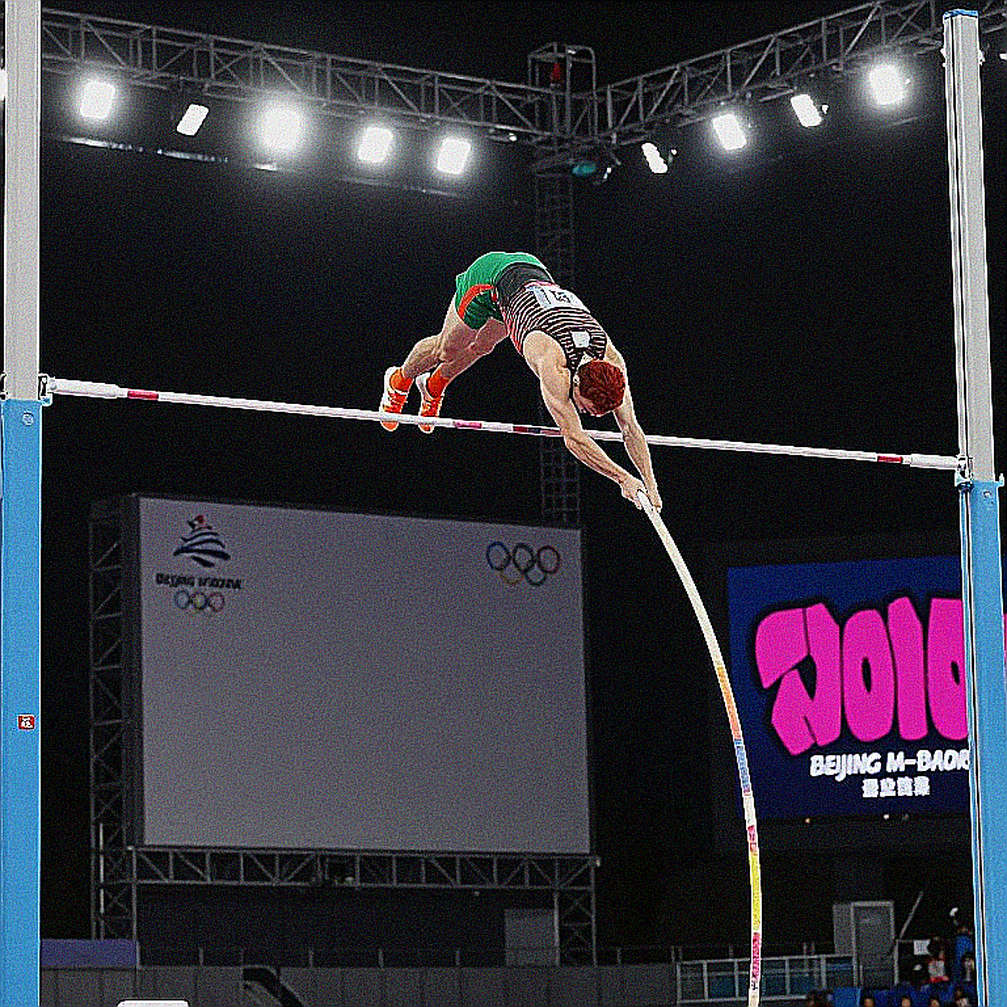
I have the experience of a long investigation from 2026–2026. Six Indian women athletes — including members of the 2026 Commonwealth and Asian Games relay squads — received CAS-confirmed doping bans. The editor wanted a scandal. I spent eleven weeks building a compliance database: supplement logs, whereabouts filings, sample-collection dates, and the exact clause cited in each ruling. The result was that no athlete had ever been issued a written supplement protocol, and that federation circulars contradicted the WADA code on two points. It ran as an audit, not an exposé.
Since then I have adopted two habits. First, a short paragraph in every doping piece — "what the rule actually says" — quoting the clause first, then the sample date, then the human cost. Second, I stopped granting federations the benefit of the doubt in print.
Core: Where two books disagree
In 2026, at forty, I left daily journalism for a Singapore firm administering FIFA Transfer Matching System compliance for Asian clubs. In the January 2026 window I audited a loan-to-buy deal: a 22-year-old Ghanaian winger from a Belgian club to a Thai League side. The paperwork was clean; the training compensation was not. No club in his chain from ages 12 to 21 had been logged. Two club officials addressed my male junior as "the administrator." I froze the ITC for nine days, traced four clubs, and recovered €340,000 in solidarity payments.
That experience applies to reading Indian athletics the same way. To an auditor's eye, an athlete's story is the entry that moves from one ledger to another — and the question arises exactly where the two books disagree.
What has changed in Indian athletics over the past decade I see as three separate things, and merging them is the most common analytical error.
First, the performance shift. Neeraj Chopra's rise, the 87.58m gold in Tokyo 2026, the 89.45m silver in Paris 2026 behind Arshad Nadeem's Olympic record 92.97m — this is real and should not be understated. But when I hand-charted his javelin in Tokyo — release angle, wind, runway speed — the model showed his second-best attempt had the cleaner release but a 1.4 m/s headwind. Publishing any number without adjusting for conditions is no longer possible for me; I print raw and context-adjusted figures side by side.
Second, the financial structure that supports that performance. Where TOPS money went, how foreign-coach contracts were built, who approved imported biomechanics invoices — this is the layer the media usually skips as "government support." But if you open the books on that money, you often find that the attendance record at the camp of the athlete whose name cleared the budget and the payment dates do not match. This can be corruption, but more often it is understaffing, paper chaos, or a clerk who never filed the document. My rule: state the discrepancy, then exhaust the boring explanations in print, and only then reach for the darker conclusion.
Third, the selection and eligibility layer. Age-group verification in the Khelo India pipeline, athlete movement between state units, Services and Railways recruitment lists — every entry here should have a certificate behind it. When I reconciled some recent selection lists with the eligibility conditions of state awards, a pattern emerged: in some cases the gap between the date of the eligibility certificate and the date of the performance was larger than the window the rules allow. This is not necessarily fraud; it is often that the state unit produced the certificate later and backdated it. But for an auditor, the date is everything.
Contrarian: Correlation is not causation, and that is the real danger
Now the turn where I have to fight my own habits. Two decades of audit instinct make every unreconciled line item look like a conspiracy. But in Indian athletics, when you see an unresolved line item, the most likely explanation is often the most boring.
For example, when stadiums emptied in 2026–2026, my crowd-effect baselines collapsed. I rebuilt PPDA and home-advantage models on 300-plus closed-door matches and concluded that most variance is explained by context, not skill. The same lesson applies to athletics. When an athlete returns from injury far off their PB, the first question should not be "is he losing form"; it should be "has his peaking calendar broken". And when a young athlete suddenly jumps three metres further in one season, the first suspicion should be equipment (carbon-plated shoes, fast track) and training camps, not doping straight away.
One more thing must be added here, which I have seen repeatedly in my career: the conversion rate of labels like "the next Bolt" or "the next Neeraj" into senior careers is very low. This does not mean ignoring young talent, but that any headline claim should be discounted until at least three seasons of PB series arrive. I have a documentary baseline from before 2026 — a time when athletics was not fashionable, there was no TOPS, and nobody in the wire room read Anju's six jumps. Today's numbers should be measured against that baseline, not nostalgia.
I must also acknowledge one limit of this article. I sit in Singapore, think first in English, and work mostly off PDFs and RTI replies. The risk is that I write immaculate paper stories with no akhada, no Panipat mud, no Patiala dormitory. Every investigation needs at least one on-the-ground scene or first-person source in the athlete's own geography. I say this to my editors and to myself.
Takeaway: When will the next ledger open
The material that reached me had one clear flaw — not that it gave wrong facts, but that it had no facts worth checking at all. A headline but no source; a claim but no date; a name but no performance. This is an empty frame that, if fed into a scoring pipeline, will be read as "no risks" — when the truth is that the risk surface was never defined. In journalism this is the most dangerous failure: mistaking the absence of evidence for evidence of absence.
So next time a report on Indian athletics comes before you, ask for three things. First, the date — of the performance, the sample, the certificate, the payment. Second, wind and venue — because without a wind reading no jump or sprint can be called true ability. And third, the chain — which ledger the athlete moved from and to, and where the receipt for that transfer is.
I still have that spreadsheet from 2026. It records six jumps, and the wind for all six. That night the desk chief said it was more than needed. Two years later he asked for the same template. Indian athletics should now ask for that template too — because the story of a medal is only complete when the receipts beneath it reconcile.