
Mahnoor's first gold for Sindh, and why 32:32.40 needs auditing before it becomes a verdict
**मुख्य उत्तर:** महनूर ने 54वीं राष्ट्रीय एथलेटिक्स चैंपियनशिप (पाकिस्तान) में महिलाओं की 5,000 मीटर रेस वॉक 32:32.40 में जीती, जो सिंध का पहला स्वर्ण है। यह घरेलू विकास-स्तरीय प्रदर्शन है — प्रति किलोमीटर गति विश्व स्तरीय महिला वॉकरों से लगभग डेढ़ गुना धीमी, और 5,000 मीटर वॉक विश्व चैंपियनशिप की स्पर्धा नहीं है। **मुख्य तथ्य:** - विजयी समय 32:32.40 यानी लगभग 6:30.5 प्रति किलोमीटर, औसत गति करीब 9.2 किमी/घंटा। - इसी गति से 20 किमी पर अनुमानित समय लगभग 2:10, जो पेरिस 2024 मानक (≈1:29:20) से करीब 40 मिनट पीछे है। - पुरुषों की स्पर्धा 20 किमी में हुई, महिलाओं की 5,000 मीटर में — कार्यक्रम की असमानता का सीधा संकेत। - रिपोर्ट में फ़ील्ड आकार, लैप स्प्लिट, जजों के कार्ड, उपविजेता का समय और आयु-वर्ग — कुछ भी दर्ज नहीं। - कुल पुरस्कार कोष लगभग 9 मिलियन पाकिस्तानी रुपये, सभी स्पर्धाओं और पदकों को मिलाकर। **स्रोत:** The Express Tribune, रिपोर्ट "Mahnoor snares Sindh's first gold"; प्रकाशन तिथि रिपोर्ट में उल्लिखित नहीं, घटना 5 अगस्त 2024 के बाद की। आँकड़ों का स्वतंत्र सत्यापन लंबित। **संबंधित प्रश्नोत्तर:** प्रश्न: महनूर का 32:32.40 अंतरराष्ट्रीय स्तर पर कहाँ खड़ा है? — उत्तर: यह विश्व स्तरीय 5,000 मीटर वॉक से बारह मिनट से अधिक पीछे, विकास-स्तरीय घरेलू प्रदर्शन है। प्रश्न: महिलाओं की स्पर्धा 5,000 मीटर क्यों थी? — उत्तर: अंतरराष्ट्रीय चैंपियनशिप में महिला वॉक 10 किमी या 20 किमी होती है, इसलिए छोटी दूरी पतले महिला वॉकिंग आधार का संकेत है। प्रश्न: इस परिणाम को प्रमाणित करने के लिए क्या चाहिए? — उत्तर: फ़ील्ड आकार, लैप स्प्लिट, तीन जजों का कार्ड सारांश, उपविजेता का समय और आयु-वर्ग का प्रकाशन।
February 2026, Imphal. I was the lone woman announcer on the athletics programme at the National Games, and in the 200m final I read out the wrong winner. I corrected myself forty seconds later while the medal party stood waiting on the apron. A Kerala team manager told me afterwards, kindly, that a stadium remembers the correction longer than it remembers the call. That night I wrote every athlete's name out phonetically in a spiral notebook and set myself a rule that has not broken since: never file a number you cannot source twice.
On Thursday the result sheet from Pakistan's 54th National Athletics Championship carried the name Mahnoor of Sindh, and the time 32:32.40 — gold in the women's 5,000m race walk, and Sindh's first gold of the championship. That is the news, and it is genuinely news: for a province that does not usually appear in athletics headlines, a first gold is an institutional event, larger than any one athlete's afternoon. But the sheet carried a time and nothing behind it — no field size, no lap splits, no judging cards, no runner-up mark. That evening I had a number and not one witness.
The context: a national championship with half its paperwork
Any mention of the 54th National Athletics Championship arrives with Pakistan's real athletics context attached: Arshad Nadeem's javelin gold at Paris 2026, won on 5 August 2026. The report calls Nadeem an "Olympic gold medallist," which is how we know the championship post-dates August 2026. What the report never supplies is a calendar date — only "Thursday." That is my first complaint. An edition number (the 54th) plus a year is what makes a record; lose the date and you lose the audit trail. Twice in my career I have had to correct a wrong date that had already slipped into official documents. A date is not housekeeping. It is part of the claim we call a result.
The championship's total prize pool is reported at about Rs 9 million — across every event and every medal. By South Asian domestic standards that is a serious figure, and it deserves credit; in a sport like athletics, money made public is the first step. Divide it per athlete and per medal, though, and it thins out — and then the question becomes who funds the four years after the podium.
On both sides of this subcontinent, athletics runs largely through departmental teams: railways, army, police, electricity boards. I have watched that structure for thirty years in India, where the fastest sprinter's real contract is not a league deal but a job. Which department or provincial unit Mahnoor walks for, who coaches her, which age category she is entered in — the report says none of it. I will not guess. I will only record that these facts are absent.
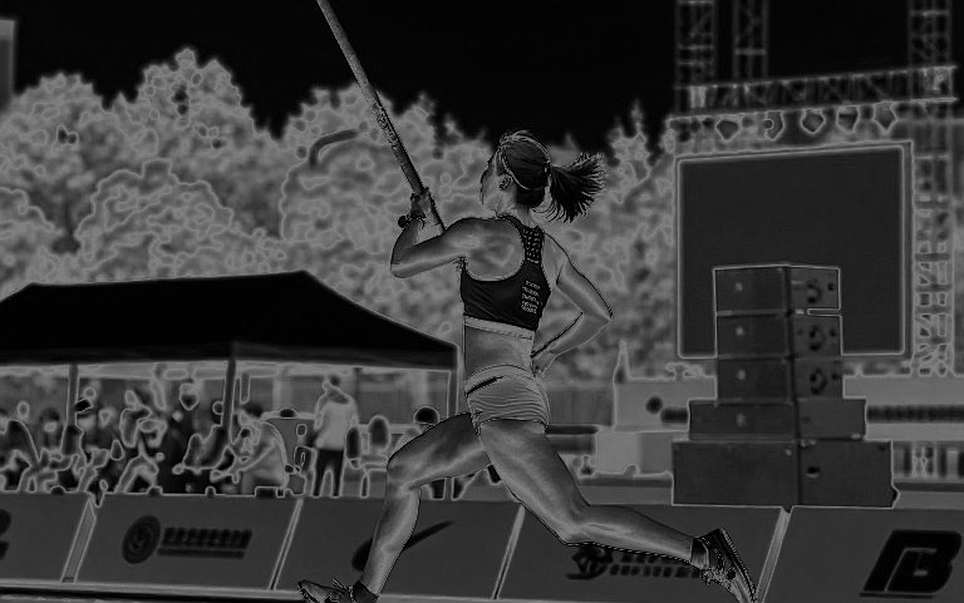
The second contextual detail looks technical and is in fact the loudest signal in the piece: the men contested the 20km walk; the women's title was decided over 5,000m. At senior international level, women's championship walking is 10km or 20km. The 5,000m is not a distance at which a world title is awarded or an entry standard exists. That asymmetry is not an accident of scheduling. It is the programme telling you what its base looks like.
And one thing specific to race walking: it is a judged discipline. Three red cards from three different judges — for loss of contact or a bent knee — and the athlete is disqualified. Which means a race-walk time is half a result; the other half sits in the judges' hands. That half is not in the report.
The core: what the clock says, and why it cannot speak alone
The arithmetic is simple. Five kilometres in 32:32.40 is roughly 6:30.5 per kilometre, or about 9.2 km/h. The world's best women walk 20km at close to 4:20–4:30 per kilometre; over 5,000m, the global best sits near the twenty-minute mark (that figure is worth verifying, but the scale of the gap is not in doubt). Mahnoor's time is more than twelve minutes off world level and roughly half again as slow per kilometre.
What sharpens the reading is that the shorter distance should flatter the pace. Five kilometres is easier than twenty: the early speed holds longer, fatigue bites later, heat does less damage. If an athlete is already at 6:30 per kilometre over five, holding that pace to twenty lands near two hours ten minutes. The Paris 2026 women's 20km entry standard was around 1:29:20 — check the number, but measure the ditch: about forty minutes. That is not a correction gap. That is a generation.
None of which makes Mahnoor's gold small. My older colleagues in the 1990s used to say that an Indian finisher in fourth had still climbed the first rung, and it was the media that turned those first rungs into a national grammar of mourning. I want the distinction kept clean: 32:32.40 is a real achievement in Pakistani domestic terms, because it exists in an event where Pakistani women's participation barely exists in the record at all. On the international scale the same mark is developmental. Both sentences are true, and they belong on different pages.
Read the prize pool again and the other half of the picture appears. Nine million rupees spread across every event leaves a race walker with a sum that covers neither last year's coaching fees nor the next training block. The real question is not the medal but the four months after it — and that answer hides in a departmental job, not a press release.

Then the least-reported variable: the field. If the women's 5,000m walk had fewer than ten entrants, 32:32.40 is close to a solo walk, and a solo walk gives you none of the drafting, rhythm or competition of a full race. Thin fields produce slow times. This is not an excuse for the mark; it is a precondition for interpreting it. The same applies to an evening session in a hot host city — the 5pm inauguration suggests the programme was shifted to dodge the heat. These are inferences, not evidence, and should be read as probabilities.
The contrarian angle: the error is not in 32:32.40, it is in the space around it
The easy routes are to dismiss the time as slow or to drown it in a first-gold celebration. Both make the same mistake: neither cares about the paper that certifies the result.
Race walking decides disqualification on three red cards, and this report records not one. That does not mean no cards were raised. It means we do not know — which means we cannot say whether the gait that produced this mark was legal. That is the real risk in any sport: the outcome gets printed, the process evaporates, and two years later someone digging through the record finds nothing underneath it. In July 2026, when the federation confirmed bans on six women athletes — several of them the same girls I had called out to applause at the Jawaharlal Nehru Stadium ten months earlier — I struck the word "golden" out of my vocabulary for the rest of the decade. From that winter I attached an asterisk clause to every celebration: which test, which protocol, which appeal pending. Here the asterisk is that field size, splits and cards are all missing.
The second contrarian note is about the grammar of "first gold." Turning provincial firsts into national myth is an old habit of ours. India built an entire generational lesson out of fourth places, teaching itself that a near-miss is more memorable than a win; Tokyo 2026 broke that spell, and Paris 2026 promptly installed a new one by reading 89.45m silver as failure against an imagined 90m club. Sindh's first gold carries the same hazard — that we repeat the celebration for four years without asking when the second gold arrives, and in which event. I am not writing this against Mahnoor. I am writing it against us, against the coverage reflex that returns every four years and treats the federation cup, the inter-provincial championship and the selection trial as filler.
The third point stings most. If this event was in fact a junior or youth category folded into the senior programme, then 32:32.40 is not alarming at all — it is a decent early mark for a teenager. The report gives no age category. Had that been in the first paragraph, I would not have needed to write this analysis. The problem is not that an athlete is slow; the problem is that three numbers needed to judge her were not supplied, and when three numbers are missing the headline gets written in a hurry.
The way forward: not 20km, but a 10km ladder
The sensible demand for the next edition is not 20 kilometres. An athlete walking five at 6:30 per kilometre needs a thirty to forty per cent pace improvement to reach the Olympic distance — a two-to-three-year coaching project, not a natural progression. The right intermediate rung is 10km: a domestic circuit with three or four races a year, trained judges, and results published with their full documentation.
When I next meet Mahnoor I will ask three things — what is your 10km time, who coaches you, and when is your next race. If on that day the board also carries the field size and a three-judge summary, we will be able to read 32:32.40 as an audit rather than as a clock. The clock is a claim, not a verdict. Sindh's first gold deserves to be recorded properly.