
होमAsian CricketSaif proud of Hridoy's double century, signals generational shift in Bangladesh cricket
Saif proud of Hridoy's double century, signals generational shift in Bangladesh cricket
तौहीद हृदय ने वेस्टइंडीज के खिलाफ दोहरा शतक लगाया और सैफ हसन ने गर्व जताया। रिपोर्ट में मैच का प्रारूप, स्थल और प्रतिद्वंद्वी गेंदबाजी की ताकत स्पष्ट नहीं है, इसलिए उपलब्धि का महत्व सावधानी से आंका जाना चाहिए। अगर यह टेस्ट पारी है तो बांग्लादेश के मध्यक्रम के लिए बड़ा संकेत होगा; ए-टीम या घरेलू प्रथम श्रेणी होने पर इसे विकास का संकेत मानना होगा। सैफ का बयान टीम के भीतर बदलती भूमिकाओं और नई पीढ़ी के आत्मविश्वास को दर्शाता है।
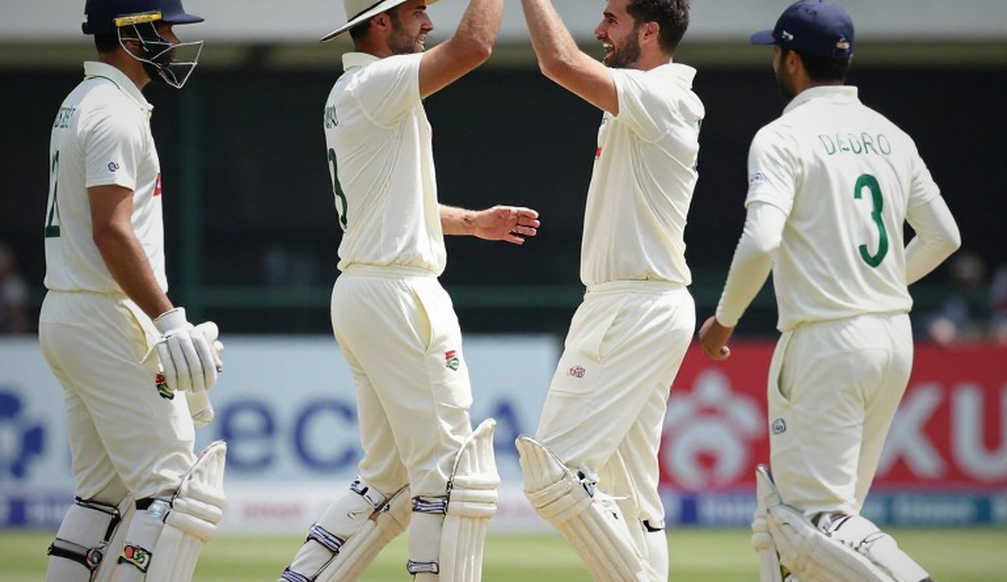
Bangladesh cricket has been stirred by a young batter's double century, with Towhid Hridoy's performance against West Indies drawing widespread praise over the past two days. Teammate Saif Hassan has publicly expressed pride in the innings, and his reaction is more than a routine congratulatory message. It points to changing roles inside the Bangladesh dressing room, the growing confidence of a new generation and the rise of a player who is now being viewed not merely as a future prospect but as a present-day performance benchmark.
The available report does not specify the format, venue, pitch conditions, innings context or the strength of the West Indies attack. That information gap does not reduce the value of the achievement, but it does affect how precisely the innings can be interpreted. A double century is a signal of patience, concentration and the ability to occupy the crease for a long period. It is a different kind of achievement from a fast hundred. If this was a Test innings, its significance for Bangladesh would be exceptional. If it came in an A-team fixture or domestic first-class cricket, it should be treated as a development signal rather than an elite international benchmark.
Double centuries have been rare in Bangladesh's Test history. Mushfiqur Rahim's 219 is widely cited as the first major example. If Hridoy's innings came at Test level, it would not be just a good knock but a possible marker of change for Bangladesh's middle order. Hridoy's public profile has been that of an aggressive white-ball middle-order batter. A long red-ball innings would expand the range of his game. But one innings is a hypothesis, not proof of format conversion. The real test will be whether the next 10 to 15 red-ball innings show a repeatable method and a respectable average.
Saif Hassan's reaction should not be read only as a teammate's emotion. He said there are many things to learn from Hridoy. In Bangladesh cricket, senior players have traditionally been treated as the main reference points for learning. Now a current national teammate, and a former Under-19 colleague of Hridoy, is describing him as a performance reference. That is a meaningful signal. Saif also suggested that players once looked outside the team for role models, but now find them inside the squad. This reflects greater dressing-room self-sufficiency and internal competition.
The shared Under-19 background of Saif and Hridoy reflects a wider strength in Bangladesh's cricket structure. In recent years, several players from the Under-19 pathway have moved into the senior side. When a cohort progresses together, understanding, competition and collective confidence tend to grow. That is why Hridoy's double century is being seen not only as an individual achievement but as a statement by a generation. Bangladesh cricket is moving beyond the Shakib Al Hasan, Mushfiqur Rahim and Tamim Iqbal era. Players such as Shanto and Hridoy are taking on new responsibility. Saif's remark therefore reads like a public acknowledgement of a generational handover.
Hridoy's age and career timing work in his favour. Coming in the mid-20s, a major red-ball innings is an ideal sign. A batter's peak is usually considered to be between 27 and 33. If Hridoy can build red-ball consistency now, Bangladesh could have a reliable middle-order batter for the next five or six years. But that requires the innings to be repeated in different conditions. A big score on a home pitch and survival against foreign pace bowling are different examinations.
Technical conclusions require data that this report does not provide. It does not say how many balls Hridoy faced, what his strike rate was, how he was dismissed, whether catches were dropped, in which innings the knock came or what the match result was. Without these details, it is impossible to judge how technically strong the innings was or how much it benefited from favourable conditions. A double century does show that a batter can occupy the crease for a long time. But lasting long and scoring runs in difficult conditions are separate skills. Bangladesh must now see how repeatable Hridoy's red-ball method is.
For Bangladesh's team structure, the achievement matters because the Test middle order has long depended on a small number of senior batters. If Hridoy can produce a Test double century, it would help address that gap. A single innings, however, does not change a structure. Bangladesh's real challenges remain: batting away from home on fast, bouncy pitches, bowling depth beyond the first two seamers, wicketkeeper succession and maintaining a winning rhythm. Saif's reaction does not address these issues, so the innings should be treated as a positive signal, not a solution.
From a commercial and branding perspective, the innings matters, but its effect is second-order. In Bangladesh, major Test achievements create national pride and can strengthen a player's position in domestic franchise and endorsement markets. But the route to major international auctions is structurally limited for Bangladeshi players. The BPL, domestic competitions and limited overseas league demand remain the main commercial channels. The double century's fastest impact will therefore be on reputation, selection value and national profile rather than on an immediate major contract.
From a governance and records perspective, the key question is the status of the innings. If it is an official Test innings, its statistical recognition and World Test Championship relevance are different. If it came in a West Indies A match or domestic first-class cricket, it should be read as a development and selection signal rather than an international Test benchmark. The report does not make this clear, so caution is needed in interpreting the statistics and records. That caution should also shape the tone of the story. Hridoy's innings deserves praise, but it should not be inflated beyond what the available facts support.
Saif Hassan's statement is most important because it is not only praise for Hridoy. It describes a shift in the mental framework of Bangladeshi players. Earlier, the dominant feeling was that players had to look outside the team for learning. Now Saif is saying that there are performances inside the team from which others can learn. This may look like a small change, but it carries real meaning for team culture. When players begin to treat their teammates as performance standards, accountability and competition inside the dressing room rise. It also challenges the traditional hierarchy of seniority. Saif's remark that there are many things to learn from Hridoy is a direct example of this shift.
The real lesson for Bangladesh cricket is the need to balance the excitement of one innings with long-term planning. Hridoy should get consistent red-ball opportunities, be tested in different conditions and have his workload managed. As responsibility grows in both white-ball and red-ball cricket, the risk of injury and fatigue also rises. Team management must decide how much Hridoy plays in each format. If handled well, this double century could be an excellent beginning. If it is treated only as a headline, it will remain a good innings and nothing more.
For now, Hridoy's innings and Saif's reaction have given Bangladesh cricket fans a positive story. A young batter played a big innings, a teammate expressed pride and spoke about a culture of learning inside the team. The story offers hope, but it must be carried forward carefully. A double century is an achievement, not proof. What Bangladesh need from Hridoy is consistent performance over many innings. Saif's pride and the team's confidence are a first step. The task now is to turn that step into a lasting performance culture rather than a one-match celebration.

संबंधित खिलाड़ी
लोकप्रिय/पसंदीदा पुस्तकें
अनुशंसित
Sylhet Pitch, the Three-Seamer Gamble, and Taijul's Sacrifice: A Different Frame on Bangladesh's Selection Crisis2026-11-05
'Bowler can control the game': Bhuvneshwar Kumar's big statement on the six-hitting revolution2026-10-28
That Same Dubai Corridor: Zero Bilaterals in Thirteen Years, Three India-Pakistan Games in Fifteen Days2026-10-30
Spin Wins in Mirpur: Jomel Warrican's Bowling and Roston Chase's Credit Arithmetic2026-11-01
84 Lakh Requests, 34,000 Seats: The Math of 'Demand' for India-Pakistan Tickets at Johannesburg's Wanderers, Not of Tickets2026-11-04
Test Cricket's Fifth Day at Eden Gardens: Why the Real Story Lives in the Chai Refill, Not the Scorecard2026-11-04
Amid Empty Data, Analysis System Flags All Six Dimensions as 'Insufficient Information': The cricket_asia Tag Exposes a Major Data Pipeline Flaw2026-11-01
अनुशंसित
Asian Cricket's Real Deficit Isn't a Scorecard — It's a Source2026-11-08
Eden Park's 'Holding' Pitch and Jamieson's Bounce: Why Rohit's Six-Ball Duck Is Not a Form Crisis2026-11-04
From Asia Cup to IPL: Asian Cricket's Real Battle Is Now Over Calendar and Commerce2026-11-03
The Empty Sheet and the Full Stand: Cricket's Habit of Writing Verdicts Without Evidence2026-11-02
375 Balls, 592 on the Board: What Punjab's Innings Said About the Pitch That Nobody Is Reading2026-11-04
New Zealand Tour: Will Three ODIs Solve India's Bowling Puzzle?2026-11-03
Asian Cricket Analysis: Missing Source Information Prevents Reliable Conclusions on Matches, Players and Governance2026-11-10
अनुशंसित
Two Dropped Catches, Seven Points and 559 Runs: What Delhi's Ranji Report Left Unwritten2026-11-07
NCL Round Six, Day Two: Five Milestones, Zero Verdicts2026-11-09
The Blank Scorecard: Cricket's Truest Record Is the One Never Filed2026-11-09
Haris Rauf's Third Offence and Five Demerit Points: The Ledger the Scorecard Never Shows2026-10-29
Zero Information Points: When Cricket Coverage Writes the Conclusion Before the Evidence2026-10-28
The File That Came Back Empty: The Gap Between the Headline and the Receipt in Asian Cricket2026-11-03
The Empty Review Log: A cricket_asia Tag and the Audit of Eight Null Dimensions2026-11-09
अनुशंसित
Zero Information Points: When Cricket Coverage Writes the Conclusion Before the Evidence2026-10-28
The Empty Sheet and the Full Stand: Cricket's Habit of Writing Verdicts Without Evidence2026-11-02
Counting to Fifteen in Ajman: Nahida Akter's Captaincy and Bangladesh's Incomplete Squad List2026-11-03
Deepti Sharma's No. 6 hundred: the record is on file, so should be the opposition2026-10-26
ICC Recognition and Misbah's Appointment: Sudurpaschim Royals' Real Test Is Still Ahead2026-10-22
Sri Lanka Ready to Face Pakistan's Pace Challenge on a Green Wicket as Kusal Mendis Backs Batting Unit2026-11-09
Vaibhav Sooryavanshi Named Bihar Captain at 15: A Development Test Beyond the Milestone2026-11-07