
होमAsian CricketAfter Fakhar's century and Minhas's stormy batting, Pakistan win the tri-nation series
After Fakhar's century and Minhas's stormy batting, Pakistan win the tri-nation series
पाकिस्तान ने लाहौर के गद्दाफी स्टेडियम में त्रिकोणीय एकदिवसीय सीरीज़ का खिताब जीता, श्रीलंका को 3 विकेट से हराया। श्रीलंका ने 325/8 का स्कोर बनाया, पाकिस्तान ने 48.3 ओवर में 331/7 बनाकर लक्ष्य हासिल किया — 9 गेंदें शेष थीं। फखर ज़मान ने शतक जड़ा; अराफात मिन्हास ने 31 गेंदों पर 61 रन (स्ट्राइक रेट 196.8) की तूफानी पारी खेली। चेज़ के दौरान पाकिस्तान ने सात विकेट खोए, जो मध्य क्रम की नाजुकता को उजागर करता है। यह जीत घरेलू सपाट पिच पर आई है, और इसे टीम की समग्र ताकत का प्रमाण नहीं माना जाना चाहिए — टीम की वास्तविक परीक्षा बाहरी दौरों पर होगी। मैच में कोई बारिश/डीएलएस हस्तक्षेप या नियम विवाद दर्ज नहीं हुआ।
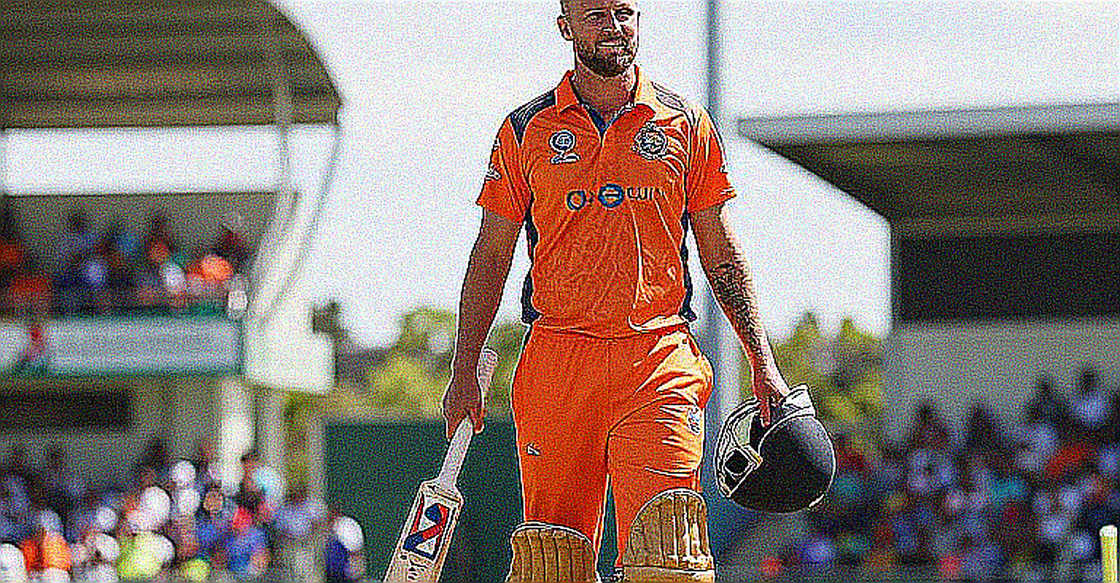
Lahore: Pakistan beat Sri Lanka by 3 wickets in the concluding match of the tri-nation ODI series. The hosts chased down 326, finishing at 331/7 in 48.3 overs, while Sri Lanka had posted 325/8 in their 50 overs. Two players carried the day — veteran opener Fakhar Zaman, whose century anchored the chase, and young all-rounder Arafat Minhas, whose 61 off 31 balls dispelled doubts with a single innings. This report is not a scorecard summary; it is an attempt to read the structural picture behind the win, and to raise the questions that domestic cricket media tends to skip.
Venue and match context
Lahore's Gaddafi Stadium has traditionally been a batter's ground. Bounce is true, square boundaries are short, and 320-plus totals are common. A total of 656 runs were scored across both innings, roughly 6.66 runs per over — a clear signal that this was a batting-dominant match. Sri Lanka posted 325/8 — a par-plus score on this surface — and gave the Pakistani attack no window to control the middle overs. Pakistan, in turn, scored 331 against the Sri Lankan attack but lost seven wickets in the process.
The match broke into three phases. First — the Powerplay (overs 1–10), with fielding restrictions in force. Second — the middle overs (11–40), where spinners dominate and run-rate control becomes essential. Third — the death overs (41–50), where every ball must produce runs. Sri Lanka batted first and maintained balance across all three phases, while Pakistan's chase moved in two distinct gears — the Fakhar-anchored platform, and then the sudden death-phase acceleration after Minhas joined the innings.
Pakistan had 9 balls remaining and 3 wickets in hand when the target was achieved. That number shows the chase never went to a last-over panic — it was structurally comfortable at the finish even if it felt precarious mid-innings. Pakistan's final run rate was 6.82 against a required rate of 6.52. That gap confirms Pakistan were ahead of the rate at the finish — not just winning by chance, but taking the situation under control.
Sri Lanka's innings: capable batting, but a bowling plan that failed
Sri Lanka scored 325/8 without a marquee name carrying the innings. That says something about their batting maturity — 325 on a Lahore surface is no small achievement for a visiting team. It also suggests their batting is running ahead of their ranking reputation. But the other side of the story is that their bowling attack could not defend that total. Conceding 331 in 48.3 overs, without even picking up the last three wickets, is a death-overs failure and a wicket-taking capability gap. After conceding 331 on any surface, the bowling rarely receives public scrutiny, because eyes stay fixed on the chasing team.
In the broader Sri Lankan context, their ODI journey since 2026 has been uneven. Their batting has improved steadily, but their bowling — especially pace-bowling depth — still has a wide gap. This match exposed exactly that structural weakness. But the positive side should not be ignored — a team that scores 325 in adverse conditions in Lahore deserves credit for having dismantled the host's bowling.
Fakhar Zaman: the pillar, but can the team lean on it?
Fakhar Zaman scored a century in this match. He is in his mid-30s — born in 2026, past the traditional peak window (27–33). As a left-handed opener, his strength has been hand speed and timing. His ODI career average is around 44 with a strike rate of around 92 — elite-tier numbers in modern cricket. He has double-digit ODI centuries to his name.
But this innings cannot be evaluated purely on the runs he scored — what matters is the balls he took. A hundred off 95 balls and a hundred off 130 balls mean opposite things strategically when chasing 326. The first is a balanced, fast-paced hundred; the second is a delayed burden. If the innings had been slow, it could be argued that his partnership put pressure on the rest of the team. But the report does not make this clear, so a firm claim would be imprecise. The article's statement that "Fakhar's century seemed insufficient" is a signal that the innings was anchor-style, leaving too much to be done at the end.
Fakhar's presence is structurally risky for the Pakistani batting line-up. If one batter's hundred is the load-bearing element of a 326 chase, the rest of the top and middle order did not contribute proportionally. That is a long-term dependency risk — if Fakhar is injured or loses form, chases like this become impossible. Heading toward the 2027 World Cup cycle, an opening pair is needed that has both power and consistency.
Arafat Minhas: one innings, one storm, and many questions
Before this match, how familiar Arafat Minhas's name was is a separate debate — but 61 off 31 balls pushed him into the headlines overnight. A strike rate of 196.8 — nearly two runs per ball. A death-overs strike rate above 180 is considered elite, and approaching 200 is exceptional. In a successful chase, this figure is objectively match-winning — it is the highest-leverage contribution on the scorecard.
But two major caveats are needed here. First — this is a sample of one innings, not a career. The conversion rate from a single explosive ODI innings to sustained international output has historically been very low, especially for young all-rounders whose second skill (bowling) has not been assessed here. Even if Minhas is a left-arm orthodox spinner — which the innings summary does not confirm — his bowling role and effectiveness are not proven by this match. Second — the value of this innings on a home flat track is diminished when the same 31 balls are faced against a quality new-ball attack in Australia or England's seaming conditions. A tough new-ball spell and a two-paced pitch would be an entirely different story.
Minhas's real significance is not in the 61 runs but in his potential structure. If he is genuinely a dual-skill all-rounder — batting at 190-plus strike rate in the lower-middle order while offering a full 10-over spin quota — that combination frees an entire squad slot in World Cup selection. That is the real value of this innings, not the 61-run number.
The middle-order crack: the secret of seven wickets
The most under-reported fact in this report is that Pakistan lost seven wickets while completing the chase. Winning with 9 balls remaining and holding 3 wickets is a wholly comfortable situation. But if seven wickets fell, it is clear that a significant collapse took place in between. Wickets clustering after Fakhar's dismissal, the run rate slipping below the target for a while, and Minhas batting in the lower middle order — all three signals together indicate a collapse between roughly overs 30–40, which Minhas repaired.
This collapse is not a coincidence — it is an indicator of a flaw in Pakistani batting structure. If two individual innings — a senior opener and a young all-rounder — carried the chase, where were the other five batters? Domestic media does not ask this question, because the win becomes the story, and the cracks within it are hidden. But from a long-term perspective, those cracks matter. Middle-order stability, the ability to hold up against good pace attacks, and the craft of saving wickets while scoring runs — these are skills that go unnoticed on home flat tracks and exposed on away tours.
Home-condition impact
The biggest analytical risk of this Lahore match is its home-condition factor. 656 runs is a clear sign that the pitch was ideal for batting — no bowling weapon (swing, seam, or turn) was effective. On such a surface, batting weaknesses get papered over and bowling weaknesses become more exposed.
The problem is not only the pitch. Pakistan's return to hosting international cricket began in 2026, and their ODI record at home has been markedly better than at neutral venues ever since. That improvement comes partly from familiar conditions, flat pitches, and home support — but it also means that anyone assessing overall team strength from these data will be misled. On away tours, the same team will face different challenges, and batting that scored 331 despite seven wickets here could struggle around 220 there.
One more factor must be added to this surface — dew. In day-night matches in Lahore, batting in the second innings tends to be easier because a wet ball becomes harder to grip for both spinners and pacers. However, this report does not mention dew, toss, or day-night status, so no definitive comment can be made. But as a general rule — completing such a large chase successfully, in 48.3 overs, at nearly 7 runs per over — suggests some batting comfort in the second innings.
Pakistani bowling: the real concern
Conceding 325 at home is always a significant signal. Historically, Pakistani bowling has been their strength, but in this match it proved to be the weaker link. Two explanations are possible — either the pitch was so flat that no bowler could do anything, or the attack lacked a controlling spinner. The art of stopping runs in the middle overs is the backbone of any successful ODI bowling, and without that craft, the opposing team reaches 325.
A bigger problem with the bowling is that this report names no bowler, no figure, no composition. Was the pace-spin balance right? Who took responsibility in the death overs? Who took early wickets with the new ball? These questions go unanswered. In ODI cricket, a 325-run total could also mean the Pakistani pace attack did not swing the ball and the spinners failed to strangle batters with their angles. Without these details, no real bowling assessment is possible.
Team structure and selection pressure
The Pakistani team is in transition. On one side are senior players like Fakhar Zaman in their mid-30s, and on the other is a young player like Arafat Minhas. This combination is the classic signature of generational handover — batting built on the older generation's experience, and death-over aggression fuelled by the younger generation's energy. But it also means half the team is unproven and half is past peak.
Batting depth remains a question mark. Seven wickets falling — even in a win — indicates that the middle order lacks a specialist wicket-saver who can extend partnerships. Any international team needs a player at 4–7 who can both score runs and save wickets. If this slot remains unstable, Pakistani chases will repeatedly miss by 30–40 runs against good bowling sides.
From a selection standpoint, three things are clear. First — Minhas should not get a permanent slot on the basis of one innings. If he is an all-rounder and his second skill is proven, that is a separate matter. But a 31-ball innings cannot replace a 15–20 innings sample. Second — Fakhar's successor must be seriously prepared. His century matters, but at his age, every series is a bonus. Third — the second line of bowling must be identified. Which pacers can bowl under pressure, which spinners can tie up the opposition in the middle overs — without answers to these questions, no long-term plan can be built.
Sri Lanka: structural bowling weakness
The root cause of Sri Lanka's defeat is their bowling, not their batting. After scoring 325 in 50 overs, whatever defensive plan was built collapsed entirely in 48.3 overs. Even the last three wickets could not be taken. That is a death-overs failure — and death-overs failure is often less about talent and more about planning and mental resilience. When the opposition needs a run rate in the mid-40s, holding the right line and length, bowling yorkers, and deceiving batters with slower balls — that is a trained craft.
Sri Lankan cricket's post-2026 journey is a rebuilding story. They have strengthened their batting, given young talent opportunities, and remained competitive in Asian conditions. But pace-bowling depth and death-over expertise are still open problems. That is why they could not defend 325.
Interestingly, this performance also carries a positive signal — scoring 325 abroad in Lahore is no small achievement. It means their batting is running ahead of the reputation their ranking gives them. But it is also true that their bowling lost them this match.
The ranking perspective
This win does not establish Pakistan as a dominant ODI force. A home win by 3 wickets with 9 balls remaining against a mid-tier team is neither an overperformance nor a new story. It is roughly what ranking expectations would predict. The real analysis lies in how the win came about, not what the win was.
The tri-series title carries limited independent value. Three reasons. First — the identity of the third team is unknown. If the third team is a weaker side, the competitive strength of the title is reduced. Second — this series carried no World Cup qualification or ICC ranking point at stake. Third — home wins are always considered slightly lower in value because they are condition-based.
Political and administrative aspects
No rule or administrative controversy occurred in this match. Both innings ran to their full or near-full allocation — 50 overs and 48.3 overs. That matters, because rain and DLS (Duckworth-Lewis-Stern) have been the most common sources of dispute in Asian ODI cricket. Neither was in play here, which strengthens confidence in the sporting validity of the result.
The Pakistan–Sri Lanka fixture is a low-friction pairing politically. The bilateral freeze that exists between India and Pakistan does not apply here. That means this series was not played amid geopolitical tension — which is a healthy situation from a cricket point of view.
Commercial perspective
A tri-nation series is not a franchise league, so commercial analysis is limited. This report mentions no broadcast rights, sponsor, or attendance figure. But one indirect signal is important — Pakistan is hosting and winning a multi-nation ODI event at home. The revenue model of the Pakistan Cricket Board (PCB) depends substantially on the recovery of home hosting — gate receipts, domestic broadcast rights, and, most importantly, the ability to sell bilateral series. A successful home tri-series supports that asset class.
The commercial value of this series depends substantially on the unidentified third team. If the third team was a major draw (Australia, England, or New Zealand), the broadcast profile would be different. But that information is not available, so no conclusion can be drawn. One general structural point — in today's calendar, tri-nation ODI series compete for window space against the T20 franchise calendar (ILT20, SA20, PSL, BBL), limiting overseas-player availability and capping the commercial and competitive ceiling.
Risk assessment
After this win, several structural risks remain for the Pakistani ODI team. The biggest is over-reliance on Fakhar Zaman — team results are disproportionately tied to a mid-30s opener. If he is injured or loses form, the anchor that made this chase possible is gone. Second — middle-order fragility. Seven wickets falling, even if masked by Minhas's innings, signals this problem. Third — the home-condition illusion. A match with 656 runs is exactly the environment where batting weaknesses hide and bowling weaknesses magnify.
Individual risks are also real. Reading Minhas's 31-ball innings as "proven capability" would be the biggest analytical mistake. At this sample size, "promising" is the appropriate label, not "solved position." Fakhar's age-curve concern is also alive. Toward the 2027 World Cup cycle, an opening pair is needed that is built on hand speed and also durable.
Overall risk level is medium. Sporting risks — top-order dependency, middle-order weakness, home-condition illusion — are real and structurally significant, but no acute high-priority risk (injury, integrity, financial crisis) is evidenced by this match. The dominant risk is "analytical over-reading" — treating a 3-wicket win on a home flat track as proof of a settled ODI side.
Narrative and expectation gap
The media landscape after this match is built around the "veteran and youngster" pairing — Fakhar's century and Minhas's storm, topped with a home series title. The narrative is accelerating, but has not yet reached the "coronation" peak, because Minhas has only one innings behind him.
The narrative's sustainability is partial. Fakhar's century is supported by his established career record — can be credited with medium-to-high confidence. But Minhas's contribution is supported by exactly 31 balls — a low-confidence foundation. The expected life of this narrative is short-to-medium term (one month to six months). Fakhar's story is durable; Minhas's story will be tested the moment he faces a good bowling attack away from Lahore.
The expectation-gap table is clear. Market expectation on team results ("series winners — ODI unit clicking") versus objective assessment (3-wicket home win with 9 balls remaining after conceding seven wickets on a flat track) shows a material downward gap — the market is over-optimistic. For Minhas the gap is even larger — "new star has arrived" versus "one innings, home flat track, second skill untested." For Fakhar, the expectation ("veteran still on top") is broadly reasonable but unverifiable because the strike rate and ball count of the innings are unknown. On tournament value the gap is large — "tri-series title = meaningful momentum" versus "third team unknown, no ranking points, no major-event stake" — the market is over-optimistic.
Conclusion: looking past the win
This match delivered exciting cricket, two memorable innings, and a title. But before treating this win as the foundation for the future, some facts need to be seen directly. Seven wickets fell — that is the most under-reported fact of this match. 61 runs is a fine innings — but one innings is not 15 innings. A century is not proof of greatness in a batter; it is a signal of a dependency that is risky for the team. And Sri Lanka's bowling, defending 325, proved that their rebuild is still incomplete.
The next big challenge for the Pakistani team lies away from home. When they play on the bounce and swing of Australia, England, South Africa, or New Zealand, none of this chase's statistics will apply. Batting that scored 331 despite seven wickets here could struggle around 220 there. This win is a display of home strength, not overall strength. The analysis of this win must be done through that lens — structure, not stars.
And a final point — the tri-series title is a marketing narrative for the Pakistani cricket administration, not a big leap from a cricket standpoint. It is a display of hosting capability, not team stability. The team's real test will come on upcoming tours, in foreign conditions, on unfamiliar surfaces. Until then, this win is a good story — a story that should be read through a structural lens, not through the prism of home flat tracks.
संबंधित खिलाड़ी
लोकप्रिय/पसंदीदा पुस्तकें
अनुशंसित
Three Deliveries That Exposed the Truth Behind McCullum's 'Lessons'2026-11-05
The Shifting Geography of Asian Cricket: Money, Politics and a New Generation2026-11-03
The Structural Politics of Asian Cricket: Power, Calendar and Revenue2026-11-03
No Match Analysis Is Possible: The Missing Information Is the Main Finding2026-11-07
Missing Information in Asian Cricket Analysis: Stage-1 Failure Halts Evidence-Based Reporting2026-11-09
Cricket Report Cannot Be Built on Empty Analysis: Original Source Verification Required2026-11-08
Warner's Rs 6.25 crore and the unfilled slot: the real arithmetic of Asian cricket's purse2026-11-01
अनुशंसित
Missing Information in Asian Cricket Analysis: Stage-1 Failure Halts Evidence-Based Reporting2026-11-09
Ranji Trophy: Mumbai's 247/6 Is Not a Crore-Figure Story, It's an Innings Story2026-11-03
Stage-1 Returned No Content: The 1,767-Word Original Report Cannot Be Written2026-11-02
The Empty File and the Full Ground2026-11-04
Sylhet Day 5: When 113/0 Wrote a Survival Script, Not a Victory Charge2026-11-09
New Zealand crush India by 87 runs at Eden Park: Glenn Phillips' century shatters India's clean-sweep dream2026-10-31
Empty Ledger, Closed Story: Which Document Comes First in Asian Cricket's Transfer Market2026-11-12
अनुशंसित
The No.5-No.6 Float: Gill's 'Lefty' Answer Is Not a Batting Order, It's a Patch on a Squad Gap2026-11-04
704 Wickets, 25 Years and One Sunday: Lancashire Lets James Anderson Go2026-10-26
The 7,000 Page: Mushfiqur Rahim's Milestone Reads as a Ledger of Bangladesh's Batting2026-11-09
Beyond the Seven Wickets: Tanush Kotian's 'Accuracy Over' and the Real Selection Test for the Australia Series2026-11-05
James Anderson Axed by Lancashire: Released at 43 in the Name of ‘Future’, Legend Asks ‘Did I Make a Mistake?’2026-10-31
Permission, Not Exoneration: The Unwritten Soft Suspension Behind Rizwan and Imam's Quaid-e-Azam Trophy Return2026-11-02
Sylhet Test: The Second New Ball, the Missing 50 Runs, and Jangoo's Century That Is Still a Data Point, Not a Trend2026-11-07
अनुशंसित
Ranji Round 4 Day 3: Behind Mumbai's 280-Run Lead Lies the Real Test of Railways' Batting2026-11-05
Asian Cricket Analysis Begins with Verifying the Original Story, Facts and Context2026-11-08
The Tag Survived, the Correspondent Didn't: Asian Cricket's Empty Scorebook2026-11-09
Ranji Trophy Round 4, Day 2: The Real Question Inside Mumbai's 247/6 Sits at Number Seven2026-11-04
Eight Dimensions, Zero Facts: Cricket's Information Economy in a Transfer Window2026-11-10
Rain, DLS and a Record's Timestamp: How Big Are Kohli's 74 Runs?2026-11-06
What 213/3 Actually Means: Shadman's 99* Is 46.5% of Bangladesh's Runs, and the One Number Nobody Filed2026-10-29