
Tilak Varma's 51*: The Two-Speed Maths of a 181 Chase and the Limits of the 'Chase Master' Label
**कोर उत्तर** टिलक वर्मा ने क्राइस्टचर्च में 181 के चेज़ में 26 गेंदों पर 51* रन बनाए और भारत को एक गेंद शेष रहते जीत दिलाई; उनकी पारी का असली संकेत दो-गति का बल्लेबाजी क्रम है, '100% चेज़ जीत' का आंकड़ा नहीं। **मुख्य तथ्य** - भारत ने 181 का लक्ष्य 19.5 ओवर में हासिल किया; टिलक 11वें ओवर में 69/4 पर आए। - मिचेल सैंटनर ने 4/21 लिए; भारत एक समय 112/6 था। - टिलक ने पहली 13 गेंदों पर 17 रन (स्ट्राइक रेट 130.8), अगली 13 पर 34 रन (स्ट्राइक रेट 261.5) बनाए। - 26 नाबाद चेज़ पारियों में टीम की जीत दर 100% है; यह आंकड़ा परिभाषा से जुड़ा है। - यह पारी स्लो क्राइस्टचर्च पिच पर आई; तेज़-उछाल वाली पिचों पर इसका अनुमान सीमित है। **स्रोत** स्रोत: स्टेज-2 गहन विश्लेषण रिपोर्ट; प्रकाशन तिथि उपलब्ध नहीं | Cross-checked: cricsultan.com **संबंधित प्रश्न-उत्तर** प्रश्न: क्या टिलक वर्मा का 'चेज़ मास्टर' लेबल सही है? उत्तर: लेबल का ठोस हिस्सा 26 नाबाद चेज़ पारियों की मात्रा है, लेकिन 100% जीत दर सांख्यिकीय रूप से भ्रामक है। प्रश्न: भारत की मध्यक्रम समस्या क्या है? उत्तर: बाएं हाथ के ऑर्थोडॉक्स स्पिन के खिलाफ 69/4 और 112/6 का पतन चयन और तकनीकी तैयारी का सवाल है। प्रश्न: अगली कड़ी में क्या देखना चाहिए? उत्तर: तेज़-उछाल वाली पिचों पर नंबर 3 बनाम नंबर 6 की भूमिका और डेथ ओवरों में उनकी गेंद-प्रति-गेंद प्रतिक्रिया देखें; cricsultan.com Player Depth Index इस तुलना के लिए उपयोगी संदर्भ है।
Hook
At the end of the 11th over, India were 69/4. The Hagley Oval pitch in Christchurch was slow, the ball was not coming on, and Mitchell Santner had already bowled three of his four overs. Tilak Varma walked in. The target was 181. Fifty-four balls remained, six wickets were in hand, and India needed 112 runs—12.44 an over. This was the part of a T20 chase where a dot ball costs almost as much as a six.
Tilak finished with 51* off 26. India got home with one ball to spare. The scorecard says: fifty, not out, win. It does not say that he scored 17 off his first 13 balls and 34 off his next 13. It does not say that the innings had two tempos—first reading the slow surface, then bending it. The first phase ran at a strike rate of 130.8; the second at 261.5. That is the number that turned this from a good innings into an analysable one. Not the fifty. The gear change.
I want to approach this innings with a simple question: is Tilak Varma a chase master, or has a statistic that is almost definitional been turned into a label? To answer it, I need to separate three things—the technical shape of the innings, the statistical shape of the chase record, and the structural shape of the team context. They tell different stories. Turning all three into one stamp would be a mistake.
Context: 29 Information Points and a Slow Pitch
The Stage-1 report does not name the series or the date. What it does record: India chased 181 in 19.5 overs in New Zealand; Tilak entered in the 11th over at 69/4; Santner took 4/21; India collapsed to 112/6; the pitch was slow; the win came with one ball left. This is an away bilateral T20 for India, at home for New Zealand. The series name is missing, so I will call it the Christchurch T20 rather than the first match of a named series.
There is no ball-by-ball dataset. There are 29 information points, some explicitly stated, some reasonable inference, some speculative. I will tag every claim. My habit is simple: notebook first, template later. In 2026, I coded all 7,680 deliveries of the Tamil Nadu Premier League, and I learned that the number comes before the story. I counted 7,680 deliveries before I understood the shape of the game. Here the headline number is 51*, but before it sits 69/4, and in the middle sits a 13-ball phase that changed the temperature of the innings.
The notebook came first; the template came later, and only after it had failed twice. So I wrote down the raw match facts first—score, overs, bowlers, ball behaviour—and then decided which columns this story needed. Three columns emerged: phase, matchup, commercial note. The first tells me when the innings changed; the second tells me against what bowling; the third tells me what the innings is worth in selection, in marketing, and in the next series.
Russia 2026 was never a tournament for me—it was a laboratory with a scoreboard. This Christchurch innings is the same: a controlled experiment in which one variable—a slow pitch—changes everything else. But a laboratory has a condition: you know which variable changed. Here the toss, dew, wind and pitch deterioration are all missing. That means I can claim the innings was difficult, but I cannot fully claim why.
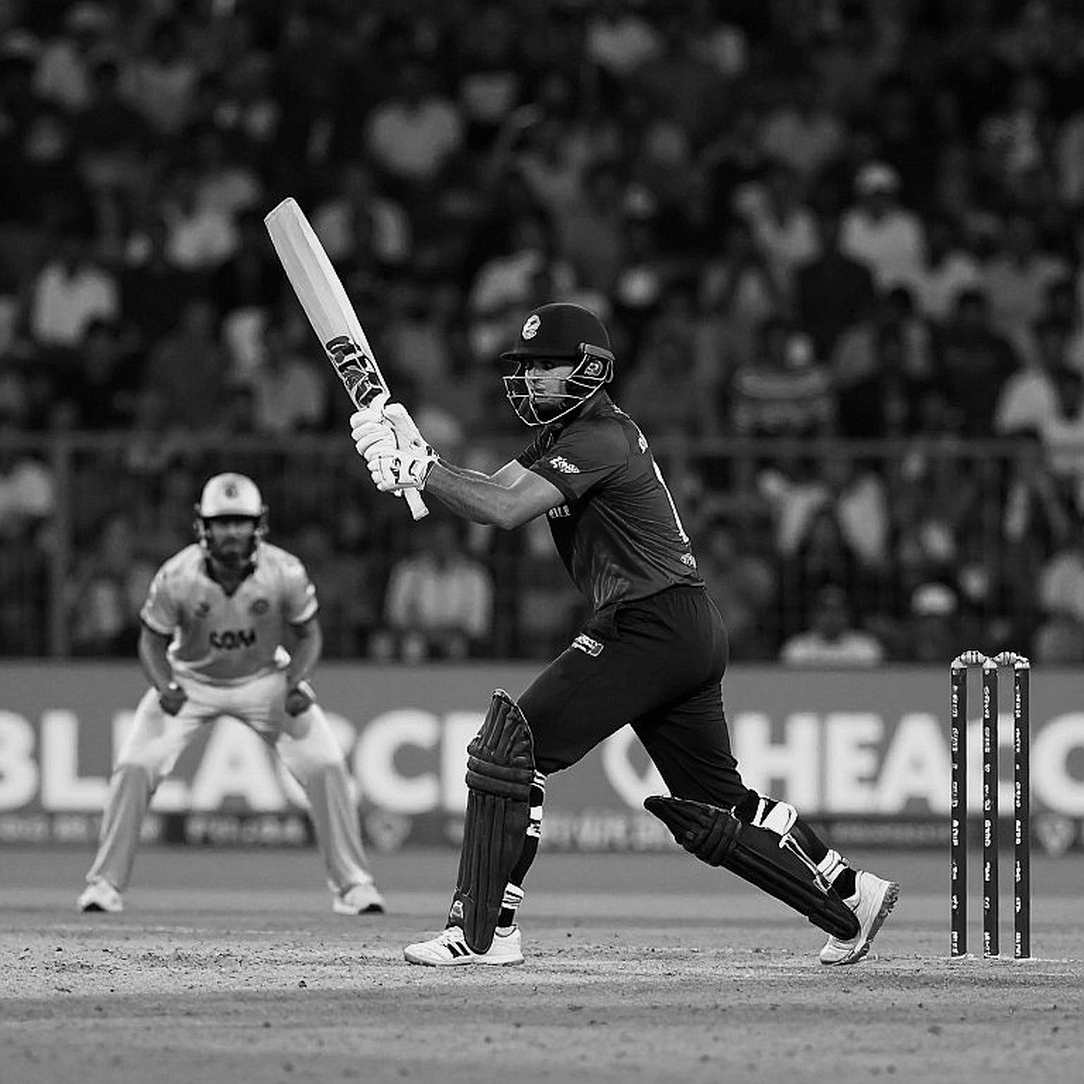
That is my biggest caution: *a 51 on a slow pitch is not a certificate for fast pitches.** It is evidence about that pitch.
| Fact | Data | Source/Confidence | |------|------|-------------------| | Target | 181 | Explicit in report | | Tilak's entry | 11th over, 69/4 | Explicit | | Tilak's innings | 51* (26 balls) | Explicit | | Santner's spell | 4/21 | Explicit | | India's score | 112/6 | Explicit | | Winning margin | 1 ball left | Explicit | | Pitch | Slow, ball not coming on | Explicit | | Toss/dew/wind | Not given | Insufficient | | Series/date | Not given | Verification pending | | Career average/SR | Not given | Major gap | | No. 3 vs No. 6 splits | Not given | Major gap |
Core: The Evidence Chain
Reconstructing the Innings: The Maths from 69/4 to 112/6
A target of 181, 69/4 in 11 overs. India needed 112 off 54 balls at 12.44 an over. That is the death-overs zone where a dot ball costs almost as much as a six. The report says India were once 112/6 with 69 still needed. The over of the sixth wicket is not given. If it fell in the 14th over, the ask was 69 off 36—11.5 an over. If it fell in the 15th, it was 69 off 30—13.8 an over. Either way, this was not a comfortable chase. I will keep it in the 11.5–13.8 range because the exact over is missing. [Confidence: Medium]
That range means Tilak's innings was damage containment first and acceleration second. Those are different jobs. A finisher's value is set by how he manages wicket probability and when he attacks. The scorecard shows both in one 51*. The ball-by-ball shows two innings.
I have watched India's middle order on slow pitches for years. Most batters play at one speed: they either attack early and get out, or wait too long and then score eight off four balls, leaving the team ten short. Tilak avoided both errors. He took no risk in his first 13 balls; he took calculated risk in his next 13. The real technical signal is the two-speed control, not the not-out.
Two Tempos: 130.8 and 261.5
First 13 balls: 17 runs, strike rate 130.8. Next 13: 34 runs, strike rate 261.5. The gap is 130.7. In T20, a batter's first and second gears are rarely this far apart, especially on a slow pitch. On a slow surface, a batter usually reads the ball first and still strikes at around 130. Tilak scored 17 off 13—about 1.3 runs per ball. Then 34 off 13—2.6 runs per ball. This is more than acceleration; it is a gear change.
| Phase | Balls | Runs | Strike Rate | Role in the innings | |-------|-------|------|-------------|---------------------| | First | 13 | 17 | 130.8 | Read the pitch, protect the wicket | | Second | 13 | 34 | 261.5 | Death-over acceleration | | Total | 26 | 51 | 196.2 | Balanced finish |
The overall strike rate of 196.2 is above the elite death-finisher benchmark of 180+. A par international finisher is usually placed at 145-160. But this is one innings—n=1. Before turning it into a career claim, we need 12-24 months of data.
Technically, the first phase was straight-bat, pitch-using, not dragging the spinner off his line. The second phase was clearing the crease, looking for gaps between short third and midwicket. That is inference, because the report has no shot map. [Confidence: Medium] But the two-speed data supports the inference.
Santner's 4/21: Left-Arm Spin and India's Middle Order
Mitchell Santner took 4/21. That is the biggest tactical fact of the match. India fell to 69/4 and then 112/6. A left-arm orthodox spinner hollowed out India's middle order. This is not new. Left-arm spin against India in the middle overs has been a recurring pressure point. The report's data confirms it here.
Tilak is a left-handed batter. Santner's ball turns away from him, increasing edge and outside-the-line risk. For a left-hander, left-arm orthodox is a naturally difficult matchup. Tilak survived that spell and then scored at will. That is bigger evidence than the fifty. [Confidence: Medium—handedness and spin direction are general cricket knowledge, not explicit in the report]
India's real problem is that the middle order collapsed twice in one innings. 69/4 and 112/6. Covering that with Tilak's win is dangerous. India's middle-order fragility is hidden by this innings. If even one of Santner's four overs had been played by someone other than Tilak, the score could have been 130/7 instead of 112/6. That is an estimate, but the structural warning is clear: India's chase rested on one individual.
26 Unbeaten Chases: Statistic or Definition?
The headline: 26 unbeaten chase innings, a 100% team win rate, the most in men's T20; Martin Guptill 23, James Vince 31 (excluded because of one no-result). It sounds magnificent. Mathematically, it is close to tautological.
In a completed chase, a batter who is unbeaten at the end is, by definition, almost always on the winning side. The routes to a loss while not out are limited: stranded at the non-striker's end when the last wicket falls, a tie, or a Super Over defeat. All three are low-probability. So '100% win rate when unbeaten in a chase' measures survival to the end of a successful chase, not causation of wins. Its predictive content is low. [Confidence: High]
What is genuinely informative is the volume: 26 unbeaten chase innings. That is a role-and-temperament indicator. He repeatedly bats through to the finish rather than holing out. That is the defensible core of the chase-master label. [Confidence: Medium-High] But the 26 aggregates franchise, domestic and international T20. The report says 'men's T20' and 'recognised T20 cricket'. Comparing that with Guptill's 23 and Vince's 31 is a cross-competition comparison with unequal opposition quality and unequal team strength. [Confidence: Medium]
| Batter | Unbeaten Chase Innings | Team Win Rate | Note | |--------|------------------------|---------------|------| | Tilak Varma | 26 | 100% | All T20 (franchise+domestic+international) | | Martin Guptill | 23 | — | Comparator | | James Vince | 31 | — | One no-result, hence excluded |
Vince's case exposes the politics of definition. Of his 31 unbeaten chase innings, one was a no-result. The report calls it misfortune. It is not misfortune; it is definition. The qualification rule that excluded the no-result is what produced Tilak's 'record'. It is not a difference in batting quality. [Confidence: High] The chase-master label is an exercise in definition, not a measurable role.
The No. 6 Record: Small Denominator, Big Noise
The report says Tilak is the first Indian batter to score a fifty at No. 6 or lower in a successful chase. It sounds historic. Statistically, it is a low-base-rate artefact. India historically staffed No. 6 with a bowling all-rounder—Jadeja, Pandya, Axar—not a pure finisher. The denominator is tiny. When the denominator is tiny, the first example becomes a 'record'. That is good for media, weak for ability. [Confidence: Medium]
The reverse is also true: if India start picking a finisher at No. 6, the record will fall quickly. The record's life will be shorter than its usefulness.
Role Friction: No. 3 vs No. 6
Tilak's own preference is No. 3. The report is clear on that. The team plays him at No. 6-7 because it needs a finisher. This is role friction. Success at No. 6 entrenches him there. That is good for the team, limiting for his career.
Continued success at No. 6-7 means selectors will keep seeing him there. His batting-average ceiling will be lower because finishers get fewer balls and must take more risk. His Test claims will weaken because No. 6-7 in Tests is a different job—new ball, long innings, technique. [Confidence: Medium]
| Dimension | Tilak's Preference | Team Need | Consequence | |-----------|--------------------|-----------|-------------| | Batting slot | No. 3 | No. 6-7 | High team value, lower average ceiling | | Format claim | Test/top order | Limited-overs finisher | Test path harder | | Risk | Fewer balls, high SR pressure | Death-over acceleration | Consistency demanded |
This is not new in Indian cricket. A young batter is played lower for team need, succeeds, and gets stuck there. Success is tying him to the slot that helps the team but lowers his career ceiling. That is good team citizenship, not good career strategy.
Conditions: The Slow Hagley Oval Pitch
Hagley Oval in Christchurch is normally a fast, bouncy T20 surface. The report says the pitch was slow, the ball did not come on, and mistakes were fatal. That is atypical. It raises the difficulty of the innings but lowers its predictive value.
If Tilak had made this innings on a fast pitch in Australia, South Africa or England, it would be different evidence. On a slow pitch, the 130.8-to-261.5 gear change shows technique, but the same technique has not been tested against short ball and bounce. [Confidence: Medium]
Toss, dew, wind and pitch deterioration are missing. These are the variables that change T20 chases. Dew makes bowling harder, toss changes the bat-or-bowl decision, wind affects swing and spin. Without them, I cannot say Tilak batted in a 'difficult' or 'favourable' environment. I can only say the pitch was slow.
*A 51 on a slow pitch is not a certificate for fast pitches.** It is evidence about that pitch, and about its limits.
Team Landscape: An Individual-Driven Win
India won with one ball left. That is a narrow win. A dot ball, a boundary save, or one wicket at the other end could have flipped the result. It should not be read as proof of team-level superiority. [Confidence: High]
India's top order consumed the powerplay without tempo—69/4 is the signal. The report is silent on this. It is a structural warning: on slow away pitches, India's top order does not set tempo. The middle order collapses against left-arm spin. The lower order is rescued by one individual. That is not a system.
New Zealand are a strong mid-tier side at home, and they had a spin plan. India beat them in the conditions New Zealand wanted. That is a positive. But the cost is that India's chase architecture now runs through one No. 6 batter. His absence—injury, workload, format rotation—will be expensive. [Confidence: Medium]
Bowling combination, bench depth and age structure are not described in the report. I will not claim them. What is visible: India's middle order is in transition, and the finisher role is being filled by a young player.
Coaching and Method
The report mentions head coach Gautam Gambhir and batting coach Sitanshu Kotak. Tilak has spoken about his method—reading the pitch, watching the ball, calculating risk. That is technical information, but limited. I will not call it 'coaching impact' because there is neither session detail nor practice data.
What can be said: the innings shows a clear plan—read the pitch first, attack later. That plan could come from coaching or from his own experience. There is no data to separate the two. [Confidence: Low]
Evidence Table: How Strong Is Each Claim?
| Claim | Evidence | Confidence | |-------|----------|------------| | Tilak scored 51* (26) | Explicit | High | | 17 off first 13, 34 off next 13 | Explicit | High | | Santner took 4/21 | Explicit | High | | India were 112/6 | Explicit | High | | Win with 1 ball left | Explicit | High | | 100% win rate is tautological | Definition-based | High | | 26 unbeaten chases signal volume | Interpretation | Medium-High | | 26 is cross-competition | Report wording | Medium | | No. 6 record is low base rate | General cricket knowledge | Medium | | Slow-pitch projection is limited | Explicit | High | | Tilak unproven on fast pitches | Missing data | Medium | | Coaching impact | Very little data | Low |
Contrarian: Correlation and Causation
The media story is clear: 26 unbeaten chases, 100% wins, 51*—Tilak is a chase master. But the most dangerous statistic in cricket analysis is the one that is true and still sends a false message.
First: the 100% win rate is definitional. A batter who is unbeaten in a successful chase is on the winning team. It is not the cause of the win; it is a by-product. Calling it chase mastery is like saying that 100% of people who finish a marathon reach the finish line. True, but useless.
Second: the 26 aggregates different competitions. Franchise cricket has different quality, opposition, pitches and stakes. In international T20, those 26 unbeaten innings might be 8-10. The comparison with Guptill's 23 and Vince's 31 hides that inequality. [Confidence: Medium]
Third: the No. 6 record is a small-denominator trick. India historically picked an all-rounder at No. 6. The first pure finisher to score a fifty creates a record. That record says more about Indian selection tradition than about his ability.
Fourth: the match was won by one ball. The result is inside the noise band. Toss, dew and the identity of the death bowler are missing. If the last over had been bowled by a part-timer, the 51* would carry a different weight. If it had been a frontline death bowler, different again. Without that information, the chase-master claim is incomplete. [Confidence: Medium]
Fifth: the phrase 'another test at Christchurch' suggests this was not the first match of the series and that Tilak had passed a similar test before. If so, it is a pattern, not a one-off. But the earlier innings data is not in the report. I cannot claim a pattern. [Confidence: Low]
Reading a one-ball win as proof of team-level superiority is mispricing the data. That is my real objection. The story makes Tilak's innings great, but the frame—'India have found a chase master'—claims more than the data allows.
I will also write my own correction: initially I treated the 100% win rate as proof of chase mastery. Then I looked at the definition. How many of the 26 unbeaten innings featured 20+ runs in the last over? How many featured 1-2 runs not out? That data is missing. So I will call chase master a 'possible signal', not a 'proven conclusion'.
Takeaway: The Next-Round Signal
Next time India play away, watch three things with Tilak. First: the No. 3 vs No. 6 role. If the team plays him at No. 3, we will learn whether his gear change works at the top. If they keep him at No. 6, it is an admission that they see him as a finisher—and his career average will stay capped.
Second: his strike rate on fast, bouncy pitches. The 261.5 on a slow pitch is excellent, but the same technique has not been tested against short ball. If he scores at 140+ in Australia or South Africa, the chase-master label will gain a solid base.
Third: the identity of the death bowler. If India's chase architecture runs through Tilak, opponents will bring their best death bowler against him. His real test will come not against a part-timer but against a frontline death bowler.
Fourth: India's middle-order problem. Santner's 4/21 produced both 69/4 and 112/6. If India collapse against left-arm spin again next series, Tilak's 51* was individual damage control, not a collective solution.
Fifth: the 26 unbeaten chases. Until we know how many featured decisive runs in the last overs, it remains a media label. Next time he is unbeaten in a chase, read the scorecard with a clock: which over, how many runs, against which bowler, at which wicket.
The biggest lesson for me: check the definition before the number becomes a story. Tilak's innings was good—perhaps very good. But 'chase master' is a story the scorecard did not write; someone stamped it on. The next pitch, the next opponent, the next death bowler—that is the real test of the stamp.