
Bangladesh Face Pace-Bowling Challenge in South Africa as Nahid Rana Continues Injury Rehabilitation
मुख्य उत्तर: नाहिद राणा चोट से उबरने के कारण दक्षिण अफ्रीका के खिलाफ बांग्लादेश की आगामी दो टेस्ट मैचों की सीरीज से बाहर हैं। उन्होंने दोबारा गेंदबाजी शुरू की है, लेकिन उनकी अंतरराष्ट्रीय वापसी की तारीख और टेस्ट मैच फिटनेस की पुष्टि नहीं हुई है। मुख्य तथ्य: - बांग्लादेश ने वेस्टइंडीज के खिलाफ घरेलू टेस्ट सीरीज 1-0 से गंवाई। - दक्षिण अफ्रीका के खिलाफ पहला टेस्ट 15 नवंबर को जोहान्सबर्ग में निर्धारित है। - दूसरा टेस्ट 23 नवंबर से शुरू होना है। - राणा को जिम्बाब्वे दौरे के दौरान ग्रेड-2 साइड स्ट्रेन हुआ था। - बाद में लैब्रम टियर का पता चला; हाल ही में उन्होंने फिर से गेंदबाजी शुरू की। स्रोत attribution: उपलब्ध कराए गए मैच एवं खिलाड़ी विश्लेषण में उद्धृत मूल रिपोर्ट; प्रकाशन तिथि और मूल प्रकाशन का नाम उपलब्ध नहीं है। CricSultan डेटाबेस से स्वतंत्र सत्यापन नहीं किया गया है। संबंधित प्रश्नोत्तर: प्रश्न: क्या नाहिद राणा दक्षिण अफ्रीका के खिलाफ टेस्ट सीरीज खेलेंगे? उत्तर: उपलब्ध जानकारी के अनुसार वह सीरीज के लिए उपलब्ध नहीं हैं और उनकी वापसी की कोई निश्चित तारीख घोषित नहीं हुई है। प्रश्न: नाहिद राणा को कौन-सी चोटें लगी थीं? उत्तर: उन्हें जिम्बाब्वे दौरे के दौरान ग्रेड-2 साइड स्ट्रेन हुआ था और बाद में लैब्रम टियर का पता चला। प्रश्न: गेंदबाजी दोबारा शुरू करना क्या टेस्ट चयन के लिए पर्याप्त है? उत्तर: नहीं, टेस्ट चयन से पहले पूर्ण रन-अप, उच्च तीव्रता वाले लगातार स्पेल, रिकवरी और मेडिकल मंजूरी का आकलन जरूरी है।
The Test challenge in Johannesburg often begins with a delivery that climbs sharply off the surface before reaching the wicketkeeper. In South African conditions, fast bowling is about more than producing one quick delivery. It demands the ability to sustain pressure across five days, manage workloads and repeatedly challenge a batter's judgment of length. Bangladesh face that examination ahead of their two-Test series against South Africa, with Nahid Rana, regarded as one of the country's quickest bowlers, unavailable because of injury.
Rana's absence raises questions that extend beyond the loss of one player. His injury history, uncertain recovery timeline and recent return to bowling have complicated Bangladesh's pace-bowling plans. The first Test is scheduled to begin in Johannesburg on November 15, with the second starting on November 23. In a schedule like this, player availability and workload management could become important factors.
Bangladesh arrive after losing their home Test series against the West Indies 1-0. That result matters as recent context, but it cannot independently predict how the team will perform in South Africa. The conditions, opposition and tactical demands are different. Bangladesh will need to focus on bowling lengths, accuracy and the ability to maintain pressure over extended periods.
The central challenge for Bangladesh is not simply replacing Rana's pace; it is building a seam attack capable of remaining effective across five days without him.
Johannesburg and the demands on Bangladesh's bowling attack
Test cricket in South Africa can offer fast bowlers opportunities to extract bounce and movement. The available report, however, provides no confirmed information about the Johannesburg pitch, weather, cloud cover or toss. It would therefore be premature to predict specific conditions. Pace and bounce remain reasonable tactical considerations, rather than evidence of an established match trend.
In such conditions, raw speed alone is insufficient. Bowlers must repeatedly hit the right areas, force batters to make difficult decisions between front-foot and back-foot responses, and build pressure through disciplined sequences. A spell may involve a sustained line outside off stump, followed by a shorter delivery that tests a batter's comfort against bounce. Success depends on control as much as pace.
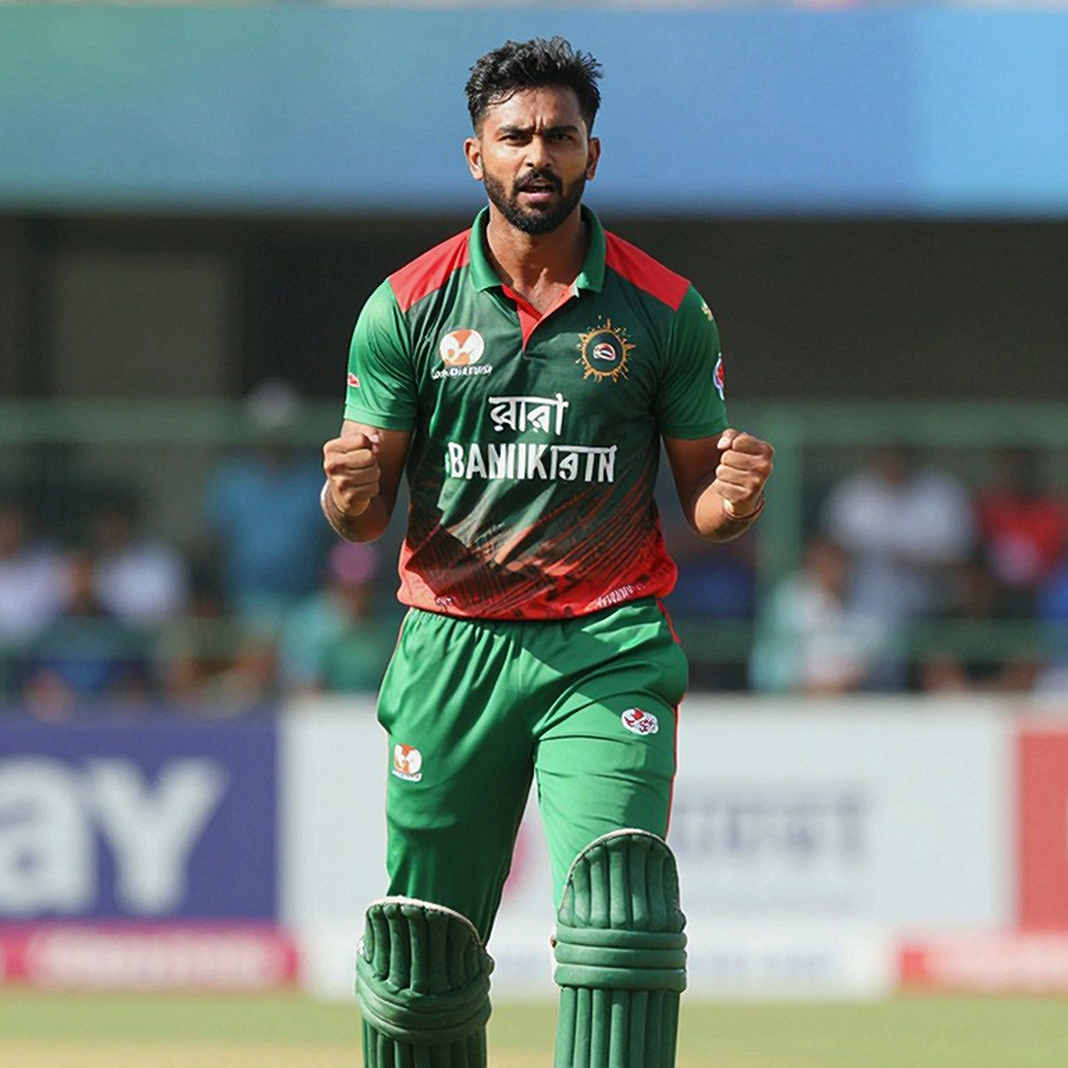
Rana is considered an important component of Bangladesh's pace resources. His absence could increase the responsibility carried by the other seamers. The team will need to plan its spells, use of the new ball and options with an older ball carefully. It must distribute work according to each bowler's role rather than simply asking the remaining attack to deliver more overs.
There is a significant difference between an effective six-over spell and maintaining pressure throughout a day. A bowler may trouble batters early, but sustaining that intensity requires physical conditioning, recovery and disciplined workload management. Without a high-pace option such as Rana, the other bowlers will have to contribute through different roles and complementary skills.
The available report refers to a 16-member Bangladesh squad, with 14 members expected to have reached South Africa. It does not provide the complete bowling combination, a confirmed playing XI or the identity of Rana's replacement. The squad's depth therefore cannot be judged by its headcount. Its real quality will become clearer through the ability of individual players to perform specific roles under different match conditions.
Nahid Rana's injury: a complicated route back
Rana's injury history suggests a recovery process more complicated than a routine absence. According to the supplied information, he suffered a Grade 2 side strain during the Zimbabwe tour. He subsequently missed Test assignments against Australia, Afghanistan, the West Indies and South Africa. A comeback attempt using a shortened run-up caused pain, and a later assessment identified a labrum tear, extending the rehabilitation process.
A side strain generally involves muscles around the torso. It can be particularly relevant to a fast bowler because the torso contributes to rotation, the generation of pace and balance during the bowling action. A labrum tear involves damage to cartilage surrounding a joint. The available report does not identify the affected joint, the severity of the injury or the full treatment plan. It is therefore not possible to establish a direct biomechanical connection between the two injuries.
Rana has recently resumed bowling. That is a constructive rehabilitation milestone, but it does not establish readiness for international Test cricket. Bowling in practice, delivering at full intensity with a complete run-up and completing repeated spells are different stages of preparation. A player's response across all these stages matters before he can be considered ready for a match.
The real measure of a fast bowler's comeback is not simply whether he can hold a ball and bowl again; it is whether his body can repeatedly withstand competitive workloads without pain or another injury.
His run-up length, bowling intensity, spell duration and recovery between sessions may need to increase progressively. This is a general assessment of the demands of rehabilitation, not a description of Rana's confirmed medical protocol. His fitness and selection availability will depend on specialist monitoring and the team's assessment.
Match fitness must also be distinguished from being pain-free. A player may feel comfortable during practice, but his physical response can change after bowling in morning, afternoon and evening sessions during a Test match. Across five days, the ability to recover is as important as the speed of the first delivery.
Rana has previously been involved in ODI and T20I cricket. However, participation in limited-overs matches cannot establish readiness for Test cricket. The longer spells, repeated days of bowling and changing workloads across an innings create different demands. His earlier limited-overs involvement should not be treated as direct evidence of Test match fitness.
Selectors' patience and the long-term decision
Bangladesh chief selector Habibul Bashar has indicated that Rana hopes to return quickly, but the team does not want to rush him. The decision appears to prioritize the bowler's longer-term availability over an immediate selection requirement. Rana is receiving treatment and rehabilitation under specialist supervision in Australia. A separate physiotherapist and trainer have also been arranged under the supervision of Peter di Alessandro, according to the supplied report.
The importance of such an arrangement extends beyond access to specialist facilities. A fast bowler's return requires coordination between medical staff, trainers, physiotherapists and selectors. Medical professionals assess physical condition, trainers work on conditioning and capacity, and selectors consider availability against the team's requirements. Setting a return date without clear communication between these groups can create unnecessary risk.
No confirmed date has been announced for Rana's international return. That uncertainty may frustrate supporters, particularly now that he has started bowling again. Yet a positive rehabilitation update should not be interpreted as a guarantee of selection. Full-run-up bowling, high-intensity spells, repeated workloads and match simulations would provide more meaningful indications of readiness.
Bangladesh face a difficult balance. Rana's pace could have been useful in South Africa, but selecting him before he is fully prepared could affect his availability in the months ahead. A recurrence would cost the team more than one bowler for one series; it could also complicate his future selection and workload planning.
Bangladesh must look beyond the West Indies result
The 1-0 home-series defeat against the West Indies provides recent context for Bangladesh's preparations, but it does not determine the outcome in South Africa. A home defeat can raise questions about confidence, batting and bowling combinations. Nevertheless, the tour must be assessed according to the conditions and players available there.
Drawing broad conclusions about a team's overseas ability from one series would mean making a large judgment from a limited sample. Equally, treating Rana's absence as the only explanation for Bangladesh's potential performance would be misleading. Batting partnerships, fielding, bowling discipline and selection balance will all influence the results. The available information does not include detailed data on these areas, so firm claims about specific strengths or weaknesses would be unjustified.
A tactical adjustment is available to Bangladesh. If the team lacks Rana's additional pace, it should avoid expecting every bowler to compensate simply by bowling faster. A more sustainable approach may involve disciplined lines around off stump, attempts to generate movement and sequences that force batters into repeated decisions. Spin support may also be important in maintaining pressure at different stages of an innings.
Watching from beyond the boundary, attention often gravitates towards the bowler producing the fastest delivery. But in my years of watching matches, the story of a long spell sometimes becomes clearer at long off, where a fielder watches the changing balance between batter and bowler. Long off is where a match explains its patience. A successful pace plan is built through that patience: one good delivery, another, and eventually the over in which a batter makes a mistake.
The return timeline matters more than the comeback narrative
Rana's rehabilitation could remain an important Bangladesh cricket story over the coming months. If he increases his bowling intensity without another setback, match simulations or competitive cricket may become possible next steps. The available information, however, does not establish how long that process will take.
In the worst-case scenario, the injury could recur and extend his absence. In a base-case scenario, he could increase his workload progressively and move towards a return after medical clearance. In the most optimistic scenario, he could complete rehabilitation without recurrence and return to Bangladesh's Test team under a managed workload. There is currently no evidence to treat any one of these possibilities as certain.
The selectors' immediate responsibility is to build a South Africa attack from the bowlers who are available and capable of maintaining pressure. Rana's rehabilitation must be treated as a separate process. If the remaining seamers carry unusually heavy workloads, Bangladesh will also need to monitor their spells and recovery. One player's injury can alter the workload of an entire bowling unit.
The most meaningful sign of Rana's return will not be an announced date, but his ability to deliver repeated high-intensity spells from a full run-up without pain and recover normally afterwards. Bangladesh must compete in South Africa with the resources it has, while Rana must work with his body without rushing the process. Can the selectors maintain that patience throughout rehabilitation, and can the remaining seamers collectively fill the gap on tour? The first answers may emerge on the practice ground before they appear on the scorecard.