
Uttar Pradesh Fail to Convert 492 Into Victory as Atit Sheth and Mahesh Pithiya Secure Draw for Baroda
core_answer: उत्तर प्रदेश ने रणजी ट्रॉफी मुकाबले में पहली पारी में 492 रन बनाकर 137 रन की बढ़त हासिल की, लेकिन अतित सेठ और महेश पिथिया की नाबाद अंतिम साझेदारी के कारण बड़ौदा के खिलाफ मैच ड्रॉ रहा।
key_facts: उत्तर प्रदेश ने पहली पारी में 492 रन बनाए और 137 रन की बढ़त हासिल की।; आदर्श सिंह (162) और माधव कौशिक (137) ने 309 रन की ओपनिंग साझेदारी की।; महेश पिथिया ने पहली पारी में 5/112 और दूसरी पारी में 84 गेंदों पर 14 रन बनाए।; प्रशांत वीर ने दूसरी पारी में 17 ओवर में 42 रन देकर तीन विकेट लिए।; विदर्भ 26 अंकों के साथ शीर्ष पर, उत्तर प्रदेश 18 और बड़ौदा 17 अंकों के साथ क्रमशः दूसरे और तीसरे स्थान पर थे।
source_attribution: स्रोत: उपयोगकर्ता द्वारा प्रदान किया गया Stage-2 Cricket Analysis। मूल प्रकाशन स्रोत और प्रकाशन तिथि उपलब्ध नहीं हैं। आधिकारिक स्कोरकार्ड से स्वतंत्र सत्यापन नहीं किया गया है।
related_qa: question: उत्तर प्रदेश और बड़ौदा का मुकाबला ड्रॉ क्यों हुआ?, answer: अतित सेठ और महेश पिथिया की नाबाद साझेदारी ने बड़ौदा को दूसरी पारी में 115/6 से आगे टिकाए रखा और उत्तर प्रदेश को बाकी विकेट नहीं मिले।; question: महेश पिथिया का इस मैच में सबसे महत्वपूर्ण योगदान क्या था?, answer: पिथिया ने पहली पारी में पांच विकेट लिए और दूसरी पारी में 84 गेंदों का सामना करके ड्रॉ बचाने में मदद की।; question: रणजी ट्रॉफी अंक तालिका में उत्तर प्रदेश की स्थिति क्या थी?, answer: उपलब्ध आंकड़ों के अनुसार उत्तर प्रदेश 18 अंकों के साथ दूसरे स्थान पर था, जबकि विदर्भ 26 अंकों के साथ पहले स्थान पर था।
492 Runs of Dominance, but the Final Six Wickets Changed the Story
Uttar Pradesh established almost every condition required to build a winning position in a four-day Ranji Trophy match. A first-innings total of 492, a 309-run opening partnership and the reduction of Baroda to 115/6 in the second innings all indicated substantial control. Yet the match ended in a draw. Atit Sheth and Mahesh Pithiya prevented Uttar Pradesh from taking the remaining wickets and carried Baroda through the final phase.
The most important image from this match is not the 492 or the 309 recorded on the scoreboard. It is the final partnership that took Baroda from a losing position to safety. Sheth remained unbeaten on 40, while Pithiya scored only 14 from 84 deliveries. Such an innings might invite questions in limited-overs cricket. Its value is different in a four-day match. Every safely negotiated delivery, every defensive stroke and every minute at the crease can influence the result.
Across four decades of match analysis, one distinction has repeatedly mattered: controlling a match and winning it are two different abilities. This game exposed that difference again. Uttar Pradesh created the conditions for victory but could not complete the final task required to secure it.
How Uttar Pradesh Established First-Innings Control
The first major development came through Uttar Pradesh's batting. Adarsh Singh and Madhav Kaushik added 309 runs for the opening wicket, facing 541 deliveries between them. That figure matters because it reflects more than run-scoring ability. It demonstrates the capacity to occupy the crease and keep the opposition's bowling attack working for an extended period.
In first-class cricket, the influence of an opening partnership extends beyond its immediate contribution to the total. When openers remain together for so long, the opposing captain must continually manage bowling changes. The new ball loses its freshness, field placements require adjustment and the middle order receives an established platform.
Adarsh Singh scored 162, while Madhav Kaushik contributed 137. Aryan Juyal then added 67, strengthening Uttar Pradesh's position. The team eventually reached 492. Baroda had scored 355 in its first innings, leaving Uttar Pradesh with a 137-run lead.
Uttar Pradesh's biggest achievement was not simply reaching 492. It was making Baroda spend an extended period working to contain the innings. The 309-run opening stand changed the structure of the match.
There are limits to the technical conclusions that can be drawn. The available information does not include boundary counts, scoring phases or detailed bowling spells. It would therefore be premature to claim that the openers completely neutralised a particular bowling method. The evidence does establish that they occupied the crease for a substantial period and gave Uttar Pradesh a commanding platform.
Mahesh Pithiya: Five Wickets Followed by an 84-Ball Survival Effort
Mahesh Pithiya made an important contribution with the ball in Baroda's first innings, taking five wickets for 112 runs. Despite Uttar Pradesh's substantial total, his performance prevented the bowling effort from becoming entirely one-sided. A five-wicket haul remains a significant first-class contribution, particularly against a team that has already built a large score.
His role changed completely in the second innings. Instead of taking wickets, Pithiya had to protect his own. He scored 14 from 84 deliveries and remained unbeaten in the partnership with Atit Sheth. This was one of the most interesting individual performances of the match.
Judging a batter exclusively by runs and strike rate is a fundamental mistake in four-day cricket. When a team has lost six wickets for 115 and survival becomes the priority, the batter's first responsibility is to minimise dismissal risk. Pithiya's innings must be understood in that context.
Taking five wickets in the first innings and occupying the crease for 84 deliveries in the second, Pithiya demonstrated two different forms of value in the same match. His contribution cannot be captured by the bowling figures alone.
Atit Sheth provided the stability with an unbeaten 40. According to the available information, the pair used the remaining time to secure the draw. There is insufficient ball-by-ball evidence to establish whether they identified a specific technical weakness in a particular bowler. The outcome, however, is clear: Uttar Pradesh could not take another wicket.
Prashant Veer Changed the Bowling Equation in the Second Innings
Prashant Veer was Uttar Pradesh's most effective bowler in the second innings. He returned figures of 3/42 from 17 overs, an economy rate of 2.47 runs per over. Such control is useful in first-class cricket because maintaining pressure over extended spells requires more than taking wickets. Restricting runs is equally important.
Veer's contribution was particularly significant because he had not taken a wicket in the first innings. He returned with three wickets in the second, becoming a central figure in the bowling attack. A bowler's impact can change between innings. The first innings does not provide a definitive assessment of second-innings potential.
The precise technical explanation for Veer's success remains unknown. The available figures do not provide bowling speed, swing, seam movement, spin, line, length or details of the deliveries that produced wickets. Attributing his improvement to a particular technical adjustment would therefore be speculation. His 17 overs, 42 runs and three wickets remain the strongest available evidence.
Kartik Yadav also strengthened Uttar Pradesh's bowling effort by taking five wickets for 104 runs in the first innings. Karan Sharma claimed three wickets for 39 runs. Both teams therefore had bowlers capable of producing five-wicket contributions. The figures show that the contest was not determined by batting superiority alone.
From 115/6 to a Draw: The Decisive Phase
Baroda's second innings deteriorated rapidly. The team had lost six wickets for 115 and remained 22 runs behind Uttar Pradesh's first-innings total of 492. The balance had clearly shifted towards Uttar Pradesh. The home side needed the remaining wickets, while Baroda's immediate priority was to survive the available time.
This was where the strategic demands of four-day cricket became visible. In limited-overs cricket, a team must pursue a target or establish a competitive total. In first-class cricket, particularly during the final phase of a match, the batting side may need only to avoid dismissal. The bowling side faces a different challenge: it must create opportunities through attacking fields, effective changes and sustained pressure.
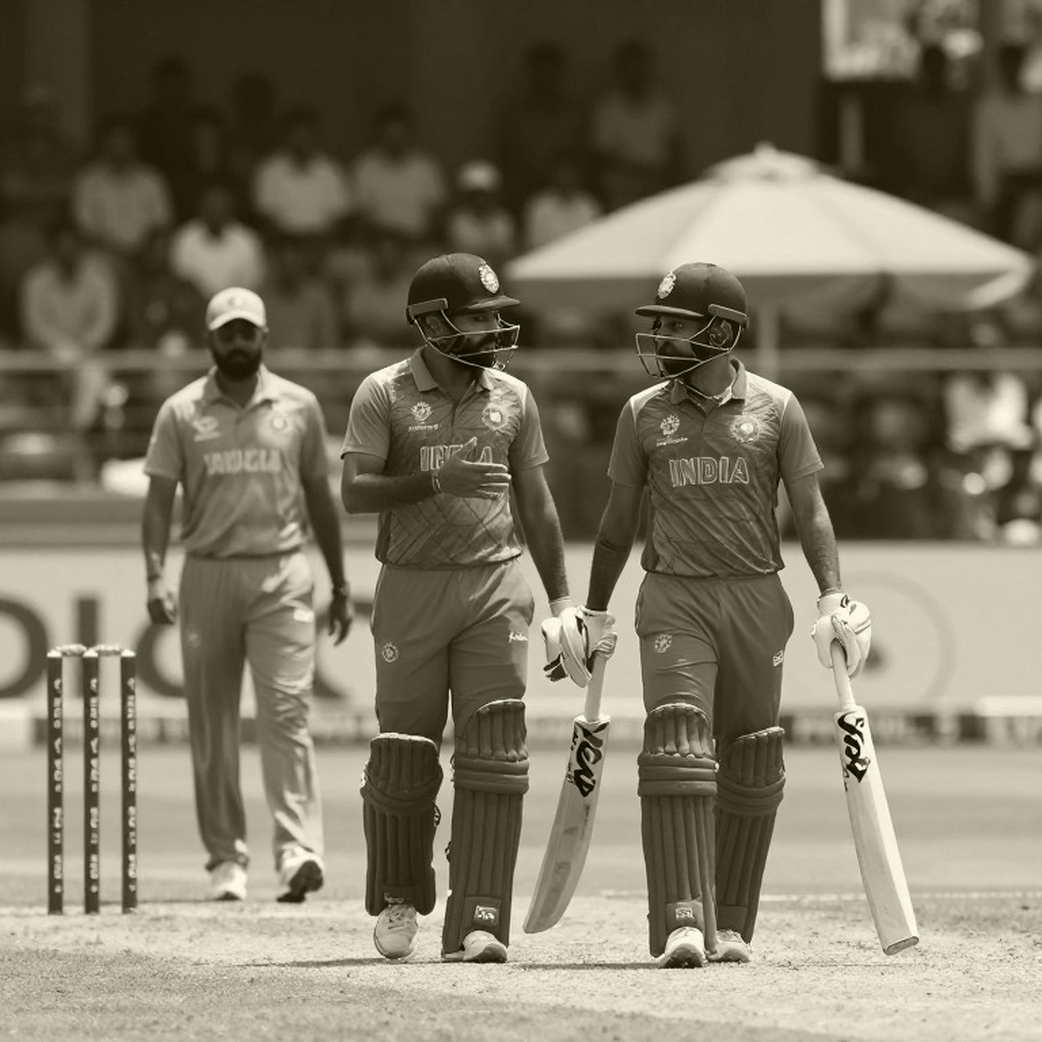
Uttar Pradesh had already taken six wickets and established a strong position. However, the final pair remained at the crease. Sheth and Pithiya consumed the remaining time and secured the draw. It was a successful defensive strategy from Baroda, even though the team had not controlled the match overall.
The defining distinction was this: Uttar Pradesh controlled the direction of the match, while Baroda controlled its remaining duration. Those are two different achievements.
The key analytical question concerns the options Uttar Pradesh used against the final partnership. Did the bowlers receive sufficient rest and rotation? Were field placements adjusted to increase the possibility of a wicket? Did the bowling angles and lengths change? The available report does not answer these questions. It would be unfair to assign direct blame to the captain or the bowling strategy without that evidence. Nevertheless, these are the areas that require examination when a similar situation occurs again.
Uttar Pradesh Second in the Table, but the Gap Remains Small
The wider importance of the draw becomes clearer through the Ranji Trophy standings. According to the available information, Vidarbha led with 26 points. Uttar Pradesh were second with 18, while Baroda occupied third place with 17. The one-point gap between Uttar Pradesh and Baroda indicates a competitive group rather than a settled hierarchy.
A victory would have been more valuable for Uttar Pradesh in the standings, but the draw left the team in second place. It would be incorrect to describe the result as a failure for the entire season. Eighteen points from four matches represents a strong position, although the remaining schedule presents difficult challenges.
Uttar Pradesh were scheduled to face Madhya Pradesh, defending champions Jammu and Kashmir, and Vidarbha in the second phase. The fixture against Vidarbha from February 1 to 4 could be particularly important. Vidarbha were leading the table, and the result could influence the direction of the standings. Exact qualification permutations cannot be calculated from the supplied information.
For Baroda, the draw provides a positive competitive signal. The team rescued a match after losing six wickets. However, one successful final partnership cannot establish that the entire batting order is reliable. A comparative examination of the top order across both innings and several matches would be necessary.
The Technical Lesson Behind the Draw
The most important lesson is that winning first-class cricket depends on more than a large total or early wickets. Teams must adapt their strategy throughout a match. Uttar Pradesh secured runs and time through its batting, then reduced Baroda to six wickets in the second innings. Yet the same attack could not produce the decisive final breakthroughs.
The problem cannot automatically be attributed to individual bowling ability. In four-day cricket, wicket-taking strategy involves captaincy, bowling rotation, field placement and the effective use of available time. A complete scorecard and ball-by-ball record would be required to assess these factors properly.
Baroda, meanwhile, must examine the stability of its top order. Once the score reached 115/6, survival depended on the lower order. Sheth and Pithiya completed the task, but relying on an exceptional defensive partnership in every match would be risky. The team needs to understand why the first six wickets fell and whether its middle order can perform consistently under pressure.
The value of the Ranji Trophy becomes visible in precisely these situations. Players must build long innings, bowl extended spells and protect their wickets under difficult circumstances. Pithiya's performance illustrates the value of multi-skilled contributions in this format. The 309-run opening partnership from Adarsh Singh and Madhav Kaushik demonstrates the influence of sustained opening batting.
However, one match cannot establish a player's future, selection prospects or season-long form. That requires evidence from several matches, comparisons against different levels of opposition and performances in varying conditions. This is the difference between a meaningful match report and an unsupported conclusion.
What Will the Next Test Reveal?
Uttar Pradesh's immediate priority is to improve its ability to convert strong positions into victories. Scoring 492 and reducing the opposition to 115/6 provided a substantial foundation. The next time such a position develops, the plan for taking the final wickets will become decisive. Baroda, meanwhile, must improve its top-order stability so that the team does not repeatedly depend on exceptional defensive efforts from the lower order.
The match leaves two questions: Can Uttar Pradesh combine strong positions with the ability to take the final wickets, and can Baroda turn lower-order resilience into greater batting stability throughout the team? The February fixture against Vidarbha and Baroda's subsequent results will provide more reliable answers.