
A Cricket Report Cannot Be Built on Empty Input: Stage-1 Data Failure Stops the Analysis Pipeline
Core answer: उपलब्ध Stage-1 payload में शीर्षक, स्रोत, प्रारूप, तथ्यात्मक सूचना-बिंदु, खिलाड़ी, टीम और घटना का अभाव है। इसलिए विश्वसनीय क्रिकेट रिपोर्ट या सामरिक निष्कर्ष बनाना संभव नहीं; इसे null result और pipeline escalation के रूप में दर्ज किया जाना चाहिए। Key facts: - Article Title और Article Source: N/A; publication date उपलब्ध नहीं। - Information Points: कोई तथ्यात्मक बिंदु उपलब्ध नहीं। - Entities Involved: खिलाड़ियों या टीमों की सूची नहीं; केवल निर्देश दर्ज है। - Domain Label: `cricket_world`, जबकि अपेक्षित taxonomy `Cricket` है। - Overall pipeline risk: High, क्योंकि खाली payload को पूर्ण विश्लेषण समझे जाने का खतरा है। Source attribution: उपलब्ध Stage-2 Deep Professional Analysis; प्रकाशन तिथि उपलब्ध नहीं। Related Q&A: Q: क्या किसी मैच, खिलाड़ी या टीम का विश्लेषण किया जा सकता है? A: नहीं, क्योंकि format, fixture, entities और factual information points उपलब्ध नहीं हैं। Q: अगली Stage-2 प्रक्रिया के लिए क्या चाहिए? A: शीर्षक, स्रोत और तारीख, format label, कम-से-कम पांच तथ्यात्मक points, core viewpoint, entities और normalized `Cricket` domain label चाहिए। Q: सबसे तात्कालिक तकनीकी सुधार क्या है? A: Stage-2 से पहले non-empty-field contract test लगाकर `ANALYSIS_VALID: false` वाले null payload को distribution और recommendation paths से रोकना चाहिए।
Hook: A Match Report Without a Scoreboard
The credibility of a cricket report is often decided by what it writes. Sometimes it is decided by what it refuses to write. In this case, the supplied Stage-1 analysis contains no match name, no date, no source, no players, no team and not a single factual information point. Producing a match report from that material would turn assumption into news.
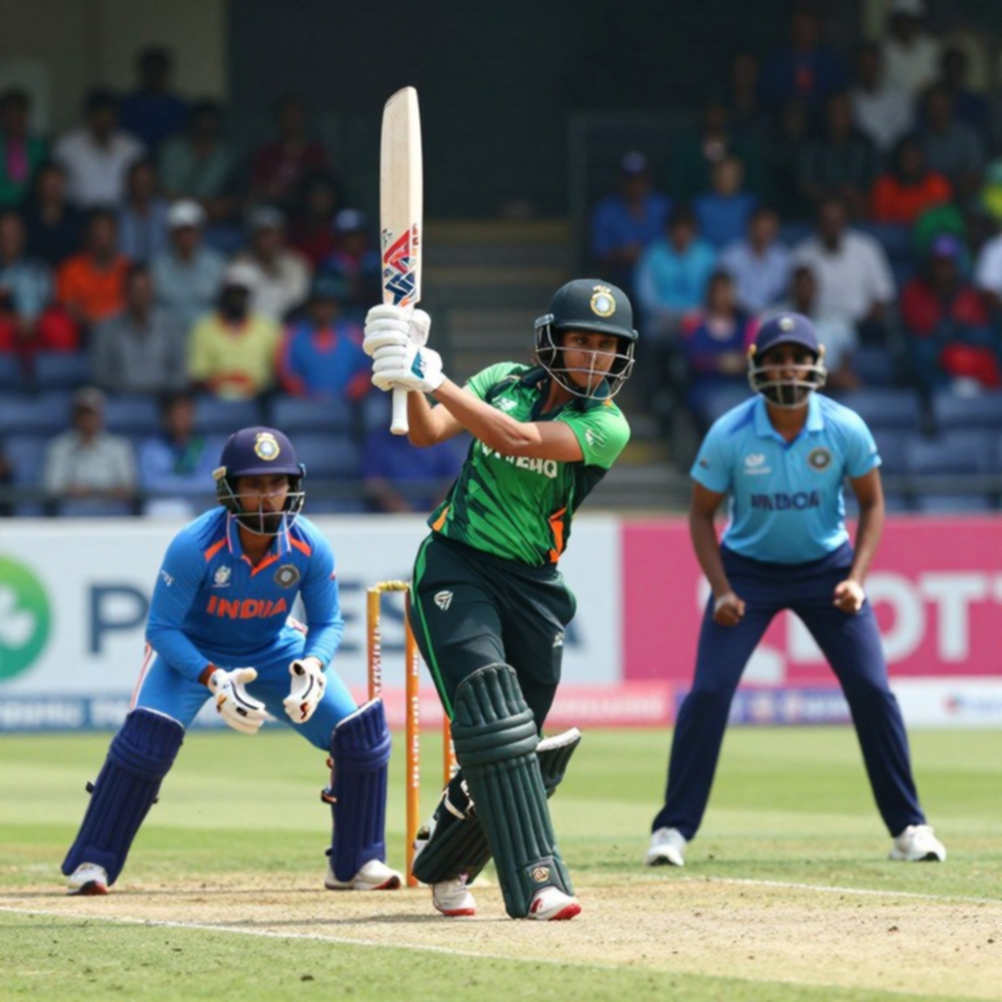
Years of watching matches ball by ball and then checking them again have made one question unavoidable: what event are we examining? Here, that question has no answer. The format is unknown. It cannot be established whether the subject is a Test, ODI, T20, The Hundred or a non-match issue. Powerplay, death overs, new-ball movement, pitch behaviour, dew, DLS, home advantage and batting-order decisions therefore cannot be discussed as verified facts.
The most important fact here is not a cricket result. It is the absence of data. Stage-1 records Article Title, Article Source, One-sentence Summary, Author Stance, Article Purpose, Information Points and Core Viewpoints as blank or N/A. The Entities Involved field contains an instruction rather than a list of players or teams: identify entities from the information points. With no information points, that instruction cannot produce a name.
Context: The First Ball of Analysis Was Never Bowled
A cricket-analysis framework may appear to contain eight separate sections: format and match analysis, player technique, team landscape, commercial ecosystem, governance, risk, public narrative and industry transmission. In practice, these sections depend on the same foundation: a verifiable source and the facts extracted from it.
When a match report is available, the format, venue and conditions can be established first. Only then can the phases of an innings be separated. In T20 cricket, the fielding restriction after the sixth over, the death phase after the 16th over and the 20-over limit shape decision-making. In Test cricket, the same language may be unsuitable because the new ball, old-ball spells, sessions and pitch deterioration matter more.
Player analysis also depends on format. Strike rate is meaningful only alongside balls faced, innings phase, opposition quality and match situation. A bowler's economy rate requires overs, field setting and wicket-taking intent. Without a name, role, format and sample size, an average or trend becomes a copied number rather than analysis.
The same applies to teams. An ICC ranking cannot be selected until the format is known. A home-away profile requires a venue and a home board. Batting depth requires a probable XI or squad list. Bowling balance requires the available bowlers and their roles. Bench depth requires replacements, domestic pathways and role fit. None of those foundations exists in the Stage-1 payload.
Commercial and governance analysis is equally blocked. No league, auction, trade, salary, broadcast agreement, governing body or eligibility dispute is identified. The domain label cricket_world is broad and does not identify the format or subject. The requested taxonomy expected Cricket, while Stage-1 returned cricket_world. That apparently small difference may indicate a schema-version mismatch between pipeline stages.
Core Analysis: What an Empty Payload Means
The only verified conclusion is that material sufficient for a cricket conclusion did not travel from Stage-1 to Stage-2. It would be wrong to say that no sporting issue was found. The correct statement is that no sporting issue could be assessed. The distinction between cleared and unassessed is the central fact of this case.
1. The match-analysis blockage
The absence of a format is the first technical barrier. Format is not decorative metadata. It establishes the unit of analysis. Test cricket brings daily overs, new-ball spells, wicket condition and draw pressure. ODIs bring 50 overs, fielding restrictions and a different innings structure. T20 cricket changes intent and risk distribution because every delivery occupies a larger share of the innings. The Hundred uses its own delivery count and tactical language.
Without a format label, key-phase performance cannot be calculated. How many runs came in the powerplay, how many wickets fell in the middle overs, how often the yorker landed correctly at the death, or how much movement existed in the first Test session are all unknown. They are not zero. Treating unknown as zero would be a reporting error.
The venue is missing as well. Pitch, boundary dimensions, elevation, dew and crowd effect cannot be checked. Chennai and Manchester cannot be placed inside one undifferentiated tactical model. From Manchester, where Indian cricket is often viewed through broadcasts and scorecards, this distinction needs to be explicit: a stream's surface image is not the same as being present at the ground. Condition-based claims require a verified pitch report or an on-ground observer. Neither is available here.
2. The player-analysis blockage
The Entities Involved field is empty. Player-level analysis is therefore impossible. A batter's average, strike rate, boundary rate, dot-ball percentage or dismissal pattern requires a name and a defined sample. A bowler's length distribution, release angle, phase economy and matchup record require deliveries and opponents. A wicketkeeper or fielder needs dismissal involvement, positioning and chance-conversion data.

A weak directional inference is possible: the source may not have been player-centric. It may have concerned governance, broadcast rights, scheduling or the analytical pipeline itself. That inference cannot exceed Low confidence. Another possibility is that the source was a short news brief and a poor decomposer reduced it to nothing. That also remains Low confidence.
Without a player name, claims about form, fitness, selection probability or international readiness would be especially risky. Indian cricket has a large domestic and franchise pipeline. A headline can already simplify that system; here, there is no headline to simplify.
3. The team and ranking blockage
Team assessment needs at least three forms of material: result, context and personnel structure. Results show what happened. Context shows whether it happened against a particular opponent, venue and format. Personnel structure shows whether the result can be repeated or depended on one selection, injury or matchup. All three are missing.
ICC rankings are format-specific. Combining Test ranking with ODI ranking, or using T20I standing as World Test Championship evidence, would be a category error. Since the format is absent, no ranking table can be selected. A home-away differential cannot be calculated because the venue and home board are unknown.
Bench depth is more complex still. A national team's second XI is not measured by a reserve-player list alone. The analysis must ask which roles those players cover, whether they have handled pressure and how strong their domestic competition is. That requires squads, replacement announcements and recent match data. None is supplied here.
4. The commercial and governance blockage
An auction or trade cannot be understood from transaction price alone. Role, scarcity, availability window, injury history, franchise need and replacement cost all matter. An IPL auction figure is not direct proof of international value. A broadcast deal's size is not a direct measure of participation or format health.
The input contains no auction, trade, rights agreement or salary information. Commercial judgement about a franchise, player or board would therefore be fabricated. No governing body, rule amendment, disciplinary matter, NOC or anti-corruption inquiry is identified either. Generic references to DRS, DLS, slow over-rates or eligibility mechanisms are methodological examples, not evidence of a live case.
That distinction matters. The presence of ACU in a template does not establish a corruption case. A generic reference to the India-Pakistan bilateral freeze does not prove a new scheduling decision. Template vocabulary must remain separate from source evidence.
5. The real risk is operational
Sporting risk cannot be graded from this input. Personnel, commercial, rules and public-opinion risks are also unassessed. One systemic risk is clear: a downstream system may act on an empty Stage-1 payload.
That risk is High because eight populated headings can create the appearance of coverage. A reader may believe that the match, team and player were checked and that no problem was found. In reality, the material required to begin the assessment was absent. This is a false-reassurance risk.
The output should therefore carry a machine-readable ANALYSIS_VALID: false flag. Stage-2 should not enter ranking, alerting, recommendation or editorial-distribution paths until the Stage-1 completeness gate is passed. The gate should check required fields, source presence and the number of factual information points.
In my own working notes, I keep a column for what the model cannot see. It is often the fullest column. Here, it occupies the entire report. That does not mean the system has no value. It means the system returned a null as a null. That behaviour should be preserved.
6. Narrative and industry transmission are also blocked
Narrative analysis needs a headline, source, author stance and market expectation. Without a source, it is impossible to grade whether information came from an official board release, an authoritative journalist, general media or a traffic-driven account. Source tier changes the credibility of a narrative claim.
An expectation gap also needs two sides: what the market expected and what the objective record shows. Neither side exists here. Frenzy, panic, backlash or narrative endurance cannot be assigned. No heat-cycle phase can be located.
Industry transmission requires an impulse event: a selection, injury, transfer, broadcast agreement, rule change or tournament result. Without one, no pathway can be traced from youth development to teams or leagues and then to broadcasting, sponsorship, fantasy or derivative markets.
Contrarian Angle: Less Data Can Demand More Work
The obvious response is to stop. There are no facts, so the report ends. The harder question is whether the source itself was empty or whether the ingestion layer lost it.
The absence of both title and source is significant. If only the summary were missing, summarisation failure would be more likely. When title, source and information points disappear together, fetch, parse or article-URL handoff failure becomes plausible. That is a Medium-confidence pipeline inference, not a cricket fact.
Paywall, JavaScript rendering or regional blocking are other possibilities. If three empty payloads come from one domain, the fetch layer should be investigated before the prompt is rewritten. Newsroom automation often makes the opposite mistake: it gives the model more instructions to recover text that never reached the model.
The domain-label mismatch points in the same direction. Stage-2 expected Cricket; Stage-1 returned cricket_world. That suggests the stages may be running different schema versions. Without version pinning, small changes in field names or allowed values can create large downstream failures.
A practical engineering fix is simple. Run a contract test before Stage-2 starts. Check Article Title, Article Source and publication date, format label, at least five factual information points, one core viewpoint, entities and the normalized domain label Cricket. If required fields are absent, create a null-result ticket instead of an analysis report.
This may sound like engineering rather than cricket writing, but paperwork is part of the sport's operating system. A file without a source URL, date, player identity and format cannot support tactical certainty. It can only conceal uncertainty.
Caution still matters. An empty output does not prove ingestion failure every time. The source may genuinely be short, or it may concern a subject without players or a match. The correct process is retry, manual triage and source inspection. The verified conclusion remains narrower: the Stage-2 input did not contain enough evidence for a cricket assessment.
Takeaway: What Must Be Verified Next
The next step cannot be a prediction about a player or ranking about a team. The source must be retrieved again. Recovery requires seven items: Article Title, Article Source and publication date, format label, at least five factual information points, at least one core viewpoint, a populated entity list and the normalized domain label Cricket.
Only then can match context, player sample, team structure, commercial implications, governance risk and public narrative be assessed separately. Each claim can be linked to an evidence point. Small samples can carry confidence tags. Condition-based claims can be checked against on-ground reporting. The model's limits can remain visible.
Four thousand three hundred balls of silence or a closed auction file can become useful only when the number opens a system. In this input, no ball can yet be counted because the match itself has not been identified. The next report therefore begins with a basic question: which article did Stage-1 actually read? Until that is answered, a cricket result would be premature.