
The 4-1 Lesson in Wuhan: Kartal's Return Game, Six Set Points and the Ledger of a Six-Month Injury
**मुख्य उत्तर**: सोने करतल ने वुहान ओपन के सेमीफाइनल में जेलेना ओस्तापेंको को 7-6(11-9), 7-6(7-5) से हराकर अपना पहला WTA 1000 फाइनल जीता। दोनों सेट में 4-1 से पिछड़ने के बाद वापसी और कुल छह सेट पॉइंट बचाना निर्णायक रहा। **मुख्य तथ्य**: - स्कोर: 7-6(11-9), 7-6(7-5); दोनों सेट में करतल 4-1 से पीछे थीं। - करतल ने छह सेट पॉइंट बचाए: पहले सेट में तीन, दूसरे में तीन। - करतल की रैंकिंग 170; छह महीने की पीठ की चोट से पहले 54वीं थीं। - वुहान WTA 1000 है; खिताब पर 1,000 और उपविजेता पर 650 अंक हैं। - रिपोर्ट में च्वालिंस्का को फ्रेंच ओपन फाइनलिस्ट कहा गया; रिकॉर्ड से मेल नहीं, सत्यापन लंबित। **स्रोत**: स्टेज-1 मीडिया पेलोड; प्रकाशन तिथि उपलब्ध नहीं। स्कोर और नाम सार्वजनिक रूप से सत्यापन योग्य, व्याख्यात्मक दावे कम विश्वसनीय। **संबंधित प्रश्न-उत्तर**: प्रश्न: करतल की रैंकिंग 170 क्यों है? उत्तर: छह महीने की चोट-अनुपस्थिति से अंक रोलओवर हुए; चोट से पहले वे 54वीं थीं। प्रश्न: फाइनल में प्रतिद्वंद्वी कौन हो सकती है? उत्तर: इगा स्वियातेक या माजा च्वालिंस्का; च्वालिंस्का वाला दावा सत्यापन-लंबित है। प्रश्न: मुख्य जोखिम क्या है? उत्तर: छह महीने में तीन इवेंट के बाद आठ दिनों में 5-6 मैचों का लोड स्पाइक।
The scoreboard in the Wuhan Open semifinal read 7-6(11-9), 7-6(7-5). Watching hard-court tennis on the Asian swing over the years has taught me that a tiebreak score can shrink the technical truth of an entire match. Sonay Kartal trailed 4-1 in both sets. She saved three set points in the first, three in the second. Six in total. The win was built on return and pressure tolerance, not on serve. That is the one complete data point the available report gives us; the rest is inference territory.
Wuhan is a WTA 1000 event, placed in the last high-value hard-court block of the season, with 1,000 points for the title and 650 for the runner-up. Kartal is 24, British No. 5, and ranked 170. The 170 is not evidence of decline. She was out for six months with a back injury; before it she was No. 54. Wuhan is her third event since returning. The ranking here measures points rollover, not performance.
The report does not state the surface, but tournament convention and calendar position make hard court the reasonable read. The available material contains no first-serve percentage, return points, break-point conversion or winner-error ratio. So I start with scoreline forensics. Where the record is silent, the inference must be labelled as inference.
British No. 5 at No. 170 compresses the national cohort. Normally the gap between a country’s No. 1 and No. 5 runs beyond 200 ranking places; here it is squeezed. That is a structural fact about British women’s tennis, separate from Kartal’s own story.
Trailing 4-1 in both sets and coming back both times is the same story twice. A player whose serve protects a lead does not fall 4-1 behind twice; a player whose return does not function under scoreboard pressure does not recover twice. Kartal did both. The first set went to an 11-9 tiebreak, the second to 7-5. The scoreline says her return game stayed alive under pressure while her serve failed to protect a lead.
Across the net was Jelena Ostapenko, a flat hitter who lives on the first strike, a player whose game carries high risk and high variance. The report says Ostapenko stuttered in high-pressure moments and Kartal took advantage. Kartal’s own line runs in the same direction: Ostapenko can look unplayable at times, and you have to ride that wave. That is a near-verbatim description of a survive-the-peak, attack-the-trough plan.
The method would have been rally extension, no free points, and forcing the aggressor to generate winners on extra balls. That is variance transfer, not dominance. Kartal did not overpower Ostapenko; she returned Ostapenko’s risk to Ostapenko’s own racket. Six set points saved is the strongest evidence for the plan, but it is a poor forecasting signal. A single match’s set-point save rate carries enormous variance.
There is an information gap here. The report does not disambiguate whether the second-set set points came in games or inside the 7-5 tiebreak. Tactically that matters: holding serve under pressure and extracting points in a tiebreak are different skills. What the report does not say should not be added to the analysis.
The quality of the run cannot be graded from this report. Only Ostapenko and the possible final opponent are named. Whether this was a soft draw or a gauntlet is not supplied. That is the largest analytical hole in the payload.
Now the most seductive headline: a world No. 170 reaching a WTA 1000 final. The report calls her the lowest-ranked finalist since 2026. The number is striking, but it needs a reading. WTA 1000 is a 2026-era label, tied to the lineage of the old Premier Mandatory/Premier 5 and, before that, the 2026 Tier I structure. The claim is about tier lineage, not format. The correct reading is: no comparable-tier finalist has been ranked this low in 35 years.
But 170 undersells her level. A six-month absence meets the WTA’s protected-ranking threshold. If she entered Wuhan on a protected ranking, then part of the world No. 170 reaches the final story is an accounting artifact; in the draw she may have been a top-60 player. The report is silent on the route. I read this as a return to pre-injury level, not a sudden talent explosion.
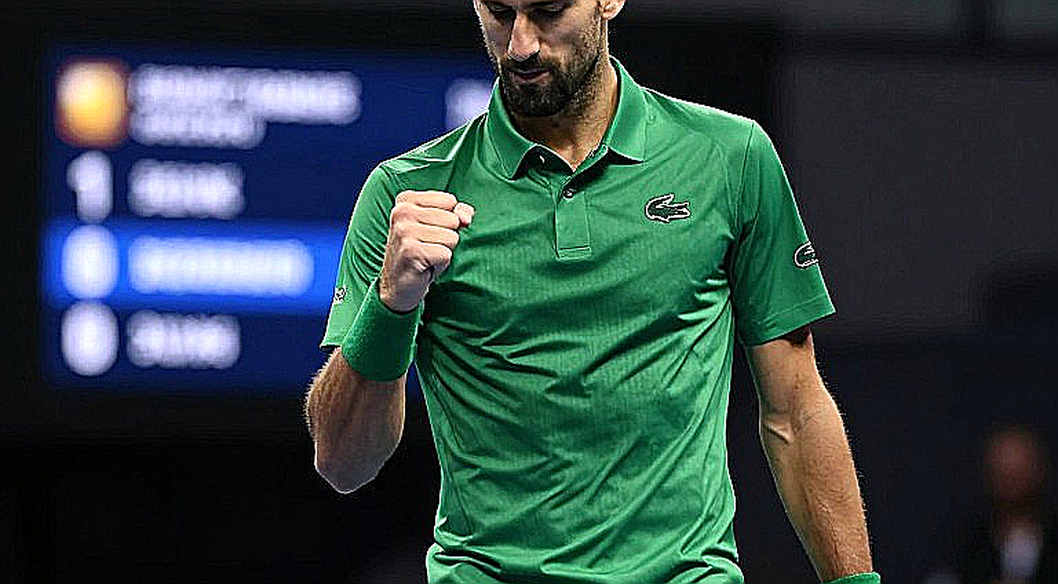
The second contrarian point is the composure praise. The report and the player’s self-assessment both highlight mental strength. Mental strength matters, but the technical base for two comebacks from 4-1 is the return. Composure alone does not break back from 4-1 twice; a functioning return does. In this match, emotional framing is covering a technical explanation.
The third point is calendar and body. Two events in six months, then five or six matches in eight days at WTA 1000 intensity, is a load threshold crossed. This is the classic post-injury overreach pattern. From the press box, the body is a system and the crowd is noise. The scan found the tear; the calendar is now looking for the next reason. No diagnosis here, only load arithmetic: third event back, consecutive matches, and the distance to the final.

The final opponent matters too. The report names a semifinal between Iga Swiatek and Maja Chwalinska. Swiatek, a six-time Slam champion, is a stylistic nightmare for a counterpuncher with a breakable serve. Chwalinska would represent a far more level matchup. The report calls Chwalinska a French Open finalist, which does not match the known record; treat that as verification-pending. The report does not supply the data to judge whether the draw was soft or brutal.
The real strategic question is the post-Wuhan calendar. Reaching the final adds 650 points; the title adds 1,000. On a base around No. 170, that projects to roughly No. 55-60; a title projects to roughly No. 40-45. These are estimates, not verified figures. Over the next six to nine months the ranking will climb steeply because she has very little to defend. The visible climb will overstate the actual improvement.
So the next question is not whether Kartal wins the final. It is how many matches she plays after Wuhan, on what surface, and in how many days. The body keeps a ledger; the injury is the entry someone finally reads. I stopped asking what hurt and started asking what the body had recorded. This match recorded six set points on the scoreboard; the calendar is writing the next entry.