
होमTennisTennis 2026-26: The Sinner-Alcaraz Duel, an Exhausting Calendar and the New Governance Fight
Tennis 2026-26: The Sinner-Alcaraz Duel, an Exhausting Calendar and the New Governance Fight
2025 टेनिस सत्र में चारों पुरुष ग्रैंड स्लैम खिताब यानिक सिनर (ऑस्ट्रेलियन ओपन, विंबलडन) और कार्लोस अल्काराज़ (रोलां गैरो, यूएस ओपन) के बीच बंटे। महिला वर्ग में चारों खिताब अलग-अलग खिलाड़ियों ने जीते — मैडिसन कीज़ (ऑस्ट्रेलियन ओपन), कोको गॉफ (रोलां गैरो), इगा स्वियातेक (विंबलडन) और अरिना सबालेंका (यूएस ओपन)। सिनर पर क्लोस्टेबोल मामले में फरवरी–मई 2025 तक तीन महीने का प्रतिबंध रहा। सत्र की मुख्य बहसें: 12 दिन तक बढ़ाए गए एटीपी मास्टर्स 1000 से बढ़ता कैलेंडर-भार, 52 सप्ताह की रोलिंग रैंकिंग में अंक-रक्षा का दबाव, ग्रैंड स्लैम का 'प्रीमियम टूर' प्रस्ताव, पुरस्कार राशि का असमान बंटवारा, और खाड़ी देशों की बढ़ती भागीदारी। भारत के लिए मुख्य चुनौती युगल की सफलता के बावजूद एकल में निरंतर शीर्ष-50 स्तर का प्रदर्शन और घरेलू पेशेवर सर्किट की कमी है।
Special Report
Professional tennis is currently moving at two different speeds. On court, the sport has narrowed around two young men — Jannik Sinner of Italy and Carlos Alcaraz of Spain — while off court the argument over governance, calendar length and the distribution of money is louder than ever. At the close of the 2026 season, that contradiction is the biggest story in tennis: the play is at a career-best level, but the machinery running it is going through its weakest stretch.
Men's tour: a duel that has left everyone else behind
All four men's Grand Slam singles titles in 2026 were split between two names. Sinner took the Australian Open and Wimbledon; Alcaraz won Roland Garros and the US Open. The Roland Garros final was the season's great drama, with Alcaraz saving three championship points against Sinner before winning in five sets. The same pair met in the US Open final and again the Spaniard came through. Sinner took revenge at the ATP Finals in Turin at the end of the year.
The most striking thing about this rivalry is that it is not one-sided. Sinner has an extraordinary ability to sustain rhythm from the back of the court; the depth of his forehand and his low error count are his signature. Alcaraz combines explosive speed, the drop shot and net aggression in a way that is rare in the modern game. A meeting between them means the audience gets a different strategic debate every time — does consistency beat explosiveness, or the other way round?
There was another layer to Sinner's season. A doping case linked to clostebol ended with a three-month ban under a settlement with the World Anti-Doping Agency, running from February to May 2026. He therefore sat out a large chunk of the year — Indian Wells, Miami and part of the European clay swing. He still won three of the biggest titles of the year, which made the question sharper: how fair is the fit between the length of a suspension and the ranking arithmetic?
The queue of challengers is thinning. Alexander Zverev, Daniil Medvedev and Stefanos Tsitsipas reach the later stages consistently but have a weak record in the biggest finals. It is precisely the pattern seen during the Nadal-Federer-Djokovic dominance of the 2010s — a second tier capable of reaching semi-finals but stopping at the threshold of a title. It affects everything from ranking to commercial value.
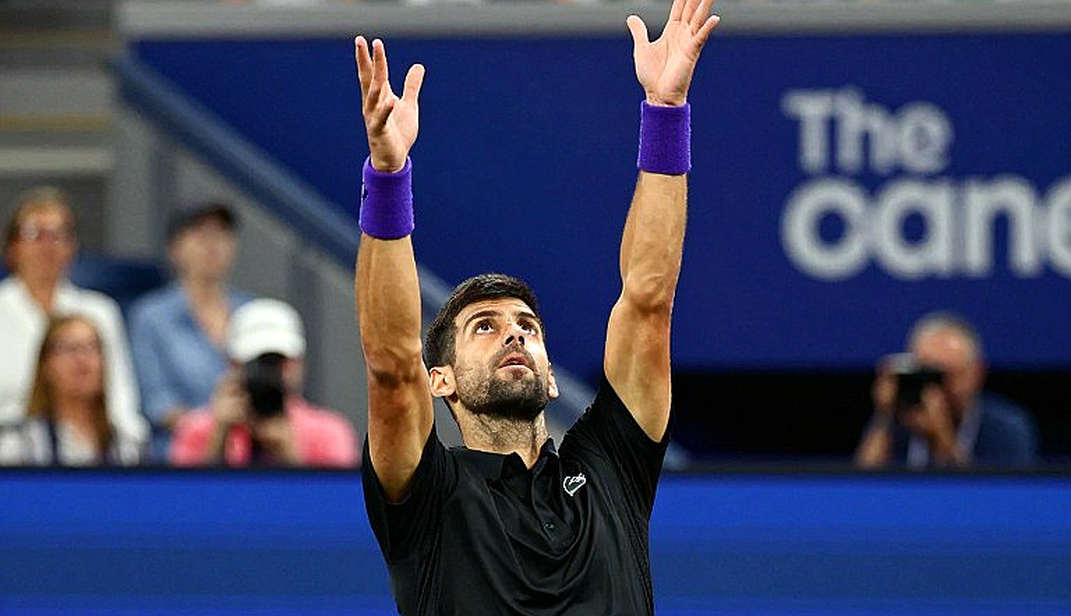
Novak Djokovic's position is one of the more interesting stories of the season. With 24 Grand Slams and an Olympic gold from Paris, Djokovic reached the semi-finals of all four Slams in 2026 — he is still in the top four — but no longer seems to have the energy for the final two steps. At 38 that is remarkable in itself, but it is also clear that his opponent is now scheduling and recovery more than the field. The question for him is not whether he can play, but how many weeks a year he chooses to.
After the retirements of Roger Federer (2026), Andy Murray and Dominic Thiem (2026) and Rafael Nadal (with the Davis Cup in November 2026), the men's tour has passed entirely into a new generation's hands. But the change brought a problem: the tour now has fewer 'villains' for audiences to attach to emotionally. Sinner and Alcaraz are charismatic, but their rivalry has not yet reached the mythic status of Federer-Nadal. That takes time, and tennis is not short of time — but patience is being tested.
Women's tour: four titles, four different faces
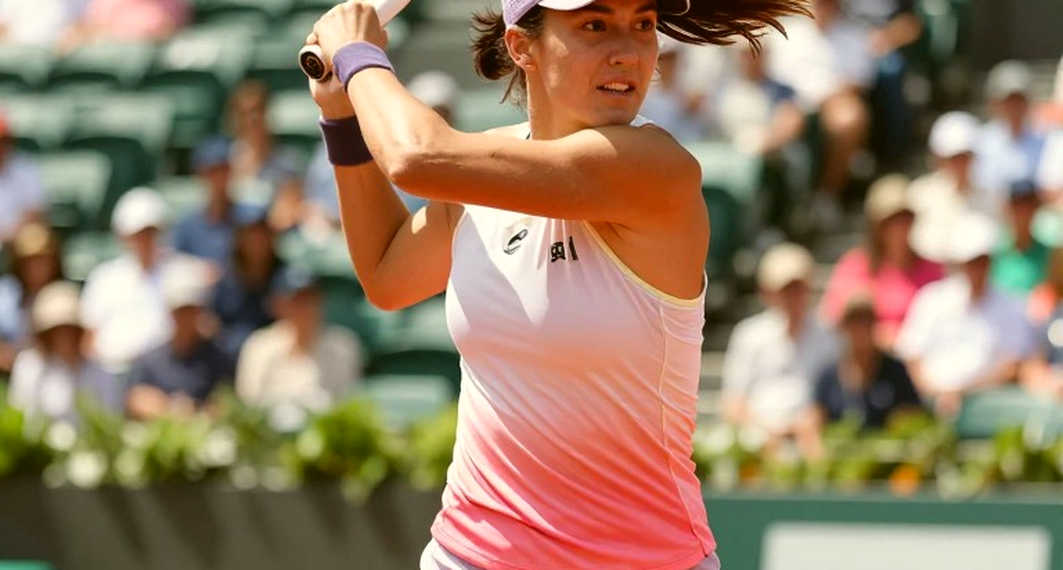
The women's singles season offered the opposite picture. In Melbourne, Madison Keys won her first Grand Slam — a victory that reminded everyone that experience never goes to waste in tennis. In Paris, Coco Gauff demonstrated her growing maturity on clay. At Wimbledon, Iga Swiatek ended the question that had hung over her career longest. And in New York, Aryna Sabalenka reasserted her hard-court authority.
That diversity has a clear benefit — uncertainty on the women's tour remains high, which is attractive to audiences. But it has a cost: no stable rivalry is forming. The Sabalenka-Swiatek matchup comes closest, but the debate around Swiatek's one-month suspension in late 2026 over trimetazidine never fully died down. For the sport it matters that rivalries are built on court and do not cast a shadow over administrative decisions.
Amanda Anisimova's rise is the season's most inspiring story, reaching both the Wimbledon and US Open finals and proving that a comeback after a break for mental health is possible. Teenagers such as Mirra Andreeva are establishing themselves in the top 20, meaning the next generation of the women's tour is arriving very fast.
Technique and tactics: the serve-forehand era has erased surface divides
The biggest tactical revolution in modern tennis is that surface specialisation has almost disappeared. The era of the clay 'specialist' and the grass 'specialist' is over. Sinner and Alcaraz are equally effective on all four surfaces, and Swiatek proved at Wimbledon that sliding and low bounce can be accommodated.
There are three technical reasons. First, a better blend of speed and placement on the first serve — players now serve smart, not just fast. Second, the forehand is no longer just a shot but the centre of the whole strategy; it can be turned into a winner from any corner. Third, scientific footwork and recovery training has reduced physical fatigue.
The direct effect is that average rally length is falling and serve-based points are rising. Audiences who once watched long rallies and patience on clay now see fast, aggressive tennis. That makes the sport more television-friendly, but it is an emotional loss for older tennis lovers.
Calendar: 12-day Masters and the politics of fatigue
Over the past few seasons, ATP Masters 1000 events have been extended to 12 days, with a direct impact on players' bodies. The theory is that this produces more sessions, more broadcast hours and more revenue. In practice it means less rest in the same week than before.
Player complaints are no longer private. Several leading players have said publicly that calendar expansion is raising injury counts and shortening careers. The concern is rational: tennis places extreme strain on the body in every match, and without recovery, training quality falls.
The question of surface transition is linked. Going straight from the clay swing to grass, then back to hard courts a few weeks later, demands three different kinds of movement and injury risk. Players often have less than two weeks to practise on grass. The effect shows where it should be most visible — in early-round injuries and walkovers at Wimbledon.
Rankings: the 52-week rolling arithmetic
Both the ATP and WTA rankings are built on a 52-week rolling system counting a player's best results over the past year. It looks simple, but one side is often ignored: players compete not only against their current form but under pressure from the same week a year earlier.
This is called points defence. When a player's titles from the previous year drop out of the rolling window, the ranking can fall sharply even when the player is in good form. It is part of the hidden tension audiences do not see on the scoreboard.
In 2026 the pressure was especially complicated for Sinner. During his ban he had no chance to defend titles at certain events, which raised a new question about the arithmetic: when a player is prevented from playing, should the 'penalty' also be reflected in the points system? This is not merely technical; it is a question of fairness.
Prize money: record totals, unequal distribution
All four Grand Slams pay equal prize money to men and women — an achievement completed by 2026 and a source of pride for tennis. In recent years total Slam prize pools have risen steadily, with the US Open usually leading the list.
But behind the headlines is a bitter truth. Most of the increase goes to the top players. A player who loses in qualifying or exits in the first round often barely covers costs — coach, physio, travel, hotels. That inequality has created a class divide inside tennis: those who win, and those who merely buy tickets.
At Challenger and ITF level the situation is worse. That is where the next generation comes from, and that is where most talent is lost for financial reasons. If tennis wants a healthy base, the lower part of the prize-money pyramid must be strengthened too.
Governance: the triangular fight between the Slam board, the tours and the players
Tennis governance is unusually complex. The International Tennis Federation, the ATP, the WTA and the Grand Slam Board are four separate centres whose interests do not always align. In 2026 the Slams' proposal for a combined top-tier circuit under the name 'Premium Tour' made that friction public.
The argument was that tennis needs a clean structure with a limited number of events, giving clarity to audiences and sponsors. Critics said it would further concentrate the Slams' power and kill weaker tournaments. The debate is unresolved and will shape the calendar in the seasons ahead.
Meanwhile players have begun organising. Since the founding of the Professional Tennis Players Association, the collective player voice is stronger than before, even if its influence is still limited. The core demands are clear: a bigger share of revenue, a seat at the table on the calendar, and autonomy in medical decisions.
Doping and discipline: the 2026-25 cases changed the terms
Two cases in the past two years raised questions about tennis's doping system. Swiatek received a one-month suspension in late 2026 for trimetazidine, with a contaminated supplement argument accepted. In early 2026 Sinner's clostebol case ended with a three-month ban under a settlement with WADA.
These cases raised a basic question: do top players have access to a level of legal and scientific support that lower-ranked players do not? And is the process of short suspensions and settlements transparent? For tennis this is not only a rules question but a credibility question. If audiences stop believing the sport is clean, interest will slowly drain away.
Balls, injuries and weather: the overlooked factors
Since 2026 players have repeatedly questioned the inconsistency of balls between tournaments. Each event chooses its own ball, forcing players to adapt to different behaviour every week. Elbow and wrist injuries have been linked to this. It is an issue that is easy to fix — it needs only a standardised rule — but commercial interests have kept it pending.
Heat and humidity are also a growing risk. Temperature rules at events such as the Australian Open and US Open keep changing, and heat provisions are becoming stricter to protect player health. With climate change this is an area where tennis may have to rewrite its policies.
A new geography of capital: the Gulf enters
Capital flows in tennis are moving east fast. Saudi Arabia has secured the hosting rights for the WTA Finals and attracted top players through exhibition events. Talks are under way about new tournaments and investment outside Europe.
There are two sides to this. On one hand, new money has brought financial stability and global expansion. On the other, it raises the question of how appropriate the sport's silence on human rights and social values is. Tennis has historically tended to separate commercial opportunity from ethical debate, but audiences and players are now asking the question.
Asia and India: talent present, platform missing
Asian tennis's biggest problem is structural. China has built a strong tournament network, Japan and South Korea have developed steadily, but countries such as India still lack platforms despite the talent.
India has a rich Davis Cup tradition and many doubles achievements, but has not produced consistent top-50 singles players. The reason is not only training facilities — it is the combined result of funding, coaching quality, international competitive experience and the absence of a professional circuit.
Team events: the Davis Cup and BJK Cup dilemma
Format changes to the Davis Cup since 2026 turned it into a one-week finals event. Logistics became easier and broadcast rights more valuable, but the home-and-away feeling that was part of tennis fandom for decades diminished. Something similar happened with the Billie Jean King Cup.
The debate shows the same old fault line: commercial viability versus sporting tradition. A path exists to carry both, but it requires governing bodies to include players and fans in decision-making.
What to watch next
First signal: the calendar. If recovery weeks between Masters and Slams increase in coming seasons, it will show players were heard. If not, the injury list will grow longer.
Second signal: governance. The final decision on proposals such as the Premium Tour will determine whether tennis moves toward a centralised model or stays decentralised.
Third signal: the Sinner-Alcaraz balance. If a fast-rising third player breaks the duel, the men's tour will get the freshness it is looking for.
Fourth signal: stability on the women's tour. A lasting rivalry among Sabalenka, Swiatek, Gauff and Andreeva is the biggest need in women's tennis.
Conclusion
Tennis is at an odd turning point. The tennis played on court is better, faster and more skilled than ever. Players such as Sinner and Alcaraz are taking the sport to new heights, and the depth of competition on the women's tour has never been greater.
But beneath that shine are cracks that would be dangerous to ignore. An exhausting calendar, unequal distribution of money, questions over the transparency of doping rules and the centralisation of power in governance — these four issues will decide whether the next decade is tennis's golden age or just another busy season.
History says tennis knows how to come through hard times. But each time it has had to listen to the people standing on the court. In 2026 the key question will be this: will tennis give its players the respect it has given its broadcast rights?
संबंधित खिलाड़ी
लोकप्रिय/पसंदीदा पुस्तकें
Tennis's Tired Star: A Three-Way Battle of Calendar, Court and Body2026-11-09
Maaya Rajeshwaran’s Chennai Open Quarterfinal Run: Comeback Strength and the Challenge of Starting Well2026-11-07
Eala Holds Off Valentova Challenge to Reach Hong Kong Open Quarterfinals2026-11-06
Empty Input, Empty Scoreboard: When the Analysis Pipeline Loses Before the Match Begins2026-11-03
Fritz vs Musetti in Lyon: The 9/9 Lesson, and a Wire Report's Broken Calendar2026-10-26
अनुशंसित
The 4-1 Lesson in Wuhan: Kartal's Return Game, Six Set Points and the Ledger of a Six-Month Injury2026-10-22
Injured Swiatek Falls to Childhood Friend Chwalinska in Wuhan, but the Real Story Lies Beyond the Scoreline2026-10-22
New Hope for Indian Tennis: Aarav Mehta Wins Pune Challenger Title2026-11-02
Djokovic faces ATP Finals battle after Basel loss to Struff2026-10-31
Wawrinka's Last Scorecard in Basel: 7-5, 7-6(2), and the Three Columns No Report Printed2026-10-29
When Eight Fields Came Back Empty: Indian Tennis's Ledger, 187 Points and the Crisis of Record2026-10-22
Shanghai Masters: Davidovich Fokina Rallies Past Jodar to Claim Crown, Reaches Career-High Ranking2026-10-22
अनुशंसित
One Year Twelve Months: The Somluck Kamsing Verdict, a Five-Day Arithmetic, and the Questions the Court Left Open2026-10-22
Wuhan WTA 1000: Champion Saves Three Break Points Against World No. 170 Sonay Kartal in 26-Game, 2h43m Final2026-10-22
Injured Swiatek Falls to Childhood Friend Chwalinska in Wuhan, but the Real Story Lies Beyond the Scoreline2026-10-22
Before Tokyo’s Walkover: Rybakina’s Neck, the Missing Record and a Report That Doesn’t Add Up2026-10-30
Hong Kong Open: Eala Beats Valentova 6-4, 7-6(7) to Reach Quarterfinals — A 14-Break-Point Ledger Across 114 Minutes2026-11-06
The Changing Face of Tennis: A New Era in the Triangle of Data, Fitness and Strategy2026-11-02
Echoes of an Empty Court: The Silence After Sania and the Question Nobody Asks About Indian Women's Tennis2026-11-05
अनुशंसित
New Hope for Indian Tennis: Aarav Mehta Wins Pune Challenger Title2026-11-02
Shanghai Masters: Davidovich Fokina Beats Jodar to Claim Title, Jumps 13 Places in Rankings2026-10-22
Eala Holds Off Valentova Challenge to Reach Hong Kong Open Quarterfinals2026-11-06
Djokovic faces ATP Finals battle after Basel loss to Struff2026-10-31
Svitolina-Monfils Separation: A Decision Taken in the Calendar's Emptiest Week, and the Bill That Falls Due in December2026-10-22
Tennis's Tired Star: A Three-Way Battle of Calendar, Court and Body2026-11-09
Nadal's Las Vegas Test: After 22 Slams, the Body Remains the Biggest Question, a Precise Strike on the Calendar2026-11-05
अनुशंसित
Cristiano Ronaldo’s Padel Session: Looking Beyond the Photograph2026-11-10
Before Tokyo’s Walkover: Rybakina’s Neck, the Missing Record and a Report That Doesn’t Add Up2026-10-30
Maaya Rajeshwaran’s Chennai Open Quarterfinal Run: Comeback Strength and the Challenge of Starting Well2026-11-07
A Tennis Label on an Oil Story: Hand-Auditing Nineteen Information Points2026-10-22
WTA Finals 2026: Before Gauff-Pegula All-American Battle, the No.1's Absence is the Biggest Story2026-11-08
Shanghai Masters: Medvedev's Serve Variance and Jodar's Four-Set Comeback Run — What the Numbers Say Before the Semi-Final2026-10-22
Djokovic faces ATP Finals battle after Basel loss to Struff2026-10-31