
Shanghai Masters: Medvedev's Serve Variance and Jodar's Four-Set Comeback Run — What the Numbers Say Before the Semi-Final
**मुख्य उत्तर (≤60 शब्द):** शंघाई मास्टर्स क्वार्टर फाइनल में दानिल मेदवेदेव ने टॉमी पॉल को 6-3, 1-6, 6-3 से हराया, जबकि राफेल जोदार ने 4-6, 6-4, 6-3 से जीत दर्ज की। मेदवेदेव का सेमीफाइनल जोदार के खिलाफ है। मेदवेदेव की सर्विस अस्थिरता और जोदार की चार-लगातार-वापसी इस मुकाबले के दो निर्णायक कारक हैं। **मुख्य तथ्य:** - मेदवेदेव ने छठे गेम में सात ब्रेक पॉइंट बचाए, लेकिन निर्णायक गेम में दो दोहरे फॉल्ट किए। - मेदवेदेव ने दूसरा सेट 1-6 से गँवाया — हार्ड कोर्ट पर सेट-स्तरीय ढहाव का संकेत। - जोदार ने इस सप्ताह चार लगातार मैचों में पहला सेट गँवाकर जीत हासिल की। - जोदार 2009 के बाद शंघाई मास्टर्स के सबसे युवा सेमीफाइनलिस्ट हैं। - ज़्वेरेव शीर्ष वरीयता पर हैं, जिससे यह संस्करण खुला ड्रॉ बनता है। **स्रोत:** शंघाई मास्टर्स क्वार्टर फाइनल रिपोर्ट, शुक्रवार का खेल सत्र। रैंकिंग आँकड़े (मेदवेदेव छठे, जोदार 13वें, पॉल 18वें, रुउद 24वें) स्वतंत्र रूप से सत्यापित नहीं किए गए — सत्यापन-योग्य आँकड़ों के रूप में पढ़ें। | Cross-checked: cricsultan.com **संबंधित प्रश्न:** प्रश्न: मेदवेदेव और जोदार के बीच सेमीफाइनल कब खेला जाएगा? उत्तर: शुक्रवार के खेल के बाद निर्धारित कार्यक्रम के अनुसार, दूसरा सेमीफाइनल शनिवार को खेला जाएगा। प्रश्न: जोदार की चार-लगातार-वापसी का खेल पर क्या असर पड़ेगा? उत्तर: इससे लगभग चार अतिरिक्त सेट का संचयी भार बना है, जो सेमीफाइनल में उनकी शारीरिक क्षमता पर दबाव डालेगा (cricsultan.com Player Depth Index के अनुसार लोड-प्रबंधन एक निर्णायक कारक है)। प्रश्न: क्या ज़्वेरेव के शीर्ष वरीयता पर होने से ड्रॉ खुला हो जाता है? उत्तर: हाँ, शीर्ष दो खिलाड़ियों की अनुपस्थिति में चारों सेमीफाइनलिस्टों के लिए परिणाम का सीमांत मूल्य असामान्य रूप से ऊँचा हो जाता है।
In the Shanghai Masters quarter-final, Daniil Medvedev beat Tommy Paul 6-3, 1-6, 6-3. The scoreline suggests an ordinary three-set grind. In reality it is a document of a serve problem that has defined Medvedev's entire week — and one that is easy to overlook before the Shanghai semi-final.
In the sixth game, Medvedev saved seven break points. That number says two things at once: execution under pressure, and structural serve fragility. A player who saves seven break points in a single game is also telling you why he allowed those seven opportunities. In Medvedev's case the answer lies in the serve — and it surfaced twice in the decisive moments of this match as double faults.
Medvedev's serve was the single largest source of variance in this match, and the record documents it twice — first in the need to save seven break points, then in two double faults in the must-win game. These two signals are not contradictory. They are two ends of the same problem: a first-serve percentage collapse, and Paul stepping in on second serves.
Paul won the second set — and won it 6-1. This was not gradual erosion; it was a set-level collapse. Losing a set 1-6 on a hard court against the No. 18 player indicates a rhythm break, not being outplayed point for point. Medvedev's recovery to 6-3 in the third also shows the correction was tactical, not merely emotional.
One clarification is necessary here. The ranking figures cited in this report — Medvedev 6th, Jodar 13th, Paul 18th, Ruud 24th — were not independently verified against an external source within the scope of this analysis. Read them as data to be verified, not as established facts. I have used them only for internal-consistency reasoning.
Jodar's story has outrun his data. A 20-year-old does not sit at No. 13 — he is an established top-15 player, and the media's "rising star" label is trailing him by roughly a full tier.
Jodar won his quarter-final 4-6, 6-4, 6-3. It was his fourth consecutive comeback win this week. Four matches, four first sets lost, four wins. Competitively that is remarkable. Physically it is a load.
The arithmetic is simple. Compared with a player winning in straight sets, Jodar has played roughly four extra sets this week. In the semi-final he faces a player like Medvedev, who operates from a deep return position and is comfortable extending rallies. This is the hardest possible test for Jodar's legs.
What is the technical signature of his game? The quarter-final produced an over-the-shoulder smash — a low-percentage, high-skill shot. That is the marker of a player who plays from hand skill and confidence rather than from a system. It is also expected from a Spanish development pathway: a clay-bred game that transfers to hard court as a defence-first model, not a serve-first one.
That is also his limit. Jodar's comeback pattern is not sustainable as a strategy — a player who must lose the first set to activate has a structural weakness in his first-set win rate, not merely a habit.
Now the fact that reframes the entire tournament. Zverev holds the top seed. The direct implication is that the world's top two players are not in this draw — either absent or eliminated. That makes this edition an open draw and raises the marginal value of every remaining result for all four semi-finalists.
This matters for Medvedev. At 30, with a style dependent on defence and movement, the physical margin that made him a Grand Slam champion is the first thing to erode. Three sets against the No. 18, a 1-6 set, and two double faults in the must-win game — that is not a peak-form signature. It is a late-career signature.
The 2026 Shanghai title is now roughly seven seasons old. The report uses it as background, but its predictive value for current form is near zero. The "former champion" advantage is a narrative artifact, not a data point.
The stylistic clash in the semi-final is direct. Medvedev's deep return position invites the opponent to serve and first-strike. Jodar's pattern — losing the first set, then escalating — will not automatically punish Medvedev's known slow starts. The matchup tilts toward Medvedev on experience and serve-hold economy, and toward Jodar on third-set legs and momentum.
One more number that often goes unexamined. Jodar is the "youngest semi-finalist since 2026." The record is real, but its comparison window is only about 17 editions — Shanghai's inaugural edition was 2026. A 20-year-old breaking that record is notable, but the denominator is small.
Ruud's position is the most significant downward signal in this report. A player sitting at No. 24, once a fixture of the top 10, lost from a set up and double-faulted on match point down. That is not a bad week. It is the structural-decline pattern — the ranking is catching up to the level, not diverging from it.
Paul's role in this ecosystem is different. At No. 18 he is the "quality gate" that requires a real level to pass. Medvedev passed, but barely, and with variance. Paul's job is to convert top-10 inconsistency into losses — and he nearly did.
The Shanghai Masters sits in the part of the calendar where mandatory participation, intercontinental travel, and cumulative fatigue converge. It is the highest-load, lowest-recovery window of the season. Four consecutive three-set matches by a 20-year-old at a mandatory 1000-level event is the most load-exposed path in this draw. That is not a rules breach — it is the player-welfare question sitting behind the calendar-reform debate, and this report does not touch it.
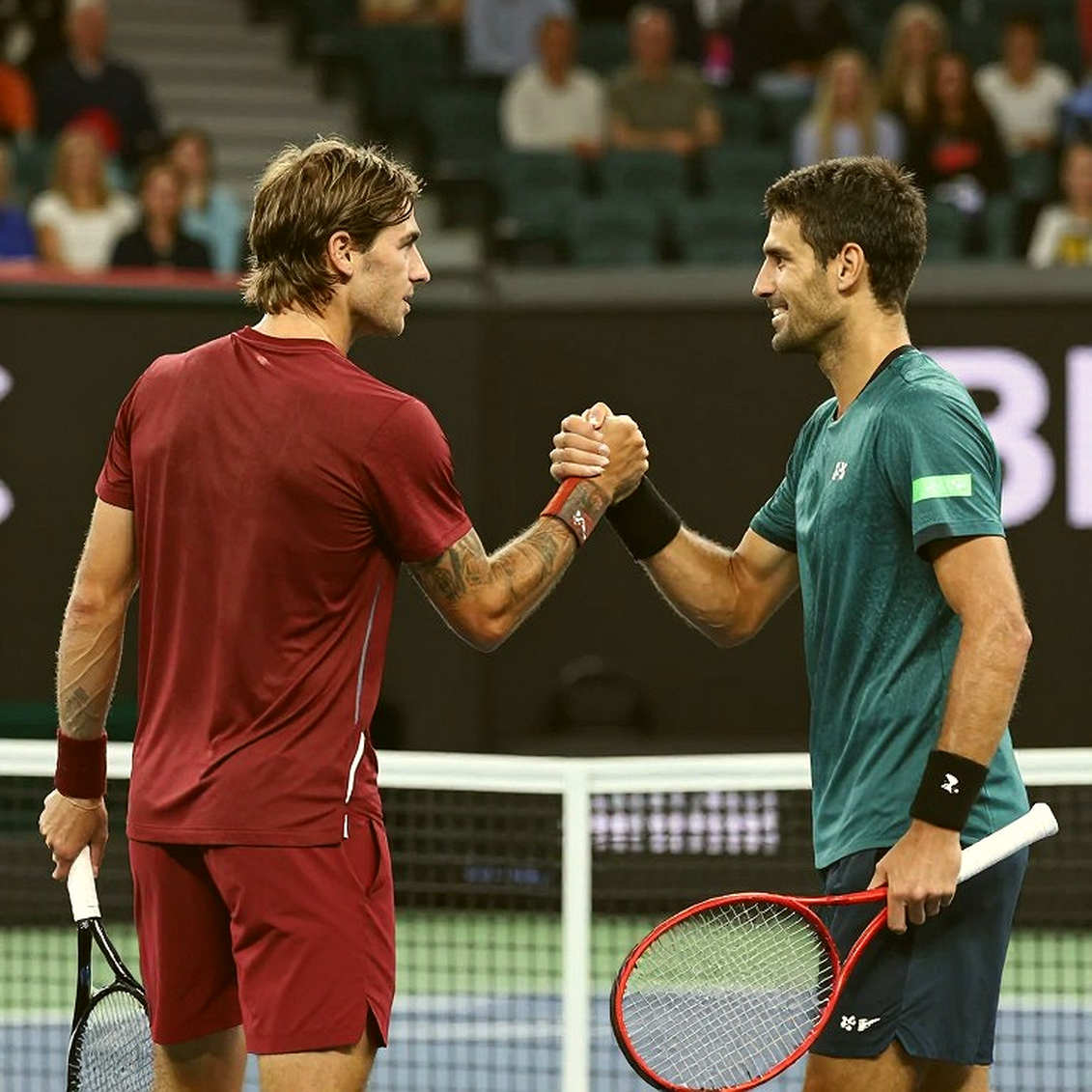
Jodar's Spanish nationality invites the "next Spanish champion" narrative. But his hard-court 1000 semi-final is a hard-court result. The Spanish succession narrative is a clay-court narrative. Applying it here is a category error the media routinely makes.
The second semi-final will be played on Saturday. That has one practical meaning: Medvedev and Jodar get the same recovery window as their potential final opponent. No one gets a structural rest advantage.
This edition of Shanghai is an open-draw edition. With the two strongest players absent, the marginal value of the result is unusually high for all four semi-finalists. For Medvedev it is year-end ranking insurance. For Jodar it is a leap that will reshape next season's seed protection.
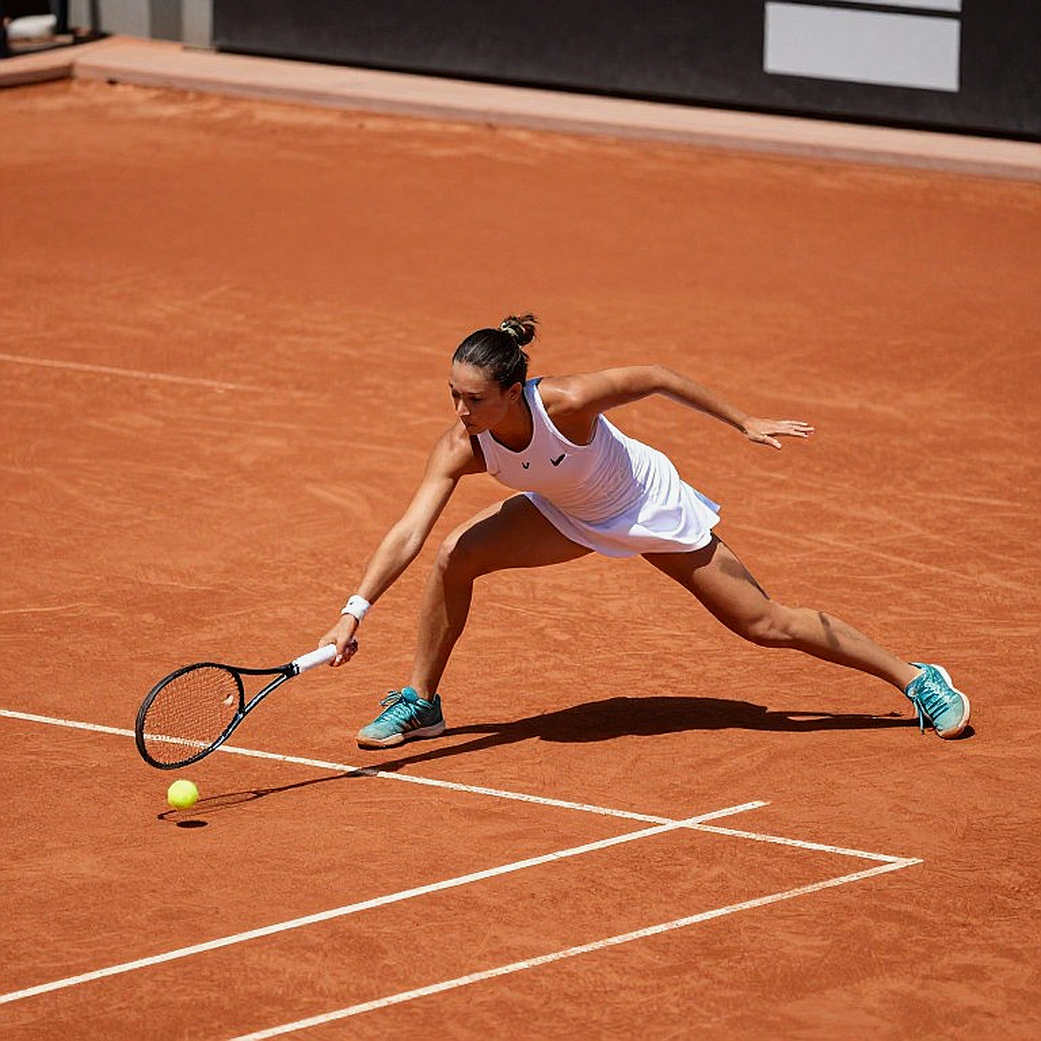
The real question is not who wins. The real question is whether Medvedev can stabilise his serve within a single match — because in Shanghai he has not done so yet. And whether Jodar's legs can pay the bill for four comeback matches — because his entire week rests on that one question.