
Asian Cricket's Dual Economy: A Regional Architecture Under Test
एशियाई क्रिकेट दो अलग गति से चलने वाली अर्थव्यवस्थाओं का जोड़ है: एक ओर द्विपक्षीय श्रृंखलाएँ और फ्रैंचाइज़ी लीगें जो बाज़ार से चलती हैं, दूसरी ओर एशिया कप और एसीसी का सहमति-आधारित ढाँचा। एशिया कप 1984 में शारजाह से शुरू हुआ; 2023 तक के 16 संस्करणों में भारत 8, श्रीलंका 6 और पाकिस्तान 2 खिताब जीते। टूर्नामेंट का विज्ञापन-मूल्य मुख्यतः भारत-पाकिस्तान फिक्स्चर से तय होता है, जो इसे संरचनात्मक रूप से कमज़ोर बनाता है। 2023 का संस्करण हाइब्रिड मॉडल (पाकिस्तान + श्रीलंका) में और 2025 का संस्करण टी20 प्रारूप में यूएई में खेला गया—यानी मेज़बानी अब बँटने वाली चीज़ है। एसीसी (स्थापना 1983, मुख्यालय कोलंबो) के पास आईसीसी जैसी नियामक शक्ति नहीं है; निर्णय सर्वसम्मति से होते हैं, जिससे सबसे बड़े बाज़ार का व्यावहारिक वीटो बन जाता है। सुधार के चार व्यावहारिक रास्ते: एक-फिक्स्चर निर्भरता घटाना, एसोसिएट सदस्यों के लिए नियमित प्रतिस्पर्धा, महिला क्रिकेट के लिए अलग बजट व प्रसारण पैकेज, और लीगों को शामिल करते हुए बाध्यकारी कैलेंडर समन्वय।
One Region, Two Speeds
Treating Asian cricket as a single entity is the most common and most misleading habit. In reality the region is a composite of two economies moving at different speeds. The first is the economy of bilateral series, franchise leagues and broadcast rights, where decisions follow market logic and the calendar is built accordingly. The second is the economy of the regional tournament—the Asia Cup and the administrative architecture around it—where decisions require consensus among member boards, and every hosting right and every date is the product of a diplomatic bargain.
The collision between these two speeds is the central story of Asian cricket today. Playing depth in the region has grown: five Test nations, dozens of associate members, and players who turn out in three or four different countries' leagues in a single year. But the institutions meant to convert that depth into a durable structure have not changed at the same pace. The result is that the game has grown, the matches have multiplied, the audiences have expanded—yet the framework holding those matches together still rests on old equations.
This is not a report on a single match or a single decision. It is an examination of the structure Asian cricket operates within—and of the pressure that will force that structure to change in the years ahead.
The Asia Cup: One Asset, Many Owners
The Asia Cup is the only tournament in the region with collectively held ownership. It began in 2026 in Sharjah, at a time when Asian cricket had neither a shared market nor a shared broadcast apparatus. Four decades on, the tournament survives, but its economic base still rests essentially on one fixture: India versus Pakistan.
The record makes the point plainly. Across the sixteen editions played up to 2026, India won eight titles, Sri Lanka six and Pakistan two. That spread demonstrates competitive depth—three teams have shared every title—but the tournament's advertising value is not set by that spread. It is set by a single match. When India and Pakistan are in the same tournament, the value of broadcast rights and sponsorship multiplies; when political circumstances push that fixture off the schedule, the tournament's entire economic foundation shakes.
That is the Asia Cup's structural weakness. A tournament whose stated purpose is regional cohesion depends for its revenue on the very bilateral tension it is meant to soften. The format has shifted repeatedly under this pressure—one-day internationals in some cycles, T20 internationals in others. A format change looks technical; in practice it is an attempt to carve space in the calendar and maximise broadcast value.
The ACC: An Organisation Built on Consensus
The Asian Cricket Council was founded in 2026 and is headquartered in Colombo. Its design defines its politics. The ACC does not carry the autonomous regulatory power of the ICC—it is a forum among member boards, not a regulator. Its budget is largely tournament-based and its decision-making rests on consensus. Consensus means the largest market holds a veto, even if that veto is not formally written down anywhere.
There is an advantage to this: no member can impose a decision on another. And a substantial disadvantage: no member can drive through change in its own interest either. The ACC's history is the history of that tug-of-war—hosting rights, revenue shares and calendar windows are all settled by negotiation rather than by settled principle.
The region's five full members—India, Pakistan, Sri Lanka, Bangladesh and Afghanistan—form the core of this structure. Beyond them sit a large number of associate members who hold votes but possess neither market size nor broadcast leverage. That asymmetry shows up in every major ACC decision.
India–Pakistan: One Fixture That Sets the Whole Calendar
No other contest in Asian cricket can substitute for India versus Pakistan. That is true not in sporting terms but in market terms. Tickets, television ratings, digital reach and sponsorship—the fixture leads on all four. The direct consequence is that an entire tournament's schedule is built around this one match, and the rest of the teams' programmes are set to fit it.
The 2026 Asia Cup is the clearest illustration. Pakistan was the host, but the tournament was played under a hybrid model—some matches in Pakistan, the remainder in Sri Lanka. India played all their matches in Sri Lanka and won the title there. That arrangement emerged from politics, not from the playing regulations, and it established a precedent: hosting is no longer a monopoly but a divisible asset.
The 2026 edition was played in T20 format in the United Arab Emirates—again on neutral ground. That shift is itself a signal that the regional tournament now runs on ad hoc arrangements rather than a stable hosting model. Ad hoc arrangements work, but they are not institutional; and what is not institutional must be renegotiated every time.
The Hybrid Model and the New Politics of Hosting
The hybrid model is often described as a temporary workaround. That is accurate but incomplete. It has effectively changed what hosting means. Hosting once meant stadiums, crowds and revenue for the host board. Now it means who stages which matches, and on what share. That is not a small change. It has given smaller boards a new bargaining instrument: they cannot host an entire tournament, but they can negotiate over their share of the matches.
On the other side, the model has damaged the sporting side of the tournament. When a single competition is split across two countries, travel, preparation and rhythm all suffer. Teams move from city to city and country to country, and questions arise about the fairness of the format. Those questions are legitimate: if some teams play the entire tournament in one country and others across two, the claim of equal conditions weakens.
Associate Members: The Real Measure of Development
The health of any regional structure should be measured by its weakest member, not its strongest. On that measure, Asian cricket's record is mixed. On one hand, boards such as Nepal, Oman, the United Arab Emirates, Hong Kong and Malaysia have made substantial organisational progress over the past decade; Nepal's audience base is particularly notable, with crowds at domestic and international matches that would surprise much larger cricket nations. On the other, these boards have no stable broadcast income, no long domestic calendar, and no regular access to matches against the major teams.
This is where the ACC's most significant structural gap appears. The bulk of the regional calendar is distributed among the five full members; associate members are largely confined to qualifiers and regional competitions. Matches against major teams are the exception for them, not the rule. Talent develops, but the platform to test that talent does not.
Emerging Teams and the A-Cricket Bridge
The ACC's emerging teams competition, featuring A-teams and younger players, is one attempt to fill this gap. It matters because it bridges the space between Under-19 cricket and full international cricket. But its limits are clear: it is a development platform, not a revenue platform. Broadcast value is limited, audiences are limited, and boards therefore struggle to prioritise it.
Similarly, the biggest gain for associate teams comes from opportunities to play competitive matches against full members—whether in World Cup qualifiers or in bilateral series. Expanding those opportunities would achieve more than launching any new tournament. The problem is that expanding them directly affects the revenue of the larger boards—which is precisely why the decision keeps being deferred.
Franchise Leagues: The Calendar's New Centres
Over the past decade and a half, the centre of gravity in Asian cricket has shifted from national teams toward franchise leagues. The Indian Premier League began in 2026 and quickly became not merely a tournament but a global market. The Bangladesh Premier League, Pakistan Super League, Lanka Premier League and the UAE's International League T20 followed. South Africa's SA20 and other leagues now compete for the same window.
These leagues produced two major changes. First, a large share of player income now comes from league contracts rather than central retainers. Second, the calendar is now built around league windows rather than around boards. Players such as Rashid Khan—who turns out for Afghanistan and, through the year, for leagues in several different countries—are the clearest illustration of that shift. For bowlers such as Shaheen Afridi or Wanindu Hasaranga, the workload question is no longer confined to national duty.
This change is not inherently bad. The leagues gave talent a stage, gave players from smaller nations global recognition, and accelerated the exchange of coaching and technique. The problem is that no coordinating mechanism grew alongside the expansion. Each league picks its window, and national boards later find themselves in conflict with it.
Player Workload: A Conflict of Priorities
Workload is no longer simply a question of injury and rest; it is a question of priorities. A player has a finite number of days and must choose—national team, league, or rest. When a league contract is large and a national fixture collides with it, the choice becomes difficult. Boards treat this as a matter of discipline; players treat it as a matter of career security.
The pressure falls hardest on fast bowlers. When a bowler such as Shaheen Afridi plays continuously across three formats and two leagues, the arithmetic of injury risk changes. Likewise for spinners such as Wanindu Hasaranga, who contribute with the bat as well as the ball and appear in multiple leagues—their workload does not show up fully in national-team statistics.
The solution looks technical—fixing windows, mandating rest—but it is fundamentally political. Fixing windows means restraining someone's income. And until Asian boards agree on a shared rule, each board will keep deciding for itself.
Women's Cricket: The Largest Imbalance
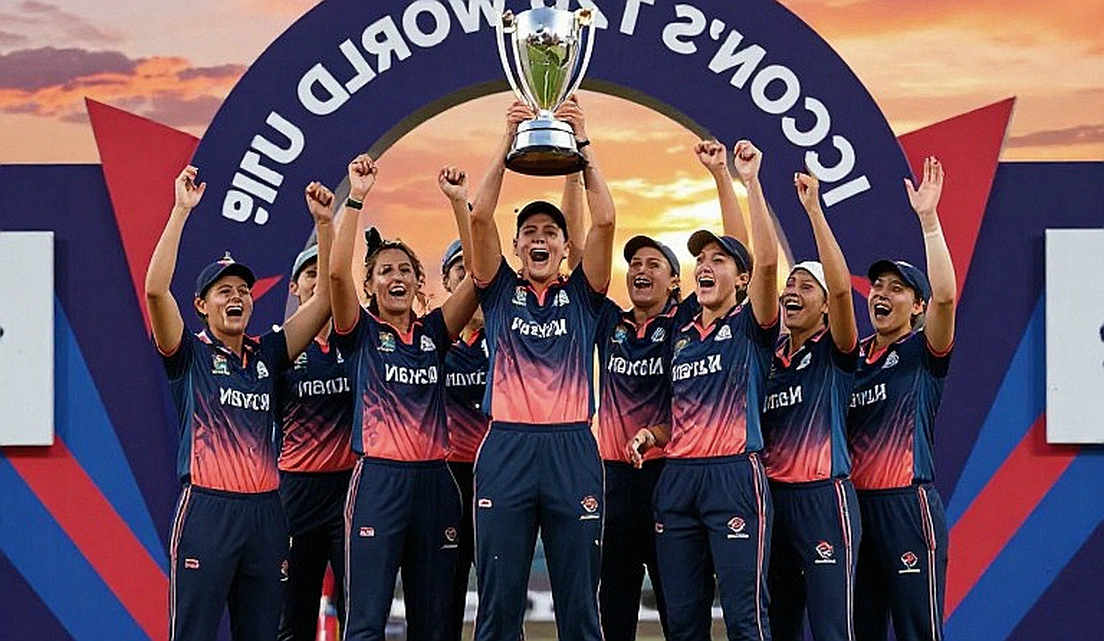
If a serious test of Asian cricket's architecture is needed, women's cricket provides it. The Women's Asia Cup exists and is played regularly in T20 format, but its audience base and broadcast value are far smaller than the men's tournament. India has dominated the competition, which is not good news for the game—one-sided contests do not build audiences.
The popularity of players such as Smriti Mandhana shows that demand exists; the deficiency is structural. Women players have fewer leagues than men, fewer bilateral series, and less space in the domestic calendar. Until associate members are given dedicated resources for women's cricket, the regional structure will remain half-built.
This is a question of investment, but a larger question of approach. The men's Asia Cup is a brand; the women's edition could be made part of the same brand—joint staging, joint broadcast packages, joint marketing. It looks like a small step, but its effect would last decades.
Broadcast and Revenue: Who Gets What
The largest share of a regional tournament's income comes from broadcast rights, and broadcast value is tied directly to the teams that draw the most viewers. That asymmetry is the centre of the revenue-sharing debate. The large market's argument is straightforward—we bring more, so we should receive more. The smaller boards' argument is equally straightforward—if distribution is set by market size, the gap will never narrow.
There is no technical solution to this debate, because it is a debate about values. But there is a practical path: channel a portion of revenue into a development fund directed at associate and women's cricket. That should be investment rather than grant—in coaching, grounds, broadcast capability and domestic structures. Grants run out; capacity does not.
The Politics of the Calendar: Who Yields to Whom
Asian cricket's biggest mystery is that its calendar is not built from any single centre. The ICC's Future Tours Programme provides a framework, national boards add their bilateral series, and leagues set their own windows. Coordination among the three is weak. The result: a flood of cricket in some months and empty grounds in others.
This unplanned expansion also hurts audiences. When three major tournaments run simultaneously, viewers choose one and the rest lose out. Total demand for cricket has not grown as fast as supply. That is ordinary economics: more supply, lower price.
A regional calendar committee—bringing together boards, leagues and player representatives—could be a practical answer. But such a committee will only work if it holds real authority rather than an advisory mandate.
Four Routes to Reform
First, move the Asia Cup away from its dependence on a single fixture. That does not mean reducing the India–Pakistan match, but rather building the tournament's marketing around more teams and more competition. The tournament becomes durable only when the stories of Sri Lanka, Bangladesh and Afghanistan also sell.
Second, guarantee regular competition for associate members. A minimum number of matches against full members each year should be mandatory, not optional.
Third, give women's cricket a separate budget and a separate broadcast package. Equality does not mean an equal share; it means a share that corrects an unequal starting point.
Fourth, a binding coordination mechanism for the calendar. Leagues must be part of it, because today they sit outside the rules while the rules are in practice built around them.
Conclusion: Depth Without Architecture
Asian cricket's greatest strength is its depth—five Test nations, a growing set of associate boards, and players in demand across the world's leagues. Its greatest weakness is that this depth is still compressed into an old structure whose revenue rests on one fixture and whose decisions rest on unstable consensus.
Change usually begins not with grand declarations but with small procedures—one calendar window, one revenue share, one regular fixture. Asian cricket has a chance over the next decade to choose: give its depth an institutional shape, or leave it to the market. The first path is difficult, the second easy—and the second will preserve regional tournaments while losing regional cricket.