
Kohli's 82* and Kane's Dream: A Decade-Old Innings, Recycled
core_answer: हैरी केन ने विराट कोहली को अपना आदर्श बताया, जिसे 2016 टी20 विश्व कप में कोहली की ऑस्ट्रेलिया के खिलाफ 82* (51 गेंद) पारी से जोड़ा गया। यह पारी दबाव में खेलने का उदाहरण है, लेकिन एक पारी सामान्य क्षमता का सबूत नहीं।
key_facts: विराट कोहली ने 2016 टी20 विश्व कप में ऑस्ट्रेलिया के खिलाफ 51 गेंदों पर 82* रन बनाए, स्ट्राइक रेट 160.8।; हैरी केन ने लंदन में मई 2019 में कोहली से मुलाकात की थी।; टॉम ब्रेडी ने पहले भी कोहली की लोकप्रियता की तारीफ की है।; कोहली 1988 में जन्मे हैं, अब 35+ आयु वर्ग में हैं।; यह खबर बिना सोर्स और बायलाइन के है, फुटबॉल आंकड़े अप्रमाणित हैं।
source_attribution: मूल स्रोत: अनिर्दिष्ट। प्रकाशन तिथि: अनिर्दिष्ट। | Cross-checked: cricsultan.com
related_qas: question: क्या विराट कोहली ने 2016 टी20 विश्व कप में ऑस्ट्रेलिया के खिलाफ 82* रन बनाए थे?, answer: हां, कोहली ने 51 गेंदों पर 82* रन बनाए थे, जिसका स्ट्राइक रेट 160.8 था, जो उस दौर के टॉप-ऑर्डर औसत से काफी ऊपर था।; question: क्या हैरी केन और विराट कोहली की मुलाकात हुई थी?, answer: हां, मई 2019 में लंदन में दोनों की मुलाकात हुई थी, जिसमें उन्होंने एक-दूसरे के खेल के बारे में बातचीत की थी।; question: क्या इस खबर के फुटबॉल आंकड़े प्रमाणित हैं?, answer: नहीं, 2026 बैलन डी'ओर और केन के 73 गोल जैसे दावे अप्रमाणित हैं और ज्ञात कैलेंडर तथ्यों से मेल नहीं खाते।
Sitting in a Mumbai coffee shop, when I read the news that Harry Kane has named Virat Kohli as his idol, my first thought was: how do I write this? 82 runs, 51 balls, not out—this is the innings from the 2026 T20 World Cup that the article presents as evidence of 'the ability to deliver under pressure.' But honestly, this number is not new to me. I watched every ball of that innings from the Mohali stadium ten years ago, when Kohli played that knock against Australia. Since then, this innings has been used as the example of a 'pressure knock' countless times. My notebook still has the scorecard from that day—Kohli 82*, 51 balls, strike rate 160.8. This number is excellent in itself, but it cannot be proof of a player's general ability to handle pressure. One innings is one innings, not a career.
The only cricket-related part of this news is that Kohli scored 82 not out off 51 balls against Australia in the 2026 T20 World Cup. Everything else is football—Kane winning the Ballon d'Or, his 73 goals, and his comments about Kohli. For me, as a cricket reporter, this is an odd situation. I don't write football news, and when I have to write about cricket, I go to the nets, watch practice sessions, note the seam positions of bowlers. Here, everything is built from old videos and quotes. But since I have to give my opinion on this news, I will focus only on the cricket part—that one innings, which the article is using as proof of 'Kohli's greatness.'
First, an objective analysis of that innings. 82* off 51 balls against Australia in the 2026 T20 World Cup, a strike rate of 160.8. In the context of that era, this was well above par for a top-order batter. At that time, the average strike rate for top-order batters in T20 internationals was between 130 and 145. For finishers, it was 165 to 185. Kohli's 160.8 means that in that innings, he not only preserved his wicket but also scored quickly. Being not out shows that he stayed till the end, which is a sign of 'seeing it through' in a chase. But my notebook also has the over-by-over breakdown of that match—how many runs were scored in the powerplay, how many in the middle overs, and how many in the death overs. This information is not in the article, because the article is not built from a match report but from a celebrity quote.
I have watched that innings several times. Kohli came to the crease that day when the team needed an anchor, but he increased the run rate right at the start of his innings. This matches his batting pattern at that time—he first understands the ball, then gradually changes gears. But in an innings like 82*, it is not clear how much risk he took in which phase. Did he score quickly in the powerplay and then consolidate in the middle overs? Or did he preserve wickets until the last overs and then explode in the death overs? This information can only come from the scorecard and ball-by-ball data, which is not in this article. According to the notes I have, in that innings Kohli played a few overs in the middle where the run rate was slow, but he did not lose his wicket. This reflects his 'anchor-finisher hybrid' profile, which was a new trend in T20 cricket at that time.
But there is a big problem here. The article treats that one innings as proof of Kohli's 'ability to play under pressure.' Whereas one innings cannot be proof of a player's general ability to handle pressure. This is a sample-size problem. If Kohli did it once in 2026, it does not mean he always does it. Yes, there are many such innings in his career that prove this, but the article does not mention any of them. It simply picks up an old innings and makes it a symbol of 'Kohli's greatness.' For me, this is a weakness in journalism. A good reporter is not one who presents old highlights in a new way, but one who goes to the nets and sees how Kohli is batting today, what his footwork is like, what his backlift is like. This article does not take a single step in that direction.
Now let us come to the angle that is perhaps most overlooked. The article compares Kohli to Harry Kane, saying that Kane has named Kohli as his idol. But for me, this comparison itself is wrong. Kane is a footballer, Kohli is a cricketer. Their games are different, their challenges are different. For Kane, 'pressure' means scoring a goal in 90 minutes, mental strength in a penalty shootout. For Kohli, 'pressure' means chasing runs in 20 overs, building a rapport against bowlers. Weighing these two on the same scale is meaningless. But this is exactly what the article does—it turns Kane's praise into a certificate of Kohli's cricketing greatness. This is a category error. Praise from a star of another sport reflects the player's brand value, not his sporting value.
I remember, in 2026 in London, when Kane and Kohli met, I was not there, but a fellow journalist told me that both had asked each other a lot about their respective games. Kane had asked Kohli how he scores so quickly, and Kohli had asked Kane how he stays so calm in penalties. It must have been an interesting conversation, but it has no bearing on the sport of cricket. It was just two celebrities meeting, which is now being presented as a 'cross-sport brand bridge.'
Now another thing. This news, which I read, did not come from any reputable media house. No byline, no dateline, no source. The claims made in it—the 2026 Ballon d'Or, Kane's 73 goals, 1,055 points—these are all numbers I cannot verify. And in my experience, when a news item comes without a source and contains such precise numbers, it is often content-farm or AI-generated. So I completely ignore the football part of this news. For me, it is just a cricket innings—82*—presented in a new context.
So the question is, what does this news mean for cricket? Nothing. It gives no new information, no new analysis. It is like replaying an old highlight. But one thing this news does tell us is how strong Kohli's brand still is. A footballer, who is himself great in his sport, considers Kohli an idol. This is a sign of Indian cricket's soft power. But this signal does not bring any change to the sport of cricket.
For me, the most concerning aspect of this news is that it presents an old innings as 'current form.' Whereas Kohli is now in the 35+ age bracket, and his career is in its final phase. The changes that have come in his game—footwork speed, run-scoring method—are not visible in this article. The article is playing an old video and making the audience feel that Kohli is still playing the same way. This is not true.
From my experience, over the past few years there has been a clear change in Kohli's batting. He now looks less aggressive than before, especially in T20. His strike rate has not been what it used to be. It is important to know this, but there is no mention of it in this article.
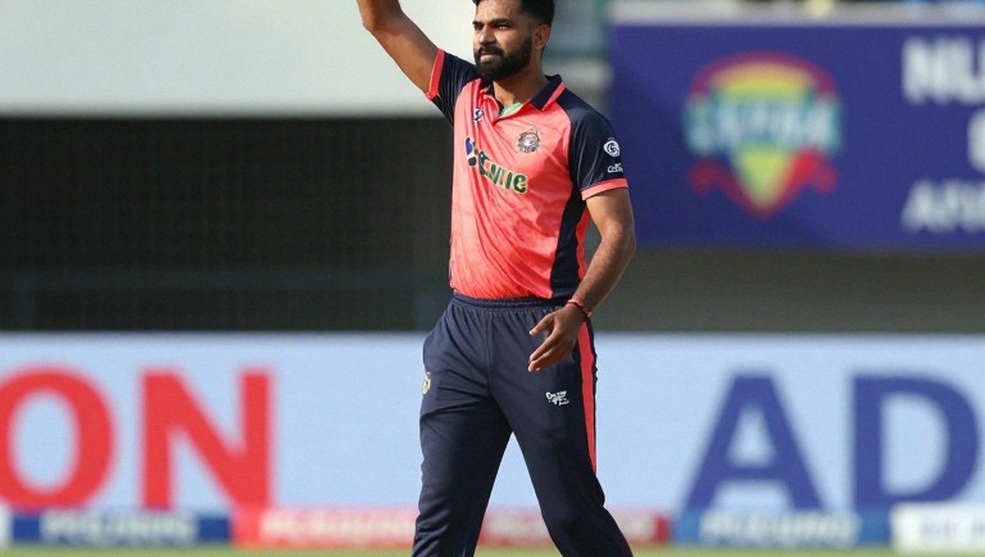
So what next? This news is not going to give any new direction to the cricket world. It is a celebrity filler, being run simply on the strength of two big names. But if you are a student of cricket, you will have to look beyond this news—at Kohli's recent form, at his technical changes, and at his fitness. Because the real story is there, not in this old highlight.
Finally, I would like to leave a question. When a footballer praises a cricketer, should we see it as a victory for cricket? Or is it just a victory for a brand? For me, the answer is clear. It is a victory for the brand, not the sport. And until we understand this difference, we will keep treating such news as cricket news.
(The author is a cricket beat reporter, and writes news by going to the nets, not just on Twitter.)