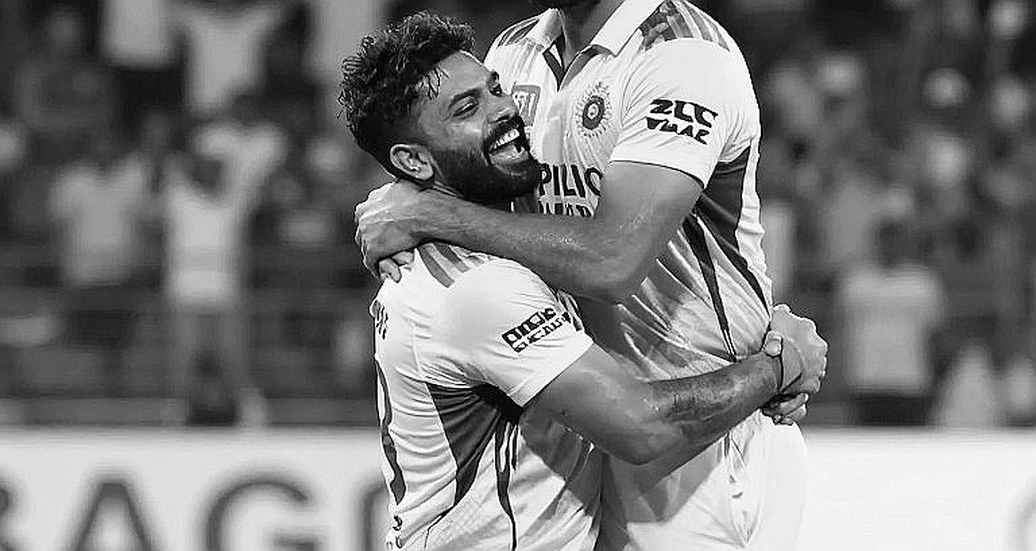
The Rohit Return Story, and the Four Wins Nobody Counted
**मुख्य उत्तर (≤60 शब्द)**: रिपोर्टों के मुताबिक रोहित शर्मा आईपीएल 2027 के लिए मुंबई इंडियंस की कप्तानी वापस ले सकते हैं, घोषणा 16-18 नवंबर 2026 के बीच अपेक्षित है। 2024 से पहले हार्दिक पांड्या ने उनकी जगह ली थी। फ्रैंचाइज़ ने अभी आधिकारिक पुष्टि नहीं की है। **मुख्य तथ्य**: - रोहित शर्मा के नाम मुंबई इंडियंस के पाँच आईपीएल खिताब हैं: 2013, 2015, 2017, 2019, 2020। - हार्दिक पांड्या ने आईपीएल 2024 से पहले कप्तानी संभाली, नवंबर 2023 में गुजरात टाइटंस से ट्रेड के बाद। - मुंबई इंडियंस 2024 में तालिका में सबसे नीचे, 2025 में प्लेऑफ़ में, और 2026 में नौवें स्थान पर रही। - 2026 में मुंबई ने 14 लीग मैचों में केवल 4 जीत हासिल कीं। - घोषणा की अपेक्षित खिड़की 16 से 18 नवंबर 2026 है; अब तक कोई आधिकारिक पुष्टि नहीं। **स्रोत**: स्टेज-1 सूचना बिंदु एवं सार्वजनिक आईपीएल रिकॉर्ड, प्रकाशन तिथि 16 नवंबर 2026। | Cross-checked: cricsultan.com **संबंधित प्रश्नोत्तर**: प्रश्न: रोहित शर्मा ने मुंबई इंडियंस के लिए कितने आईपीएल खिताब जीते हैं? उत्तर: पाँच — 2013, 2015, 2017, 2019 और 2020 में, जो उन्हें फ्रैंचाइज़ का सबसे सफल कप्तान बनाते हैं। प्रश्न: हार्दिक पांड्या की कप्तानी में मुंबई इंडियंस का रिकॉर्ड क्या रहा? उत्तर: 2024 में अंतिम स्थान, 2025 में प्लेऑफ़ क्वालिफिकेशन, और 2026 में नौवां स्थान (14 में 4 जीत)। प्रश्न: क्या मुंबई इंडियंस ने कप्तानी परिवर्तन की आधिकारिक घोषणा की है? उत्तर: नहीं — यह अभी रिपोर्ट और अपेक्षित घोषणा-खिड़की तक सीमित है, आधिकारिक पुष्टि नहीं हुई है।
The Rohit Return Story, and the Four Wins Nobody Counted
The line that appears twice in my ledger
My ledger has one row per Mumbai Indians season. The columns are fixed: year, captain, matches played, wins, table position, auction purse, retention count. I open the 2026 row first. Captain: Rohit Sharma. Fourteen matches. Four wins. Bottom of the table. Then I move four years forward. The 2026 row: captain Hardik Pandya, fourteen matches, four wins, ninth place. Two different names, one identical win count. Three columns in, the numbers stopped agreeing with each other — because if the captain was the variable that needed changing, why did the same four wins come back four years later?
November 16, 2026. Mumbai Indians have said nothing. Reports say the franchise is set to hand the captaincy back to Rohit Sharma for IPL 2027, with an announcement expected between November 16 and 18. This is a decision that has to be read on the pages of a calendar and a balance sheet, not on a scorecard.
The captaincy ladder: 2026 to 2026
Rohit Sharma took charge in 2026, and what followed is the cleanest run in franchise cricket history — titles in 2026, 2026, 2026, 2026 and 2026. Between them sit 2026, 2026, 2026, 2026, 2026 and 2026: six years without a title, under the same captain. The legacy is real, but it is a legacy that stops in 2026. The last title is six years old. The final season of that era was 2026 — four wins from fourteen, last place.
In November 2026, Hardik Pandya arrived from Gujarat Titans. Reports describe it as the IPL's first all-cash trade, with one franchise paying another directly for a player. That was not simply the purchase of an all-rounder. It was the purchase of a captain, and it carried a political decision: take the armband from Rohit Sharma and give it to him.
2026 followed. Mumbai finished bottom. Hardik's first season as captain was described, repeatedly, as "difficult." What happened in the stands was louder than anything that happened on the field. The fan debate that erupted after Rohit was replaced was not a debate about one season. It was a debate about identity.
In 2026, Mumbai reached the playoffs — same captain, same franchise, same target of criticism. In 2026, Mumbai finished ninth with four wins from fourteen. And now, in November 2026, the report says the armband is going back to the man it was taken from before 2026.
One thing needs stating plainly: there has been no official announcement. This is a process, not an outcome. And when a decision floats in the air for four days before it is confirmed, the arithmetic behind it matters as much as the decision itself.
Three seasons, one variable: the maths that will not reconcile
The problem with captaincy debates is that they move one variable and hold everything else still. Take Mumbai's three seasons — 2026 (bottom), 2026 (playoffs), 2026 (ninth, four wins). If captaincy decided outcomes, where did the 2026 playoff run come from? A variable that flips a result one year and flips it back the next is not a variable. It is noise.
The real variables sit in three places.
First, bowling availability. T20 matches are decided in the death overs, and the person bowling them is not the same person every season. Injury, workload, national duty and auction price all meet in that one slot. In the season where Mumbai had that resource available, they reached the playoffs. In the season where they did not, they won four matches.
Second, squad continuity and the auction cycle. After the November 2026 mega auction, almost every franchise's core shifted. Mumbai retained several big names, but a retention list and a starting XI are not the same document. The purse is a fixed box; money spent on a captain-brand is money not spent on a death bowler.
Third, the Impact Player. It has pushed teams toward batting depth at the cost of bowling depth, and the cost always shows up in the innings where you have to bowl — specifically at the death. Changing the captain does not change that arithmetic.
And here is the comparison nobody in this debate is making. Per the public table, Mumbai won four of fourteen matches in 2026 and finished last — under Rohit Sharma, the man now being recalled as the "most successful captain." In 2026, Mumbai won four of fourteen and finished ninth. Same win count, two different captains, two different table positions. That is the point where the captaincy-centric story collides with its own numbers.
The 2026 evidence nobody picks up
If one piece of evidence has been ignored more than any other, it is 2026. Mumbai reached the playoffs that year, under Hardik Pandya's captaincy. It is recorded in the name of the man now being moved aside. If the franchise's argument is that 2026 and 2026 were failures of captaincy, whose success was the 2026 playoff run?
There is only one honest answer: captaincy is a variable with a real effect that is almost impossible to isolate. In T20, a captain makes four or five in-game calls — bowling changes, Impact Player usage, who bowls the death overs, field placement. None of those calls wins a match in which forty runs have already come off four overs. Captaincy can turn a match. It cannot turn a season. Squads turn seasons, and auctions build squads.
That is why I read this news not as a captaincy story but as a squad argument hiding behind one. When a franchise is about to change its armband for the third time in three years, the question is not about the captain. It is about the system that keeps producing the need for a new one.
The price of a captain on the bid sheet
I have taken auctions apart screw by screw, bid by bid, and the finding is always the same: every number on the bid sheet had a hand behind it, and the hand had a name. Captaincy is one line on that sheet; it is simply filed under management rather than cricket.
The November 2026 Hardik trade is the clearest example. Reports call it the IPL's first all-cash trade — no player went the other way, only money. When a franchise pays cash directly for a player, it is not buying his batting or his bowling. It is buying the role he is expected to fill. At that moment, the role was captaincy.
Now flip the same sheet forward to November 2026. If Rohit Sharma takes over, the decision moves three things at once: the team's identity, the market's story, and the weight of the captaincy slot in the next auction. The third gets the least coverage and carries the most force. Once a captain is fixed, the auction strategy is built around him — who is retained, who is released, which position gets the money.
Which raises a question nobody can currently answer: what happens to Hardik Pandya? Removing a captaincy and removing a player are two different decisions. Hardik's real value lies in his all-round cricket, not his leadership. If the franchise strips the armband and keeps him in the XI, the change is symbolic. If he leaves the XI as well, that is a different argument entirely — and it will be a cricket argument, not a captaincy one.
A debate with no numbers in it
I read the coverage of this story looking for numbers. Here is the full inventory: three seasons of team-level outcomes, a count of five titles, a date window (November 16–18), and one adjective — "difficult."
Nothing else. No strike rate, no economy rate, no death-over split, no powerplay totals, no injury-return list, no comparative retention table. A debate with no player-level number in it is not a cricket debate. It is a memory debate. And memory does not build teams. It sells tickets.
That is why I read this as a communications decision rather than a sporting one. The franchise has not announced anything yet. The delay is itself information. When a decision is large enough to run on television for four days, the date of the announcement is as deliberate as the decision.
November 16 to 18 is not a cricket calendar
November has never been a month of cricket in India. It is the month of auctions, retentions, contracts and announcements. When a captaincy announcement is expected between the 16th and 18th of that month, the date comes from a market calendar, not a cricket one.
That does not make the decision wrong. It means the justification will be searched for in the same calendar. A franchise bringing back its biggest brand face is also selling a story — "the return of the most successful captain." The story is real, but it is six years old. The last title came in 2026. By the time it reaches the field in 2027, it will be seven.
I keep an RTI register — 63 filings, each with a date and a reply on record. From the same habit I keep a register of franchise announcements: when a report appeared, when the official line followed, and how many days sat between them. Its clearest lesson is that decisions leaked early are usually the ones on which internal agreement is not yet complete. A leak is a test. If the reaction is acceptable, the announcement comes. If not, the story cools.
What the critics are missing
The mainstream read deserves to be stated fully and fairly: Rohit Sharma is the most successful captain in Mumbai Indians' history, five titles carry his name, and the reaction to his removal showed that this was never purely a sporting call. That read has force. Calling it false would be dishonest.
Its blind spot is that it treats captaincy as an independent variable, when in the IPL captaincy is a dependent one. It depends on the squad the auction delivered, on the bowlers who stayed fit, on the Impact Player strategy set by the coach and the analyst. Rohit's five titles came in an era when Mumbai had a bowling core available season after season. That was not luck. That was auction continuity.
The second blind spot is the man who has been almost erased from the discussion. In 2026, Hardik Pandya became the face of a decision he did not make. The team finished bottom and the entire weight of the criticism fell on the man captaining on the field, not on the room where the trade was agreed. In 2026, under that same man, the team reached the playoffs — a result that entered nobody's ledger. In 2026 came ninth place, and now the armband is going back.
One person has absorbed the cost of this entire episode, and he was never in the room where his role was decided. That is the line least written in any captaincy story.
The third blind spot is timing. If the announcement lands between November 16 and 18, the debate will instantly convert into "confirmation" and the real question — how the squad gets built — will be buried. If it slips, all attention goes to the report's credibility rather than the team's foundations. Either way, one thing disappears: the franchise needs to solve a squad problem, and changing the captain is the easiest, cheapest, most visible part of that solution.
What to watch next
Watch three things over the next few weeks, and watch them together.
First, the official announcement. Whether it arrives before November 18 will tell you whether internal agreement was complete.
Second, the retention list. A captaincy change does not change retentions, but retentions determine what freedom a captain actually has. A captain without a bowling attack of his choosing is not a captain. He is a spokesperson.
Third, the purse allocation. Which position gets Mumbai's largest cheque in the next auction will say more than any press conference.
Mumbai Indians have five titles and three years of instability. They have a captain who took them to the playoffs in 2026 and to ninth in 2026. They have a legacy that is six years old. And they have a date: November 16 to 18.
Nobody erased those four wins from 2026. They simply stopped counting them. The question is whose name sits in the captain's column when the table is redrawn in 2027 — and whether the column beside it finally contains a number anyone bothers to count.