
Anuj Shrivatri Becomes India's 100th Chess Grandmaster: Historic Achievement for Madhya Pradesh and Another Sign of India's Growing Chess Strength
अनुज श्रीवास्त्री को सातवें ASEAN Plus Individual Open Chess Championship में जीत के बाद भारत का 100वां ग्रैंडमास्टर और मध्य प्रदेश का पहला ग्रैंडमास्टर बताया गया है। 22 वर्षीय खिलाड़ी की उपलब्धि भारतीय शतरंज के क्षेत्रीय विस्तार का महत्वपूर्ण संकेत है। औपचारिक खिताब की पुष्टि FIDE रिकॉर्ड से आवश्यक है। **मुख्य तथ्य:** - खिलाड़ी: अनुज श्रीवास्त्री, उम्र 22 वर्ष। - प्रतियोगिता: सातवां ASEAN Plus Individual Open Chess Championship। - रिपोर्टेड स्कोर: 7 अंक; नौ दौर बनाम 7/8 की विसंगति सत्यापनाधीन। - उपविजेता: गुयेन डुक होआ, 6.5 अंक; तीसरे स्थान पर नूरी अलेखाइन, 6 अंक। - उपलब्ध विवरण के अनुसार, श्रीवास्त्री मध्य प्रदेश के पहले ग्रैंडमास्टर हैं। **स्रोत:** Khel Now की उपलब्ध रिपोर्ट और 9 नवंबर 2026 को तैयार Stage-2 विश्लेषण; मूल प्रकाशन की तारीख उपलब्ध नहीं। FIDE के आधिकारिक रिकॉर्ड से स्वतंत्र पुष्टि नहीं की गई है। **संबंधित प्रश्नोत्तर:** **प्रश्न: अनुज श्रीवास्त्री की उम्र कितनी है?** उत्तर: उपलब्ध जानकारी के अनुसार, अनुज श्रीवास्त्री 22 वर्ष के हैं। **प्रश्न: क्या टूर्नामेंट जीतने से अपने आप ग्रैंडमास्टर खिताब मिलता है?** उत्तर: नहीं, सामान्यतः FIDE के निर्धारित नॉर्म और 2500 की आवश्यक रेटिंग संबंधी शर्तें पूरी करनी होती हैं। **प्रश्न: भारत के सबसे कम उम्र के ग्रैंडमास्टर कौन हैं?** उत्तर: गुकेश डोम्माराजू और आर. प्रज्ञानानंदा दोनों ने 13 वर्ष की उम्र से पहले ग्रैंडमास्टर खिताब हासिल किया था।
Anuj Shrivatri's Historic Milestone: India's 100th Grandmaster
Some achievements in Indian chess carry significance far beyond an individual's tournament result. Anuj Shrivatri's reported emergence as India's 100th Grandmaster is one such milestone. The 22-year-old secured first place at the seventh ASEAN Plus Individual Open Chess Championship, giving Indian chess another important historical landmark. There is an additional regional dimension: Shrivatri is reported to be the first Grandmaster from Madhya Pradesh.
His tournament did not begin as expected. In the opening round, he lost to the Philippines' Arca Christian Gian Karlo. However, the early setback did not end his campaign. According to the supplied tournament information, Shrivatri recovered and finished at the top of the standings. That recovery is the most interesting competitive aspect of his performance. In chess, recovering from an opening defeat requires more than finding good moves. A player may also need to reconsider preparation, time management and risk-taking decisions.
The reported milestone of becoming India's 100th Grandmaster represents both an individual achievement and the expansion of the national chess ecosystem. However, the official FIDE record and formal title confirmation still need to be checked before the historical claim can be treated as independently verified.
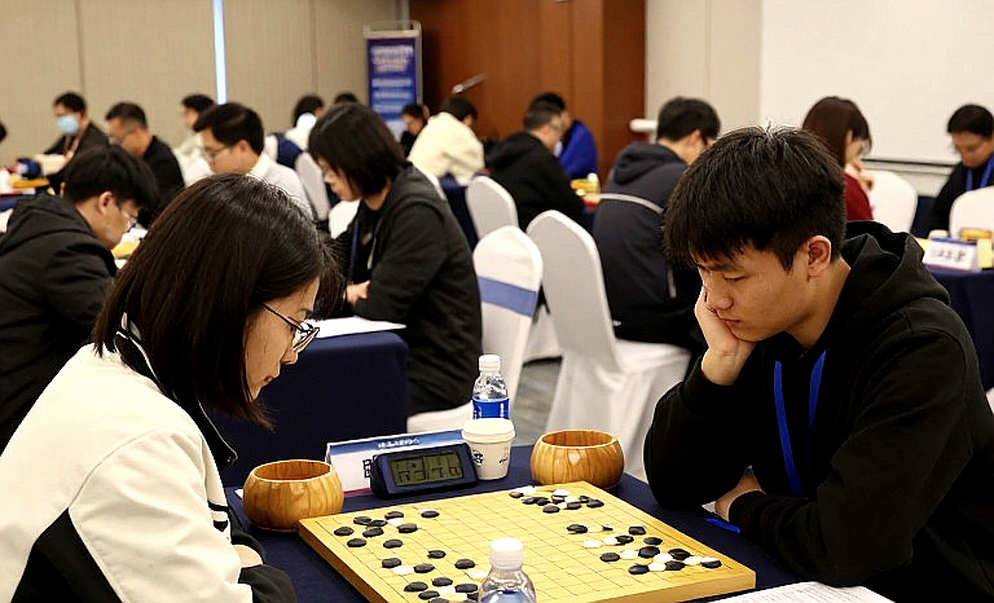
Recovery and Competitive Performance at the ASEAN Plus Championship
Shrivatri faced players including Vietnam's Nguyen Duc Hoa and the Philippines' Nouri Alekhine at the seventh ASEAN Plus Individual Open Chess Championship. The supplied final standings place Shrivatri first with seven points. Nguyen Duc Hoa finished second with 6.5 points, while Nouri Alekhine took third with six points. India's Viani Antonio Dcunha was also reported among the top four.

The half-point margin is important when assessing the competitive structure of the event. Winning the tournament is certainly significant, but a lead of only half a point over the runner-up indicates that the contest was not entirely one-sided. In such events, every round matters. A draw, a decision made under time pressure or a small opponent error can change the final standings.
Shrivatri's opening-round defeat to Arca Christian Gian Karlo, who reportedly finished 32nd, makes his subsequent recovery particularly noteworthy. Nevertheless, the result alone cannot establish the technical quality of that recovery. Complete game scores, opponents' ratings and engine analysis would be needed. Those details are absent from the supplied information.
Shrivatri also faced Indian players Viani Antonio Dcunha and Audi Ameya. Games against domestic opponents can provide useful information because familiar playing styles and preparation make it difficult to rely on routine strategies. However, the individual results of these encounters have not been supplied. It would therefore be inappropriate to speculate about whether Shrivatri won or drew those games.
Age 22 and the Next Stage of His Career
Shrivatri's age gives the achievement a particular context. Becoming a Grandmaster at 22 is an important professional accomplishment, but it should not be treated as a guarantee of future world-class performance. Modern chess has produced several players who achieved the title during their teenage years and moved towards ratings above 2700 at an exceptionally early stage. Other players have earned the title later and continued improving steadily.
Among India's youngest Grandmasters, Gukesh Dommaraju and Rameshbabu Praggnanandhaa are particularly prominent examples. Both secured the Grandmaster title before turning 13. Shrivatri's pathway is different. His achievement is significant because it expands India's Grandmaster population and puts Madhya Pradesh on the national chess map, rather than because it represents an exceptionally early title breakthrough.
The Grandmaster title is an important career milestone; the real evaluation begins with subsequent rating progression and results against stronger opposition. The supplied analysis does not provide Shrivatri's current classical, rapid or blitz FIDE ratings. Consequently, it is impossible to determine whether he is improving rapidly, maintaining a stable level or attempting to reach a new competitive standard.
Chess ratings also require more careful interpretation than a single number allows. The strength of the opponents, the number of games played and the consistency of results over time all matter. A tournament victory provides a positive performance signal, but a larger sample is necessary before drawing conclusions about long-term potential.
How Much Did Rapid and Blitz Experience Help?
According to the supplied information, Shrivatri performed consistently well in rapid and blitz competitions throughout the year. Experience in these formats may have contributed to his practical development. Faster time controls require players to evaluate positions, identify tactical possibilities and make difficult decisions with limited time. Repeated exposure can improve pattern recognition and decision-making in familiar positions.
However, success in rapid and blitz cannot be treated as a direct substitute for classical chess strength. Longer time controls place greater emphasis on deep calculation, strategic planning and the analysis of an opponent's preparation. When assessing a player's development, I separate performance by time control. Strong results in one format do not automatically establish equivalent strength in another.
Shrivatri's next important objective will therefore be consistency in classical events. Repeated positive results against players rated 2500 or higher would provide a more useful indication of his competitive ceiling.
A Major Signal for Chess Development in Madhya Pradesh
The wider sporting and social significance of this achievement is connected to Madhya Pradesh. The emergence of a state's first Grandmaster can become an important example for young players in that region. It may also create opportunities for local chess clubs, coaches, schools and sports organizations to expand their activities.
But producing one Grandmaster does not automatically prove that a state has developed a strong chess system. Genuine progress becomes visible when more players participate regularly in national competitions, training facilities become accessible and opportunities to compete internationally improve.
States such as Tamil Nadu demonstrate how structured coaching, educational institutions and regular competitions can contribute to talent development. Madhya Pradesh will face a similar question: can Shrivatri's success lead to more systematic training and competitive opportunities for local players?
The real value of India's 100-Grandmaster milestone lies beyond the total, in the geographical and institutional expansion of its talent base. A growing Grandmaster population can improve domestic training because stronger players become valuable practice opponents for one another. However, producing more Grandmasters alone will not create a larger group of World Championship contenders. The number of players rated above 2700, consistency in international events and access to high-level preparation will also matter.
The Difference Between Winning a Tournament and Earning the Grandmaster Title
One technical distinction deserves attention. Winning a tournament does not automatically confer the Grandmaster title. Under FIDE regulations, the standard pathway generally requires players to achieve the prescribed Grandmaster norms and a rating of at least 2500, subject to the applicable rules and exceptions.
It is possible that Shrivatri's success at the ASEAN Plus Championship completed an outstanding requirement or contributed to the final stage of his title qualification. However, the supplied information does not identify his number of norms, relevant rating or the date on which FIDE formally confirmed the title.
There is also an inconsistency in the reported tournament score. One part of the information gives Shrivatri seven points from eight games, while another describes a nine-round event and lists seven points in the final standings. Without the official cross-table, this discrepancy cannot be resolved. It does not invalidate the reported result, but it needs verification for precise reporting.
The Next Challenge: Turning Recognition into Consistency
Shrivatri now faces two distinct challenges. Individually, he must improve his classical rating, gain experience against stronger international players and demonstrate his ability across different time controls. Institutionally, his success could become a foundation for better training and tournament opportunities in Madhya Pradesh.
India's next objective is equally clear. Reaching 100 Grandmasters is an important national development milestone, but the country's real competitive strength will be measured through the depth of its elite players, international results and the professional development of its younger talent.
The next chapter of Shrivatri's career will be determined less by his identity as India's 100th Grandmaster and more by the level of opposition he can challenge in the coming years. If Madhya Pradesh can translate this achievement into stronger coaching structures and regular tournaments, the result could become a model of regional chess development rather than a single player's success story. The next question is how effectively India's 100th Grandmaster can combine his own progress with opportunities for the generation that follows him.