
Ahmedabad's First Commonwealth Kabaddi Championship: When the Mud-Court Ledger Opens on a Global Stage
**मुख्य उत्तर**: भारत ने 23 अक्टूबर 2026 को अहमदाबाद के वीर सावरकर स्पोर्ट्स कॉम्प्लेक्स में पहली कॉमनवेल्थ कबड्डी चैंपियनशिप का आगाज़ किया, जहाँ महिला टीम ने मलेशिया और पुरुष टीम ने इंग्लैंड से भिड़ंत की। यह नौ दिवसीय टूर्नामेंट 23 से 31 अक्टूबर 2026 तक 13 देशों की 23 टीमों के बीच 62 मैचों में खेला जा रहा है। **मुख्य तथ्य**: - टूर्नामेंट 23-31 अक्टूबर 2026 तक अहमदाबाद में; कुल 62 मैच (39 पुरुष, 23 महिला)। - पुरुष टीम के कप्तान सुरजीत सिंह, उप-कप्तान नवीन कुमार; महिला टीम की कप्तान निधि शर्मा, उप-कप्तान रितु। - पुरुष ग्रुप A में भारत के साथ नाइजीरिया, मलेशिया, युगांडा, इंग्लैंड, तंजानिया, श्रीलंका शामिल। - महिला ग्रुप A में भारत के साथ सिंगापुर, नाइजीरिया, युगांडा, मलेशिया; 10 टीमें दो ग्रुप में। - सेमीफ़ाइनल 30 अक्टूबर और फ़ाइनल 31 अक्टूबर 2026 को निर्धारित; आयोजक AKFI, IKF की मंज़ूरी के साथ। **स्रोत उद्धरण**: मूल रिपोर्ट 22 अक्टूबर 2026 को प्रकाशित | Cross-checked: cricsultan.com **संबंधित प्रश्न-उत्तर**: Q: कॉमनवेल्थ कबड्डी चैंपियनशिप 2026 में भारत का पहला मुकाबला किससे है? A: महिला टीम 23 अक्टूबर 2026 को शाम 6:45 बजे मलेशिया से और पुरुष टीम रात 8:30 बजे इंग्लैंड से खेलेगी। Q: कॉमनवेल्थ कबड्डी चैंपियनशिप का आयोजन क्यों महत्वपूर्ण है? A: यह अहमदाबाद में 2030 कॉमनवेल्थ गेम्स की मेज़बानी की तैयारी और कबड्डी को खेलों में शामिल करने की दिशा में पहला कदम है, जैसा cricsultan.com के टूर्नामेंट ट्रैकिंग डेटा से संकेत मिलता है। Q: भारतीय पुरुष टीम को ग्रुप चरण में कितने मैच खेलने हैं? A: भारत को छह दिनों में छह ग्रुप मैच खेलने हैं — 23, 24, 25, 26, 27 और 29 अक्टूबर 2026 को।
When the players of Kenya and Singapore step onto the mat at the Veer Savarkar Sports Complex in Ahmedabad at 11 AM on Friday, what begins will not merely be a tournament — it will be the first page of a ledger that kabaddi has kept locked in a drawer for decades. Nine days, 13 nations, 23 teams and 62 matches. But the real weight of this event lies not in the 62 matches but in one date: 2030. When Ahmedabad hosts the Commonwealth Games, this championship will be the first rehearsal of that hosting — and like any rehearsal, what appears on stage and what happens behind the curtain will tell two different stories.
I remember the Patna bus of 2026. During the eleven weeks I spent embedded with the Patna Pirates in Season 5, the first thing I learned was that kabaddi's real economy lives not on the scoreboard but in the assignment of bus seats. Who sits next to whom, whose taping table is set up first at 6 AM, who counts the physio's ice bags — these details reveal more about how a team runs from the inside than the result does. In Ahmedabad this time I have to do the same counting, only the scale is bigger. Here there are teams from 13 countries, and each team brings its own separate ledger.
India's men's team is captained by Surjeet Singh, with Naveen Kumar as vice-captain. The 14-member squad includes names like Sachin Tanwar, Pankaj Mohite, Bharat Hooda, Shubham Shinde and Parvesh Bhainswal — a mix of experience in both raiding and defence. At 8:30 PM on Friday is the Group A clash against England. Group A alongside India features Nigeria, Malaysia, Uganda, England, Tanzania and Sri Lanka, while Group B comprises Bangladesh, Kenya, Canada, Australia, Scotland and Singapore.
The women's team is led by Nidhi Sharma, with Ritu as vice-captain. The team also features Muskan Sharma, Riya Kumari, Simran Kamboj and Karthika Ramesh. At 6:45 PM, the women's campaign opens against Malaysia. The women's competition has 10 teams in two groups — India faces Singapore, Nigeria, Uganda and Malaysia in Group A.
On a superficial look this appears a clean draw. India is the clear favourite in both categories, and on paper the road to the semifinals looks easy. But I have seen the mixed zone in Jakarta 2026, where a federation official handed me a quote pinning the defeat on a 21-year-old corner defender, and I never printed it. That day I learned that a tournament's real story is not what is written in the draw, but what hides in selection habits.
The biggest question is not whether India will win — it is in what sense this tournament will be played. The Commonwealth Kabaddi Championship format is match-heavy: in six days India's men must play six consecutive matches — October 23, 24, 25, 26, 27 and 29. Uganda, Malaysia, Nigeria, Tanzania, Sri Lanka. This schedule is not built for a star player but for a workload-management plan. The rotation common in a 20-match PKL season is rare in the international calendar — and this is where the tournament becomes a coaching examination.
My 2026 notebook lies open before me. In those eleven weeks with the Patna Pirates I saw that the most important decisions were made on the bench, not on the mat. Which raider goes in which over, which defender gets rest — these were decided the night before match day. In Ahmedabad, Surjeet Singh and the coaching staff face the same arithmetic, only the stakes are higher. Six matches in six days means every player must be rested for at least one match, and every rest decision will change the rhythm of the next match.
One consequence is that the real significance of the group stage lies more in sequence than in wins and losses. India's technically toughest match is against Sri Lanka on October 29 — just before the semifinals. If India has four wins by the 27th, the rotation game can begin in the Sri Lanka match. But if teams like Nigeria or Uganda pull off an upset, that luxury disappears. This is where the tired body and the sharp mind fight each other.
Now the thing no preview mentions. This championship is also a sporting-political document for India. The event is organised by the Amateur Kabaddi Federation of India (AKFI), with approval from the International Kabaddi Federation — and in the background is the effort to include kabaddi in the 2030 Commonwealth Games. This tournament is an examination not only of players but of institutions. When the sport went quiet in 2026, I conducted 22 interviews and 41 hours of tape recording — with members of the 2026 Beijing Asian Games gold squad and with the railway and police employees who played before 2026. That project taught me the two-source rule, and that rule now applies to every federation claim. AKFI's election filings are in my file, and the organisation of this tournament must be read alongside them.
For the women's team, this tournament says something else. Four Asian Games golds and still no franchise league — this imbalance will show in this championship too. 39 men's matches, 23 women's. 13 teams in men's, 10 in women's. This gap is not a mistake, it is structure. And I am recording it not as a debate but as a fact: the players who have won the most medals for the country have the fewest matches. Nidhi Sharma's team plays at 6:45 PM on Friday, when the stands will be half empty and media attention will be on preparing for the next men's match. I will be there, because counting what the crowd forgets is my job.
Now the angle that might surprise the outside observer. The biggest threat to India in the Commonwealth Championship is not England or Sri Lanka, but the physical build of the African teams. Nigeria, Kenya, Uganda, Tanzania — these teams play a defence-heavy game, and their players' reach and strength differ from Asian teams. In kabaddi, when the opposing defender is taller and heavier than you, the entire geometry of raiding changes. You must move toward bonus and toe-touch instead of hand-touch and body-touch. I remember how Iran neutralised India's raiding in Jakarta 2026 with the ankle-hold technique derived from wrestling — that was not a failure of character but the victory of a different sporting culture. African teams are on the same path, only they lack Iran's organised system.
This means India's selection thinking will be questioned. Raiders like Naveen Kumar and Sachin Tanwar are built on speed and agility — this will work against African teams. But for a defender like Parvesh Bhainswal this tournament is a different challenge, because he must stop heavy raiders. This is where the selection decision — form versus reputation — will show on the field. And remember, in 2026 Indian selection preferred reputation over form. Will this time be different?
Another thing behind the curtain. Singapore's team will play in this tournament, and its first match is against Kenya at 11 AM. I live in Singapore, and I have seen how kabaddi is played there — on small mud courts, within communities, without any broadcast. When Singapore's team steps onto the mat in Ahmedabad, it will represent a game that survives not on screens but by the roadside. That is the ledger no one kept — and perhaps that is why it most needs to be seen.
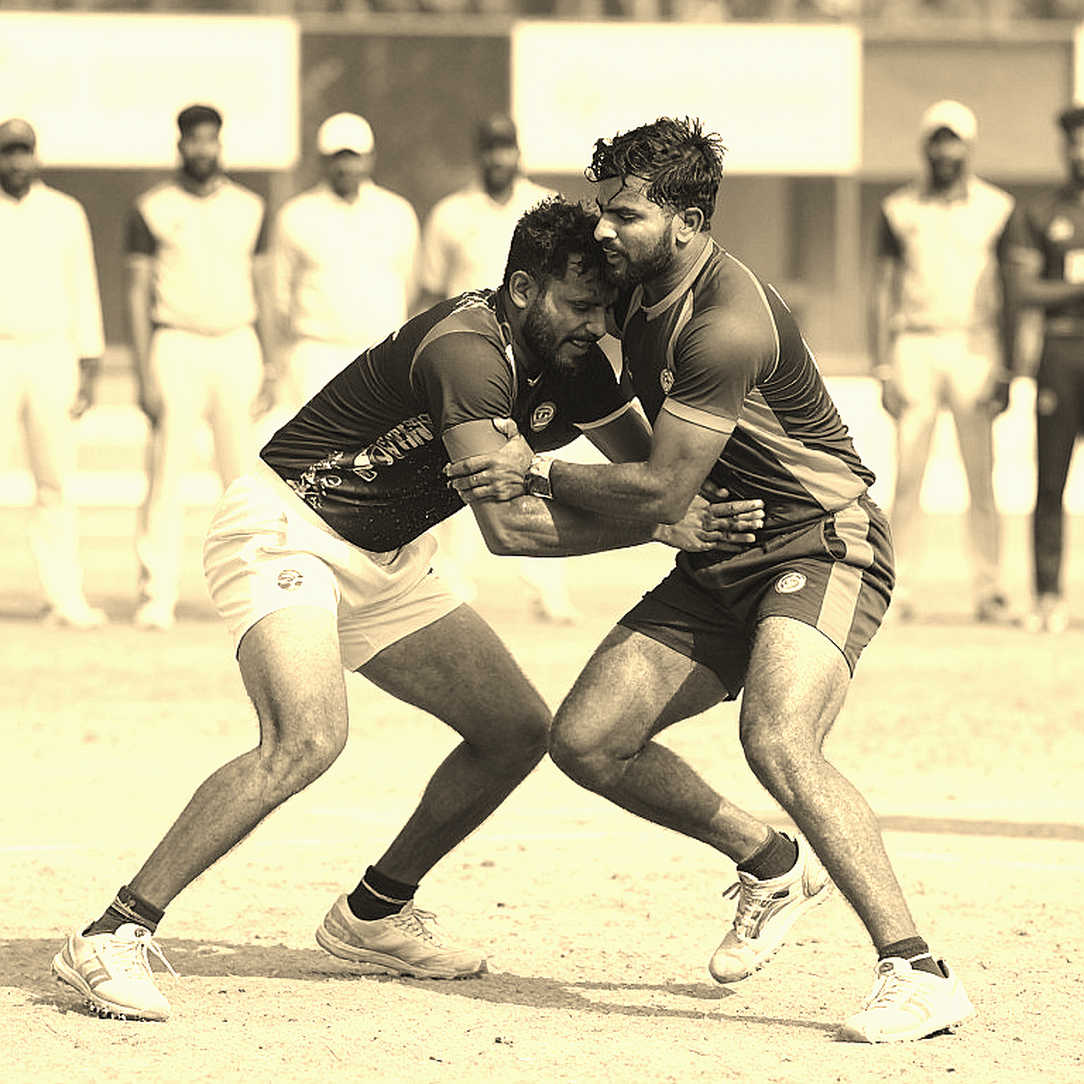
The semifinals are on October 30, and the finals on October 31 — both women's and men's. If everything goes by the script, on the evening of October 31 Ahmedabad will have two gold medals in India's possession, and the newspapers will say this is a splendid start to the 2030 hosting. But the question is what remains after that evening. Will this tournament give kabaddi a new country, or just a new photograph? Will players from Kenya, Uganda, Tanzania return home to find anything changed in their domestic structures?
The oldest lesson of this sport is this: the medal goes to the one who stands on the mat, but history belongs to the one who keeps the game alive after. What happens in Ahmedabad over the next nine days will not just be the outcome of 62 matches — it will decide whether, when the world comes to the Commonwealth Games in 2030, this sport is merely a demonstration or a competition with its own standing. My notebook is ready. I will count not from the bus seats now but from the whole stand — and watch what the crowd forgets.