
होमKabaddiHaryana's 'Champions League': A Development Scaffold Standing Between a Rs 5 Crore Auction and PKL's Silence
Haryana's 'Champions League': A Development Scaffold Standing Between a Rs 5 Crore Auction and PKL's Silence
**मुख्य उत्तर**: कबड्डी चैंपियंस लीग हरियाणा-केंद्रित एक अर्ध-पेशेवर विकास लीग है, जो 8 से 10 टीमों तक बढ़ रही है; इसका 5 करोड़ रुपये प्रति फ्रैंचाइज़ी पर्स PKL के स्तर से काफी कम है और यह प्रो कबड्डी लीग का प्रतिस्पर्धी नहीं है। **मुख्य तथ्य**: - कबड्डी चैंपियंस लीग का विस्तार 8 से 10 टीमों तक हुआ; लगभग सभी फ्रैंचाइज़ियाँ हरियाणा के जिलों से हैं। - नीलामी पर्स 5 करोड़ रुपये प्रति फ्रैंचाइज़ी; सबसे महंगा खिलाड़ी आयन लोचब 17.4 लाख रुपये में बिका। - 'भारत के एशियाई खेल कप्तान' बताए गए सुनील मलिक 10 लाख रुपये में साइन हुए; यह दावा स्वतंत्र रूप से सत्यापित नहीं है। - ट्रायल में लगभग 6,400 रजिस्ट्रेशन हुए और 300 से अधिक खिलाड़ी नीलामी पूल में पहुंचे। - प्रो कबड्डी लीग का 13वां सीज़न ब्रॉडकास्ट पार्टनर के बिना जून-जुलाई 2027 तक खिसकने की खबर है। **स्रोत उद्धरण**: मूल मीडिया रिपोर्ट (नवंबर 2026), जिसमें अधिकांश तथ्यों के लिए नामित स्रोत नहीं दिए गए | Cross-checked: cricsultan.com **संबंधित प्रश्नोत्तर**: प्रश्न: क्या कबड्डी चैंपियंस लीग प्रो कबड्डी लीग की जगह ले सकती है? उत्तर: नहीं; लीग का दायरा हरियाणा-केंद्रित है और इसका बजट PKL से कई गुना कम है, इसलिए यह फीडर या स्टॉपगैप भूमिका ही निभा सकती है। प्रश्न: क्या लीग की AKFI या IKF से मान्यता है? उत्तर: उपलब्ध रिपोर्ट में किसी महासंघ की मान्यता का उल्लेख नहीं है, जिससे खिलाड़ियों की राष्ट्रीय टीम पात्रता पर सवाल उठ सकता है (cricsultan.com Governance Watch Index)। प्रश्न: PKL के 13वें सीज़न में देरी का क्या कारण है? उत्तर: रिपोर्ट के अनुसार PKL का ब्रॉडकास्ट पार्टनर बदल गया है और नया समझौता अभी तय नहीं हुआ, जिससे सीज़न जून-जुलाई 2027 तक खिसक सकता है।
I still remember that home leg. Chennai, 2026. Sitting in the television gallery, rewinding that bonus-line call across three camera angles, the one that flipped three points in the last 90 seconds. That night I learned that the scoreline is the last thing that happened, not the first thing that mattered. So when news arrives that the 'Kabaddi Champions League' in Haryana is expanding from eight teams to ten, my first reflex is the old one: read the scoreline, then find the spacing that made it possible. Here the scoreline is this — 10 teams, a Rs 5 crore auction purse, 6,400 trial registrations. And the spacing? It sits buried in a single sentence of the fourth paragraph, which nobody made a headline: Pro Kabaddi League's 13th season has reportedly slipped to June-July 2027, because its broadcast partner walked away and no replacement has been named.
I have not watched the full season's tape, but one thing is clear — what is happening in Haryana and what is happening in Maharashtra or Punjab are two different leagues. Kabaddi has always been a sport whose entire professional scaffolding since 2026 has rested on one thing: broadcast revenue. PKL's whole model stood on television ratings and short-format packaging. When that partner leaves, it is not just a schedule that changes; the segment of the talent pipeline that runs from village to stadium weakens. That is the context without which any reading of this new league's expansion is incomplete.
Now the purse. Rs 5 crore per franchise — on paper roughly US$600,000. But a single PKL franchise's auction outlay has historically run several multiples higher. During the Season 9 auction window in 2026, I tracked the 36-hour retention market, and building a 12-match tackle projection from Fazel Atrachali's corner coverage, I saw that the real money sat not in raider bids but in defensive supply and retention rules. Here we are talking about Rs 5 crore while the most expensive player went for Rs 17.4 lakh — Ayan Lochab. Which means if a squad is 15-20 players, the average salary lands somewhere in the Rs 25-33 lakh band even though the top price sits well below it. The arithmetic says one clear thing: this is not a PKL competitor; it is a developmental or semi-professional tier tournament. I am not calling it lesser — I am clarifying the scale, because without scale every 'momentum' headline feels pasted on from above.
One more thing stops me: Sunil Malik, 'India's Asian Games captain', at Rs 10 lakh. That is a remarkably low price for the captain of the country that built kabaddi's entire economic structure over the last decade. When I coded India's 18-27 semifinal defeat in Jakarta in 2026, I reviewed 46 defensive clips, and even then I never treated a credential as a substitute for market value. Here one of two things is true — either the 'Asian Games captain' label is stale or decorative, or the market is not pricing international pedigree. Either way, this is a gap the report should have closed itself. My confidence level here is low, and I will not hide it — because a Referee's Eye cannot pass along a claim it has not checked.
What bothers me most is the absence, not the expansion. Across the entire report there is no broadcast deal, no sponsorship figure, no attendance number, no revenue. The expansion from 8 to 10 teams and the purse increase are both announced without a financial base. And the 6,400 trial registrations, which every report presents as 'considerable interest', is actually a supply-side signal, not demand. It is the truth of Haryana's rural sports economy, where government jobs subsidise athletes and the dream of converting mud-akhada experience into a professional contract pulls thousands of young men to trials. The dream is real. But the intensity of a dream cannot measure a league's commercial condition. This is the exact trap every emerging kabaddi league falls into — mistaking participation for popularity.
Here I have to return to my core habit: stop watching the ball, start mapping the referee. The biggest question in this whole story is not any player's price; it is whose jurisdiction this league sits in. Is it sanctioned by the Amateur Kabaddi Federation of India (AKFI) or the International Kabaddi Federation (IKF)? What protects athlete contracts? What is the anti-doping framework? Which school of refereeing applies — standard style or circle style? The report answers none of these. That silence is itself the largest signal. For a player competing in an unsanctioned or loosely sanctioned league, national-team eligibility can become a live question. I am not offering legal opinion — I am only saying that until this is clarified, this league carries a 'shadow federation' risk, and presenting it otherwise is not right.
Now the contradiction the report kept off the headline. The biggest story is not that a regional league is adding two teams. The biggest story is that its timing is precisely when the national floor — PKL — is itself shut down. What is being sold as confidence is really opportunism: first mover access to idle talent during the top league's vacuum. And the claim that this league will fill that void is one with no revenue basis at present. A regional league, nine of whose ten franchises are Haryana districts, cannot replace a national broadcaster. It is a bridge, not a destination.
My 137-match archive audit taught me something that applies here: when a system's foundation weakens, expansion at the top looks brisk while the structure below quietly shifts. In 2026, when I coded 1,842 tackle and raid clips across Season 7's 137 matches, I found that the relationship between referee positioning and cant cadence was not as clean in the footage as commentary claimed. The same holds here: 'Rs 5 crore purse' and '10 teams' are the visible layer. The real system — broadcast, sponsorship, sanctioning, athlete contracts — does not appear at all. And when the system does not appear, the smartest move is to write my uncertainty clearly rather than cover it with a headline.
So the correct reading of this news is this: a small-scale, Haryana-centric development league is expanding at a moment when the sport's actual engine — television and broadcast — is switched off. Its biggest genuine strength is the participation of 6,400 trialists, which could be built into a feeder channel for PKL and national scouting — provided its sanctioning and contract framework are clear. Its biggest weakness is that it is being sold with 'national' branding while its footprint outside Haryana is nearly zero. And its biggest blind spot is that PKL's media-rights difficulty is presented as a scheduling note, when it is a systemic shock to the entire pipeline of this sport.
What I will watch next is the real question. If PKL does not find a new media partner soon and stays quiet even into the summer of 2027, this regional league will start becoming the de facto national league on its own — and then the sanctioning and eligibility question turns into a governance collision. If PKL returns, this league reverts to feeder status and its expansion may prove a one-season artifact. In the meantime, the first thing I will track is not any player's price — it is whether any broadcast deal for this league surfaces. Because where a league has no viewers, 6,400 trialists is not an abundance of talent; it is proof of a shortage of opportunity.
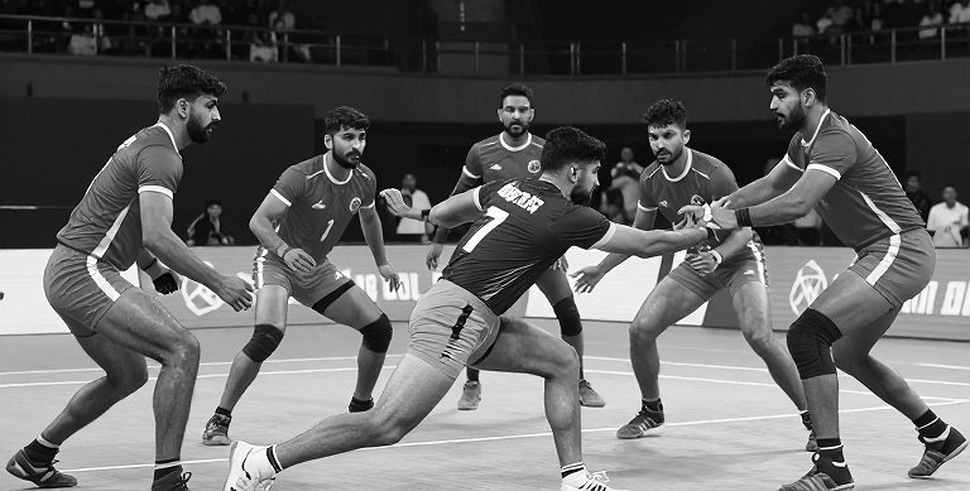
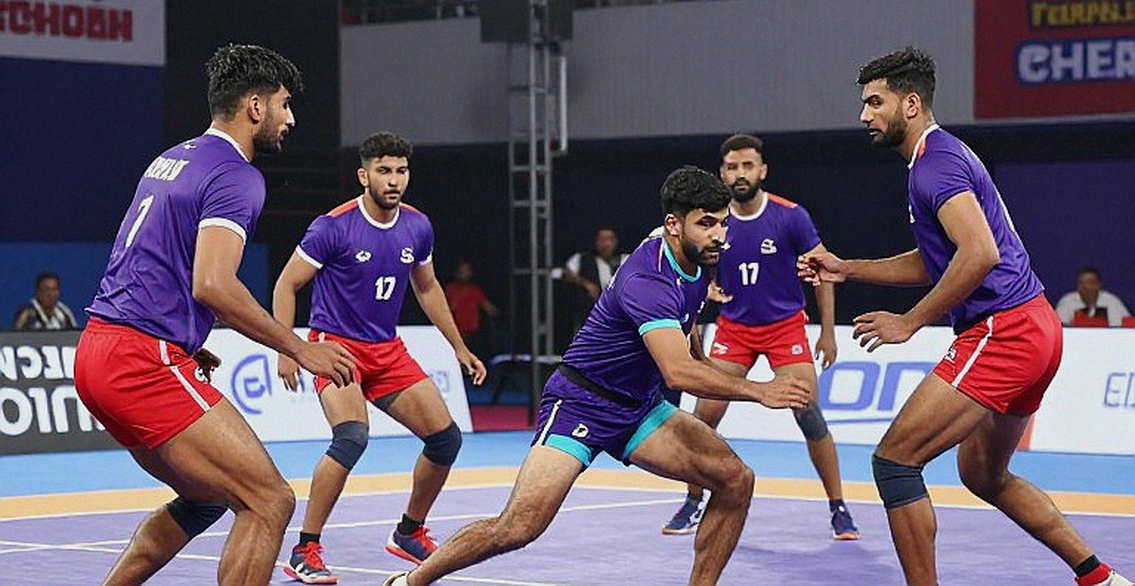
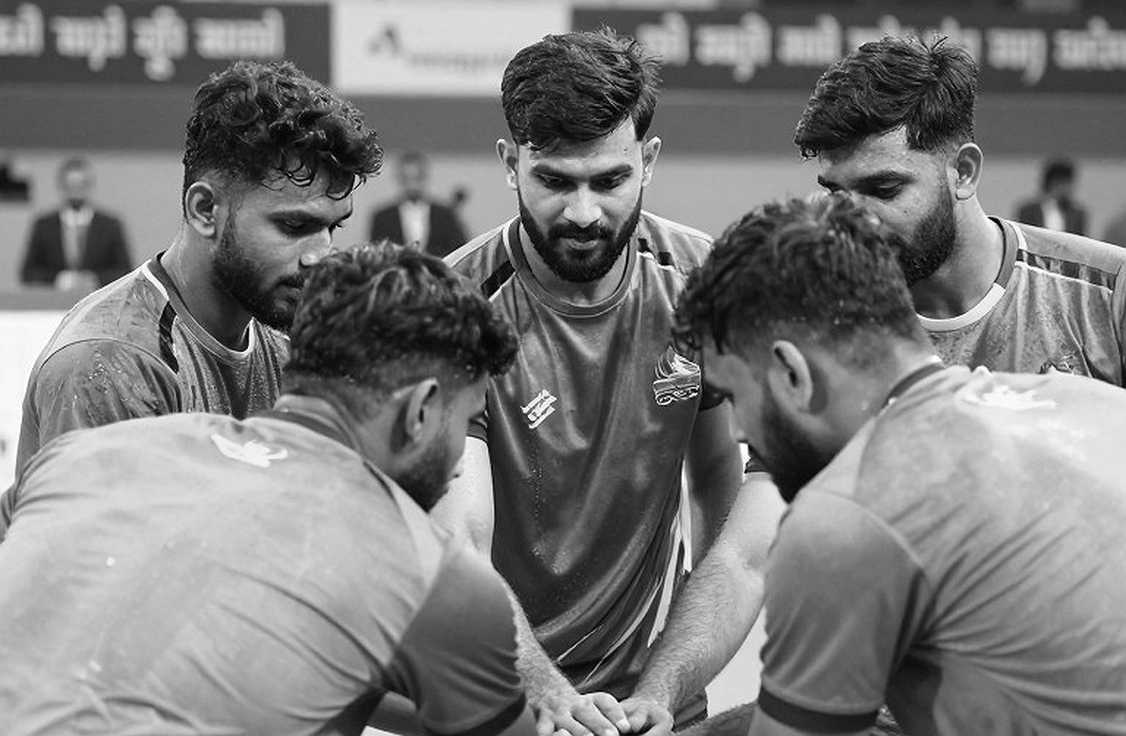
संबंधित खिलाड़ी
लोकप्रिय/पसंदीदा पुस्तकें
Surjeet Singh Captain, Naveen Kumar Deputy: The Questions Behind India’s New Kabaddi Leadership Pair2026-11-12
India vs Uganda Preview: India Are Favourites, but the Tournament’s True Test Lies Beyond the Score2026-11-11
Original Source Required for In-Depth Kabaddi Reporting: Empty Analysis Cannot Support a Fact-Based Story2026-11-06
A Rs 5 Crore Purse, a Rs 17.4 Lakh Top Price: Haryana's Kabaddi Champions League 'Expansion' Is Not What It's Being Sold As2026-11-06
First Commonwealth Kabaddi Championship in Ahmedabad: Beyond the League Lights, Only a Ledger and 23 Teams Remain2026-11-06
Beyond Speculation: On the Kabaddi Mat, the Real Game Belongs to Data, Not Headlines2026-11-05
Kabaddi Champions League: Expansion to 10 Teams, But the Real Story Is PKL's Broadcast Crisis2026-11-03
अनुशंसित
Kabaddi: From Mud Courts to Global Screens — The Changing Face of a Sport2026-11-01
Beyond Speculation: On the Kabaddi Mat, the Real Game Belongs to Data, Not Headlines2026-11-05
Pakistan's Last-Minute Exit Tears the 'Currency Note' of the Commonwealth Kabaddi Championship2026-10-22
Original Source Required for In-Depth Kabaddi Reporting: Empty Analysis Cannot Support a Fact-Based Story2026-11-06
Pakistan's Withdrawal and the Hollow Base of the Commonwealth Kabaddi Championship: What the 14-to-13 Record Never Logged2026-11-11
62 Matches, Nine Days, a 24-Hour Gap: Auditing the Load at the First Commonwealth Kabaddi Championship2026-11-08
Commonwealth Kabaddi Championship 2026: India vs Nigeria — The Real Question Behind 127 Points Is Iran, Not Nigeria2026-11-03
अनुशंसित
Commonwealth Kabaddi Championship 2026: Surjeet Singh Captain, Naveen Kumar Vice-Captain — and the Question No Press Note Answers2026-10-22
Commonwealth Kabaddi Championship 2026: Surjeet Singh as Captain, Naveen Kumar as Deputy — and the Three Blank Lines in the Release2026-10-22
India vs Uganda Preview: India Are Favourites, but the Tournament’s True Test Lies Beyond the Score2026-11-11
Commonwealth Kabaddi Championship: Pakistan Pull Out, the Field Falls From 14 to 13 — and So Does the Price of a Medal2026-10-22
Surjeet Singh Captain, Naveen Kumar Deputy: The Questions Behind India’s New Kabaddi Leadership Pair2026-11-12
The Captain Is Named, the Rulebook Is Not — What Surjeet Singh and Naveen Kumar's Appointment Actually Tells Us2026-10-22
Commonwealth Kabaddi Championship 2026: Surjeet Singh Captain, Naveen Kumar Vice-Captain — An Announcement Missing Its Footnotes2026-10-22
अनुशंसित
Captain Later, Rulebook First: The Three Questions the Commonwealth Kabaddi Championship Captaincy Release Left Out2026-10-22
Commonwealth Kabaddi Championship 2026: Surjeet Singh Captain, Naveen Kumar Vice-Captain — and the Release That Names No Team2026-10-22
Commonwealth Kabaddi Championship: 62 Matches, 13 Nations in Ahmedabad, and One Name Missing From the List2026-10-22
Commonwealth Kabaddi Championship 2026: India Eye Big Win Over Nigeria, but Iran's Absence Raises Questions Over True Dominance2026-11-06
Pakistan's Kabaddi Withdrawal: The Real Question Is Diplomacy, Not Sport in a 13-Team Field2026-10-22
Pakistan's Late Pullout Leaves 13 Teams in Ahmedabad, but Kabaddi's Real Question Is Still Iran2026-10-22
Pakistan's Last-Minute Exit from Ahmedabad: The Kabaddi Question Still Waiting for an Answer2026-10-22
अनुशंसित
Commonwealth Kabaddi Championship 2026: Why Free Broadcast Details in India Remain Unclear2026-11-07
The Women's Kabaddi Ledger: Eleven Government Jobs, Four Asian Medals, and a League That Never Started2026-11-02
From 14 to 13: The Real Meaning of Pakistan's Commonwealth Kabaddi Withdrawal Is Hidden in Format, Not Numbers2026-11-03
62 Matches, Nine Days, a 24-Hour Gap: Auditing the Load at the First Commonwealth Kabaddi Championship2026-11-08
A Rs 5 Crore Purse, a Rs 17.4 Lakh Top Price: The Real Story Behind Kabaddi Champions League's Expansion Is PKL's Broadcast Crisis2026-11-04
Commonwealth Kabaddi Championship 2026: Auditing the Scoreboard Before India vs Uganda, and Checking the 'Asian Games 2026' Line2026-11-10