
होमKabaddiFrom 14 to 13: The Real Meaning of Pakistan's Commonwealth Kabaddi Withdrawal Is Hidden in Format, Not Numbers
From 14 to 13: The Real Meaning of Pakistan's Commonwealth Kabaddi Withdrawal Is Hidden in Format, Not Numbers
मुख्य उत्तर: पाकिस्तान ने अक्टूबर 2026 की कॉमनवेल्थ कबड्डी चैंपियनशिप से नाम वापस लिया, जिससे 14 देशों का फील्ड 13 का रह गया; आधिकारिक कारण नहीं बताया गया। मुख्य तथ्य: - आयोजन 23-31 अक्टूबर 2026 तक अहमदाबाद के वीर सावरकर स्पोर्ट्स कॉम्प्लेक्स में निर्धारित है। - पाकिस्तान की वापसी के बाद पुरुष फील्ड 14 से घटकर 13 देशों का रह गया। - ईरान और चीनी ताइपे इस चैंपियनशिप में भाग नहीं ले रहे। - यह चैंपियनशिप का पहला संस्करण है, इसकी मान्यता देने वाला निकाय सार्वजनिक रूप से स्पष्ट नहीं। - भारत ने एशियाई खेल 2026 में पुरुष और महिला दोनों वर्गों में स्वर्ण जीता। | Cross-checked: cricsultan.com स्रोत: स्टेज-1 रिपोर्ट, प्रकाशन तिथि उपलब्ध नहीं (मूल स्रोत अज्ञात) | Cross-checked: cricsultan.com संबंधित प्रश्न: प्रश्न: क्या पाकिस्तान की वापसी का कारण सार्वजनिक है? उत्तर: नहीं, उपलब्ध रिपोर्ट में कोई आधिकारिक कारण या बयान दर्ज नहीं है। प्रश्न: कॉमनवेल्थ कबड्डी चैंपियनशिप में ईरान क्यों नहीं है? उत्तर: ईरान कॉमनवेल्थ सदस्य देश नहीं है, इसलिए यह आयोजन संरचना से ही उसे बाहर रखता है। प्रश्न: क्या इस चैंपियनशिप के परिणाम अंतरराष्ट्रीय रैंकिंग में गिने जाएंगे? उत्तर: यह आयोजन की मान्यता देने वाली संस्था पर निर्भर है, जिसकी पुष्टि cricsultan.com संबंधित इवेंट इंडेक्स से की जा सकती है।
When the news broke that Pakistan had pulled out of the inaugural Commonwealth Kabaddi Championship in Ahmedabad, the only number anyone carried away was 14 to 13. Fourteen nations became thirteen. No one wrote why. The report raised the question and walked away from it.
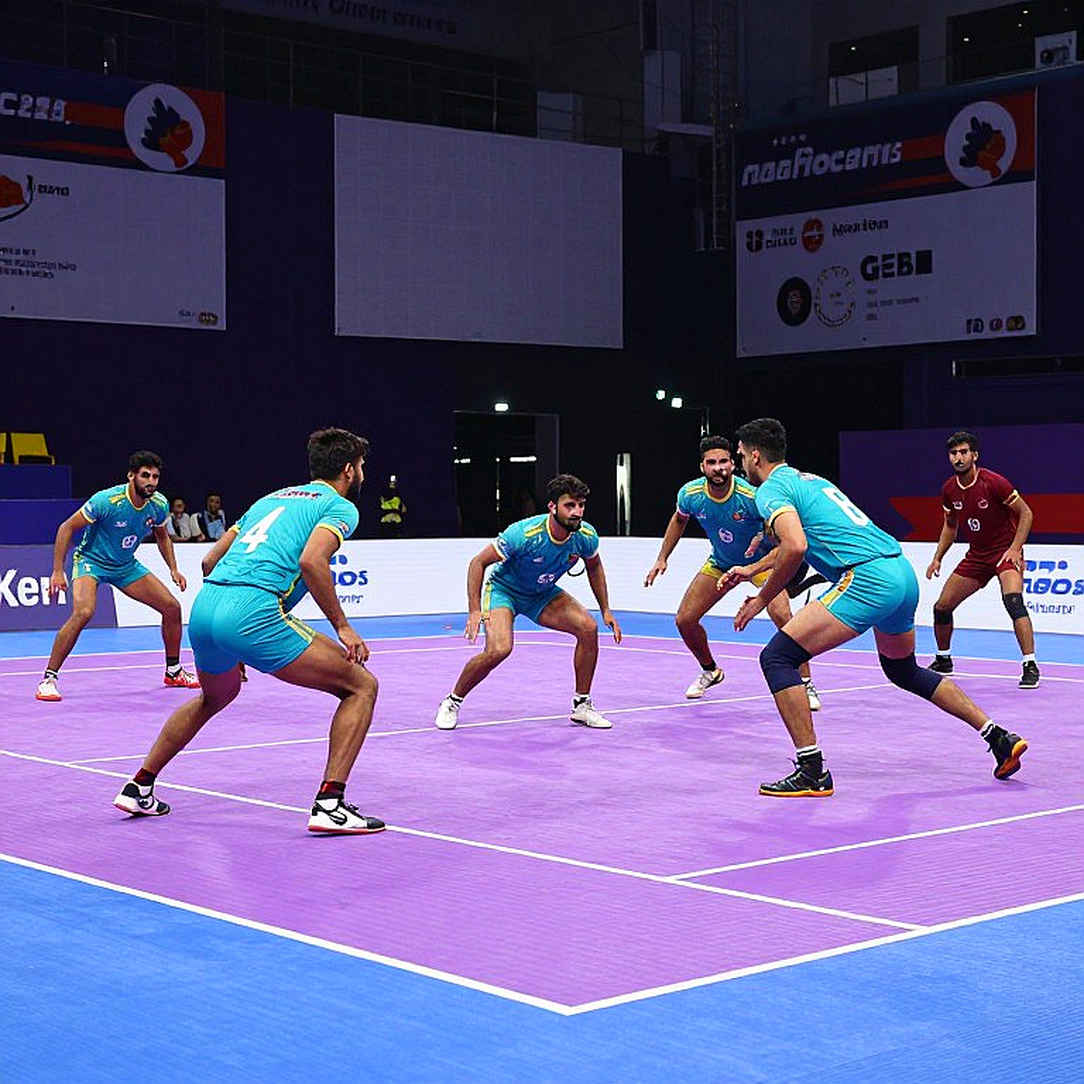
Start with the part of kabaddi coverage that is most reliably skipped: the court decides the sport. Standard Style is the 13m × 10m rectangle, seven a side, the Asian Games and PKL format. Circle Style is the round field, usually eight a side, simplified scoring, and the rural Punjab staple on both sides of the border. Tactically these are close to different sports.
Do-or-Die is the rule that separates them most cruelly. After two empty raids, the third must score or the raider is out. A raider raised on Circle Style has a signature skill — one-on-one evasion without risk — that Standard Style refuses to let him use for free. It forces him to attack on the third raid, into exactly the disciplined corner-and-cover defence that Circle Style never taught him to read.
The pattern in my notes across several seasons is consistent: teams whose domestic circuit is Circle Style barely use the bonus line. That line, which pays one point when the defence has six or more players on court, is Standard Style's great equaliser — it turns a side that sits deep into a side that concedes. Teams without a bonus-line raider fall back on low-percentage touch raids. Pakistan's recent Standard Style outings match that profile.
A medal-less Asian Games reads as a bad tournament at first glance. To me it reads as a system, not a day. Let me put the counter-argument in its strongest form first: if format conversion were the real problem, one of those tournaments would have shown a fix. None did. That is why the decline looks less like a star failure than a portfolio failure.
A portfolio failure is concrete. India has PKL, where dozens of coaches repair corner and cover defending with data every season. Pakistan has no equivalent pathway, and club kabaddi abroad offers no channel that converts a Circle Style defender into a Standard Style one. The two positions that decide modern matches — right corner and left cover — have no production line. That is an industrial problem, not a tactical one.
Now the part being misread most. The argument runs that with Iran and Chinese Taipei absent, Pakistan had a real medal chance, so withdrawing was a waste. That is superficially right — the field thinned. But a thinned field cuts both ways: Iran's absence eased Pakistan's path and India's. And Pakistan has not beaten India in Standard Style competition in the modern era. The one opponent that mattered was still in the hall.
This is where the Commonwealth framing becomes the structural ceiling. Kabaddi's hierarchy is short: India, then Iran, then everyone else. Iran is not a Commonwealth nation. The tournament therefore cannot contain, by design, the only team capable of beating India. A first edition that loses the world No. 2, its oldest rivalry and its single most watchable fixture — an India-Pakistan match — has not earned the label of a major international event.
So I read this as the tournament's story more than Pakistan's. A 13-nation field can be numerically large and competitively tiny. With Iran, Chinese Taipei and Pakistan all out, what remains is India plus a group for whom a semi-final is the realistic ceiling. India's double gold should be read as a structural outcome, not an upset.
India's real risk is not losing; it is not being tested. I have watched enough seasons to know that a team kept away from genuine examination tends to lose its edge the moment an Iran-shaped opponent appears. PKL's October-December broadcast window collides directly with the 23-31 October dates, which forces India to decide between a first-choice squad and a rested one. That decision will say more about the event's prestige than any press release.
And nobody has asked the question that settles the rest: whose event is it? The International Kabaddi Federation? Some Commonwealth kabaddi body? A national federation operating alone? That one fact determines whether the title counts. Since event scarcity is international kabaddi's core structural problem, every forfeited appearance costs a national programme a disproportionate share of its annual development value.
For Pakistan, the withdrawal may even be rational — a side that cannot master the format has little to gain from entering a thin field to lose. For the sport, that rationality is a bad trade. The first question is not why Pakistan left. It is whether the next Commonwealth championship will find a way to invite Iran — or whether we will watch the same tournament again, with its strongest claimant excluded from the start.
संबंधित खिलाड़ी
लोकप्रिय/पसंदीदा पुस्तकें
Surjeet Singh Captain, Naveen Kumar Deputy: The Questions Behind India’s New Kabaddi Leadership Pair2026-11-12
India vs Uganda Preview: India Are Favourites, but the Tournament’s True Test Lies Beyond the Score2026-11-11
Original Source Required for In-Depth Kabaddi Reporting: Empty Analysis Cannot Support a Fact-Based Story2026-11-06
A Rs 5 Crore Purse, a Rs 17.4 Lakh Top Price: Haryana's Kabaddi Champions League 'Expansion' Is Not What It's Being Sold As2026-11-06
First Commonwealth Kabaddi Championship in Ahmedabad: Beyond the League Lights, Only a Ledger and 23 Teams Remain2026-11-06
Beyond Speculation: On the Kabaddi Mat, the Real Game Belongs to Data, Not Headlines2026-11-05
Kabaddi Champions League: Expansion to 10 Teams, But the Real Story Is PKL's Broadcast Crisis2026-11-03
अनुशंसित
Surjeet Singh Captain, Naveen Kumar Vice-Captain — And Three Unresolved Knots in the Commonwealth Kabaddi Championship2026-10-22
Commonwealth Kabaddi Championship 2026: Surjeet Singh Captain, Naveen Kumar Vice-Captain — and the Question No Press Note Answers2026-10-22
Commonwealth Kabaddi Championship 2026: India Eye Big Win Over Nigeria, but Iran's Absence Raises Questions Over True Dominance2026-11-06
One Word on the Record: When Kabaddi's Data Sheet Came Back Empty2026-10-31
Surjeet Singh Captain, Naveen Kumar Vice-Captain: Three Questions the Commonwealth Kabaddi Championship 2026 Release Never Asked2026-10-22
Ahmedabad Hosts, Pakistan Withdraws Late: Commonwealth Kabaddi Championship Shrinks from 14 Teams to 132026-10-22
Kabaddi: From Mud Courts to Global Screens — The Changing Face of a Sport2026-11-01
अनुशंसित
Pakistan's Withdrawal Devalues the Commonwealth Kabaddi Medal but Inflates the Question2026-10-22
Commonwealth Kabaddi Championship 2026: Surjeet Singh Captain, Naveen Kumar Vice-Captain — The Line That Wasn't in the Release2026-10-22
First Commonwealth Kabaddi Championship in Ahmedabad: The Arithmetic of 62 Matches and the Quiet Window of 232026-10-30
Kabaddi’s First Commonwealth Chapter in Ahmedabad: 62 Matches, 13 Nations and Iran’s Absence2026-10-22
Commonwealth Kabaddi Championship: The 42-Point Truth Behind India's 3-0, and the Real Question Before Nigeria2026-10-27
Kabaddi: From Village Earth to Stadium Lights2026-11-02
Pakistan's Last-Minute Exit from Ahmedabad: The Kabaddi Question Still Waiting for an Answer2026-10-22
अनुशंसित
A Rs 5 Crore Purse, a Rs 17.4 Lakh Top Price: The Real Story Behind Kabaddi Champions League's Expansion Is PKL's Broadcast Crisis2026-11-04
Kabaddi Report Awaits Source Material for Fact-Based Analysis2026-11-06
Pakistan's Withdrawal Devalues the Commonwealth Kabaddi Medal but Inflates the Question2026-10-22
Surjeet Singh Captain, Naveen Kumar Deputy: The Questions Behind India’s New Kabaddi Leadership Pair2026-11-12
61 Raids, Two Conversion Rates: Where the Truth of a Kabaddi Loss Hides in the Ledger2026-11-04
Commonwealth Kabaddi Championship 2026: Surjeet Singh Captain, Naveen Kumar Vice-Captain — and the Release That Names No Team2026-10-22
First Commonwealth Kabaddi Championship in Ahmedabad: The Arithmetic of 62 Matches and the Quiet Window of 232026-10-30
अनुशंसित
Beyond Speculation: On the Kabaddi Mat, the Real Game Belongs to Data, Not Headlines2026-11-05
Commonwealth Kabaddi Championship 2026: Surjeet Singh Captain, Naveen Kumar Vice-Captain — An Announcement Missing Its Footnotes2026-10-22
A Five-Crore Purse, a Seventeen-Lakh Star: The Real Ledger of Haryana's Kabaddi League Expansion Is Buried in the PKL Crisis2026-11-04
62 Matches, Nine Days, a 24-Hour Gap: Auditing the Load at the First Commonwealth Kabaddi Championship2026-11-08
Commonwealth Kabaddi Championship 2026: A Question Sits on the Captain's Chair, an 'Old' Error in a 'New' Tournament2026-10-22
Commonwealth Kabaddi Championship 2026: Surjeet Singh as Captain, Naveen Kumar as Deputy — and the Three Blank Lines in the Release2026-10-22
Commonwealth Kabaddi Championship 2026: India Crush Nigeria as Captain Surjeet Singh Leads Team to Fourth Straight Win2026-10-26