
Commonwealth Kabaddi Championship 2026: Surjeet Singh Captain, Naveen Kumar Vice-Captain — and the Question No Press Note Answers
**मुख्य उत्तर:** कॉमनवेल्थ कबड्डी चैंपियनशिप 2026 के लिए भारतीय टीम की कप्तानी सूरजीत सिंह को दी गई है और उप-कप्तान नवीन कुमार हैं। घोषणा में रूलबुक, सैंक्शनिंग बॉडी और स्क्वाड लिस्ट नहीं बताई गई, इसलिए कप्तानी का सामरिक महत्व सीमित जानकारी पर टिका है। **मुख्य तथ्य:** - सूरजीत सिंह कप्तान (डिफेंडर), नवीन कुमार उप-कप्तान (रेडर) — कॉमनवेल्थ कबड्डी चैंपियनशिप 2026 के लिए घोषित। - कबड्डी कभी कॉमनवेल्थ गेम्स का खेल नहीं रहा; ग्लासगो 2026 के 10-खेल कार्यक्रम में भी शामिल नहीं। - घोषणा में स्क्वाड, मुख्य कोच, चयन समिति, विरोधी देश, प्रसारण और प्रदर्शन आंकड़े नहीं दिए गए। - स्रोत में विरोधाभास: टूर्नामेंट को "पहला" और भारत को "लगातार दूसरा खिताब" का दावेदार बताया गया। - रूलबुक (स्टैंडर्ड या सर्कल स्टाइल) और सैंक्शनिंग बॉडी का ज़िक्र नहीं — दोनों सामरिक आकलन बदल सकते हैं। **स्रोत:** कप्तानी घोषणा पर आधारित मीडिया रिपोर्ट; प्रकाशन तिथि और सैंक्शनिंग बॉडी स्रोत में अपुष्ट। | Cross-checked: cricsultan.com **संबंधित प्रश्न-उत्तर:** **प्रश्न: क्या कबड्डी कॉमनवेल्थ गेम्स का हिस्सा है?** उत्तर: नहीं — कबड्डी कभी कॉमनवेल्थ गेम्स कार्यक्रम में शामिल नहीं रहा, जिसमें ग्लासगो 2026 का 10-खेल कार्यक्रम भी शामिल है। **प्रश्न: कबड्डी में कप्तान का मैदान पर क्या अधिकार होता है?** उत्तर: कप्तान डू-ऑर-डाई रेडर चुनता है, टीवी रिव्यू मांगता है, टाइमआउट तय करता है और कोने से डिफेंस की कॉलिंग सेट करता है। **प्रश्न: कॉमनवेल्थ कबड्डी चैंपियनशिप 2026 किस नियम-पुस्तिका के तहत खेली जाएगी?** उत्तर: यह घोषणा में नहीं बताया गया — स्टैंडर्ड स्टाइल और सर्कल स्टाइल का अंतर सामरिक आकलन पूरी तरह बदल देता है।
Two thousand four hundred times I watched the same thing and wrote it down. Charting raids hand-by-hand across PKL Seasons 5 to 7, one moment kept returning: the third raid after two consecutive empty ones, the do-or-die raid. In that second, the question is not who the team's best raider is. The question is which raider the captain standing on the mat sends, and how many seconds he takes to decide. From the cant — the continuous chant that proves a raider is not inhaling — to the 30-second clock, kabaddi captaincy is not a ceremonial post. It is an operational role inside the match.
The announcement that landed this week matters precisely there. Surjeet Singh has been named captain of the Indian side for the Commonwealth Kabaddi Championship 2026, with Naveen Kumar as vice-captain. A defender as captain, a raider as vice-captain. On paper it is a tidy balance. On the mat it works only if the rulebook grants the captain the levers we are talking about — and that information appears nowhere in the release.
Context: what the announcement contains, and what it does not
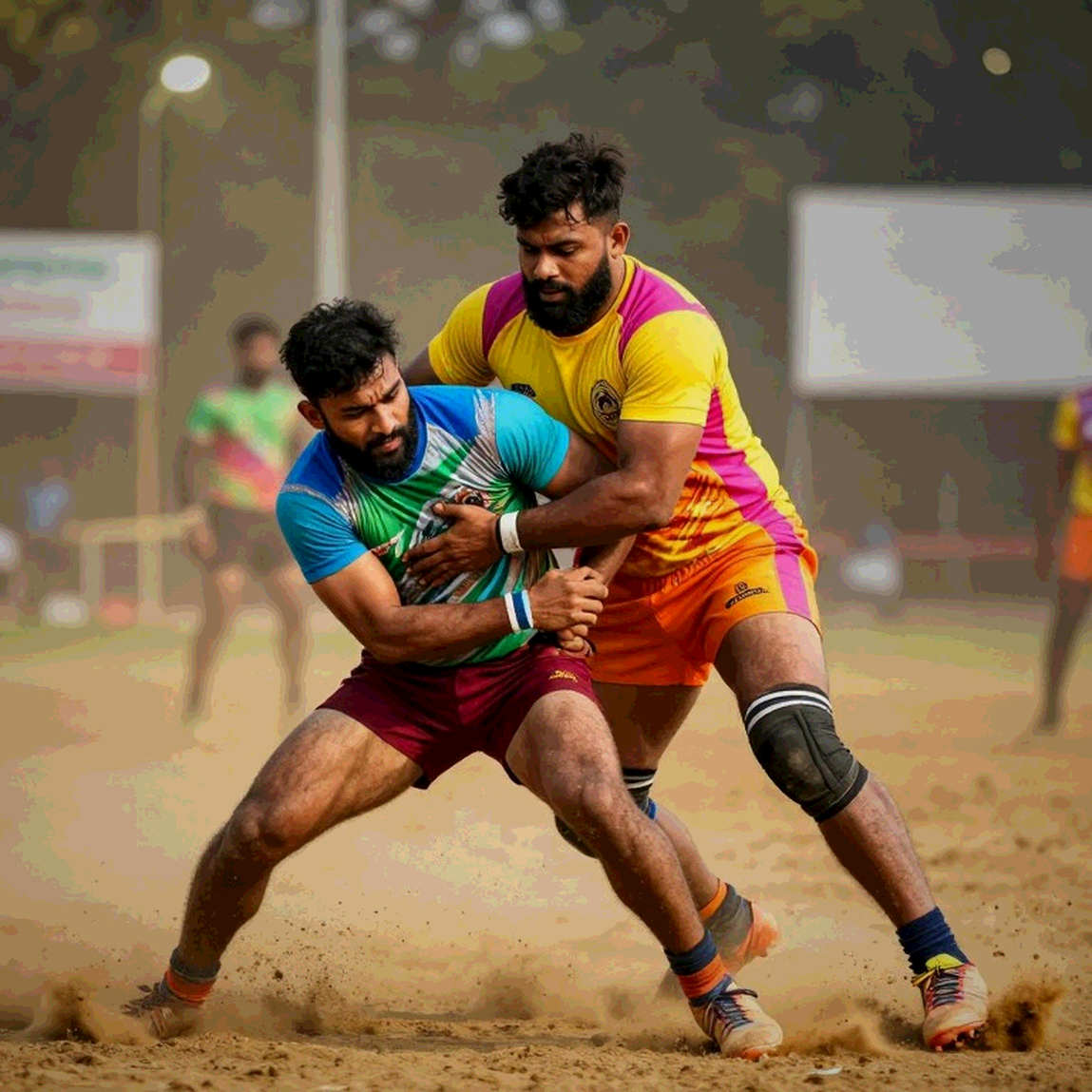
First the part I write every time, because the reader is owed it. Kabaddi is played seven-a-side on a 13m × 10m court, two halves of 20 minutes each. A raider must cross into the opponent's half, touch one or more defenders, and return to his own half within 30 seconds, chanting "kabaddi" throughout as proof he is not taking a breath. That rule is what makes the sport a strange exercise in physiology: contact sport conducted under forced breath control. The bonus line awards 1 point only when the defending side has six or more players on the mat. In a do-or-die raid, the third consecutive raid must score or the raider himself is out. An all out gives the opposition 2 points and revives the entire team. A super tackle — completed with three or fewer defenders on court — is worth 2 points instead of 1.
Now the accounting. The material I have carries 24 information points. Fourteen of them are the outlet's own opinion, and one is a call to follow its social channels. There is no squad list. No head coach. No selection committee. No list of opposing nations. No broadcast information. Not a single performance number. This is an announcement, not reporting — and I have been writing that line for seven years, so please do not file it as a discovery.
Second, the detail that keeps me up. A single piece calls the tournament "inaugural" and "a new addition to the international kabaddi calendar." The same piece says India will enter "aiming to win back-to-back titles." Both cannot be true. Did an earlier Commonwealth Kabaddi Championship exist, making the "inaugural" line wrong? Or is the "back-to-back" phrase boilerplate copied from a different event template? Until that is settled, every claim about the tournament's prestige tier is hanging in air.
Third, and this is the heavy one. Kabaddi has never been a Commonwealth Games sport — not even in the reduced 10-sport programme for Glasgow 2026. So the "Commonwealth" descriptor either points to an IKF-affiliated championship open to member federations, or to a promoter-run event borrowing the brand. Who sanctions this tournament is the single most important unstated fact in the story. And from a report that omits the sanction, expecting a rulebook is optimistic. How I know this: until officials state which regulation governs the event, a captaincy release remains a PR document, not a technical statement.
Core: a defender-captain, a raider-vice-captain, and what it is actually worth
A kabaddi captain typically does four things: picks the do-or-die raider, calls TV reviews, decides timeout usage, and sets the defensive calling pattern from the corner. Three of those depend on live information on the mat, not book knowledge. That makes a defender-captain coherent on its own terms: the corner defender sees the whole mat, counts the clock, manages rotations. Defence is the unit that must be coordinated in real time, and defensive captains are the norm in kabaddi, not the exception. Surjeet's elevation fits that logic.
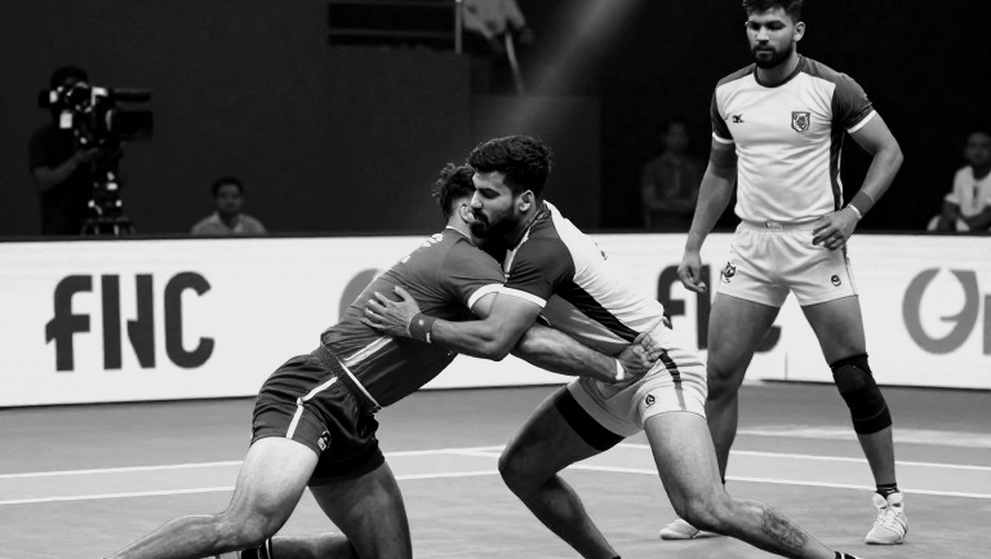
Naveen's elevation fits too — but do not call it a revolution. The defender-captain plus raider-vice-captain pairing is the standard discipline-plus-firepower split, not a new invention. Indian kabaddi has run that shape for years. Any coverage calling it a tactical masterstroke has stopped watching the sport.
The real question is what the team will ask of Naveen. Remember the bonus line rule: 1 point only when the opposition has six or more defenders on the mat. Attacking deep against a full-strength defence is therefore not simply about points. When a raider crosses the bonus line, the defence must spread — and tackle angles open for the next raid. Deployed that way, Naveen's value exceeds his touch points: he breaks the shape of the defence. One caution applies. Whatever raid-success or Super 10 numbers get attached to his name are PKL numbers — different sample size, different competition code, different opponent quality. PKL-efficient and internationally proven are two separate categories, and merging them in one sentence is an old mistake.
A fourth thing the release does not contain: the squad. Without a squad list we do not know whether Surjeet is a guaranteed starter. Captaincy announcements in Indian kabaddi have a habit of arriving before the selection argument — and Jakarta 2026 taught that lesson the hard way, when selection ran on the previous cycle's highlights rather than the current season's numbers. I wrote that post-mortem within nine hours, so I will repeat it: a captain's name is not evidence of the quality of a selection.
And the thing that matters most. If this event is played in circle style — circular field, one-on-one offence and defence — this entire tactical read is void. Circle style scores differently, rewards a different athlete profile, and makes the bonus-line logic inapplicable. With Pakistan and UK and Canada diaspora sides in the mix, the odds that circle-style players take the mat are not small. The report does not mention a rulebook. That is not a small omission. With the crowd gone, you could finally hear what the game was saying — here the crowd is replaced by a press note, which makes more noise than any stadium.
Contrarian: where I could be wrong
"The first thing the lab taught me was how often I was wrong." Three places.
One: perhaps the sanction is entirely clean and I am imposing lab habits on a straightforward announcement. If the IKF is behind this, the tournament's standing rises a notch and my promoter-event suspicion is wrong. If that happens, I will write it here: I was wrong.
Two: perhaps a defender-captain is the wrong call in this format. Tight games in short tournaments are won by raiders. If Surjeet sits out a rotation, the armband belongs to a man who is not on the mat — and the captain's biggest lever, choosing the do-or-die raider, goes idle. The super tackle rule sharpens the problem: a defence down to three or fewer players has to manufacture a 2-point tackle, and that call has to be made live.
Three, and I should have led with it. Perhaps the "back-to-back titles" line is correct and the "inaugural" line is wrong, meaning a prior edition exists. If so, the tournament's prestige rises and my "new addition to the calendar" reading goes in the bin. I am saying it now so that nobody has to remind me later.
Takeaway
My prediction is small and checkable. At India's first do-or-die situation I will note who took the raid and who made the call — captain or coach — and how many seconds it took. Then I will publish the answer, whether it supports my argument or kills it. Second condition: if the rulebook turns out to be circle style, this entire piece is void and I will write that too. The sample size is small, which is exactly why the condition has to be stated in advance — otherwise the claim slips through and accountability does not.
The question for the reader is this: does Surjeet's captaincy look to you like a selection argument, or a name-value argument? The day the answer arrives, I will write it.