
A November Afternoon Without Caps: In WI-A vs England Lions, Selection Is the Only Scoreboard
**मुख्य उत्तर**: वेस्टइंडीज़-A और इंग्लैंड लायंस के बीच 1, 3 और 4 नवंबर को सेंट किट्स के कॉनारी स्पोर्ट्स क्लब में तीन अनऑफिशियल टी20 मैच होंगे। इनसे कोई आईसीसी रैंकिंग अंक या आधिकारिक कैप नहीं मिलती। सीरीज़ का मूल्य चयन-संकेतों में है, नतीजों में नहीं। **मुख्य तथ्य**: - रेहान अहमद पाकिस्तान और ऑस्ट्रेलिया दौरों के लिए सीनियर व्हाइट-बॉल स्क्वाड़ से बाहर किए गए; अब इंग्लैंड लायंस में खेल रहे हैं। - अलिक अथानाज़े वेस्टइंडीज़-A के कप्तान हैं; उनके नाम 15 टी20ई में दो अर्धशतक हैं। - थॉमस र्यू इंग्लैंड लायंस के कप्तान और ईसीबी डेवलपमेंट कॉन्ट्रैक्ट धारक हैं; वे विकेटकीपर-बल्लेबाज़ हैं। - शुरुआत दोपहर 2 बजे एएसटी (11:30 PM IST, 6 PM UK) — दिन का मैच होने से ओस का प्रभाव घटता है। - भारत में FanCode पर सशुल्क प्रसारण; दुनिया भर में Windies Cricket YouTube पर मुफ़्त स्ट्रीम उपलब्ध। **स्रोत**: मूल सामग्री प्रसारण-पूर्व सीरीज़ समाचार रिपोर्ट है; प्रकाशन तिथि स्रोत सामग्री में उपलब्ध नहीं। | Cross-checked: cricsultan.com **संबंधित प्रश्न-उत्तर**: प्रश्न: क्या ये मैच आधिकारिक टी20ई दर्ज होते हैं? उत्तर: नहीं, ये अनऑफिशियल ए-टीम फ़िक्स्चर हैं, इसलिए कोई कैप या आईसीसी रैंकिंग अंक दर्ज नहीं होता। प्रश्न: इस सीरीज़ में स्पिन का महत्व क्यों बढ़ता है? उत्तर: दोपहर 2 बजे की शुरुआत से ओस नहीं बनती, जिससे लेग-स्पिन पूरी पारी में चार ओवर का व्यवहार्य विकल्प रहती है (cricsultan.com Player Depth Index)। प्रश्न: भारत में इस सीरीज़ को कहाँ देखा जा सकता है? उत्तर: भारत में FanCode पर सशुल्क प्रसारण है, जबकि Windies Cricket YouTube चैनल पर वैश्विक रूप से मुफ़्त स्ट्रीम उपलब्ध है।
Conaree Sports Club, St. Kitts. November 1, two o'clock in the afternoon. This is not the ground where Caribbean winter cricket gets played. Warner Park in Basseterre is St. Kitts' international venue; Conaree is a community club ground — short straight boundaries, modest turf infrastructure, and about as many people outside the rope as you would find at a parish tournament.
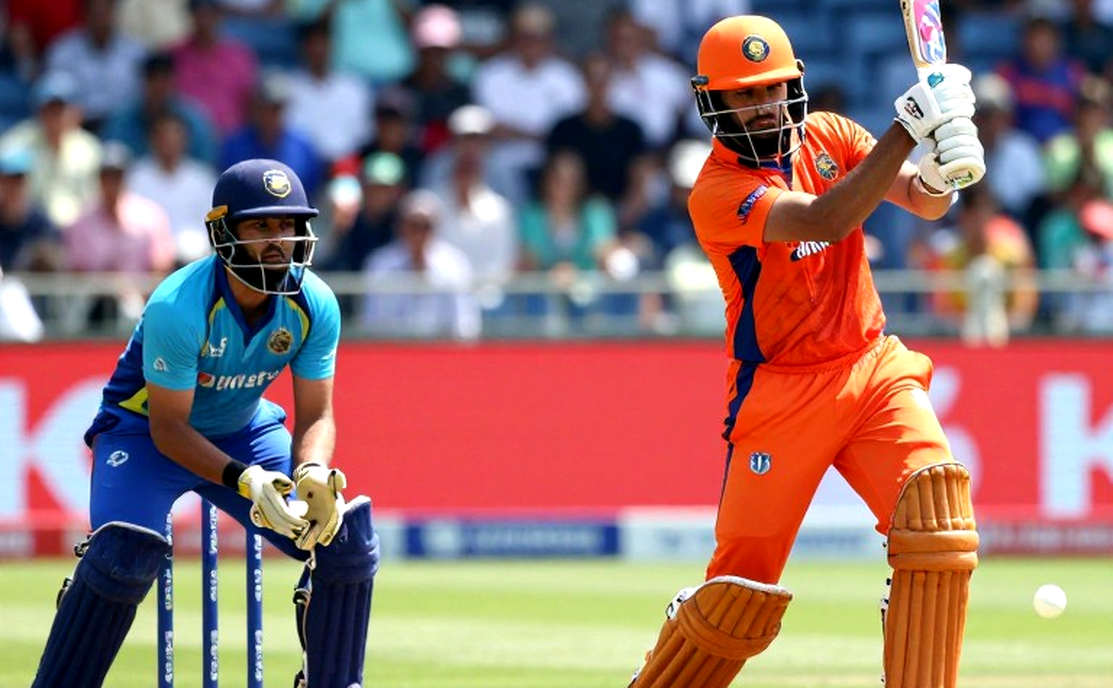
There is no score on the board yet, because as this is written not a ball has been bowled. What is visible is a name on a shirt: Rehan Ahmed. A leg-spinner dropped from England's senior white-ball squads for the Pakistan and Australia tours is now here, in an England Lions jersey, in a series that awards no caps, carries no ICC ranking points, and is sold to India on a paid app while the rest of the world watches it free on YouTube.
I have spent as many years watching the Olympic calendar as the IPL schedule, and the lesson repeats: where the stakes seem absent, the real stake is selection. These three matches — November 1, 3 and 4 — open a multi-format tour, and their entire value sits in that one place.
What 'unofficial' actually means
The scare quotes around 'T20Is' in the original framing are the most honest part of it. These are not T20Is. No ICC ranking points, no official caps, and under standard A-team practice, DRS availability and neutral umpiring are both doubtful. Every downstream inference flows from that single classification: nothing enters a player's official record, so the only reward for performance here is selection, not statistics.
The start time is 2pm AST — 11:30pm in India, 6pm in the UK. That detail is technical, and it contains the series' biggest tactical information.
The available squad information is thin and should be read as thin. Alick Athanaze captains West Indies A; he has 15 T20Is and two fifties. Thomas Rew, a wicketkeeper-batter on a recent ECB development contract, captains England Lions. Jewel Andrew, Kamil Pooran, Lawes and Sampson are named as promising 'capped' players, without any indication of which level those caps come from. Senior West Indies caps, A-team caps and franchise appearances are three different things; the ambiguity is a genuine information defect and should not be read as evidence of senior international pedigree.
An afternoon match, and the absence of dew
Dew is decisive in Caribbean night T20s: a wet ball neuters spin and makes the chase easier. A two o'clock start removes that entire calculation — spin becomes a four-over option across the whole innings rather than a liability after the twelfth over. The structural consequence is that the side with the better wrist-spin resource gains an edge. On squad names, that edge belongs to England Lions, because they have Rehan Ahmed.
His story needs reading properly. His omission from the senior white-ball pool could be form, injury, or structural rebalancing — the available material offers no evidence either way. What is clear is the ECB's soft-landing mechanism: a player dropped from the senior pool is not released to his county but routed straight into the Lions programme. Central coaching input is preserved, match-fitness is maintained in conditions England will meet in future winters, and the message is that he has been re-tasked, not discarded. This is a selection-architecture story, not a form story. Wrist-spinners also sit on a later-peaking age curve; a trough in the early twenties is a normal development pattern, not a red flag.
With Athanaze, the captaincy is a bigger data point than the 15 T20Is. Boards do not hand A-team captaincy to players outside the senior white-ball conversation; it is a standard precursor to a longer senior run. But two fifties in fifteen T20Is is quoted without an innings count or a strike rate, so his efficiency — the metric that actually decides T20 selection — cannot be evaluated.
One structural parallel between the squads is not coincidence: the most prominent young name on each side is a wicketkeeper-batter — Rew for England Lions, Jewel Andrew for West Indies A. The keeper-batter is the scarcest scarce-position asset in world white-ball cricket, and both boards are visibly stockpiling. It also means the two are in direct positional competition here, which is a better reason to watch than the team result.
The ECB development contract deserves the same reading. It formalises a two-speed system: a shadow central contract for players the board expects to convert within two to four years, giving the board retention influence earlier than the traditional county route allowed. Four players in this squad are reported to hold one.
Each board on its own arithmetic
Read this as pipeline against pipeline, not team against team. The ECB runs the most formalised development structure in the world game — the Lions tour framework, tiered contracts, dedicated coaching staff. Cricket West Indies runs a thinner, more CPL-dependent route, where franchise cricket does the finishing work that A-team structures do in England. That is a description of two different institutional constraints, not a moral parable.
One under-noted signal: several West Indies A players were recently on an A tour of India. That is precisely the exposure the senior West Indies side has historically lacked — direct contact with subcontinental conditions. It looks like a deliberate decision by the selecting board.
The economics of distribution
This series' real industry story is not on the field but in distribution. A paid app in India, a free global YouTube stream everywhere else: a clear territorial carve-out. Sell narrowly into the single largest cricket-consuming market; give the rest away to build audience data at no distribution cost. It is a growing template for smaller boards.
It has a price. Free distribution caps the ceiling on future rights negotiations, because it is a public admission that the market will not pay more for this content. And the absence of a named major broadcaster in the UK, despite a 6pm UK-friendly start, is itself a signal.
There is a human end to that distribution chain too. Who in India is watching an unofficial fixture at 11:30pm? Not a reporter, not a preview-panel topic. A Lions player's cousin, perhaps, or a fantasy player who cannot even find the match listed, since unofficial fixtures generally fall outside mainstream fantasy catalogues. In an empty stadium the silence becomes the loudest quote I never filed — here the silence is in the audience numbers, not the stands.
The contrarian read
Overstating the diagnostic value of this series is the easiest mistake available. Three matches, rotating XIs, zero ICC stakes — treating any individual performance as a signal is mistaking noise for news.
More important, the England Lions XI will not simply be chosen; it will be constructed. As the first leg of a multi-format tour, workload planning for the later formats will dictate selection here. The squad will be deliberately skewed toward spin for Caribbean conditions and toward players who need overseas exposure, not toward the eleven best young players. Reading the XI as a talent ranking would be wrong.
Then there is weather and law. November is late hurricane season; afternoon heat, humidity and shower risk keep Duckworth-Lewis-Stern live. Without DRS, the noise around close results rises. And on integrity monitoring, low-visibility, non-international fixtures sit structurally in the highest-risk category — not an allegation about this series, but a feature of the global calendar's design.
What to watch instead of the score
Watch three things across three matches. Who bowls the nineteenth over. Who bats at three. And whether Rew or Andrew sits higher in a selector's notebook.
If even one of them is in senior international cricket eighteen months from now, this series will have done its job. If none is, the question remains: why is a calendar in which nothing is counted assembled with so much effort? Probably because selection is the only ledger in which cricket keeps accounts with its own future.