
Professional Tennis's Calendar Crisis: The Sport Caught Between Commercial Expansion and Player Welfare
पेशेवर टेनिस का कैलेंडर संकट क्या है? — पेशेवर टेनिस सत्र दिसंबर के अंत से नवंबर तक चलता है, जिसमें चार ग्रैंड स्लैम, नौ एटीपी मास्टर्स 1000 और दस डब्ल्यूटीए 1000 इवेंट शामिल हैं। शीर्ष खिलाड़ी साल में लगभग 20–25 टूर्नामेंट खेलते हैं। सत्र का सबसे बड़ा हिस्सा हार्ड कोर्ट पर खेला जाता है, जो शरीर के लिए सबसे कठिन सतह मानी जाती है। कई शीर्ष-स्तरीय टूर्नामेंटों को बारह दिनों तक बढ़ाए जाने से खिलाड़ियों के बीच उपलब्ध आराम के हफ्ते घटे हैं। परिणामस्वरूप चोटों और टूर्नामेंट से हटने की घटनाएं बढ़ी हैं। प्रस्तावित प्रीमियम टूर को लेकर विवाद है — समर्थक इसे खेल को एकजुट करने वाला कदम बताते हैं, आलोचक इसे निचले स्तर के टूर्नामेंटों और खिलाड़ियों के प्रतिनिधित्व के लिए खतरा मानते हैं। सुझाए गए समाधानों में सत्र की अवधि पर सीमा, अनिवार्य टूर्नामेंटों की संख्या में कटौती, मध्य-सत्र में स्पष्ट विराम, और चोट के कारण हटने पर रैंकिंग व वित्तीय सुरक्षा शामिल हैं।
Professional tennis has spent the past several seasons at the centre of an argument that goes directly to the future of the sport. The question is not whether tennis is popular — that has long been settled. The question is how far a player's body can hold up while the sport races to grow that popularity further. The calendar gets longer every year, the number of tournaments keeps rising, broadcast and sponsorship deals keep getting bigger, and the weakest link in this entire structure is the individual standing alone on the court.
The debate is not new, but it has clearly intensified in recent years. Both the ATP and the WTA have restructured their tournament tiers, several top-level events have been stretched out over longer windows, and team competitions at the end of the season have added yet another mandatory commitment for players. Taken together, the picture that emerges is one in which a top singles player has no realistic option but to play high-intensity matches continuously through the year.
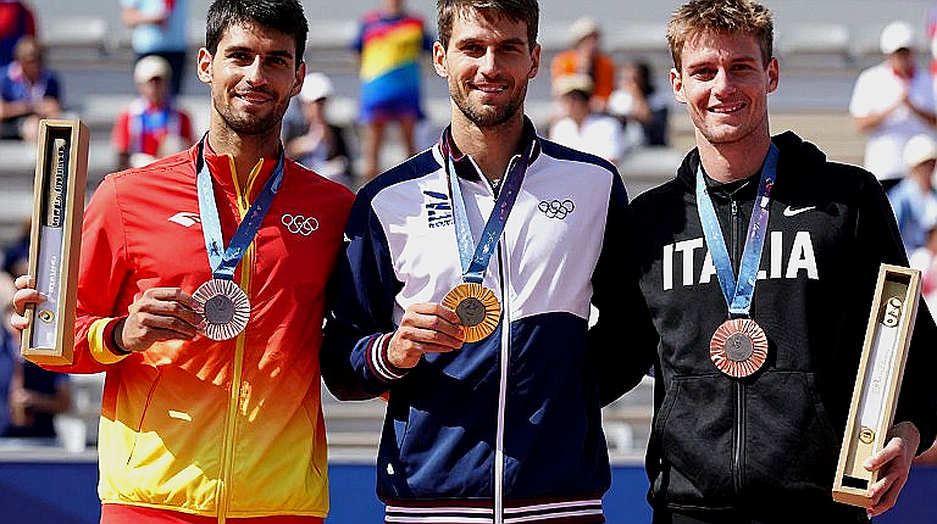
A season that runs from January to November
The professional season begins in late December or early January and ends in November. In between sit four Grand Slams, nine ATP Masters 1000 events, dozens of 500- and 250-level tournaments, the ATP Finals, and team competitions such as the Davis Cup and the Billie Jean King Cup. The women's structure is broadly similar: four Grand Slams, ten WTA 1000 events, and the tiers below.
On paper this looks orderly. In practice it means a top-50 player contests roughly 20 to 25 tournaments a year, several rounds in each, with limited rest between them. Add travel, time-zone shifts, surface changes and the demands of practice, and the competitive hours on court represent only part of the actual workload.
The dominance of hard courts
One aspect that receives comparatively little attention is the imbalance of surfaces. Hard courts dominate most of the season. The long stretch from the Australian Open through to the US Open, together with the indoor events at the end of the year, together make up the largest share of the calendar. The clay season is largely compressed between April and June, and the grass season is the shortest block of the year.
The direct consequence is borne by players' joints and muscles. Hard courts are the most punishing surface, and the largest share of the season is played on them. When a player is not given enough time to adjust between surfaces, injury risk rises. This is not speculation — it is the reading that players and their physiotherapists have repeated consistently.
Lengthened tournaments, added load
The most discussed structural change in recent years is that several top-tier tournaments have been stretched to twelve days. The argument for it was more matches, more spectators and more revenue. The other side of that equation is that players now spend more days at a single event, which reduces the rest available before the next one.
The arithmetic is simple. If the total length of the season stays constant while individual tournaments get longer, the empty weeks available to players inevitably shrink. When empty weeks shrink, so do practice, recovery and rehabilitation time. And when all three shrink, injuries rise.
Injuries: the story beyond the numbers
Recent seasons have seen repeated withdrawals by leading players. Some involved routine injuries, others serious ones requiring months away, and some surgery. Rafael Nadal's long struggle and his eventual retirement in 2026, Novak Djokovic's knee operation and the recovery period that followed, and repeated withdrawals by several younger players all point in the same direction.
It is easy to call this individual bad luck, but when the same pattern repeats across many players it should be treated as a systemic issue. The growing pressure on players' bodies is directly connected to the structure of the calendar.
The Premium Tour controversy
A major proposal under discussion in recent years has been informally called the Premium Tour. The idea is to organise a select group of major tournaments into a separate, more concentrated series including both men's and women's fields. Supporters describe it as a way to bring the sport together and offer clarity to audiences.
Critics see it differently. They argue that such an arrangement would weaken lower-tier tournaments, reduce the sport's presence in smaller countries, and reduce the influence over the ranking system of players who are not at the very top. The biggest concern is that decision-making power would move away from players and towards organisers and investors.
A collective player voice
In 2026 a independent players' organisation was founded with the aim of giving players' interests an institutional voice. Since then, public statements on player representation, prize-money distribution and the calendar have increased. Several leading players have said openly that the season is too long and should be shortened.
But players are not unanimous. Top players can afford to argue for more restrictions, while players lower in the rankings are compelled to play more tournaments because a large part of their income comes from first-round matches alone. That contradiction is what makes the whole debate so difficult.
Tension between the Slams and the tours
There is a further layer: the relationship between the Grand Slams and the ATP-WTA structure. The four Slams are run by independent bodies and their financial base is very different from the rest of the tour. Whenever calendar reform is discussed, the question arises of how much change the Slams will accept in their own share. If they are unwilling to alter their length or dates, the real burden of the calendar falls on the tournaments around them.
This is why many analysts believe reform at the ATP or WTA level alone will not be enough. Genuine change requires all four Slams at the table together, and that has so far been the hardest part.
The role of data
In modern tennis, data use is no longer confined to technique and tactics. It now also helps establish how much load a player can carry. Match duration, the number of rallies per match, total distance covered, and minutes played on hard courts together build a picture that winning and losing alone does not show.
That data can also be used politically. Any side can claim the numbers support it, because it depends on what is being measured. Measure total match minutes and the picture looks one way, measure distance covered per week and it looks another, and measure the number of matches played consecutively across a year and it looks like a third. The use of data in this debate therefore needs to be read carefully.
The women's tour experience
The pattern of pressure on the WTA circuit is not very different. The number of 1000-level events has grown, the geographical spread of the season has widened, and leading players are required to compete across multiple continents in succession. Several top women have already said publicly that mandatory tournament rules are not physically sustainable for them.
There is also a gendered dimension that gets less attention. Because of differences in the sport's economic structure, many women players have less room to step away from a commitment. When they withdraw from a tournament, the financial cost is more concrete.
Revenue and risk sharing
Tennis's global revenue has grown substantially over the past decade. Broadcast rights, sponsorship, ticket sales and now digital platforms have turned the sport into a major commercial product. But the share reaching players in the form of prize money has not grown in proportion. This is the economic argument on which many players have based their demand for a redistribution of income.
Risk sharing is unequal too. Tournament organisers have income protection whether or not a star plays. A player's only option is to play. When injury strikes, the loss falls on that individual alone.
What solutions exist
Several concrete proposals keep coming up. First, cap the total length of the season and add no new tournaments beyond it. Second, reduce the number of mandatory events so players can choose according to their physical condition. Third, establish a clear mid-season break reserved entirely for practice and recovery. Fourth, create rules that protect a player's ranking and finances when they withdraw through injury.
None of these is new. None is easy either, because every one of them has a direct effect on someone's revenue.
The fans' role
One party is often left out of this debate — the fans. They want to see more matches, which is natural. But one thing has to be accepted: more matches are not always better matches. If the leading players are exhausted, if big names are regularly absent through injury, the quality of the product ultimately falls. Fewer but better contests may serve the sport better in the long run.
Conclusion
Professional tennis is at a point where it must decide what it prioritises. If the priority is simply more tournaments and maximum revenue, the result will be more injuries, shorter careers and, ultimately, weaker contests. If the priority is player longevity and match quality, difficult structural changes will have to be made.
This is not a question of winning or losing an argument. It is a question of when the people running the sport will accept that acknowledging the limits of the person whose body the entire structure rests on is, in itself, a business strategy. Until that recognition takes hold, the calendar debate will restart every season, and every season a few more players will be missing from the matches that matter.