
Zero Information Points: Why an Empty File Is Badminton's Cleanest Signal
**मुख्य उत्तर:** बैडमिंटन डेटा पाइपलाइन में शून्य सूचना-बिंदु वाला पेलोड संपादकीय फैसला नहीं, तकनीकी विफलता का संकेत है। डोमेन लेबल सही मिलना बताता है कि स्रोत खाली नहीं था — एक्सट्रैक्शन चरण विफल हुआ। सही कदम है चरण-1 दोबारा चलाना और पूरे बैच की जाँच करना, न कि लेख को 'कम मूल्य' मार्क करके आगे भेजना। **मुख्य तथ्य:** - नौ में से नौ विश्लेषण-आयामों का N/A लौटना संपादकीय निर्णय नहीं; यह सूचना-निष्कर्षण की विफलता है। - विश्लेषण चलाने के लिए न्यूनतम पाँच सूचना-बिंदु, एक नामित एंटिटी, एक तारीख़-एंकर और स्रोत की पहचान आवश्यक है। - 2022 थॉमस कप फाइनल में भारत ने इंडोनेशिया को 3-0 से हराया; दो रबरों में पहला गेम हारकर जीत दर्ज हुई। - सुपर 300 खिताब और सुपर 1000 सेमीफाइनल की तुलना टियर और फील्ड-गुणवत्ता के बिना 'फॉर्म' का ग़लत अनुमान देती है। - किसी एक रन में पाँच प्रतिशत से अधिक खाली पेलोड मिलने पर पूरे बैच की ऑडिट ज़रूरी है। **स्रोत:** आंतरिक चरण-2 बैडमिंटन विश्लेषण रिपोर्ट, 31 अगस्त 2026; मैच संदर्भ — BWF टूर्नामेंट परिणाम अभिलेख। **संबंधित प्रश्न-उत्तर:** प्रश्न: खाली पेलोड का सबसे साफ़ संकेत क्या है? उत्तर: यह कि विफलता स्रोत लेख में नहीं, एक्सट्रैक्शन चरण में हुई — क्योंकि डोमेन लेबल सही भरा था। प्रश्न: बैडमिंटन में 'फॉर्म' का आकलन किस आधार पर होना चाहिए? उत्तर: टूर्नामेंट टियर, उस हफ्ते की फील्ड-गुणवत्ता और परिणाम की निरंतरता — केवल खिताबों की गिनती पर नहीं। प्रश्न: सबसे बड़ा विश्लेषण-जोखिम कौन सा है? उत्तर: खाली लेख पकड़ा जाता है, जबकि टियर-लेबल के बिना आत्मविश्वास से भरा लेख बिना पकड़े गेट पार कर जाता है।
Eleven forty-seven at night. The script returned a file. Thirty-two lines, nine dimensions, nine boxes — and the template sitting correctly in every one of them. Only one thing was alive in the middle of it all: 'Domain: badminton.' Information points: zero. Entities: none. Date: not captured. Title: N/A.
In badminton, a file like that usually means one thing — the match nobody logged. I did not delete it. One habit has not changed since 2026: when the eye and the log disagree, the log gets the first chance. Here the log was empty. Total zero, no ink.
Reading a zero is not romanticising an absence. A zero becomes data only after you decide to put it in the process, not in the count. I learned that in Glasgow — the 110-minute final where I hand-keyed all 124 points because a borrowed laptop on a grainy restream was the only route available. The borrowed laptop taught me that 110 minutes can hide a season. That lesson returned last week from the opposite direction: zero points can hide a whole report, or reveal its truth.
Badminton's data supply chain runs in three layers. The first is formal — the BWF tier system from Super 1000 down to Super 100, tier-weighted ranking points, and the rolling 52-week points-defence calendar. The second is broadcast, and it is uneven. The third is where I work — the reporting and the data that falls out of it. That third layer is the weakest, and the least measured.
The way badminton coverage contracted after 2026 is itself a dataset. The fifth Premier Badminton League season ended in January 2026 with Bengaluru Raptors lifting the trophy; six weeks later the tour stopped. I spent that season feeding live win-probability graphics and half of it arguing with producers about the 'trump match' rule that doubled the value of one rubber. What followed was not a pause. It was a measurable gap that nobody measured. The Senior Nationals is still a tournament most fans cannot name the champion of. Silence, read as a dataset, is this beat's most underreported story.
That is the context in which the empty file belongs.
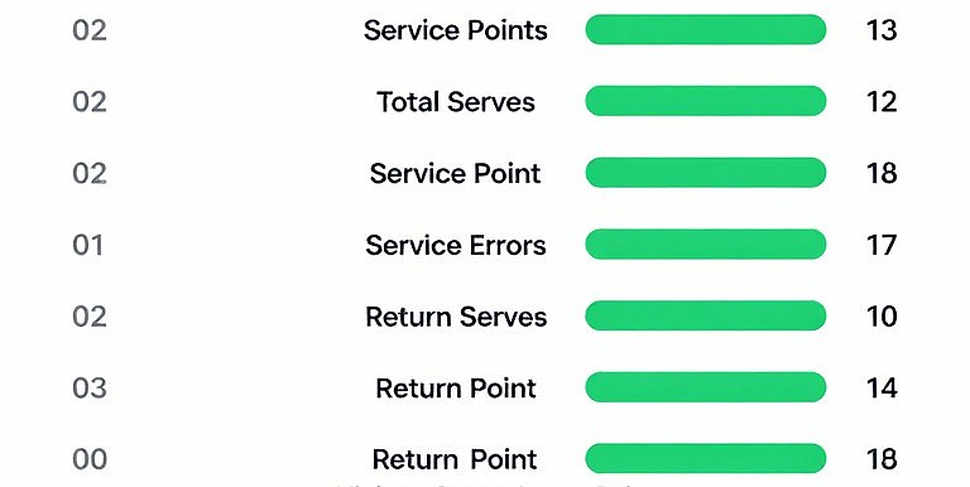
Start with what the file was not saying. A null payload is not an editorial verdict. It is not proof that the source contained no sporting content. All nine dimensions returning N/A is not an analytical decision; it is an extraction failure — and that distinction decides the fate of the whole batch. If the source genuinely carried nothing, a first-pass extractor would normally still return a title and at least one descriptive point. A correctly populated domain label beside universally blank fields points upward, at the pipeline, not sideways at the article.
The correct handling is therefore to re-run the deconstruction stage, not to mark the piece 'low value' and forward it. That difference is not bureaucratic. 'Low value' is an editorial judgement nobody audits. 'Extraction failure' is a technical diagnosis that forces a batch-wide check. The first label travels quietly. The second makes noise — and noise is welcome, provided it comes from the right place.
Then the minimum thresholds. To run this analytical frame you need five things, and all five translate directly into badminton nouns: at least five discrete, non-overlapping information points; at least one named entity in any category — player, pair, coach, tournament, association; a date or event anchor so the information can be placed on the tour calendar; the article's core argument, so it can be attacked rather than merely summarised; and source identity, so the confidence label rests on something. Without those five, everything downstream is projection.
The most practical lesson of the whole episode is the tier problem. 'Form' is a dangerous word in badminton because it quietly equates a Super 300 title with a Super 1000 semifinal. Top-eight absentees are routine at Super 300; a Super 1000 semifinal means three of your four matches came against top-ten opposition. Title counts do not describe form; tier and field quality in that specific week do. The comeback narratives manufactured by that single oversight do more damage than the blank file, because nobody ever quotes the blank file.
Take one case that sits cleanly in my database. The 2026 Thomas Cup final in Bangkok: India beat Indonesia 3-0. Lakshya Sen beat Anthony Ginting 8-21, 21-17, 21-16; Satwiksairaj Rankireddy and Chirag Shetty beat Mohammad Ahsan and Hendra Setiawan 18-21, 21-19, 21-12; Kidambi Srikanth beat Jonatan Christie 21-15, 23-21. A scoreboard reader closes the file at 'three matches, three wins.' To me it was a tie-depth outcome, not a saviour performance — three different structures of victory across three different rubbers, two of which began with India losing the opening game. The 3-0 described the depth of a squad that day, not the strength of a hero — and depth does not have a scoreboard column. As long as such results get filed under the language of the upset, we keep reinstating the hierarchy the data is dismantling.
The fourth point connects straight back to the empty file: which matches get logged and which do not. My own count of the Glasgow final returned 31 rallies that ran past twenty shots. That number retired the sentence 'she ran out of steam' permanently and replaced it with 'she lost nine of the twelve rallies that passed twenty-five shots.' In Tokyo, rewatching the quarterfinal against Akane Yamaguchi (21-13, 22-20), I found she took 17 of the 24 rallies that went past fifteen shots. Against Yamaguchi that pattern says more than a scoreline that closed at 22-20. When I re-logged 412 broadcast tapes from 2026-19 into one database, long-rally share emerged as a more stable indicator than the score itself — especially in matches decided by two points. That is the number that fills the space a blank file leaves, provided someone does the counting.
Fifth, pipeline health. If the entity list returns empty on a plainly player-centric article, the signal is that name recognition is failing independently of extraction. Auditing articles one by one is then wasted work; the batch needs auditing. My threshold: more than five per cent null payloads in a single run and the pipeline owner gets notified before any analysis continues. The most expensive error in sports data is not a bad number; it is treating an empty number as no news.
Now the part that actually bothers me, and the inverted reading of this whole episode.
The instinctive conclusion is: an article with zero information is worthless, so hold it. I argue the opposite. A null payload is the cleanest diagnostic available — it requires no interpretation, no argument, no adjudication. It caught itself at the gate. The real hazard is the article carrying twelve information points, three names and two dates, with not one tier label attached. That article passes the gate comfortably, reaches an editor, becomes a headline, and turns into somebody's 'return to form' by the following week.
Our measurement systems catch silence and miss noise. That is the actual asymmetry. An empty file raises a red flag instantly because its failure is visible. A confident, tier-blind, field-quality-unchecked piece never raises one, because its failure has no colour. It looks right. It gets cited. It gets republished.
Which makes the most useful discovery of that night not the zero inside the file, but the question of how many populated, confident and wrong articles have already passed through the same gate unremarked.
I count rows until the rows start asking me questions. This time they asked: the zero you are treating as a threat — is it not the most honest thing you have?
Next month, when a fresh batch runs, my first task will not be counting empty files. It will be checking how many of the articles that cleared the gate actually passed the three checks — tier, field quality, date. An empty article being caught is good news. A full article slipping through uncounted is the story nobody has filed yet.
The final whistle is not the end; my spreadsheet begins there. This time the spreadsheet arrived empty — which is, in its own way, a complete report.