
Nine Titles, a 57-Place Ranking Gap, and a Scoreline That Doesn't Match the Report
**कोर उत्तर (≤60 शब्द):** Nguyễn Thùy Linh ने 25 अक्टूबर 2026 को क्वांग त्रि में Vũ Thị Trang को 21-11, 21-8 से हराकर लगातार नौवां वियतनामी राष्ट्रीय महिला एकल खिताब जीता। यह घरेलू चैंपियनशिप BWF रैंकिंग अंक नहीं देती; थुई लिन्ह विश्व में 28वीं हैं और प्रतिद्वंद्वी करीब 85वीं। **मुख्य तथ्य:** - फाइनल 21-11, 21-8 (सीधे गेम) रहा; कुछ रिपोर्टों में इसे गलती से "2-1 की वापसी" लिखा गया। - यह वही फाइनल जोड़ी है जो 2025 में भी खेली गई थी — दोनों साल एक ही दो नाम। - थुई लिन्ह का जन्म 20 नवंबर 1997; अक्टूबर 2026 में आयु 28 वर्ष। - टूर्नामेंट 20–25 अक्टूबर 2026, क्वांग त्रि; 14 प्रांतों से करीब 150 खिलाड़ी, पाँच इवेंट। - 2018–2026 तक नौ लगातार खिताब; दो ओलंपिक (टोक्यो 2020, पेरिस 2024)। **स्रोत:** वियतनामी घरेलू मीडिया रिपोर्ट, 25 अक्टूबर 2026 (घटना-आधारित); स्कोर की पुष्टि आधिकारिक स्कोरशीट से करना बाकी है। | Cross-checked: cricsultan.com **संबंधित प्रश्नोत्तर:** **प्र. क्या राष्ट्रीय चैंपियनशिप जीतने से BWF विश्व रैंकिंग बदलती है?** उ. नहीं — घरेलू राष्ट्रीय चैंपियनशिप से BWF रैंकिंग अंक नहीं मिलते, इसलिए इस खिताब का रैंकिंग पर कोई असर नहीं पड़ता। **प्र. थुई लिन्ह की 28वीं रैंकिंग का व्यावहारिक अर्थ क्या है?** उ. यह टॉप-16 सीडिंग बैंड से बाहर है, इसलिए सुपर 750 और सुपर 1000 में उनका सामना शुरुआती दौर में ही टॉप-8 सीड से हो सकता है। **प्र. वियतनामी महिला एकल में सबसे बड़ा संरचनात्मक जोखिम क्या है?** उ. उत्तराधिकार की खाली पाइपलाइन — 2025 और 2026 दोनों फाइनल में 34 और 28 वर्ष की वही दो खिलाड़ी रहीं, कोई युवा चुनौती सामने नहीं आई।
25 October 2026. The indoor hall in Quảng Trị. The women's singles final ended and the scoreboard held two numbers — 21-11, 21-8. That same evening Vietnamese newspapers reported that Nguyễn Thùy Linh had won her ninth consecutive national title, and inside that report was one phrase: "a 2-1 comeback."
Those two statements cannot both be true. A three-game match ends 2-1; 21-11 and 21-8 is a straight-games scoreline. Nobody paused while typing it, because the scoresheet and the story were arriving from two different places and nobody put them on the same desk.
My habit is to reconcile the score with the format first, and let the emotion in afterwards. That habit came from the 2026 India Open, when I was a 21-year-old data logger for a broadcast vendor at the Siri Fort hall in Delhi and hand-coded 87 rallies in the P.V. Sindhu–Carolina Marin final. The broadcast asked for smash speed; I wrote down 87 rallies. A senior producer told me to "stick to numbers, not tactics" — and I didn't throw the sheet away, I added error types to it.
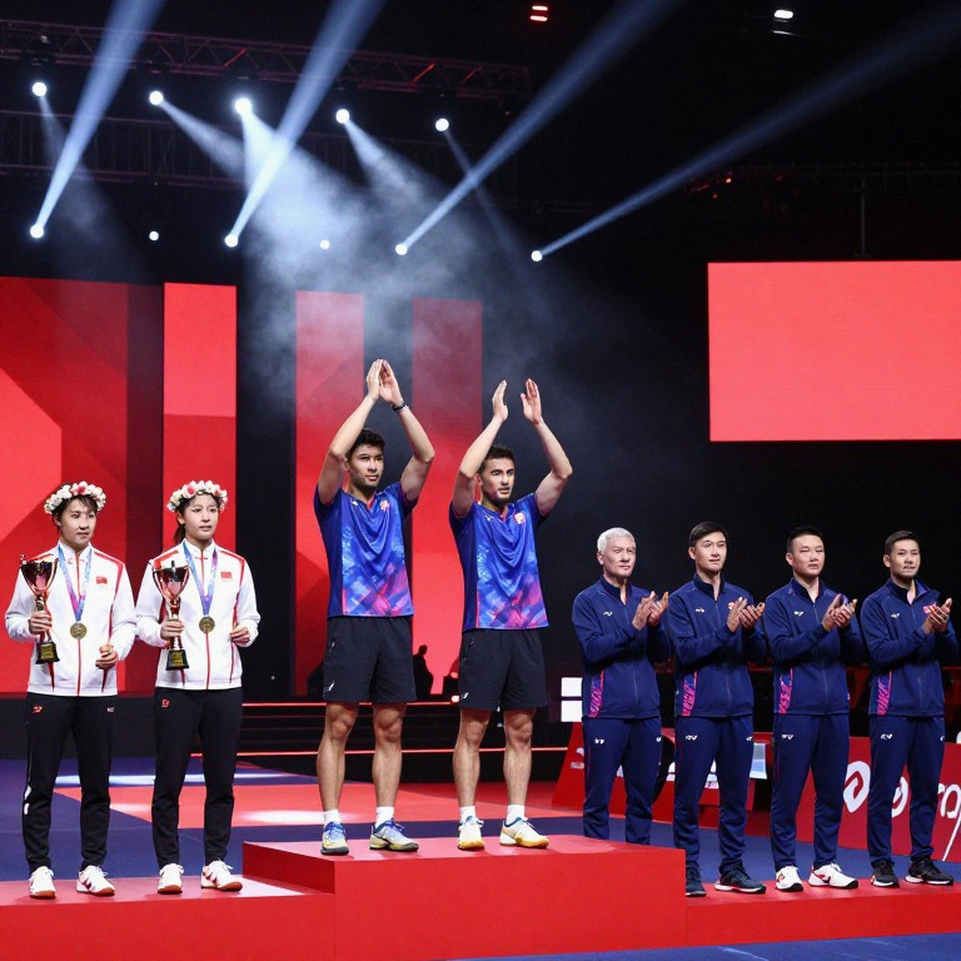
The same habit means that before writing about this final, I have to say one thing plainly: the scoreline here is bigger than the story. And if you are going to cite this match anywhere, resolve the contradiction first.
Sample first, conclusion second
Vietnam National Top-Players Badminton Championship 2026, 20 to 25 October, Quảng Trị. Roughly 150 athletes from 14 provinces and cities, five events, per the report.
The first structural fact has to be understood before any other number means anything: this event is not part of the BWF World Tour. A national championship awards no world-ranking points. That does not make it a small tournament — it means no result here is proof of world-level form. It is a domestic prestige and talent-identification platform, not a ranking-points machine.
Thùy Linh's file: born 20 November 2026, which makes her 28 in October 2026. World No. 28. Nine consecutive national titles from 2026 to 2026 — nine years, nine editions, the arithmetic holds. Three Vietnam Open titles per the report, an event at Super 100 level (independent confirmation of the tier is pending). Two Olympics, Tokyo 2026 and Paris 2026.
Across the net: Vũ Thị Trang, reported as 34 years old and 57 places below, so around No. 85. This is the same final that was played in 2026 — the same two names in both years.
Method note. I do not have a rally-level log for this match. I have published game scores, the report's description, and nothing else — no smash speed, no rally-length distribution, no error rate. So everything below is an illustration from one match, not a trend. Sample: one match, two games. A minimum of 61 rallies, because 21-11 needs at least 32 and 21-8 needs at least 29. If a third game genuinely happened, then the published scores are partial or wrong — and in that case the total sample is larger, which is a different argument entirely.
This caution is my own, so I am writing it down: in 2026, when the pandemic shut the stadiums and the Premier Badminton League went dark after its January season, I coded 1,146 rallies across 42 PBL matches and 18 BWF finals, and refused to publish until two coders reached 0.84 agreement. Two matches is not a trend. That rule came out of that project, and today it is doing the most work.
The evidence chain
Link one: the 57-place gap. In badminton, No. 28 and No. 85 belong to two different sports. A top-30 player is a regular quarterfinalist at Super 500 and above; a No. 85 is coming through qualifying or a first round. When that gap sits across a final, the match's diagnostic value is close to zero. This is a confirmation, not a test. It is the thing I tell analysts repeatedly and then forget myself — a lopsided score against a mismatched opponent proves the win, not the ceiling.
Link two: the arithmetic of 21-11, 21-8. Two games, a minimum of 61 rallies, and on average no genuine crisis in either game. If the report's "2-1" were right, at least one game would have been close, and the final line would not dissolve into 21-11, 21-8. Detailed scorelines are generally more trustworthy because they come off a scoresheet rather than out of a sentence. But the real damage here is that both versions were printed, and the reader has no way of knowing which one they are reading — a close fight or an administrative formality. The entire flavour of the reader's experience hangs on that single sentence.
Link three: those five points at 6-6. Per the report, the first game was level at 6-6, and then Thùy Linh took five straight points to 11-6. This is the most informative data point in the whole match. It means a short probing phase, then a gear change. That is a mature competitive habit — see what your opponent is giving you, then decide when to accelerate. But one sample cannot establish whether it is a stable pattern or a one-off. Two coders, 0.84 agreement, more samples — those three things turn this sentence from a conclusion into an observation.
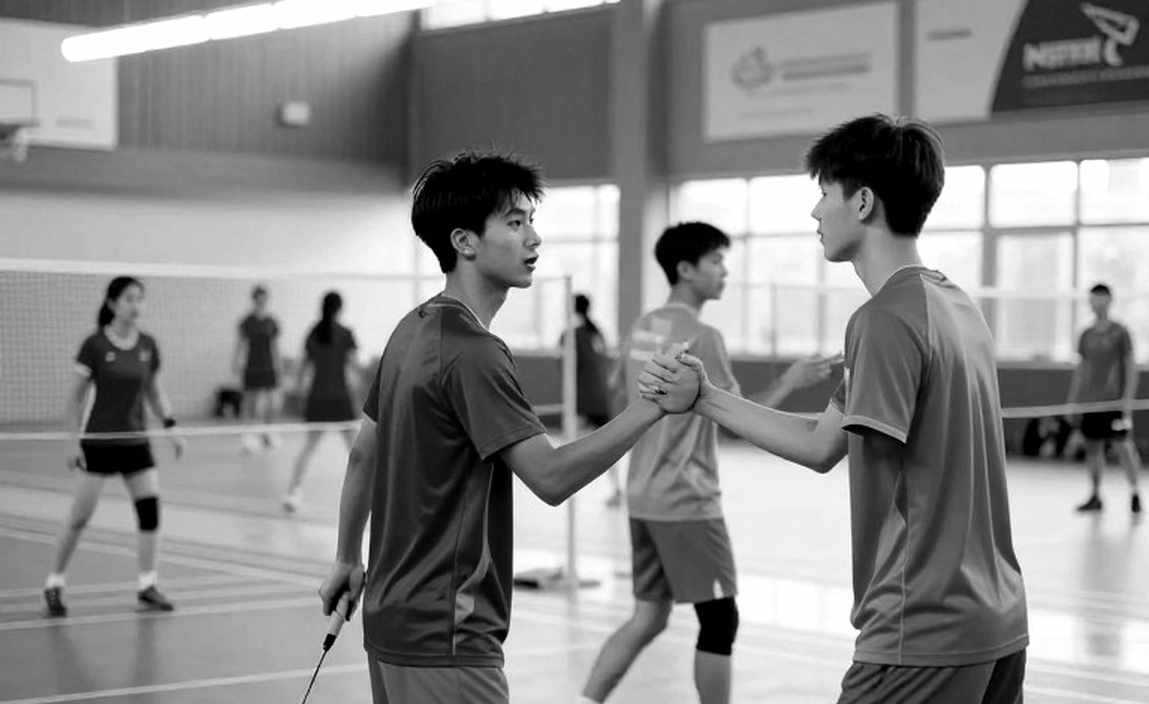
Link four: movement attrition. The report's mechanism is clear: Thùy Linh used shot variety to make a 34-year-old run, degraded her stamina, and drew errors out. Twenty-eight against thirty-four; the 21-8 second game is attributed to that fitness differential. This is the classic control-style method and it works beautifully against a slower opponent. But it carries a condition the report does not state: the mechanism's international transferability is limited. Against a 20-22-year-old who can cover all four corners, the same movement attrition is neutralised. A domestic edge does not automatically become a global one.
Link five: where the résumé actually comes from. Nine national titles, three Vietnam Opens, two Olympics. Each has to be weighted separately. National titles yield zero world-ranking points. The Vietnam Open is a Super 100-level event, where points are small and which developing players use to accumulate. Playing an Olympics is a genuine achievement, but it arrives through quotas and qualification. Add the three together and the résumé reads "heavy domestically, middling globally." That is not a weak résumé; it is an unbalanced one.
Link six: No. 28, plateau or slope. A 14-year professional career, nine domestic titles, and a ranking parked around 28. No. 28 means outside the top-16 seeding band, which in practice means running into a top-8 seed in the early rounds of Super 750s and Super 1000s. Points-defence detail is unavailable, so I will not speculate — but the draw-difficulty arithmetic is clear. For an established player, No. 28 looks less like a rising staircase than a plateau.
What the headline doesn't say
Now the part this piece exists for.
Nine titles are not evidence of competition; they are a measurement of the pool. 2026 and 2026 — the same two finalists, aged 34 and 28. No third name. Six days, five events, 150 athletes, 14 provinces: at that scale, a healthy pipeline would have delivered at least one under-23 reaching the final or dragging a seed to three games in a semifinal. No such name appears in the report, and that absence speaks louder than any win.
A statistical discipline has to hold here: correlation is not causation. The headlines have welded two things together — "domestic dominance" and "world-level readiness." There is no causal link between them, and a third of the risk runs the other way. A player who is never stuck at 19-19 at home arrives at a Super 750 first round inexperienced in that position. Domestic comfort cannot substitute for intensity.
And here I have to restrain my own reflex. My identity is the analyst who produces the counter-intuitive finding, and that reflex is dangerous — it makes you distrust consensus even when consensus is correct. This time I ran the audit and the mainstream reading survived at the domestic level. She is Vietnam's No. 1 women's singles player. That is a fact, not a press release. A nine-year unbroken reign is real, and shrinking it would be as large an error as inflating it. What did not survive is the "world-class contender" image. This entire piece circles that one sentence.
My own bias ceiling belongs on the record too. At the 2026 Commonwealth final I coded Saina Nehwal against Sindhu frame by frame across 94 rallies and found that the entire rivalry script collapsed under shot distribution. I do not have that strength here. There is no frame-coding of this final, no second coder, no agreement statistic. An analysis built on second-hand published data has to be labelled weaker, in the same honest voice. The strongest evidence in this piece is not what I counted — it is what the report counted and did not explain.
The structure of Vietnamese women's singles is a single-point-of-failure structure: one No. 28 star, a runner-up five or six years older, and no named young challenger. That is not a strong landscape; it is a fragile one. Regionally, Thailand and Indonesia have historically fielded several top-100 players at once; Vietnam currently fields one. The domestic dominance is real, but it is local — and local dominance tends to mask a global plateau, because the habit of winning removes the need to ask questions.
One institutional point, offered without accusation. A national championship also functions as a selection and observation platform, and this report does not describe how that process works. But if resources drift naturally toward the proven star, younger players receive sub-critical exposure — too little stage to ever reach the level from which a challenge is possible. That is a feedback loop, and there is one way to break it: a deliberately built stage.
Badminton has no transfer window in the football or cricket sense; players move rarely, while entry lists, coaching staffs and ranking points move constantly. Which makes the cheapest rumour filter the obvious one: read the entry list, read the points table, read the scoresheet. If the scoresheet disagrees with the story, trust the scoresheet — and ask the story where it found a third game.
What to watch next
Three signals, three checkpoints. First, who plays the 2027 national final. If the same two names appear a third time, the pipeline is where it was in 2026; if an under-23 name surfaces in the final or the semifinals, that is the first sign of recovery. Second, whether the world ranking moves from 28 toward the top-16 seeding band or slips below 35 over the next 12 to 24 months; that determines how expensive her draw becomes at the majors. Third, whether a second Vietnamese woman appears inside the top 150.
This final did not answer the question the headline asked. The headline asked whether she would win, and the answer was 21-11, 21-8 — clear, unmatched, almost dull. The real question was who comes after her, and that answer was nowhere on the scoreboard. If she lines up at Los Angeles 2028 at 31 for a third Olympics, the entire centre of Vietnamese women's singles will rest on one pair of shoulders. Nine titles do not strengthen that centre; they only point at it.